Unlocking the True Power of Self-Discipline: Beyond Willpower
Have you ever chased the dream of mastering self-discipline, only to find yourself stumbling time and again? 🤔 Many of us fall into the trap of equating self-discipline with sheer willpower, but what if I told you there’s more to the story? Imagine trying to follow the Uberman sleep cycle, aiming for heightened productivity by sleeping only 20 minutes every four hours. Sounds like a productivity hack Napoleon, Da Vinci, and Tesla might have used, right? Yet, when push comes to shove, why do so many of us falter? This piece dives deep into the common misconceptions about self-discipline, illustrating through personal anecdotes and science why willpower alone is not the answer. Join me on a journey of self-discovery and learn how to truly embrace self-discipline, transforming your life beyond your wildest dreams. Are you ready to find out how? Let’s debunk some myths and unlock the secrets to sustainable self-discipline. 🚀
Introduction: The Myth of Willpower
Have you ever felt like you’re on a hamster wheel, running towards the dream of ultimate productivity, only to end up exhausted and right where you started? 🐹 I sure have. Let me take you back to a time when I stumbled upon what I thought was a golden ticket to productivity: the Uberman sleep cycle. This wasn’t just any productivity hack; it was extreme. The idea was to sleep for 20 minutes every four hours. That’s it. Sounds crazy, right? Well, it sounded perfectly reasonable to me back then.
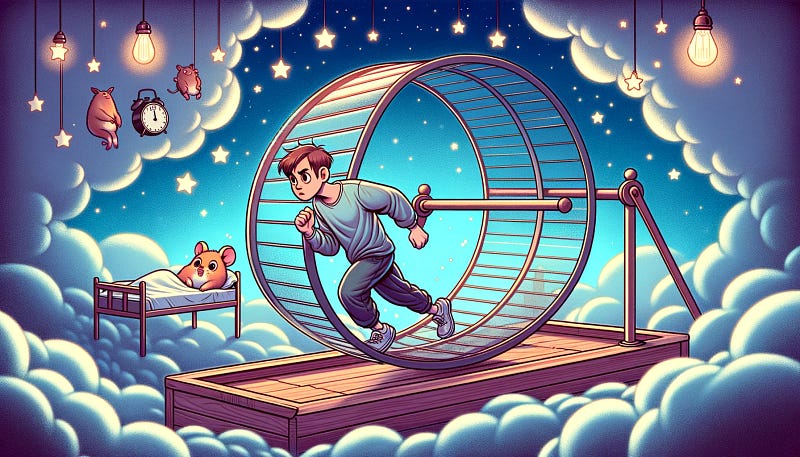
I remember reading about how great historical figures like Napoleon, Da Vinci, and Tesla supposedly hacked their sleep to achieve greatness. “If they could do it, why can’t I?” I thought. Fueled by a blend of naivety and excitement, I dove headfirst into this adventure. Little did I know, I was about to learn a tough lesson in self-discipline and the limitations of willpower.
Chapter 1: The Misunderstood Nature of Self-Discipline
The Uberman sleep cycle was my Everest. I was determined to conquer it, believing that my willpower was all I needed. Spoiler alert: I was wrong. Very wrong. By the third night, my eyes were heavy, my thoughts were scrambled, and my productivity was nowhere to be found. I had drastically underestimated the challenge and overestimated my willpower.

This experience led me down a rabbit hole of research and self-reflection. What I found was both surprising and relieving: self-discipline isn’t just about willpower. In fact, relying solely on willpower is like trying to fill a leaky bucket — it’s unsustainable. Scientists have shown that willpower is a limited resource. It’s like a muscle that can get exhausted from overuse. Each decision we make, from choosing a salad over a burger to sitting down to work instead of watching TV, drains a bit of our willpower.
My failure with the Uberman sleep cycle was a hard pill to swallow. But it was also a turning point. It forced me to confront the reality that self-discipline is more complex and multifaceted than I had ever imagined. It’s not about pushing yourself to the limit with brute force. It’s about understanding the intricacies of human behavior, habits, and the environment that shape our actions.
Through my failed experiment, I learned that self-discipline is not a testament to one’s character or a measure of one’s worth. It’s a skill that can be developed and strengthened over time, with patience, understanding, and the right strategies. And that’s what I set out to explore next.
Chapter 2: The Uberman Sleep Cycle: A Failed Experiment in Willpower
Let’s dive into the deep end of my Uberman sleep cycle adventure. Imagine thinking you could hack your sleep to just 20 minutes every four hours and end up with extra days’ worth of awake time each week. Sounds like a superpower, right? Well, it felt more like a super problem.
I started on a high note, buzzing with excitement. “This is it,” I thought, “I’m about to unlock levels of productivity I’ve never known.” The first day was tough but thrilling. By the second and third days, though, reality hit like a ton of bricks. My body was confused, my mind foggy. The world felt like it was underwater, and I was desperately trying to swim to the surface for air.
Every 20-minute nap was supposed to refresh me, but instead, I woke up groggier each time. My willpower was tested with every ticking second, but no amount of mental strength could fight my biological need for sleep. By day four, I was a zombie. Tasks that normally took me an hour were dragging into three. The dream of productivity was now a nightmare of exhaustion.
This experiment taught me a harsh lesson: self-discipline isn’t about pushing through with willpower alone. It’s not about bending the laws of nature to your will. My failure wasn’t a lack of trying; it was a misunderstanding of what self-discipline truly means.
Chapter 3: The Real Foundation of Self-Discipline
Emerging from the Uberman experiment, I realized that the foundation of self-discipline wasn’t about conquering sleep or mastering willpower. It was about understanding and leveraging the power of habits, environment, and support systems.
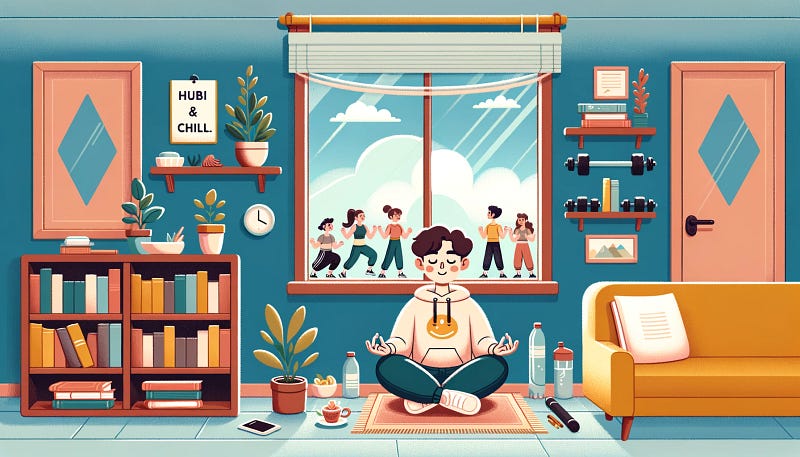
Habit Formation: The key to self-discipline lies in building small, manageable habits over time. Instead of attempting drastic changes overnight, it’s about the slow and steady accumulation of habits that align with your goals. For instance, instead of aiming to write a novel in a month, commit to writing 200 words a day. It’s these small steps that lead to big changes.
Environment: Our surroundings have a profound impact on our behavior. By crafting an environment that supports our goals, we can naturally guide our actions in the right direction. If your goal is to read more, keep books in visible, easily accessible places around your home. Make it as easy as possible to pick up a book instead of your phone.
Support Systems: No man is an island, especially when it comes to self-discipline. Sharing your goals with friends, family, or a supportive community can provide the encouragement and accountability needed to stick with your habits. Whether it’s a workout buddy or a writing group, having others to share your journey with can make all the difference.
Through real-life examples, I’ve seen the transformative power of these principles. Friends who’ve achieved incredible fitness goals did so not by relying on bursts of willpower but by gradually incorporating exercise into their daily routine, adjusting their home environment to reduce temptations, and joining communities that share their fitness aspirations.
In the end, the true essence of self-discipline isn’t found in our ability to wield willpower like a sword. Instead, it’s in the quieter, more consistent efforts we make each day, supported by the habits we form, the environments we create, and the communities we build. This understanding was the real victory in my journey, far more valuable than any productivity hack could ever offer.
Chapter 4: Building Blocks of Sustainable Self-Discipline
Embarking on the journey to self-discipline is like planting a garden. It’s not about a single day of hard work; it’s about the daily care, the small habits that, over time, lead to a lush, flourishing garden of your dreams. 🌱
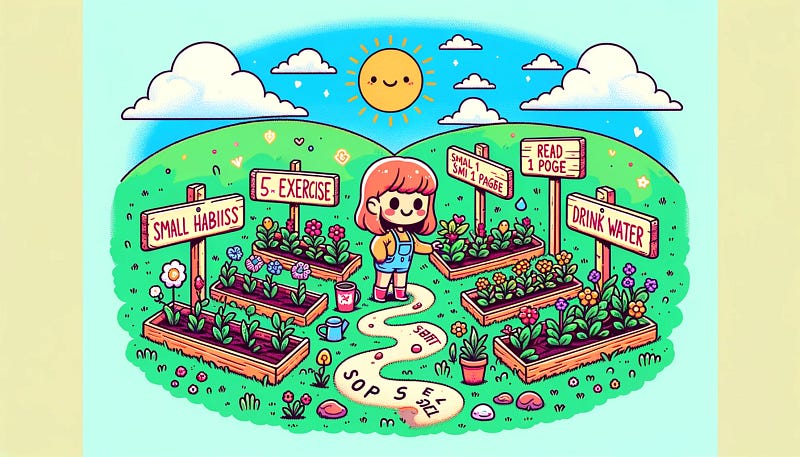
Start Small: Begin with habits so tiny they feel almost too easy. Want to exercise more? Start with five minutes a day, not an hour. This approach makes it easier to stick with it, and over time, these minutes add up and naturally become a part of your day.
Set Realistic Goals: Dream big but start small. Set goals that are achievable and measurable. If your goal is to read more, start with one page a night. It’s about the consistency, not the quantity. Celebrate these small victories; they’re your stepping stones to bigger achievements.
Incorporate Flexibility: Life is unpredictable. Your routine needs to have the flexibility to adapt to life’s ebbs and flows. Missed your morning workout? No problem. Do a quick five-minute routine at night. It’s not about being perfect; it’s about being persistent.
Forgive Yourself: You’re human. There will be days when you don’t meet your own expectations. That’s okay. The key is to not let one slip-up derail your entire effort. Forgive yourself, and get back on track the next day.
Stay Consistent: The power of small habits comes from their cumulative effect. Consistency turns actions into habits, and habits form the backbone of self-discipline.
Chapter 5: Tools and Techniques for the Long Haul
In our journey of self-discipline, tools and techniques are our allies. They help us navigate through challenges and keep us on track. Here are some practical tools and strategies to enhance your self-discipline:

Apps and Tools: Use technology to your advantage. Apps like Habitica gamify your habits, making them fun and engaging. Time management apps like Toggl or Pomodoro timers can help you focus and use your time more efficiently.
Mindfulness and Meditation: These practices can significantly boost your self-discipline by improving focus and reducing stress. Even a few minutes a day can make a big difference in your mental clarity and decision-making abilities.
Journaling: Keeping a journal can be a powerful tool for self-reflection and tracking progress. It allows you to see how far you’ve come and helps keep your goals in perspective.
Dealing with Setbacks: When faced with setbacks, it’s crucial to have a plan. Reflect on what led to the setback, adjust your strategies, and keep moving forward. Remember, resilience is a critical component of self-discipline.
Adapting Strategies for Growth: As you grow, so will your goals and strategies. Regularly review your habits and goals to ensure they’re still aligned with your vision for your life. Be open to change and ready to adapt your strategies as needed.
Embracing self-discipline is a journey of personal growth, filled with learning and evolving. By developing small, sustainable habits, setting realistic goals, and using the right tools and techniques, you’re not just chasing a dream; you’re building a reality, one small step at a time. Remember, the true power of self-discipline lies beyond willpower; it’s in the daily choices that lead to a lifetime of achievement. Let’s keep moving forward, together. 🚀
Conclusion: Transforming Your Life with True Self-Discipline
As we wrap up our journey through the maze of self-discipline, it’s clear that the path isn’t paved with sheer willpower alone. 🌟 It’s a road built on understanding, patience, and most importantly, self-compassion. My dive into the Uberman sleep cycle, a quest for productivity, turned into a valuable lesson on the true essence of self-discipline. It’s not about pushing yourself to the brink but nurturing a balanced, sustainable approach to achieving your goals.

Reflecting on this journey, it’s evident that self-discipline is not a battleground for testing the limits of our willpower. Instead, it’s a garden that requires regular tending. The seeds of habits we plant, the soil of our environment we cultivate, and the support systems we grow, all contribute to the flourishing of this garden. 🌱
The transformation from misunderstanding to mastering self-discipline isn’t an overnight phenomenon. It’s a process of embracing small, manageable habits, setting realistic goals, and being flexible and forgiving towards oneself. It’s about making peace with the fact that setbacks are not failures but stepping stones to greater resilience and understanding.
As you embark or continue on your journey of self-discipline, remember to celebrate the small victories, learn from the setbacks, and always strive for balance. Tools and techniques can aid us, but the true power lies within our daily choices and the habits we cultivate.
Let this exploration of self-discipline be a beacon, guiding you towards a life where you’re not just dreaming of your goals but actively living them, one small, disciplined step at a time. Embrace the journey, for it is in the journey that we find ourselves, our true potential, and the lives we were meant to lead. 🚀
Remember, the essence of self-discipline is not found in the suppression of desires but in the harmonious alignment of our actions with our deepest values and aspirations. As we close this chapter, I encourage you to start applying these insights into your life. Let’s not see self-discipline as a mountain to be conquered, but as a pathway to a more fulfilled, balanced, and productive life.
Here’s to unlocking the true power of self-discipline, beyond willpower, and transforming our lives into the masterpiece we’ve always dreamed of. Let the journey begin!


