
Unlocking the Sunshine Vitamin: How Vitamin D Builds Strong Bones?
Get Your Bones on Vitamin D and Calcium…
What is Vitamin D?
- Vitamin D3 or 1, 25-dihydroxycholecalciferol is a fat-soluble vitamin that is a nutrient as well as a hormone. Ergocalciferol (Vitamin D2) and Cholecalciferol (vitamin D3) are inactive forms of vitamin D, hence known as pre-vitamin D. These inactive forms are converted into their active form 1, 25-dihydroxycholecalciferol by various chemical reactions in the liver and kidneys. Once converted, the activated 1, 25-dihydroxycholecalciferol also known as Vitamin D3 is ready to perform its functions.
Please stay on this page for 30 seconds to avoid killing writer read ratio…Clap and Comments would be much appreciated!
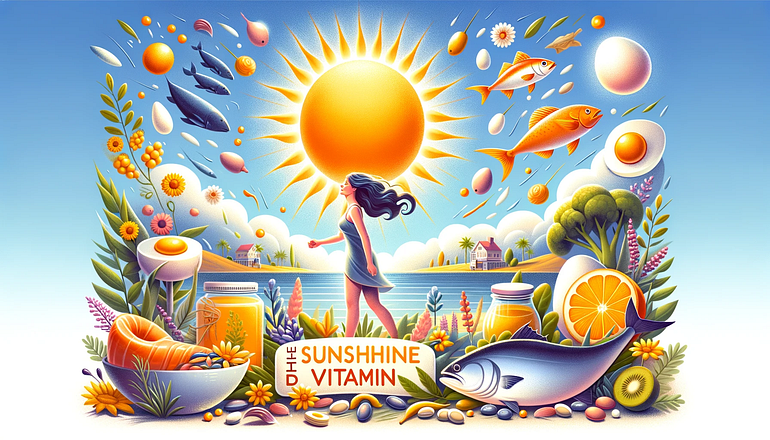
- Vitamin D is present in some foods. Our skin produces vitamin D in the presence of sunlight hence known as ‘the sunshine vitamin’. People living in cold regions where there is little to no sunlight face low levels of vitamin D in their blood.
- People with darker skin tone have low levels of vitamin D in their blood as the melanin pigment present in their skin acts as a shade to the sunlight and reduces vitamin D production. Melanin reduces the risk of skin cancer too caused by damaging sunlight.
How Vitamin D is Produced in the Skin in Sun Light?
It starts with 7 dehydrocholesterol (7 DHC) present in the deeper layers (stratum basale and stratum spinosum) of the skin. Ultraviolet B radiations convert this chemical into its isomer PreD3 with the same chemical formula but different spatial configuration of the atoms. Then a vitamin D binding protein binds with the isomer and transports it into the dermis. This pre-active form travels to the liver and the kidney where it is converted to its final activated form 1, 25-dihydroxycholecalciferol.
Vitamin D and Calcium: A Power Couple.
Vitamin D alone is not sufficient for strong bones. Its main function is to help the body absorb and retain calcium and deposit it on the bones along with phosphorus. They work as a team in maintaining bone health. Any of these missing in the body leads to weaker bones.
You can think of calcium as bricks and mortar while Vitamin D works as a foreman. Having tons of bricks and mortar is not enough as we need someone who can put them together and make it count. That foreman is Vitamin D. So if you have a lot of calcium in the body but vitamin D is missing, it can have adverse effects rather than making your bones stronger.
How Vitamin D Makes Calcium Count?
Let’s break down this process of how vitamin D makes calcium count in three stages:
1- The Digestive Stage:
This is where the story begins. When we consume calcium rich foods or take calcium supplements, calcium enters our small intestine. The small intestine has cells called enterocyte. These cells have channels that remain locked preventing the absorption of calcium.
2- Calcium Influx:
Vitamin D travels to the liver and then to the kidneys where it is converted to its active form calcitriol (1, 25-dihydroxycholecalciferol) and the magic starts.
Vitamin D initiates the opening of these calcium channels and initializes the influx of calcium into the main bloodstream. Now calcium can be transported anywhere in the body.
3- Destination:
After entering the blood stream it has two main functions.
Bone absorption:
Vitamin D stimulates osteoblasts (bone-forming cells). These cells use free calcium in the bloodstream to make and to repair bones keeping them strong and healthy.
Other functions:
Vital role in muscle functioning, helps in blood clotting by converting prothrombin into thrombin in the presence of other clotting factors. It is also important for nerve signaling.
Calcium or Vitamin D Deficiency:
Deficiency of vitamin D or calcium or if their functioning is disturbed, it can lead to fragile bones and other serious consequences in both children and adults.
Rickets:
Disorder that primarily affects children caused by calcium or vitamin D deficiency. Bones become weak and soft leading to bowed legs.
Osteomalacia:
It is characterized by softening and weakening of the bones in adults caused by calcium and vitamin D deficiency. The decreased bone density in adults leads to fractures.
Sources of vitamin D:
The daily requirements of vitamin D for adults older than 19 years is 15mcg or 600 IU and for adults older than 70 years, it is 20mcg or 800IU. We can meet our daily requirements for vitamin D with the help of certain foods and supplements. Natural food sources of vitamin D are very limited especially if you are vegan or you don’t eat fish. Here are some of the foods that are rich in vitamin D:
1- Fatty fish.
2- Cod liver oil.
3- Canned tuna.
4- Egg Yolks
5- Mushrooms
Other health benefits of Vitamin D:
Vitamin D is an important steroid hormone that not only improves the quality of our bones but also improves overall health. It has tons of other health benefits that are:
1- Immune system booster.
2- Mood Modulator.
3- Muscle Powerhouse.
4- Cancer Fighter.
5- The Glucose Guardian .
6- Heart-friendly.
7- supports fetal bone development in pregnant women.

Conclusion:
Above mentioned are some of the important facts based on multiple researches. Vitamin D is of great importance for the body and we should meet its daily requirement from food or sunlight. Its deficiency leads to weak bones that are susceptible to fractures. Along with vitamin D, calcium is also important as both work together as a couple. The percentage of women, children and even adults with a deficiency of calcium and vitamin D is rising every single day.
So we should be aware of our daily needs and make sure we spend enough time in sunlight or eat enough food that contains vitamin D and calcium. As skeletal made of bones and joints works as a base supporting our muscles and giving shape to the body. If bones are weak these won’t be able to support the body weight as they should.
Sit in the sunlight and let the sun do its magic!

Thank you for reading this article and I look forward to your feedback in the comments. If you want me to write about any specific health topic, feel free to ask. You can follow and press the bell icon to get notified whenever I post a new story. Appreciate your time and help!!
👏+ Highlight + Comment = Support/Love ❤️


