
Unlocking the Mysteries of Hot Traditions
Uncovering the Secrets Behind 5 Popular Hot Traditions
Introduction:
Hot traditions are an integral part of the cultural fabric of many communities around the world. From festivals to rituals, these customs often have deep roots and fascinating histories. While some of the origins of these traditions remain shrouded in mystery, their impact on modern society is undeniable. From the Burning Man Festival in the Nevada desert to the Running of the Bulls in Spain, these hot traditions are sure to leave an indelible mark on those who experience them.
- The Burning Man Festival: Every year, tens of thousands of people venture to the Nevada desert to take part in the Burning Man Festival, a week-long celebration of art, music, and self-expression. It’s unclear exactly how the festival began, with some speculating that it was inspired by a bonfire ritual in the 1960s, while others suggest it was a response to the 1984 San Francisco Cacophony Society event.
The Burning Man Festival is an annual event held in the Black Rock Desert in the US state of Nevada. It is a week-long celebration of art, self-expression, and community that has become a global phenomenon. The event begins on the last Monday of August and ends on the first Monday of September. During the festival, attendees build a temporary city known as “Black Rock City” and participate in various art, music, and performance activities. Burning Man is known for its often outrageous sculptures and art installations, which are often burned in a spectacular ceremony at the end of the festival. The Burning Man Festival has been around since 1986, but it has really gained prominence in recent years. It has become an international event with people from all over the world attending.
The event has also been featured in films, television shows, books, and magazines. The spirit of the event is to celebrate creativity and self-expression, and to foster an environment of openness and acceptance. Attendees are encouraged to create and share their art with others, and to build relationships with those around them. The event also has a focus on environmentalism and sustainability. The Burning Man Festival is a truly unique experience that has become a global phenomenon. It is a celebration of self-expression and community that has inspired many to think differently about art and the world around them.
The Burning Man Festival has been on my list Places to go for over 5 years now.
2. The Tomatina Festival: This annual festival in Spain is celebrated by throwing tomatoes at each other! The origins of this festival are a bit murky, with some theorizing that it was inspired by a fight between two groups of young people in 1945. Others believe it was originally a religious celebration.
Regardless of the origin, it has become an annual event in the town of Buñol, about 30 miles outside of Valencia. The Tomatina Festival, otherwise known as La Tomatina, is one of the most unique and exciting festivals in the world. Held annually on the last Wednesday of August in the small Spanish town of Buñol near Valencia, this festival involves thousands of people hurling tomatoes at each other in a huge tomato fight. The origins of La Tomatina are a bit of a mystery, but some believe it began as a result of a fight between two groups of young people in 1945. Other theories suggest it was originally a religious celebration or a protest against the town’s local government. Whatever the case may be, it has become an annual event that is celebrated with great enthusiasm by locals and tourists alike. The festival begins with the “Palo Jabón” (soap pole) which is a tall greased pole with ham or sausage at the top. A group of brave young men try to climb the pole and reach the meat, but it’s no easy task as the pole is greased. When someone is finally able to reach the top, the festival begins. At precisely 11 am, a loud firecracker signals the start of the tomato fight. All participants must wear protective goggles as a truckload of tomatoes is driven into the centre of the town’s square. For the next hour, the crowd throws tomatoes at each other. There are no rules, although according to tradition, no other objects are used other than tomatoes. At the end of the hour, a second firecracker is set off and the fight is over.
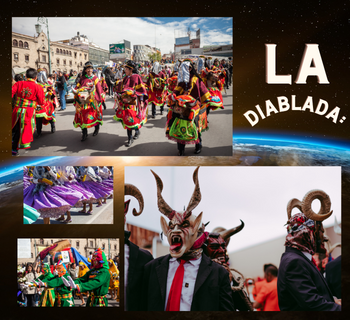
3. La Diablada: This Peruvian festival is believed to be a mix of Incan and Spanish traditions. It involves people dressing up as the devil and performing dances in the streets. It’s unclear why this tradition exists, though some believe it was a way to ward off evil spirits and bring luck to the community.
La Diablada, or the Dance of the Devil, is an ancient festival that has taken place in Peru for centuries. It is a mix of both Incan and Spanish traditions, with people donning costumes of the devil and taking to the streets to perform traditional dances. The exact origin of the festival is unknown, though some experts believe it was a way to ward off evil spirits and bring luck to the community. As the legend goes, the devil was said to be roaming the streets of Peru, looking to cause chaos and wreak havoc.
The people of Peru decided to take matters into their own hands and fight back against the devil by performing a dance that was believed to bring good luck and prosperity. The festival is celebrated in mid-August each year, and it is a sight to behold. People from all over Peru come together to watch the parade of people dressed up as the devil, some in full costume and others in masks and makeup. Once the parade comes to an end, the dancers begin to perform their traditional dances in the streets, while onlookers clap and cheer them on. The festival is a reminder of the strong cultural heritage of Peru and the importance of keeping traditions alive. It serves as a reminder of the power of faith, and how the people of Peru have managed to ward off evil spirits through the power of celebration and dance.
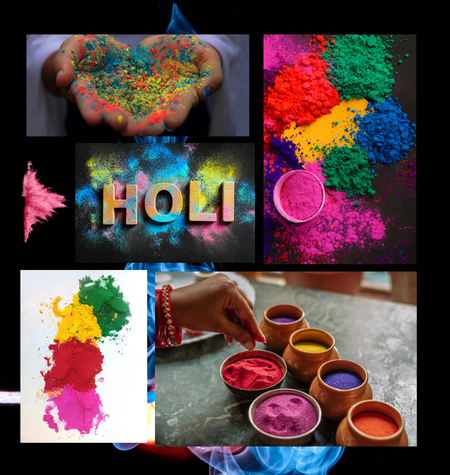
4. Holi: Holi is an ancient Hindu festival celebrated in India and Nepal. The origins of this festival are unclear, though it is believed to be derived from a legend involving the god Vishnu and the demon king Hiranyakashipu.
Holi is known as the Festival of Colors and is celebrated in many parts of India and Nepal. On the day of Holi, people gather together to celebrate the victory of good over evil and to welcome spring. People dress up in bright, colorful clothing and throw colored powder, water balloons, and water-filled pouches at each other. Holi is also celebrated for its spiritual significance. It is believed to be a time for spiritual renewal and purification. People gather in temples and pray to the gods and goddesses for health, wealth and peace. The most popular legend associated with Holi is the story of Prahlada, the son of the demon king Hiranyakashipu. Prahlada was devoted to Vishnu, and his father was angered by this and tried to kill him several times. In one of the attempts, he asked Prahlada to sit on a pyre with his wicked aunt Holika. Holika had a magical shawl that would protect her from the flames, but Prahlada was saved by Vishnu and Holika was burned to death.
This is why Holi is celebrated with a bonfire on the night before the festival. The festival of Holi is celebrated with much enthusiasm and joy all over India and Nepal. It is celebrated for two days and is a time for people to come together and celebrate the victory of good over evil. On the first day, people light bonfires and perform prayers and rituals, and on the second day, people play with colors and enjoy sweets and drinks. People also share gifts with each other and visit their friends and relatives.
5. The Running of the Bulls: Every year, thousands of people gather in Pamplona, Spain to take part in the Running of the Bulls, a tradition where people run ahead of a herd of bulls in the streets. Again, it’s unclear how this tradition originated, though some believe it began as a way to transport.
The Running of the Bulls is an annual event held in the city of Pamplona, Spain, where thousands of people gather to take part in a unique and thrilling experience. The event is widely known around the world and is one of the most popular festivals in Spain. The origin of the Running of the Bulls is unclear, though some believe it began as a way to transport bulls from the outskirts of town to the bullring where they will be used in the bullfighting events. Another theory suggests that the event began as a way to prepare the bulls for bullfighting events by making them more aggressive and energetic. Regardless of its origin, the Running of the Bulls has become an iconic event in Pamplona. Every year, people from all over the world travel to the city to take part in the festivities, including the Bull Run. On the morning of the event, the participants congregate in the main square of the city, the Plaza de Toros. At 8:00 am, a rocket is set off, signaling the start of the run.
The bulls are then released from their pens, and the participants have to make their way through the maze of narrow streets, running ahead of the herd of bulls. The run usually lasts around three to four minutes, and the participants must stay ahead of the bulls at all times. At the end of the run, the participants are required to enter the ring and secure their position, while the bulls are herded into corrals. The Running of the Bulls is a thrilling experience and a unique cultural event, and it is not to be missed. The event is extremely popular and draws a large number of visitors each year.
Visiting any of the five popular hot traditions listed in this article can provide you with an unforgettable experience.
They also provide a great opportunity to learn more about a culture and explore its customs. So, if you’re looking for an exciting and memorable experience, consider visiting one of these five hot traditions.