
Unlocking Healthcare Breakthroughs: The Role of Computational Intelligence in Medical Advancements
The Game Changer: Understanding the Impact of Computational Intelligence in Medicine
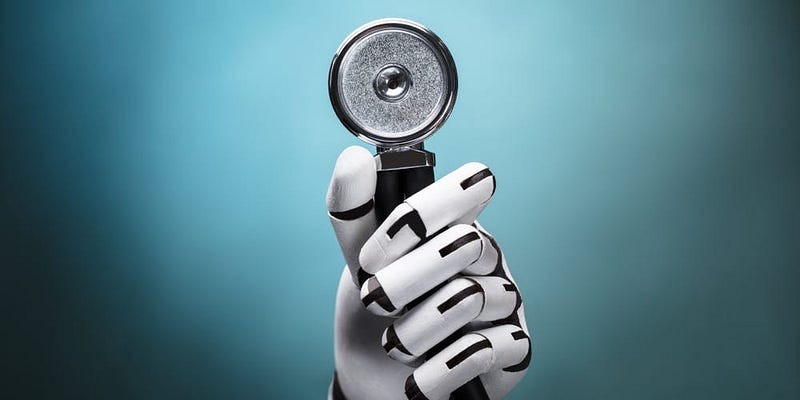
Welcome to the fascinating world of computational intelligence and its application in the medical field! It’s quite impressive how technology is revolutionizing the traditional approaches in healthcare. In this article, we bring you an in-depth look at how computational intelligence is being deployed to improve medical practices and patient care.
Don’t rush through; instead, immerse yourself in this intriguing journey, which is brimming with innovative algorithms, advanced machine learning, and smart healthcare systems. You’ll see just how computational intelligence is fostering robust and dynamic advances in the field of medicine.
- Descover how predictive modeling is streamlining the diagnosis process
- Understand the role of artificial neural networks in drug discovery
- Dive into the future of personalized medicine with genome analysis
“The intersection of computational intelligence and healthcare is not just shaping the future of medicine, but also redefining the way we perceive health and wellness in the modern age”
As you delve deeper into the realm of computational intelligence in healthcare, you encounter an array of promising innovations. These innovations are reshaping diagnostics, treatment planning, patient care, and our overall understanding of human health. Let’s explore a few key applications to understand exactly how computational intelligence walks hand in hand with modern medical practices.
Diagnostic Support:
Machine learning algorithms, a key component of computational intelligence, can aid health professionals in interpreting medical images, such as X-rays or MRIs, with enhanced accuracy and efficiency. They strategically process large amounts of data, identifying patterns and anomalies far beyond the capabilities of the human mind. For you, this could mean timely and more accurate diagnoses.
Prediction of Disease Progression:
Predictive analytics is another area where computational intelligence shines. By analyzing health data from a large population, these tools can predict potential risks and progression of diseases, even foreseeing outbreaks. As a patient, this means more personalized care with proactive measures to prevent or mitigate health issues.
Precision Medicine:
Another salient application of computational intelligence in healthcare is the development of a personalized health plan. By analyzing your genetic information, it’s now possible to craft treatments specific to your individual body chemistry. Imagine the potential — treatments that work for you and not just the majority.
Robotic Surgical Assistance:
Precision and steadiness are crucial during surgical procedures. With the application of computational intelligence, robotic surgical systems can conduct minimally invasive procedures with impeccable precision. This translates into less post-operative discomfort and quicker recovery times for you.
In Summary, the application of computational intelligence injects a degree of accuracy and personalization in healthcare that we’ve never seen before. By translating large amounts of raw data into meaningful, actionable insights, we’re paving the way for a future where everyone receives the personalized care they deserve.
Let’s delve deeper into how exactly computational intelligence nudges us towards a future with personalized healthcare. At its core, computational intelligence involves several techniques such as machine learning, data mining, and artificial intelligence (AI). But how does this translate to practical benefits in the medical field? Stick around, and we’ll reveal all.
The use of machine learning, for instance, permits us to sort vast sea of patient data and spot significant patterns. These patterns help doctors identify the probability of disease occurrence in one patient compared to another. Additionally, it could help doctors predict how individual patients may respond to a certain treatment plan based on historical data. Essentially, machine learning can influence life-saving decisions.
Furthermore, data mining allows us to go deeper and interpret the significance of these patterns. Let’s visualize this: Picture an intensely tangled ball of yarn — that’s your raw medical data. What data mining does is untangle the threads one by one. It not only finds hidden patterns but also interprets their significance — this thread equals a potential disease symptom, and that thread signifies a patient’s allergy to specific medications.
To top it all off, our favorite digital friend, AI, bridges the gap between these technologies and their application in real-time patient care. It automates the implementation process, ensuring that the valuable insights driven by machine learning and data mining are put into action without any delay. Imagine AI being the conductor of an orchestra, seamlessly synchronizing the outcomes derived from machine learning and data mining to create a harmony of personalised healthcare.
So there you have it. Each aspect of computational intelligence plays a pivotal role in enhancing healthcare delivery. Together, they work towards turning the dream of personalized healthcare from a mere concept to a tangible reality — changing the way we perceive and receive healthcare.
- Computational intelligence techniques, like machine learning and artificial intelligence, can analyze large amounts of medical data in seconds, faster than any human can.
- These technologies are capable of predicting potential health risks by recognizing patterns that might otherwise be overlooked by health professionals.
- Through precise diagnoses and personalized treatment plans, computational intelligence can significantly improve patient outcomes and satisfaction.
- Computational Intelligence can aid in developing more efficient drug delivery systems, which can increase treatment effectiveness and reduce side-effects.
- Telemedicine, an essential facet of digital healthcare, is facilitated by computational intelligence. This makes it possible for patients in remote areas to receive medical attention.
- These techniques also play a significant role in medical research, accelerating the discovery process for new treatments and therapies.
- Reducing healthcare costs is another benefit of computational intelligence, as it can streamline workflows, optimize resource allocation, and automate administrative tasks.
- With the advancements in wearable tech, computational intelligence can utilize real-time data for continuous patient monitoring and early intervention.
In conclusion, computational intelligence has become an invaluable tool in the realm of healthcare. Its transformative potential in medicine ranges from predictive diagnosis, personalized treatment strategies, and efficient drug delivery systems to facilitating telemedicine for remote patients. Furthermore, it leads the charge in expediting medical research and revolutionizing patient monitoring through wearable technology, all while reducing healthcare costs. Not only do these advancements foster improved patient outcomes and satisfaction, but also promise a future where quality healthcare is more effective, accessible, and personalized than ever. The application and continued development of computational intelligence in medicine is, therefore, indispensable for a healthier and better-informed world.
If you feel like this read hit home and it’s worth a coffee for this writer, :) You can buy me a coffee here. I’m forever grateful for your support. Cheers.


