
Unleashing Data Magic: The Power of Data Ingestion Layer
In the realm of data management and analytics, the Data Ingestion Layer serves as the bedrock upon which insights are built. This critical component orchestrates the collection, processing, and delivery of data, laying the groundwork for robust analytics and informed decision-making. Within this layer, various patterns and tools play pivotal roles, shaping the efficiency and effectiveness of data ingestion. Let’s dive into the intricacies of these key aspects that constitute the Data Ingestion Layer.
ETL Tools: Streamlining Data Flow
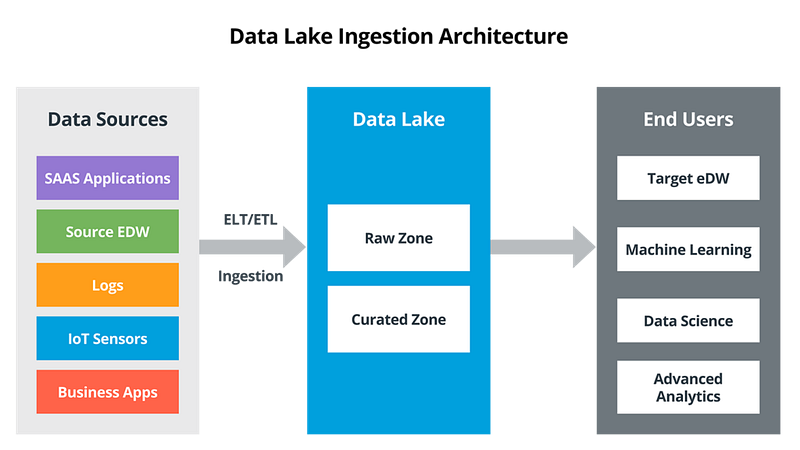
ETL (Extract, Transform, Load) tools stand as stalwarts in the data ingestion process. These versatile tools facilitate the extraction of data from multiple sources, transforming it into a usable format, and loading it into the destination systems or data warehouses. Popular ETL tools such as Apache NiFi, Informatica, and Talend streamline this process, offering functionalities for data manipulation, cleansing, and transformation, ensuring the data’s quality and consistency.
Multisource Extractor Pattern: Bridging Data Silos
In the contemporary data landscape, information resides across disparate sources. The Multisource Extractor Pattern emerges as a solution to bridge these data silos. This pattern integrates data from multiple sources, be it databases, APIs, files, or even IoT devices, consolidating diverse datasets into a unified format for seamless processing.
Just-in-Time Transformation Pattern: Agility in Data Processing
The Just-in-Time Transformation Pattern emphasizes on-the-fly data transformation, minimizing storage overheads and optimizing processing efficiency. Instead of pre-transforming all data before ingestion, this pattern performs transformations as data is ingested, allowing for faster insights without compromising on data quality.
Multidestination Pattern: Tailoring Data Delivery
In a diverse ecosystem, data often needs to be delivered to multiple destinations. The Multidestination Pattern facilitates this by enabling data to be routed to various endpoints simultaneously, ensuring that different departments or systems receive the specific datasets they require, whether it’s for analytics, reporting, or operational purposes.
Protocol Converter Pattern: Enabling Interoperability
Amidst a multitude of data formats and protocols, interoperability becomes crucial. The Protocol Converter Pattern acts as an intermediary, translating data between different protocols or formats. This pattern enables systems using distinct technologies to communicate seamlessly, facilitating smooth data flow across the entire ecosystem.
Real-Time Streaming Pattern: Embracing Instant Insights
In the era of real-time decision-making, the Real-Time Streaming Pattern takes center stage. This pattern enables the continuous flow of data, allowing for immediate processing and analysis as data streams in. Technologies like Apache Kafka and Amazon Kinesis exemplify this pattern, empowering organizations to harness actionable insights in the moment.
Conclusion: Orchestrating Data Dynamics
The Data Ingestion Layer embodies the nucleus of data-driven initiatives, harmonizing the intricate dance of data from diverse sources to meaningful insights. The amalgamation of ETL tools and diverse patterns — Multisource Extractor, Just-in-Time Transformation, Multidestination, Protocol Converter, and Real-Time Streaming — forms the backbone of a robust data ingestion strategy.
As organizations navigate the ever-expanding data landscape, understanding and harnessing the potential of these tools and patterns within the Data Ingestion Layer becomes paramount. By embracing these dynamics, businesses can unlock the true value hidden within their data, paving the way for informed decision-making and competitive advantage in today’s data-driven world.