
Unleash Your Productivity Potential: Say Goodbye to Procrastination With This Foolproof Tool!
Overcome a lack of motivation and procrastination.
(Want to read this story for free? Click this link.)
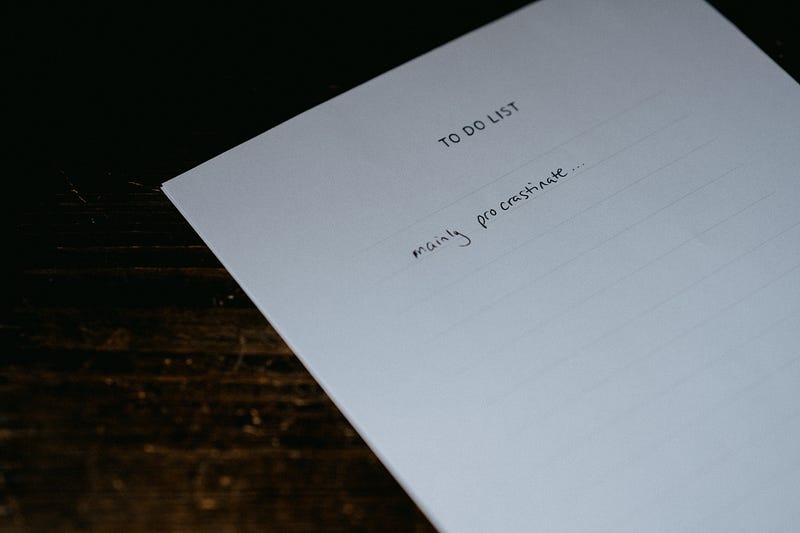
Allowing motivation to rule what we do, and more importantly, what we choose not to do, is the quickest way that I can think of to never reach your goals, do any work that requires real effort, and let your productivity, well, be nonexistent.
That’s why having ways to overcome the script playing in your head, saying, “I don’t feel like it," is essential to getting things done and maintaining a level of productivity in work and life.
When you are having trouble starting your work or a task, the quickest way I can think of to bypass the lack of motivation feeling is to just start. But if just starting was that easy, there would never be the hums and haws of procrastination that everyone deals with at one time or another.
So, when you are going through an “I don’t feel like it” moment or are just not feeling the tasks on your agenda, what do you do to still make forward progress??
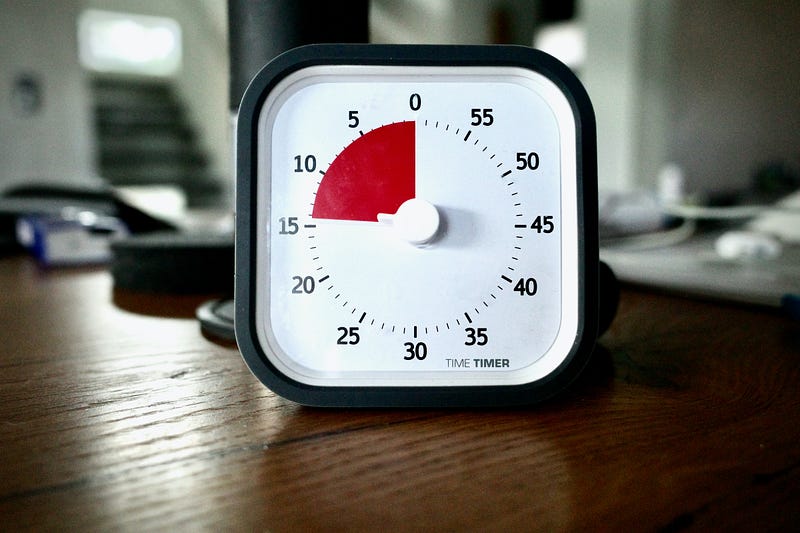
Simple: Grab a timer!
This is the most effective yet underutilized tool for dealing with procrastination and maintaining productivity.
There is only one rule that goes along with using the timer, and that is:
Once you press start, no if, ands, or buts, get started on your work!
You would be surprised at how quickly your brain switches from lacking motivation and procrastinating to working.
How Long Do You Set the Timer For?
The time you set your timer for will vary depending on what the task is.
I like the idea of the Pomodoro technique; however, I think 25 minutes isn’t enough time for most of my tasks and that taking a break, even for 5 minutes, is just a distraction from the work that I finally got myself to focus on. Also, working in longer time intervals lets you work in a flow state.
When deciding how long to set your timer, a good goal, especially for a work task, is to aim to work in a flow state.
Working In Flow
A flow state is often described as being “in the zone” and is when you are completely engrossed in the task at hand and all distractions from the world around you fade away.
There are no rules for a flow-state session; however, the optimal time for a session has been reported to be 90–120 minutes.
Flow is characterized by effortless attention on what you are doing and can lead to improved performance, problem-solving, and creativity. It is also associated with being intrinsically motivated and having positive emotions such as joy and satisfaction.
For all these reasons, my suggestion is to set your timer for 90–120-minute sessions while at work (or your home office).
Flow Breaks
Because you are working for longer periods of time and working in a flow state is actually taxing on brain cognition, longer breaks for mental recovery are necessary.
I go with 30–60 minutes when taking a break after a flow session. Completely disengaging from work is necessary. You can get out and go for a walk, talk with friends or coworkers, or, my preference, turn on a show for an hour.
Taking these breaks is necessary because overworking in flow for extended periods of time can lead to burnout, and without time to mentally recharge, your performance will be negatively affected.
All Other Tasks
Getting started on tasks other than at work can also be hindered by a lack of motivation, leading to procrastination too. Who really wants to do the dishes or clean the bathroom?
A timer is also helpful to get started on tasks at home. But a flow state is probably not the goal for these tasks, so you can choose to set the timer for whatever time you want!
Some ideas for choosing a time:
1. Aim for a quick start. Set the timer for 5–10 minutes. If you tell yourself you only have to work on the task for a short time, it does get you started and over the lack of motivation feeling, and there is no rule saying you have to stop when the timer stops. This quick start is just that—meant to get you over the hump of starting—but with a goal of finishing too.
2. Estimate how long you need to complete the task. Setting the timer for how long you think you need can actually be motivating in itself because you can see if you can beat the time.
3. How much time do you have available? If you only have a specific amount of time to devote to your task, set the timer for that. This can be helpful in using up time that might go to waste scrolling your phone or doing nothing because you don’t think you have time to start anything.
Final Thought
Whether it is setting a 10-minute timer to tidy up your house or a 90-minute timer to get into a flow state and do some deep work, a timer is an inexpensive and useful technique to just get things done. It helps bypass a lack of motivation and keeps you productive at work and home. So the next time you need a little help getting started, grab a timer or your phone, set it, and go!
Next Reads:
Follow me for more on productivity, habits, personal development, creativity, writing, and mindset. And on Twitter @mj_jens0
Join my email list to receive a weekly newsletter with tips, highlights, and extra content!