
Unfamiliarity With ‘Moats’ Is A Sure Shot Way To Lose Money In The Stock Market

Have you ever seen old castles and noticed that most of the majestic ones are surrounded by a water body?
Ever wondered why?
This water body is called a Moat.
As per the Wikipedia definition, a moat is a deep, broad ditch, either dry or filled with water, that is dug and surrounds a castle to provide it with a preliminary line of defense.
Why am I talking about moats, you’d ask?
Similar to the moats surrounding castles, companies/ businesses have economic moats surrounding them.
Identifying these can be your biggest unfair advantage when investing.
Think about Economical moat as a company’s competitive advantages that let it thrive in the turbulent market.

Characteristics of Moat
Let’s consider planning an attack on a castle.
One would have to cross the castle’s moat to attack it.
What did historical architects do to guard against these? They built them wide and deep.
Width
The width of an economic moat is the extent of a company’s competitive advantage.
A wide moat implies that a company has a significant edge over its competitors, making it difficult for them to enter or compete in the market.
Depth
The depth of an economic moat is the durability/ sustainability of a company’s competitive advantage.
A deep moat tells how long the company’s competitive advantage is likely to persist.
A one-liner:
As an investor, your goal should be to identify companies with a wider and deep economic moat.

How Companies Create Strong Moats
Companies that come up with better products and superior technologies are profitable early on. But, it is quite difficult for this to be sustainable.
Let’s look at ChatGPT by OpenAI.
A novel and great product that changed the lives of millions living around the globe.
Do you think that OpenAI has a strong moat?
If yes, I would disagree.
Google’s Bard, Meta’s LLaMA and hundreds of open-source LLMs will compete with it and reduce its profits in the long term.

Most people will emotionally (out of greed and FOMO) invest in such products but never consider the width of the surrounding moat.
Let’s learn next about what creates strong moats for companies.
Companies With Products With Perceived Higher Value
Many companies create products /services that their customers perceive to be of better quality/ higher value (although this may not be true).
Let’s consider LVMH Moët Hennessy Louis Vuitton, a French multinational holding and conglomerate specializing in luxury goods.
Some of the well-known brands under LVMH’s umbrella include:
- Louis Vuitton
- Givenchy
- Loewe
- Kenzo
- Moët & Chandon
- Christian Dior
- TAG Heuer
- Hublot
- Sephora
- Le Bon Marché
The company might be creating better products but its moat comes from its brand value.
Customers subconsciously think that these products are better than everything else available on the market.
These companies also allow customers to status signal through their products.
This allows these companies to thrive in both bear and bull markets as both rich and poor have the need to signal at all times.
That’s a huge wide and deep moat.

Companies With Strong Networks
‘Network effect’ refers to the phenomenon where the value of a product or service increases as more people use it.
Consider Facebook. It is almost impossible to create a social media network big enough if one wants to compete with it.
The same goes for Amazon & eBay.
The more buyers and sellers the network has, the more attractive it becomes to prospective users and the tougher it becomes for competitors to contend with.
This allows strong moat creation.

Companies With Products That Customers Can’t Switch Around Easily
Consider medical device manufacturers: Stryker and Zimmer.
Both of these produce artificial hip and knee joints.
Surgeons have to be trained on how to implant their products which requires an investment of time and money.
Also, they develop preferences for a particular implant in the process.
This makes switching from one company’s products to another painful.
The same goes for switching banks or switching Email providers.

Companies With Numerous Intangible Assets
Intangible assets are resources of economic value that are owned by a company, that are not physical in nature.
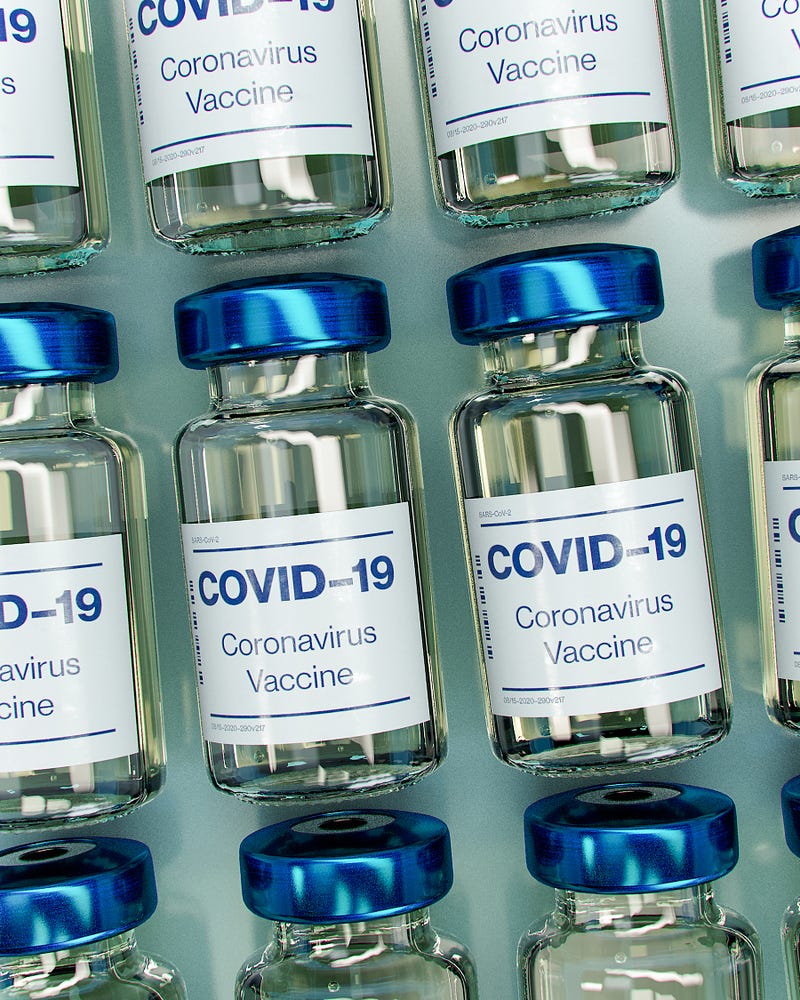
Consider Pfizer, a global pharmaceutical company that has a diverse portfolio of intellectual property (IP) and patents.
Some of these include patents for:
- COVID-19 vaccine
- Ibrance (palbociclib), a treatment for breast cancer
- Eliquis (apixaban), an anticoagulant medication
- Xeljanz (tofacitinib), a medication for treating rheumatoid arthritis, psoriatic arthritis, and ulcerative colitis
- Prevnar 13 (pneumococcal conjugate vaccine)
- Vyndaqel (tafamidis): a medicine for transthyretin-mediated amyloidosis
Such companies have wide (as pharmaceutical research is expensive and time-consuming) and deep moats (due to the above-mentioned reasons).
Companies That Achieve Economies of Scale
Economies of scale refer to the cost advantages that companies can achieve as they increase their production or operational scale.
As the production volume of a good or service grows, the average cost per unit tends to decrease.
This is due to:
- more efficient allocation of resources
- more effective use of fixed costs
- improvements in production processes
This leads to wider and long-lasting moats.
Walmart, Apple, P&G, Coca-Cola and Amazon are prime (no pun intended) examples of this.
Disclaimer: This article does not promote investment in the above- mentioned companies and is purely for educational purposes.
I hope that this article helps.
Thanks a lot for reading!
If you’re a beginner to Python or Machine Learning, check out my books below: