
Unerased
Overcoming my lifelong fear of taking space
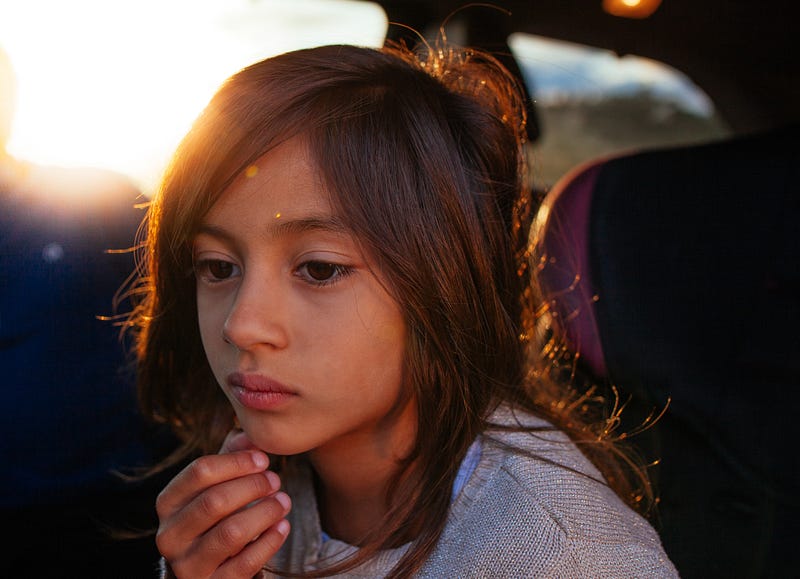
“She’s coming.”
My sister’s tone had an underlying urgency. She’s clearing the living room of plates and glasses, entreating me to help. Our daily ritual, getting a call saying she’s coming home and then scrambling around for the intervening 15-minutes trying to erase any sign of our own existence. Clutter was a trigger.
She came in a few minutes later with her characteristic energy of smoldering frustration. Her voice had an edge as she asked if we’d vacuumed. If we’d started dinner.
We’re stone-faced, answering yes in submissive tones. It didn’t matter. She’d find something else to blame us for before dinner was through. Whatever our transgression of the day was, it was just a cover. What she really blamed us for was being forced to live a life she didn’t want.
You don’t get upset. You don’t get angry. You go to school with a fever and a throat so sore you can barely speak. She has to work, so you can’t stay home.
You’re quiet. You obey. You do your chores. Chores are what you’re valued for, except for showing off to friends.
If your chores are completed, maybe you’ll be loved.
Don’t need. Don’t ask. Don’t make noise while she’s sleeping. Remember, she had a terrible childhood. You must always be compensating for that.
Don’t take up space, physical or emotional.
These are the messages I internalized from the age I could grasp them. I was a good student, at school and at home. I learned well.
My arm is injured in elementary school gym class. I don’t cry and I don’t tell anyone. I spend the day in throbbing pain. When I’m finally taken to the hospital that evening, the bone is broken.
Years later, at my part-time job, I am continuously sexually harassed. I tell no one, even the manager.
My post-college roommate asks why I’m always pretzeled into the smallest amount of space I can possibly take, making so little noise. “Who hurt you?” he asks, mystified as to why I like to be so inconsequential.
A few years later, I hire a therapist, but she’s far too probe-y. “I don’t like to talk about sad things. I like to be happy,” I tell her. When she won’t accept that, I fire her.
Family members die, two fast and one slow. I don’t feel feelings in public. I won’t make anyone uncomfortable.
I become the patron saint of self-appointed victims everywhere, willing them to be fulfilled with my belief in them, my support, and positivity. I’m mystified that I’m never able to make a change no matter how much energy I pour into them. I deplete myself in the process.
I live in the middle of a metropolis so I have a distraction whenever a bad feeling comes my way. I’ve seen all the movies, been to all the galleries, tried all the fusion restaurants. Who needs sadness when you can have Jamaican/Chinese?
April 2020, a month into a global pandemic. Life is cold and gray, and unremittingly quiet. All of my distractions and safety nets are gone. The heaviness in my chest won’t subside for days no matter how I try to anesthetize myself — Netflix, speaking to friends, going for a walk, reading.
“It’s okay to not be okay,” I tell myself out loud. Still, the tears won’t come.
I remember what a friend told me after taking a course on grief — that it won’t subside until you acknowledge its existence and let yourself feel it.
I’ve spent my whole life sublimating any sadness I’ve ever experienced. I don’t know how to feel it even as my breathing gets heavy.
I lie down and close my eyes. I focus on my breath, the way you’re supposed to. I will myself to let the emotions break the surface.
A lifetime of training is hard to undo.
The pressure starts in my throat. It slowly moves to my chest and then finally into the gut. I can feel the energy moving around inside me just as tangibly as you can feel wasabi slide down your throat. Instead of burning, it feels heavy.
“You’re okay. It’s okay,” I tell myself.
The sobs start tentatively and then get stronger. My tears are slow and stingy.
Being sad feels wrong. It’s my role to be strong and make people feel better. I can’t upset them. Other people are allowed to feel things, not me.
Other people matter, not me.
As the crying slows down, I feel the pressure fade. Within an hour, I start to feel lighter.
In the first few months of adjusting to quarantine, sadness becomes a regular companion. I notice the time I spend running away decreases with each episode. I’m getting to know my needs and starting to tentatively honor them.
When I see the people in my life again, I ask them all the same question: “What are you taking out of quarantine with you?”
Their answers are good. A feeling of gratitude. The realization that they need far less than they thought to be happy.
Some of them turn the question back to me. My answer is a lifetime in the making.
“The ability to take up space.”