
RACE|CULTURE
Understanding The Unspoken Language That Many Of Us Don’t Speak Up And Out About
Whether it be a look in the eyes, a tone of voice, a stare, posture, glare, or gesture some know what is truly being said

Even though political science was one of my core majors for my degree in social science, I have never cared much for in-depth political discussion.
Like many others, this began to change when Trump became president despite his infamous comment regarding women:
I wanted to puke when I found out he won.
The fact that he almost won AGAIN turns my stomach even more and is part of the reason I left the (un)United States.
Then came the recent Senate confirmation hearings that filled me with all kinds of mixed emotions, from pride to anger, to joy and sadness.
It was a ridiculous spectacle that was heightened by the fact that the latest Supreme Court nominee is a Black woman.
After discussing this with my good friend JA Vassili, she told me that she recently wrote a piece of short fiction that addressed her frustration over seeing too many white democrats being too silent in regard to Judge Kentanji Brown Jackon’s treatment during the hearings.
My favorite moment, aside from her actual confirmation, is when Senator Corey Booker spoke:
“You got here how every Black woman in America who’s gotten anywhere has done, by being like Ginger Rogers: ‘I did everything Fred Astaire did but backward, in heels,’” Booker said.
“It’s hard for me not to look at you and not see my mom, not to see my cousins — one of them who had to come here and sit behind you,” Booker said. “She had to have your back. I see my ancestors and yours.”
“Nobody’s gonna steal that joy,” Booker said in his speech. “Nobody’s taking this away from me.”
I also see my mom and other Black women I’ve known throughout the course of my entire life when I see Judge Kentanji Brown Jackson.
It makes my heart burst with exquisite reverie and at the same time ache with anguish because I have a good idea of the degree to which she has sacrificed, and the hardships she has had to endure to get to where she is- inwardly and outwardly.
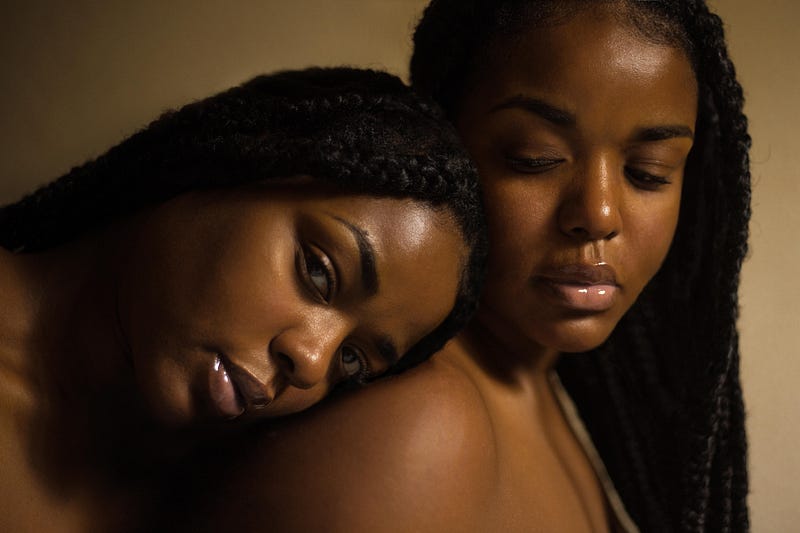
In doing some research on this topic, I was happy to find that the voices of Black women are being heard and reported.
Jordan Simpson, a 25-year-old aspiring lawyer in Valdosta, Ga., was excited to watch the Senate confirmation hearing for Judge Ketanji Brown Jackson, until Senator Ted Cruz’s line of questioning made her feel something else: discouraged.
The treatment of Judge Jackson in the hearing reminded Fentrice Driskell, a Democrat and a Florida state representative, of how white male students interrupted her, and rarely gave her the benefit of the doubt, when she was elected the first Black student government president of Harvard College.
For Black women in America, feelings of pride and hope over Judge Jackson’s nomination to the Supreme Court overlapped with pain and disgust as Republicans in the Senate Judiciary Committee questioned her this week on critical race theory and gender identity, and claimed that she was lenient toward people charged with possessing child sexual abuse imagery.
In the hearing’s stinging exchanges, some Black women said they saw the same hardly veiled discrimination that they have experienced at times in their personal and professional lives. They also recognized Judge Jackson’s response: the same steely endurance that they have tried to display through gritted teeth, even when under far less intense public scrutiny.
“Every sigh, every time her jaw tightens, every time her eyebrow raises a certain way,” said Jazzi McGilbert, 33, the owner and founder of Reparations Club, a concept bookstore and creative space in Los Angeles. “Every Black woman speaks that language.”
Back to the deafening silence by many democrats —
I was very happy to find an article, again in the New York Times, that goes into detail as to how people’s discomfort with speaking openly or publicly about race and racism is a serious obstacle when it comes to standing up for justice and fairness.
Democrats are still debating an enormously complex and weighty topic: how to talk about race in America.
It’s a subject many Democrats would rather avoid, according to strategists and activists who expressed a range of views — and emotions — over days of conversations about Jackson’s rough treatment during the confirmation hearings last week.
“When issues of race come up, Democrats get scared,” said Rashad Robinson, the president of the nonprofit group Color of Change. He lamented that President Biden and Senate Democrats had not more forcefully condemned Republicans for what he said were racist attacks on Jackson’s record and identity.
“The White House has to engage on these fights,” Robinson told us. “Republicans will weaponize race and racism to achieve their goals, but Democrats don’t elevate racial justice.”
There is a writer here on Medium that can possibly help you learn more about and reflect on these issues from a white person’s perspective, in case it helps you feel more comfortable or it’s easier to relate.
Tim Wise Anti-racism educator and author of 9 books, including White Like Me and, most recently, Dispatches from the Race War (City Lights, December 2020)

We are all hurtling along through space on this same third rock from the sun.
I know we can do better, so let us.
JA Vassili’s story:
The guy looks at Benny, looks at me, and says, “Why doesn’t he make a fresh pot since all he’s doing is drinking coffee on his boss’s dime?”
Benny looks at the guy and says, “I am the boss, Mister.”
The guy looks at Benny and says, “You’re a n###.”
All the customers in the line kind of gasped and everyone moves around like they’re ants whose hill got kicked, and I didn’t know what to say. Benny just stands there with his cup of coffee in his hand. Then he puts his coffee down. Then he takes off his bandana and his apron.
A few more of my stories on these issues:
Your $5 per month membership allows you to read unlimited stories, contributes to me earning half of that and opens the door to you earning money (I made almost $3,000 in 6 months) on Medium as well.


