Understanding the Self-Attention Mechanism in Chat GPT
Chat GPT, also known as GPT (Generative Pre-trained Transformer), is a large language model developed by OpenAI. It is based on cutting-edge artificial intelligence techniques and has revolutionized the field of natural language processing (NLP).
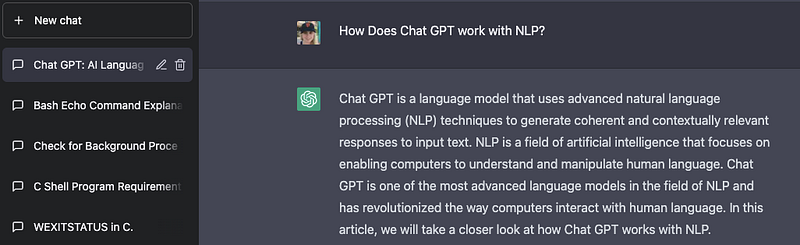
What is Chat GPT?
Chat GPT is a type of language model that can generate coherent and contextually relevant responses to input text. They trained it on large amounts of data and have the ability to understand the structure and nuances of language. Chat GPT is based on the Transformer architecture, which was introduced by Google in 2017. The Transformer architecture uses self-attention mechanisms to allow the model to focus on different parts of the input sequence when generating output. This approach has been highly successful in NLP, and Chat GPT takes it to the next level.
How does Chat GPT work?
Chat GPT works by training on massive amounts of text data and using that data to generate new text. The training process involves feeding the model input sequences and training it to predict the next word in the sequence. They repeated this process millions of times, with the model adjusting its weights to improve its predictions. Once the model is trained, it can be used to generate text by providing it with a prompt or starting sequence.
The self-attention mechanism used in the Transformer architecture is a key part of how Chat GPT works. Self-attention allows the model to attend to different parts of the input sequence when generating output. This means that the model can focus on the most relevant parts of the input when generating a response, rather than generating a generic response based on the input as a whole.
Another important aspect of how Chat GPT works are its use of context. The model is trained on a wide range of text data, which allows it to understand the context of the input sequence and generate a response that is contextually relevant. This context is important for generating natural and coherent responses, as it allows the model to understand the meaning behind the input and generate a response that takes that meaning into account.
What material is Chat GPT based on?
Chat GPT is based on a massive amount of text data, which is used to train the model. This text data comes from a wide range of sources, including books, articles, and websites. OpenAI used a variety of techniques to gather and clean the data, ensuring that the model is trained on high-quality text.
The size and diversity of the text data used to train Chat GPT are key to its success. The model has trained on over 8 million web pages and books, which gives it a broad understanding of language and allows it to generate contextually relevant responses. The diversity of the data is also important, as it allows the model to understand different styles of writing and different types of language use.
One important aspect of the text data used to train Chat GPT is that they preprocessed it to remove any identifying information. This means that the model is not trained on any specific person’s writing style or preferences. Instead, it is trained on a broad range of text data, which allows it to generate responses that are unbiased and contextually relevant.
Final Thoughts
Chat GPT is a powerful language model that is based on cutting-edge artificial intelligence techniques. They trained it on massive amounts of text data and uses self-attention mechanisms to generate contextually relevant responses. The success of Chat GPT is due in part to the size and diversity of the text data used to train it, as well as the use of context in generating responses. Chat GPT has revolutionized the field of natural language processing and has many potential applications, including chatbots, language translation, and content generation.
—
If you enjoyed this article, please consider joining Medium by clicking on this link. Thank you.