
Understanding the Modern Middle East
Brief context on the region.
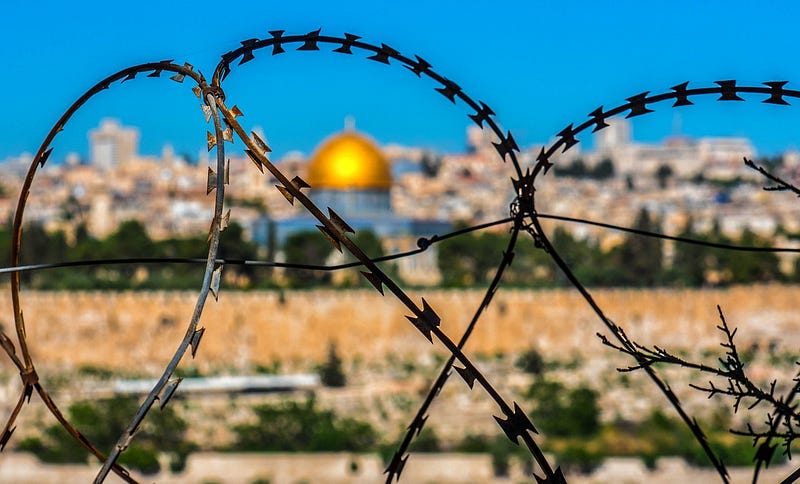
Following the end of the First World War the defeated Ottoman empire was dismantled and partitioned into arbitrary nation states which have become a source of conflict and tribulation both within the region and the broader world.¹ ² This current modern “middle east” was the result of varying treaties, political powers, and plans. During the events leading up to the partition there were three famous treaties that highlight the conflicting political aspirations and promises of the British empire and how the region was shaped into its present form. These notable treaties include the McMahon Hussein correspondence, Sykes–Picot Agreement, and Balfour Declaration. Other important determining factors in the final division of the region also include the treaty of Sevres, the treaty of Lausanne and the League of Nations mandate. In the following essay I’ll briefly highlight how the Ottoman empire was divided up by these conflicting political entities, goals, and treaties.
The first treaty to help understand the context of the partition of the middle east following World War I is the McMahan Hussein correspondence. During the war, British Intelligence agents colluded with Arab power bases inside Arabia and the Levant to aid them in their war with the Ottomans. Two notable Arab powers that were engaged by the British for support against the Ottoman Empire were Ibn Saud and Sharif Hussein. In exchange for loyalty to the British war effort and rebellion against the Ottoman these powers were promised an Arab State and political power.³ To put things in modern context Ibn Saud became the ruling Monarch of Saudia Arabia⁴ and Sherif Hussein’s family became rulers of British mandates such as Iraq and Jordan.⁵ The details of the pledges between Great Britain and Sharif Hussein are detailed in the McMahon Hussein correspondence. ⁶ ⁷ The importance of the treaty is it provides evidence for the unfaithfulness of the British by allocating the land believed to be promised to Hussien to other pollical entities such as the French in Syria and the Zionist in Palestine.
Evidence of the British’s duplicity in its promises made to Sharif Hussien is found in the Sykes-Picot agreement. The document contains a secret agreement between Allied Powers to divide the regions of the middle east into territories administered by French and British control.⁸ ⁹ The document was important in shaping the modern middle east because it became the forerunner of the Western influence and interference in the modern middle east. This document provides evidence of British objectives to secure their own interest in the region despite making promises of an Arab State to Sharif Hussien.¹⁰
The final of the three famous documents that are important in understanding the varying political ambitions and promises of the British empire and in the shaping of the Modern middle east is the Belford declaration. The Belford declaration is a letter sent to Jewish Zionist leader Lord Rothschild from British statesman Arthur Balfour. In contrast to the promise of an Arab State in the region, in the letter the British pledge to create a Zionist nation in Palestine.¹¹ ¹² In response to the implications of British and foreign power rule in Palestine, Sherif Hussein’s would refuse to sign the Treaty of Versailles at the end of the War and discontinued his cooperation with the British.¹³ ¹⁴Ibn Saud with British support would go on to defeat Hussein and gain control of the Hijaz while Hussein was exiled to Cyprus.¹⁵ ¹⁶
Two more treaties that were important in the final decisions that formed the modern middle east were the treaty of Sevres followed by the treaty of Lausanne.¹⁷ These two treaties were signed as the end of World War I and resulted in the official dismantling of the Ottoman empire and the confiscation of its remaining territories.¹⁸ Following the treaty of Sevres, France and Great Britton divided the regions of the former empire amongst themselves in accordance with the stipulations of the Sykes-Picot agreement. Although, The Treaty of Sevres was never fully enforced due to the success of the Turkish war of independence. and was replaced with the Treaty of Lausanne in 1922. The final treaty differed in preserving key areas of Turkish Identity and failing to reach the ambition of a Kurdish State as outlined in the treaty of Sevres.¹⁹ ²⁰
The last treaty to be discussed is the Treaty of Versailles which led to the creation of the League of Nations mandate that transferred the control of middle eastern territories into the control of the Allied powers.²¹ In this mandate system artificial states were created that were administrated and overseen by the foreign powers of the United Kingdom and France. The system included patronizing ideas that the local populations were not capable of autonomous rule.²² The system based on repressive beliefs and laws led to many of the conflicts and instability that has characterized the region up until current times.
In conclusion, the modern middle east has been shaped by all the differing plans, promises, and treaties enacted by the allied powers. The treaties were marked by fraud, failed promises, and intrusive policies. All these factors contributed to formation of the modern middle east.
Bibliography
[1] “New Frontiers: The Middle East Following WWI” (TVOntario and Mideast Productions, Ltd., 1984).
[2] The Great War, “How the First World War Created the Middle East Conflicts (Documentary),” December 8, 2023, https://www.youtube.com/watch?v=tjnBmH8b0Ko.
[3] Ansary, Tamim. Destiny Disrupted: A History of the World Through Islamic Eyes. New York, United States of America: PublicAffairs, 2009.
[4] The Editors of Encyclopaedia Britannica, “Saud Dynasty | History, House, & Royal Family,” Encyclopedia Britannica, December 27, 2023, https://www.britannica.com/topic/Saud-dynasty.
[5] The Editors of Encyclopaedia Britannica, “Hashemite | History, Dynasty, & Facts,” Encyclopedia Britannica, November 28, 2023, https://www.britannica.com/topic/Hashimite.
[6] “The McMahon-Hussein Correspondence 14 July 1915–10 March 1916,” Press release, n.d., https://www1.udel.edu/History-old/figal/Hist104/assets/pdf/readings/13mcmahonhussein.pdf.
[7] The Editors of Encyclopaedia Britannica, “Hussein-McMahon Correspondence | History & Map,” Encyclopedia Britannica, March 10, 2010, https://www.britannica.com/topic/Husayn-McMahon-correspondence.
[8] Text by Scott Christianson; Interactive by Chris Heller, “The Origins of the World War I Agreement That Carved up the Middle East,” Smithsonian Magazine, November 9, 2015, https://www.smithsonianmag.com/history/sykes-picot-agreement-180957217/.
[9] “The Sykes-Picot Agreement (1916),” Copyright 2024, n.d., https://www.jewishvirtuallibrary.org/the-sykes-picot-agreement-1916.
[10] Al Jazeera, “A Century on: Why Arabs Resent Sykes-Picot,” n.d., https://interactive.aljazeera.com/aje/2016/sykes-picot-100-years-middle-east-map/index.html.
[11] Admin and Admin, “The Balfour Declaration — Balfour Project,” Balfour Project — Contributing to Justice, Peace and Reconciliation in the Middle East (blog), May 31, 2023, https://balfourproject.org/the-balfour-declaration/.
[12] Balfour Project. “The Contradictory Promises — Balfour Project.” Balfour Project — Contributing to Justice, Peace and Reconciliation in the Middle East, October 29, 2020. https://balfourproject.org/the-contradictory-promises/.
[13] “A Matter of Principle: King Hussein of the Hijaz and the Arabs of Palestine on JSTOR,” Www.Jstor.Org, n.d., https://www.jstor.org/stable/162371.
[14] The Editors of Encyclopaedia Britannica, “Hussein Ibn Ali | Sharif, Biography, History, & Facts,” Encyclopedia Britannica, January 1, 2024, https://www.britannica.com/biography/Hussein-ibn-Ali.
[15] Nono Umasy, “Saudi Conquest of Hejaz | Map and Timeline,” n.d., https://history-maps.com/story/History-of-Saudi-Arabia/event/Saudi-conquest-of-Hejaz.
[16] Martin Strohmeier, “The Exile of Husayn b. Ali, Ex-Sharif of Mecca and Ex-King of the Hijaz, in Cyprus (1925–1930),” Middle Eastern Studies 55, no. 5 (May 7, 2019): 733–55, https://doi.org/10.1080/00263206.2019.1596895.
[17] Nick Danforth, “Forget Sykes-Picot. It’s the Treaty of Sèvres That Explains the Modern Middle East.,” Foreign Policy, July 23, 2019, https://foreignpolicy.com/2015/08/10/sykes-picot-treaty-of-sevres-modern-turkey-middle-east-borders-turkey/.
[18] The Editors of Encyclopaedia Britannica, “Treaty of Sevres | Definition, Terms, Significance, & Facts,” Encyclopedia Britannica, December 19, 2023, https://www.britannica.com/event/Treaty-of-Sevres.
[19] “The Treaty of Sevres,” n.d., https://historylearning.com/modern-world-history/treaty-of-sevres/.
[20] The Editors of Encyclopaedia Britannica, “Treaty of Lausanne | Summary, Terms, & Facts,” Encyclopedia Britannica, December 14, 2023, https://www.britannica.com/event/Treaty-of-Lausanne-1923.
[21] The United Nations Office at Geneva. “The Covenant of the League of Nations | The United Nations Office at Geneva,” n.d. https://www.ungeneva.org/en/about/league-of-nations/covenant.
[22] Karl Yambert, The Contemporary Middle East: A Westview Reader (Westview Press, 2012).