
Understanding the Metaverse
A Multiverse Of Metaverses
Metaverse suggests going beyond or transcending the universe.
We cannot say what the Metaverse will look like as it has not yet materialized in form.
We still find online MMO games and platforms that did not reach their full potential (like Second Life), social media with gamification, and VR features that failed to meet expectations.
Augmented Reality (AR) is rapidly evolving, already finding a use case in multiple fields.
The above technologies combined in a unique, user-friendly, and addicting approach will become the Metaverse. Or, “a” Metaverse, since most possibly there won’t be only one.
Perhaps the format that beats the rest will claim the Metaverse name.

The Rise Of The Metaverses
Almost every article on the subject, refers to the Metaverse as the new internet. The news acknowledges the Metaverse as an isolated technology that would be standing alone but this is not exactly right.
It is often falsely presented as an infrastructure network and with the assumption there will only be just one Metaverse!
The internet is a communications technology that connects the world in a visual and audio approach. It needs infrastructure, though. The Metaverse will just run on top of the internet and the existing infrastructure.
It doesn’t need extra fiber optic cables installations,routers, and ISPs managing traffic. Quite possibly the only required extra hardware will be a VR set which in the future will also be connected to the internet with 5G networks.
We can use a desktop computer even for 10–15 hours. Are we able to do the same with a VR set every day?
Even the VR headset won’t be necessary but useful for a full experience of the 3D universes.
Before the Internet we were already connected with audio telecommunications and already using computer technology. The internet combines these two technologies and connected us in visual form as well.
The Metaverse will be a 3D world delivering interoperability. A platform where email services, banks and any kind of platforms will connect, and depending on each Metaverse. Cryptocurrencies, Web3 and NFTs will also flourish in the Metaverse.
As Facebook wasn’t the only social media available, the same will be with the Metaverse. There will be plenty of them.
in its beginnings it will present a life-simulation platform similar to “Second Life” with various options to select which game to play by entering a certain zone.
However as it grows the metaverse will include additions that will eventually integrate most of the internet domains, operating inside a 3D world.
Decentraland
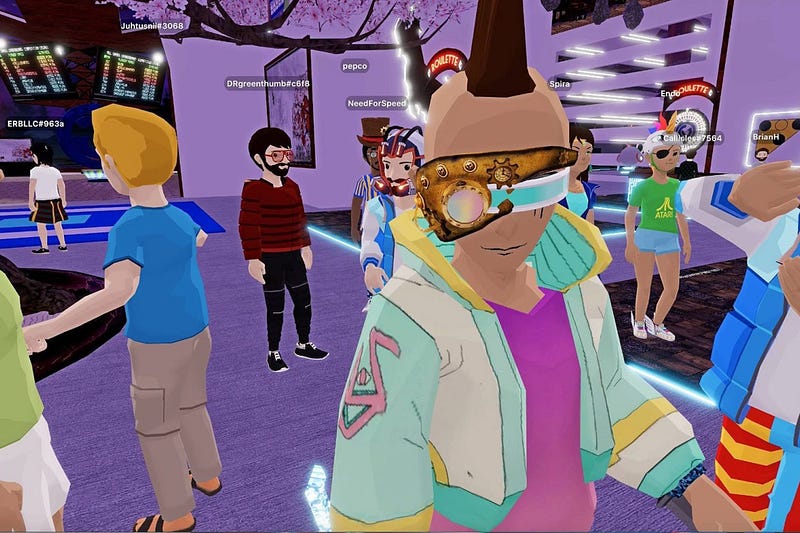
Decentraland is a crude Metaverse. Probably it won’t be representative of what the future has in store for us, though.
After years of development, Decentraland is not progressing as much as initially expected. The team behind it had plans for VR support, but scrapped them or delayed.
This 3D world partially uses the Ethereum blockchain to transmit transactions of NFTs, such as items, avatars, usernames, and land. It is a Web3.0 platform (website) that connects with various networks using the Metamask wallet. It doesn’t use a blockchain to operate, but the 3D Universe of Decentraland is running on centralized servers. It won’t be possible to have any platform running entirely on a blockchain at least for a while.
A Multiverse of Metaverses
There will be plenty of metaverses, not just one. Apple, Google, Nintendo, Ubisoft, and almost every gaming corporation will try to create their version of the Metaverse.
It will eventually be a Multiverse of Metaverses, and the public will select which will be worth more. Maybe they will all be connected together and we will be jumping from one Metaverse to another without much hussle.
The Metaverse is not another layer on top of the internet. It is not a communications technology either, though. It is a combination of technologies that we already have available (a 3D world with avatars, social media, email) added with anything that could interoperate with this virtual world (e-banking, trading platforms, entertainment, online concerts, movies, theaters).
Moreover, it is supposed to contain technologies that have not yet evolved to the degree they can support it. AI is an example, a technology that has progressed remarkably, but probably not to the extent it can assist the Metaverse yet.
Ready Player One
The movie Ready Player One is possibly what the gaming industry should be aiming for. Ready Player One gives the perfect example of what a Metaverse might be, although it focuses too much on the gaming factor.
Inside a Metaverse, users can work from home or have a relaxing time hanging with friends at an online café, visit entertainment locations that could be free or asking for payments, and this is just a few of the possible interactions we will find.
There are endless possibilities, and this was the reason Meta uses the infinite symbol as its logo.
Facebook’s vision:
In Conclusion
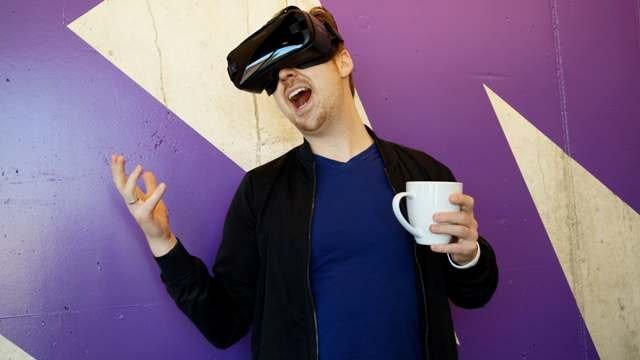
VR/AR will be a central point in the concept of Metaverse. However, there are fundamental technological difficulties for this concept to succeed in the near term.
Technology is rapidly evolving, and perhaps we may find a different Metaverse, perhaps one with the use of hologram screens instead of the LCD/LED or VR technology we enjoy today.
A Metaverse is not a new communications system, and it will certainly not replace the internet as the media suggest but will use the internet without requiring special infrastructure.
After Facebook disclosed its rebranding into Meta and its plans of building the Metaverse, we should expect new announcements from the rest industry leaders.
There will be many more attempts since the concept, as theoretically discussed so far, seems to have unlimited possibilities and it certainly can create a vast digital economy.
Equally important is the inevitable use of NFTs in any Metaverse. The protocol of NFTs provides the absolute right of ownership for digital assets and presents one of the best developments the blockchain/cryptocurrency industry has produced so far.
The era of the gaming/developing corporation owning every digital asset in a platform will soon be over. The entertainment sector must acknowledge the fact it is selling individual rights of digital property to its customers. Only then a real virtual economy in the entertainment and gaming sector can reach its maximum potential. The Metaverse will represent real life conditions, so it is better for all participants to offer digital ownership rights to the users.
Platforms:
● read.cash ● noise.app ● Cashrain ● LinkedIn ● Twitter ● Me.dm ● Medium ● YouTube
Medium Membership:
Your membership fee directly supports Pantera and other writers you read. You’ll also get full access to every story on Medium.
Originally published at https://read.cash.


