Understanding the meaning of Secularism in the light few recent events across the globe
Discussing the definition, various arguments for and against secularism, its relevance and models. Politics, religion have been the centre of discussion post-Ayodhya, Hagia Sophia, Islamisation in Europe, Riots etc.
Let us find out the answers to 5W and 1H regarding Secularism and how is it being practised across the globe.

We all know that India is a secular country. How? The Preamble of the Indian constitution says so. But Secularism and Socialism was added only in 1971 and not by the constituent assembly.
Although secularism is in the preamble, there is no definition of the term secularism in any of India’s law book. We are quite familiar with the genocide of Jews in Nazi Germany, the oppression of minorities in Bangladesh, Israel, Pakistan, Sri Lanka, Bhutan, etc. The suppression of Uighurs in China, and the anti-minority sentiments across the globe. Even the recent incidents in New Zealand and Sweden is something we can all relate to.
What is secularism?
Essentially from what we know and we think, we take it as “The separation between the church and the state.” This is nothing but a western definition, which propped up during the American and later in the French revolution and most of the countries adopted only after say in the 20th century. Despite that many states like the USA still allows the influence of the church in multiple factors, for example, US president can take the oath on the Bible, which you can say as nothing but a mockery of secularism or the system. Some theorists argue that secularism means tolerance and peaceful coexistence of all religions, while others claim that it is treating all religions equally by the state. (What is your definition of secularism?)
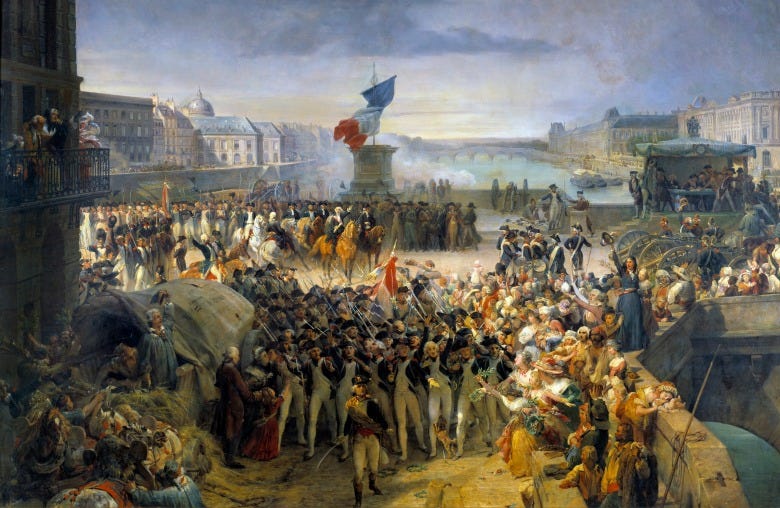
The church had an influential role in the state in the western world, especially Europe. Even today, Vatican and Pope stands as an influence player in the international sphere.
Secularism today, more broadly stands as Equality before the law, non-discrimination on the basis of religions, equal treatment, fairness and the respect of dignity and choice of each individual. Secularism today is considered to be the main yardstick of modernity.
Secularism legally defines the relationship between the state and the religion, the religion and the individual and thus relation between the society and religion.
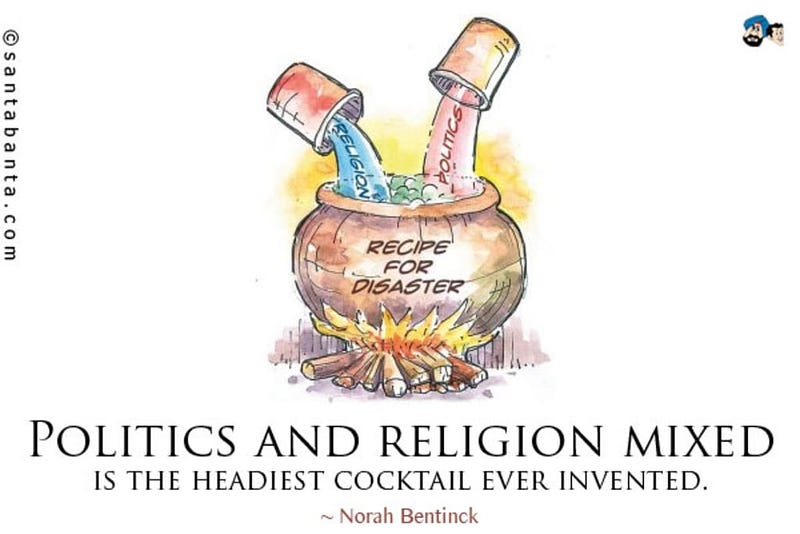
We had already discussed the infinite cycle of dependency between religion and politics and how religion has been misleading politics and politics destroying religions. Majority vs Minority has destroyed secularism in different countries and now we will discuss various forms of secularism across the globe, also focusing on the Indian context, whether it still exists/not-exists, worked/not-worked etc. Since the majority of the countries view the citizens as a pool of individuals rather than their religion, secularism has its significance in the modern democracies.
Read the prerequisite to this article-
Why Secularism?
Its often discussed why we need to protect secularism, but we often don’t actually know what exactly is to be protected and why is it so.
In the past, as we know, we didn't have many states. There were a couple of quasi-states and religion itself was the ruler. Later, the kings or emperors themselves were the default protectors of religions. Eg- we had the Khalifa ruling the entire Islamic caliphate, Pope ruling Christain empire in Europe. Today we have proper theocratic states which adopt religious laws and culture in the nation’s public policy. Eg- Saudi Arabia, who is the head of Sunni Islam, Israel the head of the Jewish world, the Vatican the head of Christain world and Iran, the head of Shia world.
- The link between states and religions have been toxic and often one-sided. The religion the state favoured triumphed and others were left off.
- Majority vs Minority completion it was always there. We know what happened in Nazi Germany, where the Jewish minority had faced massive discrimination and genocide.
- The requirement of minority rights and privileges- Certain groups do require state-supported protection. For that, the state can never be partisan with anyone.
- Pluralistic society thrives on diversity, equality and tolerance. The state is responsible to give the best of it can to the population. This is only possible if the state is non-partisan and gives equal respect to all groups.
- Damage from inter and intra conflict between religions have destroyed many states and societies, eg- Syria, Yemen, Afghanistan, Iraq etc. Except for Syria, all are theocratic states and religion or sects had a very important role to play in escalating the conflict.
- Religion by default is fundamentally discriminatory, promotes inequality and sectarian conflict. So, we need reasonable and rational restrictions.
- Each religion has different rules, personal laws, etc. A country cannot have different laws for different people, which will create legal disparity. eg TTT, was discriminatory against Muslim women, which is unequal to the divorce rights of Hindu women.
- Secularism promotes the idea of the fact religion/religious practice must not threaten health, morality and public order. eg- Practices like FGM, Sati, etc can be banned.
- The rise of religious extremism, terrorism and divisive ideas have proved to us that this world needs secularism as state policy and not a theocracy.
Pakistan is the only country to be formed on the basis of religion.
Why people oppose secularism?
- Generally, people do raise the objection against the majority and minority in religious concept. They argue that the state shouldn't give preference to any one religion, and all should be considered equal in a secular country.
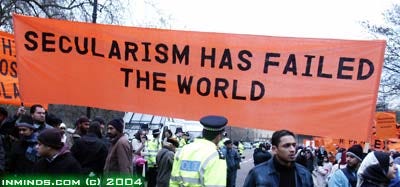
- Freedom of religion is a subjective concept. There are people who feel that secularism often restricts one’s freedom of practice of religion. eg- Muslims in Europe claim that banning burqa and headscarf threaten their freedom of religion/faith.
- There is a lot of conflict between what extent can the government interfere with the matters of religion. We have seen that in multiple cases especially Sabarimala temple case, where there was a massive outrage by the religious organisation against the verdict as well as the debate- on what extent can the government force a ban on religious practice.
- On what extend can the do the positive distinction between various religion and religious practise? For eg- persecuted minorities need special care, but what about majority and those communities who have been well off throughout history. Eg- Uighurs have had a history of persecution in China, but we can understand Buddhists in China are also minorities, but Uighurs need special care.
- Majority of modern-day laws, practices, democracy liberalism, secularism have European origin or even American, to apply those principles elsewhere which is very much different than Europe like Asia, which is diverse, unlike homogeneous European nations.
- Secularism paves way for blasphemy, which hurts and paves way for hate speeches and crimes against certain communities. For eg- Blasphemy is not legal in Europe, and there are politicians who do hate speeches, burn religious texts in the name of secularism. Is this justified?
What do you think of these arguments?
Ambiguous cases
- Should a secular country give holidays for religious functions? Like Christmas and eid?
- Should the governments ask for your religion while filing form/creating data for govt. schemes, project, school admission, jobs etc?
- Should taxi drivers/bus drivers etc keep symbols like cross, idols etc which is meant for public transport?
- Should you be wearing traditionally accepted clothes for govt jobs/institutions rather than formal attire?
- Giving subsidies for pilgrimage by the govt? Controlling places of worship and heritage sites by the government is justified or not?
These are few cases for secularism, where different people have different answers and these cases differ pretty much across the globe. So let us dive into various models of secularism and what all they offer.
French Secularism Model
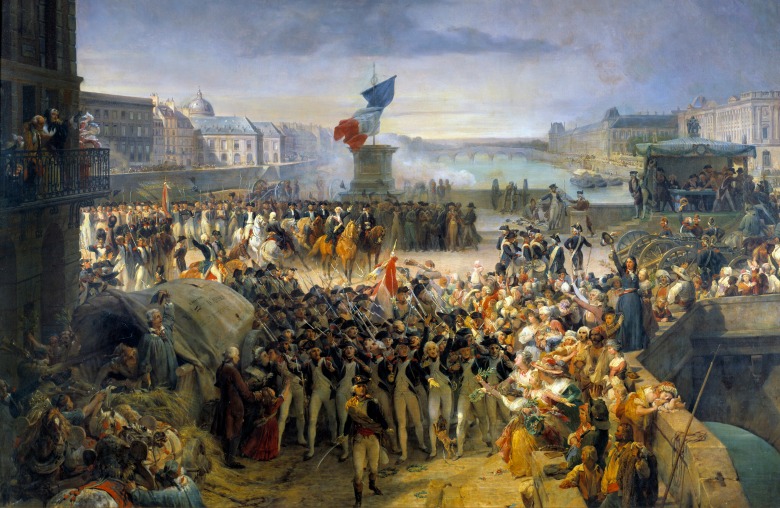
It is also called as laïcité in French and popular state policy. Article 1 of the French Constitution prevents religious involvement in government affairs. It designates France as the Secular Republic. It also prevents the state’s involvement in religious matters as well. Law of separation of churches from the state was enacted by the Republican party of France in 1905. However, this law is not applicable to the French provinces of Alsace and Moselle, because these provinces were returned back to France from German control only after WW1.
As per wiki, French secularism is said to have been based on freedom of religion and thought.
As of today, French politicians are prohibited from speaking anything on religious matters. In 2004, a controversial law was passed where Religious symbols (burqa, cross, turban etc) will be prohibited from Schools. There are no community prayers in schools and even the vacations like Easter and Christmas are given as Spring and Winter vacations respectively.
Conservative Muslims in France claim that it is inappropriate to force people not to wear head scarfs while others claim that this is a stand against the oppression of women and is a matter of public security. It is believed that this practice will help gender equality and secularity. There were a couple of protests in France where people are opposing it, saying that this has sparked violence in the country in 2015 and so on. Also, it is to be noted that, 2015 was the year when a deadly terrorist attack took place in Paris and Nice, and a time when radical Islam was at a peak in France.
The French model of secularism is quite a masterpiece and is followed in Quebec province of Canada, Switzerland and Turkey.
Ataturk’s Secularism (Kemalism)
Kemal Ataturk was the first dictatorial head of state of the Republic of Turkey after WW1 when Ottoman empire broke up. Ataturk brought secularism into this conservative Islamic population, controlled most of the Islamic population. To him, secularism was not about distancing from the church, but getting involved and intervene it to suppress religions and free the society from archaic practise and liberate the population into modernity.
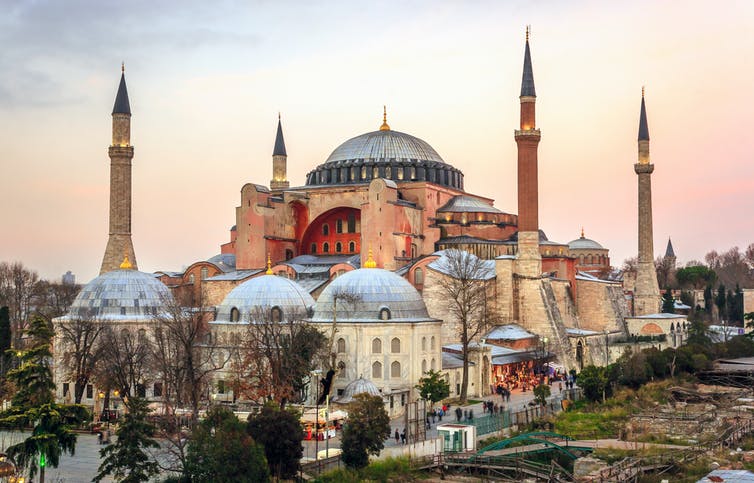
He himself had changed his name from Musthafa Kemal to Kemal Pasha Ataturk which is a secular name. He has established a strong foundation for modern Turkey. He also spearheaded the move to convert the mosque “Hagia Sophia” into a museum., which is now the primary landmark of Turkey. He replaced Sharia law with European Civil code.
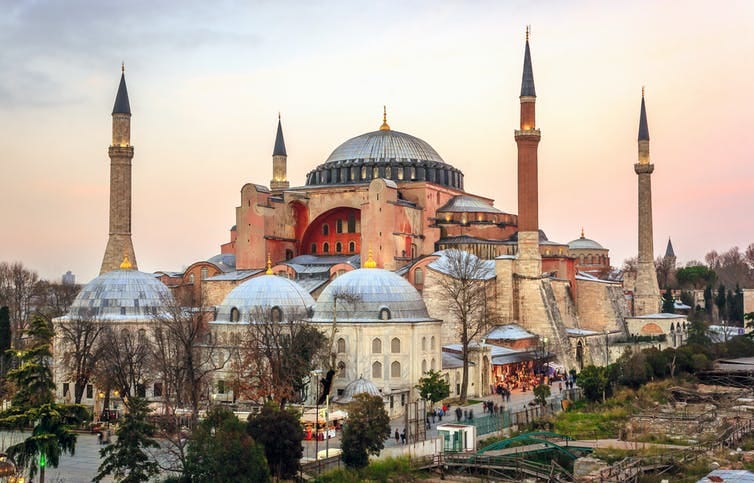
Recep Tayyip Erdogan, a leader of Conservative AK party is now the President, he got elected himself as president for life through a referendum, which is claimed to have been rigged and won by a thin margin. He believes that Turkey should be an Islamic country and not Secular. This is also the type of foreign policy he has been trying to portray and rival Saudi Arabia which is said to be default leader of the Islamic world. Recently, controversy loomed after the Istanbul court allowed “Hagia Sophia” museum to be converted back to the mosque, which saw massive outrage by western countries, including the Pope himself.
The most entrusted secular institution in the country is it is the Army and is the guardian of Secularism in the country. Turkish Army is entitled to safeguard the Kemalist principles. In 2016, Turkey saw a failed coup attempt when a faction of Turkish Army wanted to overthrow President Erdogan though a coup and secure Turkish legacy, a lot of pro-Erdogan factions and citizens were successful to foil this coup attempt. Over 40% of the military was dismissed, making it shun the voice of opposition in the country.
In a 2015 poll, it showed that only 9% of populations want an Islamic country and 80% want Secularism to stay. Kemalism is indeed a model for thought to all who believe that the state should be governed by religious fundamentals. Turkey stands out amongst other Muslim major nations and whose living standards and ideals stand in par with other European nations.
Indian Secularism
Secularism today is the most abused, misinterpreted word in the country. Without wasting time, you will be branded as a liberal, libtard, leftist, sickular, etc. What Indian secularism actually stands for, is a pretty unsure question.
As said before, there is no strict definition of secularism in India and is open for multiple interpretations. Also, we must consider that the Indian Society is based purely on the basis of religion and culture.
As per the constitution of India,
Article 25 stands for every person’s “Freedom to practice, profess and propagate religion subject to public order, morality and health freely.” Article 26 also always have the right to establish control over religious institutions. Both these laws are all supported by Article 14 which stands for Equality and Article 15 for Non-Discrimination.
These two articles (25 and 26) also have exceptions, ie the state still has the right to make laws in political, financial, economic, secular activity in the religious practice. Article 29 is the provision for Protection of Minorities which includes Religious minorities. Article 30 gives an exception to Minorities for establishing and administering educational institutions.
Thus we clearly understand that secularism in India clearly allows the interference of state/government in the practice of religions.
Many of us and even the experts, totally confuse between secularism and pluralism. Indian secularism as per the paper encourages pluralism, which is the peaceful coexistence of religions in the country. This definition is different from French Secularism.
Nehruvianism
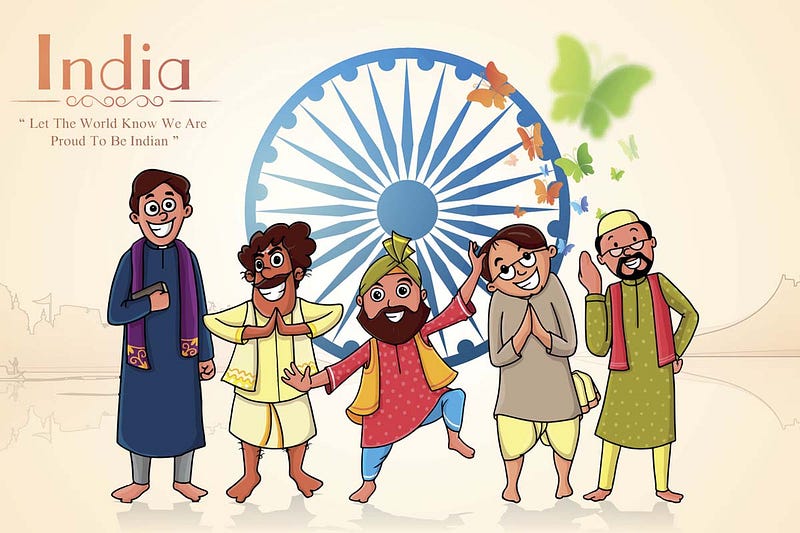
‘Equal protection by the State to all religions’- Jawaharlal Nehru, this was the stand taken by him on what is Secularism. He never believed in any god and nor followed any religion. Nehru took initiative in enacting laws abolishing caste discrimination, dowry and Sati, and extending legal rights and social freedom to Indian women. He believed in secularism that doesn’t separate the state and religion, positive intervention in destroying social evils, and bring reform was welcome for him.
We can see that this is exactly opposite of what Kemalism was. Mustafa Kemal despite also being Atheist, he saw religion itself as a negative concept, while Nehru believed reformed religion as a positive concept.
American Model
There is no formal reference as such, but the American Constitution recognises any religion and its an absolute freedom. There are no laws for blasphemy, also the freedom of speech is absolute. A strict separation between the state and religion is being followed even without any positive intervention, unlike India/France. State and religion are mutually exclusive. That means people can display their religion up to any extent and not keep it restrict it, at the same time, you can criticise any god/religion without the fear of anyone.
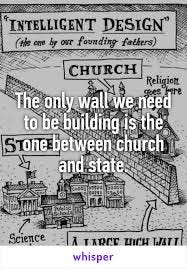
Thus we can say that France and America are two extreme ends of secularism and India stands somewhere in the middle.
A secular state with religion Model
This is a pretty weird case where the country is secular put favours one religion, which is often the majority one. Eg- England, Denmark etc.
India and Religion
Multiple time was seen conflicts based on religions and caste in India. The list is endless.
The recent Ayodhya dispute which was in court was run as a big do-or-die battle by the ruling BJP, during elections. They openly endorsed the use of religions in election campaigns which is against the Election Commission’s Model Code of Conduct. Ayodhya dispute was nothing but a property dispute between Ram Lalla and Shia Waqf Board while, politicians and people saw it as a battle between two religions- Hinduism and Islam, which apparently it was not. The court accepted the faith of Hindus, which they claim that the land was the birthplace of Lord Ram (No evidence), and also that there existed a temple there before Babri Masjid (With evidence). Many people including me support the verdict. The interesting part is that the faith of people in the property was considered important by the court. Despite the verdict asked the formation of Ram Janmabhoomi Trust which should be an independent one, the inauguration of the temple was hijacked by the ruling party under Modi.
Similarly, we have seen the hypocrisy of the Congress party during Rajiv Gandhi’s time, when the Shah Bano case verdict was out. The P. V. Narasimha Rao govt failed to stop the demolition of Babri masjid. The govt had to bring “Places of Worship act” of 1991, to prevent the conversion of any religious place as per the time of 15th August 1947. Congress party and its affiliates are considered to be playing with the sentiments of Hindus, just like how BJP does with Muslims.
Even today we have rampant cases of religious discrimination in our lives. We discriminate people on the basis of clothes they wear, beard they grow, their use of language. We also go into the extent of classifying Hindu dominated localities, Muslim dominated localities, Hindu and Muslim dominated districts etc. We have seen how Hyderabad, Ahmedabad, Delhi, Lucknow etc. have people of different religions living different segregated localities. People also spread hatred on Social Media, like how we saw in the case of Wayanad when Rahul Gandhi wanted to contest from there, and Menaka Gandhi calling Malappuram, the only Muslim majority district of Kerala as the most violent district of India. During the pandemic time, we saw how BJP IT cell used fake images and news to deem people in Tabligui jamaat for deliberately spreading coronavirus. It also tried to paint Muslims as the primary spreaders. In Kashmir issue too, a vast majority claim that the Muslims in Kashmir are anti-India and pro-Pakistani by default. CAA was an important debate with respect to India’s secular credentials.
It is also pretty interesting to see how the majority of Indians support the construction of the temple, even at the peak of the pandemic. We just showed that religion, is inevitable and it will decide a large portion of our lives.
In 2018 Sabrimala verdict so, how LDF, UDF and NDA supported the SC verdict and later UDF and NDA changed stances for vote bank politics. Later we saw massive violence in the name of Sabarimala in the state. This was totally contrary to the SC verdict on Ayodhya which saw the majority of the parties welcoming the verdict without a second thought.
SC has now referred the verdict to a higher bench, which will look into matters of essential practices of religions, which means what all practices of the religion can state intervene in/and what all cannot be.
Read about how BJP has won the battle of covid-19
Religious based violence/riots in India
- 2700 Sikhs were killed in Massacred in Delhi during the 1984 Sikh riots.
- Thousands of Kashmiri pandits were forced to leave their homes in Kasmir valley.
- Muslims have killed in the post-Godhra riots.
- Mob lynching in the name of beef is common.
- Recent incidents of riots reported in North Eastern Delhi riots and in Bangalore.
There are several laws in India, which exists to prevent any kind of uneasiness which rise between various religious groups, or anything which is done in the name of religion.
Section 153A of Indian Penal Code-
Promoting enmity between different groups on grounds of religion, race, place of birth, residence, language, etc., and doing acts prejudicial to maintenance of harmony.
This law prevents rioting and public violence related to demographics. The villain thus in the room is not 153A but the following one.
Section 295A of Indian Penal Code-
Deliberate and malicious acts, intended to outrage religious feelings of any class by insulting its religion or religious beliefs. — Whoever, with the deliberate and malicious intention of outraging the religious feelings of any class of citizens of India, by words, either spoken or written, or by signs or by visible representations or otherwise], insults or attempts to insult the religion or the religious beliefs of that class shall be punished with imprisonment of either description for a term which may extend to three years, or with fine, or with both.
This law is also widely criticised as India’s blasphemy law. It is a cognisable offence which makes it even more dangerous.
So should we have absolute freedom of religion and freedom of speech?
Can you insult any religion in a secular country? Should there be a punishment or not?
Read why we hate politics, due to religion.
What are the solutions for a safe, secure and secular world?
Personally I believe that secularism doesn’t come in reality unless its put into practise by both state and population.
What can people do?
- Spread love and not hate. Understand that right to your faith is equal to others as well. They are also believers like you.
- Don’t discriminate between people on the basis of religions/cultural differences. Understand that this can also happen to you too.
- Interact and socialise with a lot of people- you will be able to see goodness in everyone.
- There is no one to stop your prayers or chase you down on what you do in your home. Never let this be a tool to suppress anyone, any community or the public. Never let your freedom hinder others freedom.
- Always understand that 99% of people who follow their beliefs or faith is because they are born into it, this is not an excuse impose it on other people. Not everyone will find it interesting or be faithful. Freedom to enter and exits a religion should be there.
- Start changing yourself. Religion should be a personal/individual choice. Start defeating extremism at the personal level itself.
- We should keep religions at minimum, ie it should not affect our work, the way we interact with others and most importantly, keep it away from politics and elections.
- Boycott parties who tie-up with religions and spread venom.
- Half-the problems will be solved when religions themselves reform and that is the biggest hurdle.
What all should the governments do?
- The existing secular laws must be put to practise.
- Your duty is to keep the population happy, so you need to treat everyone with the same respect and so that you can concentrate on how to make people happy through your non-partisan actions.
- Freedom to practise/not practise the religion of their choice should be a birthright. Protection of atheists is also very important, as they face discrimination in countries like Saudi Arabia.
- Keep the religions away from politics and vice versa.
- Fighting extremism and terrorism should be used with minimum violence and more with tactics and public reform. Demonising communities and religions are going to backfire for sure.
- The state should make people interact and prevent staying in segregated colonies. Studies have shown that in India, where cities having segregated Hindu and Muslim neighbourhoods like Ahmedabad saw more riots and violence than Lucknow where people stay together. Religious harmony is very important. Singapore substantially intervenes into public construction and housing which allows houses/apartment complex with an equal number of Malaysians, Chinese, Indian and others on the same floor.
- Vote bank politics is one of the most degrading aspects of democracies and secular nations. Today we see that even big democracies and secular nations are victims of it. eg In India, we have parties which have religious and caste vote banks. Vote bank politics lead to favouritism of one religion over the other when it is in power.
- Blasphemy laws should no longer be there, this is the biggest blot on secularism. Minorities in Pakistan face a lot of torture for this law. This is also true for many countries.
Just as liberal theories believe, an individual is the centre of the world and he has the power to change everything around him. It is very important that we ourselves need to interpret our own ideas and take appropriate decisions. Protecting India’s secularism should come from within and you cannot change society.
If there are no good people in this world then why don’t you be one?
.
.
.
If you are liking my blogs and in search of useful content keep following me. You can drop in your feedback either in the comments section or reach out to me on Social Media-FB|Messenger|Instagram|Telegram|Quora|YKA|Blogger. I have also started a podcast series on Anchor&Spotify.
For my old posts do scroll down my profile page. Thank you!