risks, particularly in developing nations that contributed less to the crisis.</li></ul><figure id="41fd"><img src="https://cdn-images-1.readmedium.com/v2/resize:fit:800/1*Bk5wdyZGo-UdbJNNLnguNA.png"><figcaption>Source: <a href="https://www.ipcc.ch/report/ar6/wg1/downloads/figures/IPCC_AR6_WGI_TS_Figure_6.png">IPCC Sixth Assessment Report</a></figcaption></figure><h1 id="8118">Forests and Their Crucial Role</h1><p id="aaf5"><a href="https://www.youtube.com/watch?v=B5Fwl4P4EW8">Deforestation</a> and changes in land use are as significant as fossil fuels. Trees absorb carbon dioxide, curbing climate change. Massive deforestation — driven by farming, logging, and urban sprawl — releases stored carbon, weakening Earth’s defense.</p><p id="ca9c">The Amazon rainforest, our world’s lungs, is a prime example. Rapid deforestation disrupts weather patterns and affects ecosystems far and wide.</p><p id="3b2f">On August 9th, 2023, leaders from the eight countries that share the river basin met at the <a href="https://www.theguardian.com/environment/2023/aug/09/amazon-leaders-rich-countries-support-rainforest-deforestation-brazil">Amazon Summit</a>. They signed the <a href="https://www.gov.br/mre/pt-br/canais_atendimento/imprensa/notas-a-imprensa/declaracao-presidencial-por-ocasiao-da-cupula-da-amazonia-2013-iv-reuniao-de-presidentes-dos-estados-partes-no-tratado-de-cooperacao-amazonica">Belém Declaration</a>, calling on wealthy nations to help them develop a <a href="https://www.theguardian.com/world/2022/jun/01/marshall-plan-us-aid-rebuild-postwar-europe-1947">Marshall-style plan</a> to help defend the Amazon. Unfortunately (and somehow expectedly), they didn’t reach a common point to end deforestation in the region.</p><p id="611c">This is a matter that involves the entire world.</p><h1 id="a452">Other Greenhouse Players: Methane</h1><p id="6d21">While carbon dioxide takes center stage, the significance of other greenhouse gases, such as methane, should not be overlooked.</p><p id="7f11"><a href="https://www.epa.gov/gmi/importance-methane">Methane</a>, emitted from livestock digestion, rice paddies, and landfills, boasts a heat-trapping potential far exceeding CO2 over shorter timeframes. Addressing methane emissions is pivotal in the battle against climate change.</p><h1 id="0e3f">Ocean Acidification</h1><p id="d542">Beyond atmospheric warming, rising CO2 levels trigger ocean acidification. As oceans absorb excess CO2, their pH levels decline, rendering seawater more acidic. This transformation disrupts marine ecosystems, particularly those reliant on calcium carbonate, such as coral reefs and shellfish.</p><p id="156b"><a href="https://www.theguardian.com/environment/2023/aug/04/florida-coral-bleached-ocean-heat">Coral reefs</a>, often heralded as the “rainforests of the sea,” are vital habitats supporting diverse marine life. Ocean acidification compromises the ability of corals to form their calcium carbonate skeletons, culminating in coral bleaching and compromised reef health.</p>
<figure id="a696">
<div>
<div>
<img class="ratio" src="http://placehold.it/16x9">
<iframe class="" src="https://cdn.embedly.com/widgets/media.html?src=https%3A%2F%2Fwww.youtube.com%2Fembed%2FmQ10xBl8XMQ&display_name=YouTube&url=https%3A%2F%2Fwww.youtube.com%2Fwatch%3Fv%3DmQ10xBl8XMQ&image=http%3A%2F%2Fi.ytimg.com%2Fvi%2FmQ10xBl8XMQ%2Fhqdefault.jpg&key=a19fcc184b9711e1b4764040d3dc5c07&type=text%2Fhtml&schema=youtube" allowfullscreen="" frameborder="0" height="480" width="854">
</div>
</div>
</figure></iframe></div></div></figure><h1 id="d589">Marine Currents: The AMOC Gulf Stream Concerns</h1><p id="b87b"><a href="undefined">Will Lockett</a> recently <a href="https://readmedium.com/is-the-gulf-stream-really-about-to-collapse-cause-climate-mayhem-a9aa2b8d0b03">posted</a> an explanatory piece on this matter, connecting the dots I was failing to do so.</p><p id="f7bc">The Atlantic Meridional Overturning Circulation (AMOC) is a vital climate system in the Atlantic region. It’s like a conveyor belt in the ocean, with deep cold and warm surface currents driven by winds and sea ice. This system affects weather, ocean life, and even the climate of Europe and America.</p><p id="ca38">The AMOC’s cold currents bring vital nutrients from deep in the ocean, helping algae to grow and absorb carbon. It also brings warmth to the Arctic, keeping its ecosystem alive. Plus, it warms Europe, making its winters milder than America’s.</p><p id="909a">But the AMOC is slowing down due to climate change.</p><p id="b06d"><a href="https://www.nature.com/articles/s41467-023-39810-w">If it stops:</a></p><ol><li><b>Climate Change Speeds Up</b> The oceans absorb a lot of carbon emissions, but the AMOC helps distribute and store this carbon.</li><li><b>Less Life in the Ocean:</b> Nutrients won’t be spread around the Atlantic, harming marine life and the people who rely on it for food.</li><li><b>Weather Chaos:</b> Europe and America would face more extreme and frequent winter weather. Rain patterns would change, powerful hurricanes could hit more often, and heat would build up in the Caribbean seas.</li></ol><p id="fb61">In short, the AMOC is like a climate superhero. If it fails, it could worsen climate change, harm ocean life, and bring chaotic weather to Europe and America.</p><h1 id="b7f8">The Role of Renewable Energy</h1><p id="0e3a">Ditching fossil fuels for renewable energy is imperative to mitigate climate change.</p><p id="5e83">Solar, wind, hydroelectric, and geothermal power provide clean energy solutions that curtail emissions and foster job creation and economic growth.</p><p id="143f">But fossil fuels are still irrationally underpriced and heavily subsidized for their environmental costs. <a href="https://www.imf.org/en/Publications/WP/Issues/2019/05/02/Global-Fossil-Fuel-Subsidies-Remain-Large-An-Update-Based-on-Country-Level-Estimates-46509">Studies</a> estimate the global energy subsidies at 4.7 trillion (6.3 percent of global GDP) in 2015 and at 5.2 trillion (6.5 percent of GDP) in 2017. The largest subsidizers being China, United States, Russia, European Union, and India.</p><p id="be8f">Efficient fossil fuel pricing would have lowered global carbon emissions by 28% and increased government revenue by 3.8 percent of GDP.</p><p id="03c6">According to Morgan Stanley, climate-related disasters cost 650 billion from 2016–2018. Even if now, five years later, we are spending 1 trillion, we are subsidizing fossil fuels at least six times as much as we’re investing in climate change.</p><p id="94c6">Carbon emissions aren’t falling either.</p><p id="225c">China is camouflaging its impact with investments in renewable energies, such as adding 154% more solar and 78% more wind capacity. But the true <a href="https://www.carbonbrief.org/analysis-chinas-co2-emissions-in-q2-2023-rebound-to-2021s-record-levels/">fact</a> is China’s CO2 emissions grew 10% in the second quarter of 2023, 1% above the record levels in 2021.</p><p id="1e57">Then, there’s serious doubt Biden’s pledge to cut emissions from the agriculture sector in the US by 50% by 2030 will one day become a reality.</p><p id="741b">And also, we will have to see what the outcome of the <a href="https://www.downtoearth.org.in/news/forests/belem-declaration-amazon-countries-fail-to-agree-on-protection-goals-91095">Belem Declaration</a> finally brings to the table.</p><p id="19eb">Time will say if the efforts
Options
some Nations are committing produce a significant shift toward greener energy production. Or if they are just decoys.</p><p id="ae6a"><b>1. <a href="https://www.greeneconomycoalition.org/news-and-resources/people-power-denmarks-energy-cooperatives">Denmark’s</a> Wind Power Revolution</b></p><p id="d5c1"><b>2. <a href="https://sustainabledevelopment.un.org/content/documents/798bhutanreport.pdf">Bhutan’s</a> Carbon-Neutral Pursuit</b></p><p id="055f"><b>3. <a href="https://rmi.org/germanys-renewables-revolution/#:~:text=Germany%20has%20doubled%20the%20renewable,2040%20and%2080%25%20in%202050.">Germany’s </a>Renewable Revolution</b></p><p id="4a60"><b>4. <a href="https://www.jstor.org/stable/26964338">Costa Rica’s</a> Green Pledge</b></p><p id="9c88"><b>5. (Even) <a href="https://www.sciencedirect.com/science/article/pii/S2589004223003401#:~:text=Renewable%20energy%20transition%20in%20China%20has%20been%20considered%20as%20an,to%20dominate%20the%20energy%20system.">China’s</a> Renewable Ambitions</b></p><h1 id="3160">Impact on Biodiversity and Ecosystems</h1><p id="8935">Climate change imperils biodiversity and ecosystems across the planet. Mounting temperatures, altered precipitation patterns, and shifting habitats threaten species and ecosystems.</p><p id="20c7">For instance:</p><ul><li>Melting Arctic ice disrupts <a href="https://www.nasa.gov/sites/default/files/atoms/files/animals-changing-climate-agu-briefing-2016.pdf">polar bear</a> hunting and breeding, reducing cub survival and population numbers.</li></ul>
<figure id="8346">
<div>
<div>
<img class="ratio" src="http://placehold.it/16x9">
<iframe class="" src="https://cdn.embedly.com/widgets/media.html?src=https%3A%2F%2Fwww.youtube.com%2Fembed%2F_JhaVNJb3ag&display_name=YouTube&url=https%3A%2F%2Fwww.youtube.com%2Fwatch%3Fv%3D_JhaVNJb3ag&image=http%3A%2F%2Fi.ytimg.com%2Fvi%2F_JhaVNJb3ag%2Fhqdefault.jpg&key=a19fcc184b9711e1b4764040d3dc5c07&type=text%2Fhtml&schema=youtube" allowfullscreen="" frameborder="0" height="480" width="854">
</div>
</div>
</figure></iframe></div></div></figure><ul><li>The <a href="https://en.wikipedia.org/wiki/Ad%C3%A9lie_penguin">Adélie penguin</a> population in Antarctica <a href="https://www.sciencedirect.com/science/article/abs/pii/S092181812200159X">has declined by 70%</a> in the past 40 years due to changes in sea ice patterns and food availability.</li><li>Bird migration and breeding are <a href="https://www.sciencedirect.com/science/article/abs/pii/S0006320711003880">declining</a> due to shifting plant and insect cycles.</li><li><a href="https://pubmed.ncbi.nlm.nih.gov/15486254/">Amphibians</a> are vulnerable to climate shifts, affecting their breeding and migration patterns, and contributing to population declines.</li><li>Warmer temperatures disrupt <a href="https://www.researchgate.net/publication/23562635_How_does_climate_warming_affect_plant-pollinator_interactions_Ecol_Lett">plant-pollinator relationships</a>, affecting pollination and plant reproduction and impacting ecosystems.</li></ul><p id="97fb">Ecosystems balance <a href="https://www.youtube.com/watch?v=XFmovUAWQUQ">biodiversity</a> and regulate climate, offering essential resources.</p><p id="a58b">Such endeavors preserve the delicate harmony of nature and ensure the adaptability of ecosystems in the face of changing climate dynamics.</p><h1 id="c66a">Climate Communication and Education</h1><p id="6915">The global reach of climate change necessitates international collaboration and agreements to address the crisis effectively.</p><p id="5674">Established in 2015, the <a href="https://unfccc.int/process-and-meetings/the-paris-agreement">Paris Agreement</a> stands as a landmark pact aimed at constraining global warming to well below 2°C above pre-industrial levels.</p><p id="2883">Under the Paris Agreement, nations commit to defining emission reduction targets and submitting periodic progress reports. This collaborative endeavor underscores the significance of shared responsibility in combatting climate change.</p><p id="7ab4">Governments, industries, and individuals play pivotal roles in realizing the objectives of international accords. Policymakers wield influence in enacting regulations that incentivize sustainable practices. At the same time, individuals can advocate for policies prioritizing environmental preservation and actively participate in movements advocating for climate action.</p><p id="915a">The collective impact of individual actions and lifestyle choices holds immense sway in combatting climate change.</p><p id="deee"><a href="https://www.ncbi.nlm.nih.gov/pmc/articles/PMC5409751/">Alternatives</a> such as moderating <a href="https://www.theguardian.com/environment/2018/may/31/avoiding-meat-and-dairy-is-single-biggest-way-to-reduce-your-impact-on-earth">meat consumption</a>, embracing energy-efficient practices, and reducing waste generation contribute to diminishing <a href="https://www.sciencedirect.com/science/article/pii/S2590123023001810">personal carbon footprints.</a></p><h1 id="dde0">Final Words From The “Tropical” Andes</h1><p id="908f">A different morning unfolds here in Patagonia, where seasons once danced in precision. Yet, today, we’re more than a month away from spring, and the rhythm has changed. Unforeseen heatwaves and torrents of rain blur the lines between winter and summer.</p><p id="4ad3">The lake mirrors a false image of abundance, and the hidden truth looms closer: record-low winter snowfall means parched reserves for the expected dry summer ahead.</p><figure id="0ca8"><img src="https://cdn-images-1.readmedium.com/v2/resize:fit:800/1*-QIO5PsC8ewIc5n3kokNzQ.jpeg"><figcaption><b>Tropical-like storms in Patagonia. A new alarming reality. </b>(photo by author)</figcaption></figure><p id="a5c9">It’s time to face the inconvenient truth: we’re inseparable from the threads connecting us to Earth’s tapestry. My backyard echoes shifts across the globe.</p><p id="248d">We stand at the edge of a precipice, where every step, every choice we make will determine our planet’s fate.</p><p id="3cc6">Yet, we are leaving too many blank pages void of meaningful impact.</p><p id="f457">It’s time for a real change.</p><div id="ba7e" class="link-block">
<a href="https://readmedium.com/the-chilling-truth-antarctica-just-lost-an-ice-mass-the-size-of-my-country-d8970933f260">
<div>
<div>
<h2>The Chilling Truth: Antarctica Just Lost an Ice Mass the Size of My Country</h2>
<div><h3>Antarctica’s sea ice is not just a local phenomenon — it plays a significant role in regulating the Earth’s…</h3></div>
<div><p>medium.com</p></div>
</div>
<div>
<div style="background-image: url(https://miro.readmedium.com/v2/resize:fit:320/0*gvaxMoLYFAU_0JxZ)"></div>
</div>
</div>
</a>
</div><p id="e393"><i>Thank you for your thorough reading and support!</i></p><p id="80c6"><i>If you crave more insights into climate change, scientific progress, and geopolitics with a Patagonian twist, subscribe to the newsletter <a href="https://rickylanusse.substack.com/?utm_source=navbar&utm_medium=web&r=271e6q"></a></i><a href="https://rickylanusse.substack.com/?utm_source=navbar&utm_medium=web&r=271e6q"><b>Antarctic Sapiens</b></a> <i>and dive into thought-provoking content weekly.</i></p></article></body>
Understanding The Complex Crisis Of Climate Change in a Simple Way
The links between the many factors that have led to the current critical situation

When the cataclysmic movies “The Day After Tomorrow” and then “2012” came out, I was very skeptical (to say the least) about the end-of-the-world theories depicted on the big screen.
Yes, I’d seen Al Gore presenting the “Inconvenient Truth” and can’t deny the man had a convincing storyline. But living in Patagonia, where everything seemed to live in perpetual magnificence, it was hard to connect in the long term. It soon felt like a foggy theory of some angry man who lost the elections against another angry man who decided to destroy another angry country.
Then, “Interstellar” hit theaters. And heck, that was different.
I re-watched my favorite Pixar movie, “Wall-E”, through a new lens. The silent robot now seemed to scream, “Open your eyes, people! This is our future!”
Home changed too. Summers and winters turned extreme with scorching heatwaves, wildfires, and odd rain patterns.
And this year, Antarctica failed to form a piece of its ice sheet the size of my country, Argentina, the 8th largest in the world.
From Hollywood fantasies to real-life chaos, things escalated in no time.
So I felt the urge to simplify this complex issue and figure out where it’s all coming from.
Exploring the Complexity of Climate Change
Climate, the long-term weather average, is changing like never before. While natural fluctuations have occurred for ages, recent changes are linked directly to human actions.
Burning fossil fuels like coal, oil, and gas releases greenhouse gases, mainly carbon dioxide (CO2).
These gases create an insulating layer, trapping the sun’s heat and elevating the planet’s temperature.
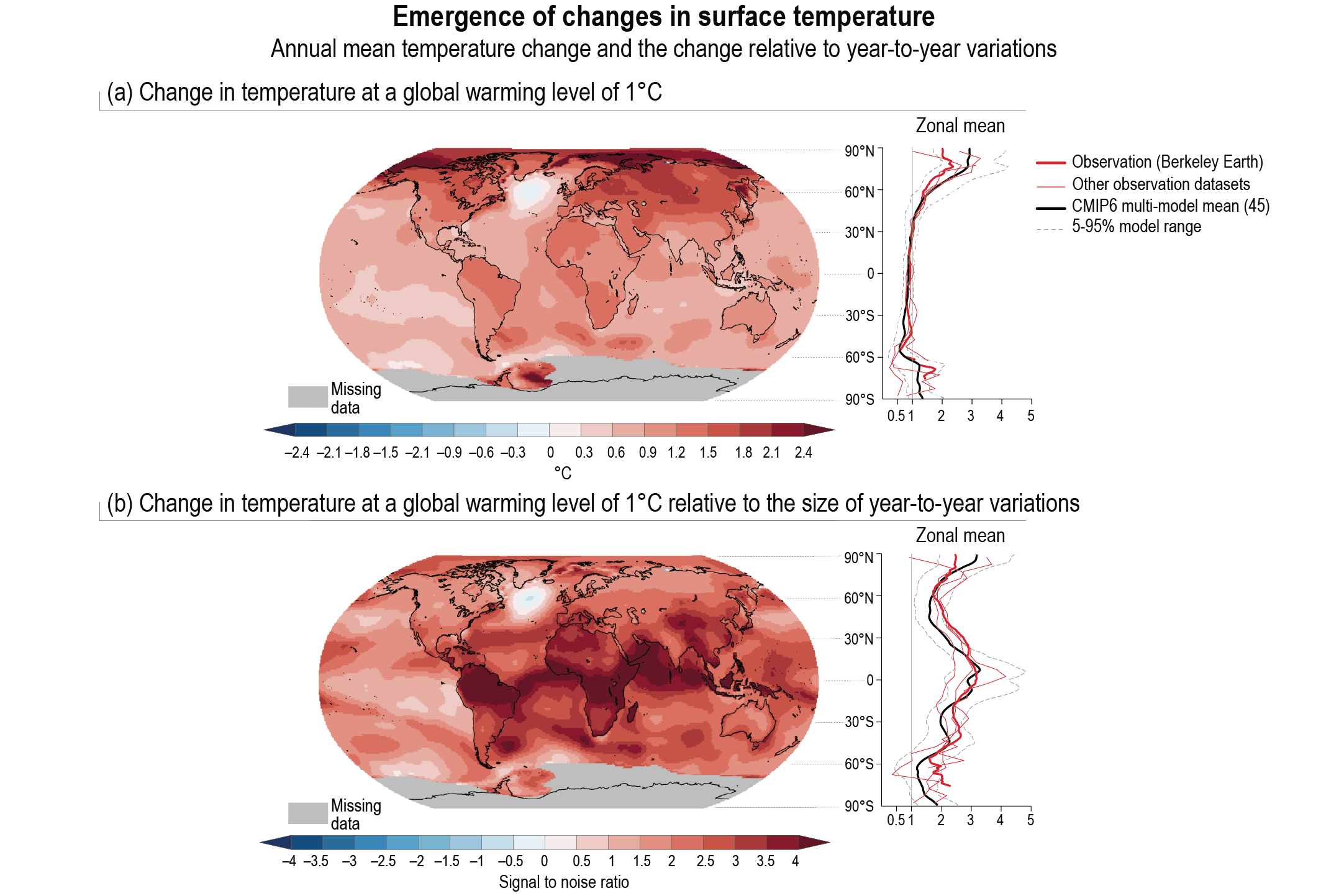
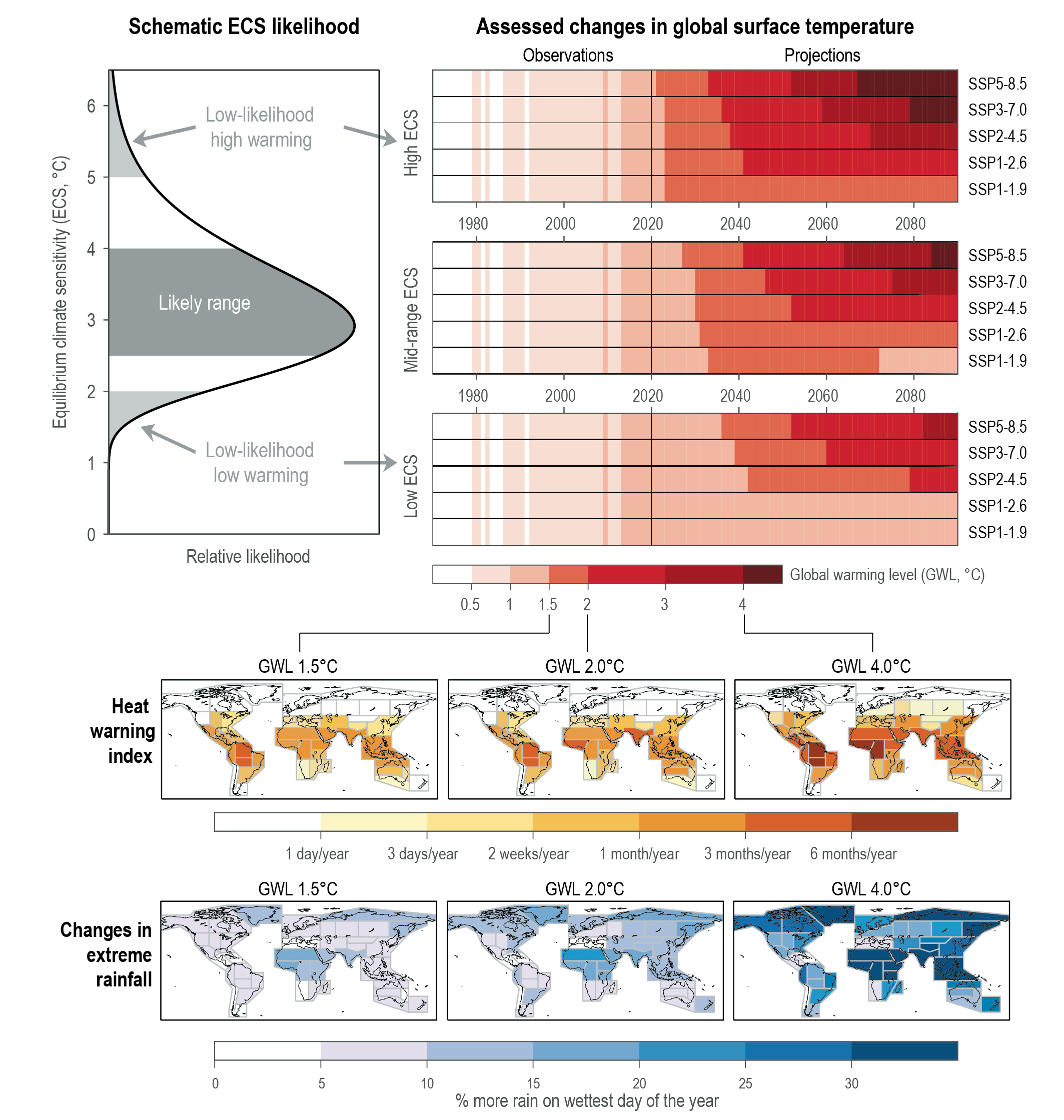
Since the Industrial Revolution, marked by the extensive burning of fossil fuels, CO2 levels have jumped by 50%, raising global temperatures by about 1.1°C compared to the late 1800s.
Deforestation and changes in land use are as significant as fossil fuels. Trees absorb carbon dioxide, curbing climate change. Massive deforestation — driven by farming, logging, and urban sprawl — releases stored carbon, weakening Earth’s defense.
The Amazon rainforest, our world’s lungs, is a prime example. Rapid deforestation disrupts weather patterns and affects ecosystems far and wide.
On August 9th, 2023, leaders from the eight countries that share the river basin met at the Amazon Summit. They signed the Belém Declaration, calling on wealthy nations to help them develop a Marshall-style plan to help defend the Amazon. Unfortunately (and somehow expectedly), they didn’t reach a common point to end deforestation in the region.
This is a matter that involves the entire world.
Other Greenhouse Players: Methane
While carbon dioxide takes center stage, the significance of other greenhouse gases, such as methane, should not be overlooked.
Methane, emitted from livestock digestion, rice paddies, and landfills, boasts a heat-trapping potential far exceeding CO2 over shorter timeframes. Addressing methane emissions is pivotal in the battle against climate change.
Ocean Acidification
Beyond atmospheric warming, rising CO2 levels trigger ocean acidification. As oceans absorb excess CO2, their pH levels decline, rendering seawater more acidic. This transformation disrupts marine ecosystems, particularly those reliant on calcium carbonate, such as coral reefs and shellfish.
Coral reefs, often heralded as the “rainforests of the sea,” are vital habitats supporting diverse marine life. Ocean acidification compromises the ability of corals to form their calcium carbonate skeletons, culminating in coral bleaching and compromised reef health.
Marine Currents: The AMOC Gulf Stream Concerns
Will Lockett recently posted an explanatory piece on this matter, connecting the dots I was failing to do so.
The Atlantic Meridional Overturning Circulation (AMOC) is a vital climate system in the Atlantic region. It’s like a conveyor belt in the ocean, with deep cold and warm surface currents driven by winds and sea ice. This system affects weather, ocean life, and even the climate of Europe and America.
The AMOC’s cold currents bring vital nutrients from deep in the ocean, helping algae to grow and absorb carbon. It also brings warmth to the Arctic, keeping its ecosystem alive. Plus, it warms Europe, making its winters milder than America’s.
But the AMOC is slowing down due to climate change.
Climate Change Speeds Up The oceans absorb a lot of carbon emissions, but the AMOC helps distribute and store this carbon.
Less Life in the Ocean: Nutrients won’t be spread around the Atlantic, harming marine life and the people who rely on it for food.
Weather Chaos: Europe and America would face more extreme and frequent winter weather. Rain patterns would change, powerful hurricanes could hit more often, and heat would build up in the Caribbean seas.
In short, the AMOC is like a climate superhero. If it fails, it could worsen climate change, harm ocean life, and bring chaotic weather to Europe and America.
The Role of Renewable Energy
Ditching fossil fuels for renewable energy is imperative to mitigate climate change.
Solar, wind, hydroelectric, and geothermal power provide clean energy solutions that curtail emissions and foster job creation and economic growth.
But fossil fuels are still irrationally underpriced and heavily subsidized for their environmental costs. Studies estimate the global energy subsidies at $4.7 trillion (6.3 percent of global GDP) in 2015 and at $5.2 trillion (6.5 percent of GDP) in 2017. The largest subsidizers being China, United States, Russia, European Union, and India.
Efficient fossil fuel pricing would have lowered global carbon emissions by 28% and increased government revenue by 3.8 percent of GDP.
According to Morgan Stanley, climate-related disasters cost $650 billion from 2016–2018. Even if now, five years later, we are spending $1 trillion, we are subsidizing fossil fuels at least six times as much as we’re investing in climate change.
Carbon emissions aren’t falling either.
China is camouflaging its impact with investments in renewable energies, such as adding 154% more solar and 78% more wind capacity. But the true fact is China’s CO2 emissions grew 10% in the second quarter of 2023, 1% above the record levels in 2021.
Then, there’s serious doubt Biden’s pledge to cut emissions from the agriculture sector in the US by 50% by 2030 will one day become a reality.
And also, we will have to see what the outcome of the Belem Declaration finally brings to the table.
Time will say if the efforts some Nations are committing produce a significant shift toward greener energy production. Or if they are just decoys.
Climate change imperils biodiversity and ecosystems across the planet. Mounting temperatures, altered precipitation patterns, and shifting habitats threaten species and ecosystems.
For instance:
Melting Arctic ice disrupts polar bear hunting and breeding, reducing cub survival and population numbers.
The Adélie penguin population in Antarctica has declined by 70% in the past 40 years due to changes in sea ice patterns and food availability.
Bird migration and breeding are declining due to shifting plant and insect cycles.
Amphibians are vulnerable to climate shifts, affecting their breeding and migration patterns, and contributing to population declines.
Warmer temperatures disrupt plant-pollinator relationships, affecting pollination and plant reproduction and impacting ecosystems.
Ecosystems balance biodiversity and regulate climate, offering essential resources.
Such endeavors preserve the delicate harmony of nature and ensure the adaptability of ecosystems in the face of changing climate dynamics.
Climate Communication and Education
The global reach of climate change necessitates international collaboration and agreements to address the crisis effectively.
Established in 2015, the Paris Agreement stands as a landmark pact aimed at constraining global warming to well below 2°C above pre-industrial levels.
Under the Paris Agreement, nations commit to defining emission reduction targets and submitting periodic progress reports. This collaborative endeavor underscores the significance of shared responsibility in combatting climate change.
Governments, industries, and individuals play pivotal roles in realizing the objectives of international accords. Policymakers wield influence in enacting regulations that incentivize sustainable practices. At the same time, individuals can advocate for policies prioritizing environmental preservation and actively participate in movements advocating for climate action.
The collective impact of individual actions and lifestyle choices holds immense sway in combatting climate change.
A different morning unfolds here in Patagonia, where seasons once danced in precision. Yet, today, we’re more than a month away from spring, and the rhythm has changed. Unforeseen heatwaves and torrents of rain blur the lines between winter and summer.
The lake mirrors a false image of abundance, and the hidden truth looms closer: record-low winter snowfall means parched reserves for the expected dry summer ahead.
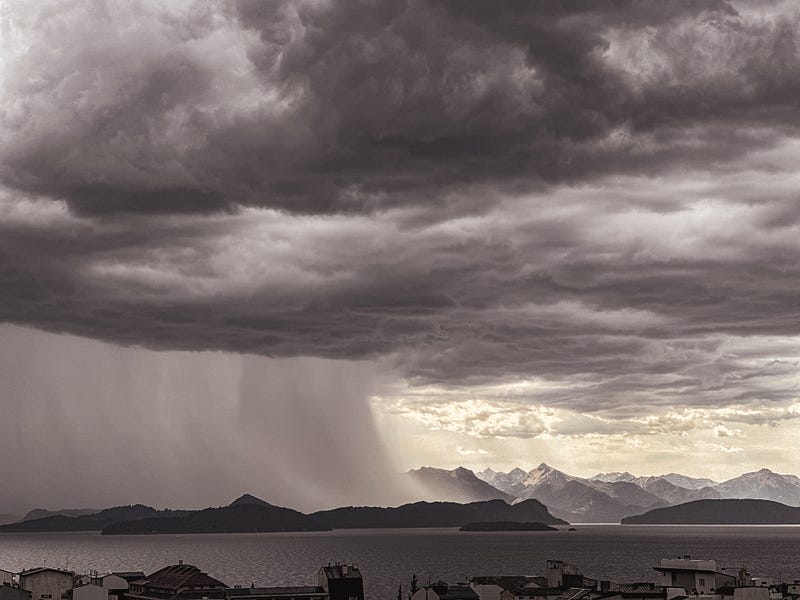
Tropical-like storms in Patagonia. A new alarming reality. (photo by author)
It’s time to face the inconvenient truth: we’re inseparable from the threads connecting us to Earth’s tapestry. My backyard echoes shifts across the globe.
We stand at the edge of a precipice, where every step, every choice we make will determine our planet’s fate.
Yet, we are leaving too many blank pages void of meaningful impact.
If you crave more insights into climate change, scientific progress, and geopolitics with a Patagonian twist, subscribe to the newsletter Antarctic Sapiensand dive into thought-provoking content weekly.