
Understanding the Blue Dot Effect: The Hidden Bias Impacting Our Choice
How confirmation bias influences corporate compliance and our daily lives
For obvious reasons, corporations are subject to complicated compliance frameworks, regulatory guidelines, and internal control frameworks. The management and the governing bodies want someone to make sure that things are controlled and processes work fine.
Have you ever wondered why, despite rigorous checks and controls, internal compliance teams seem to always discover issues?
Perhaps you’ve questioned if this is due to a lack of learning from past mistakes or if these compliance teams are just exceptionally astute.
Or could there be a more intriguing psychological phenomenon at play?
But what?
One reason is the constantly changing regulatory environment but despite the best of the people working to make sure that processes work the way they should, the internal control teams always pull out a feather from the hat.
How?
I got a glimpse of what must be playing here in the book ‘Everything is F*cked’ by Mark Manson.
In the world of corporate compliance and beyond, we may all be unwitting participants in an unconscious bias known as the ‘Blue Dot Effect’.
Inspired by Mark Manson’s book ‘Everything is F*cked’, let’s delve into this fascinating concept and how it influences our perception and decision-making processes.
The Blue Dot Effect
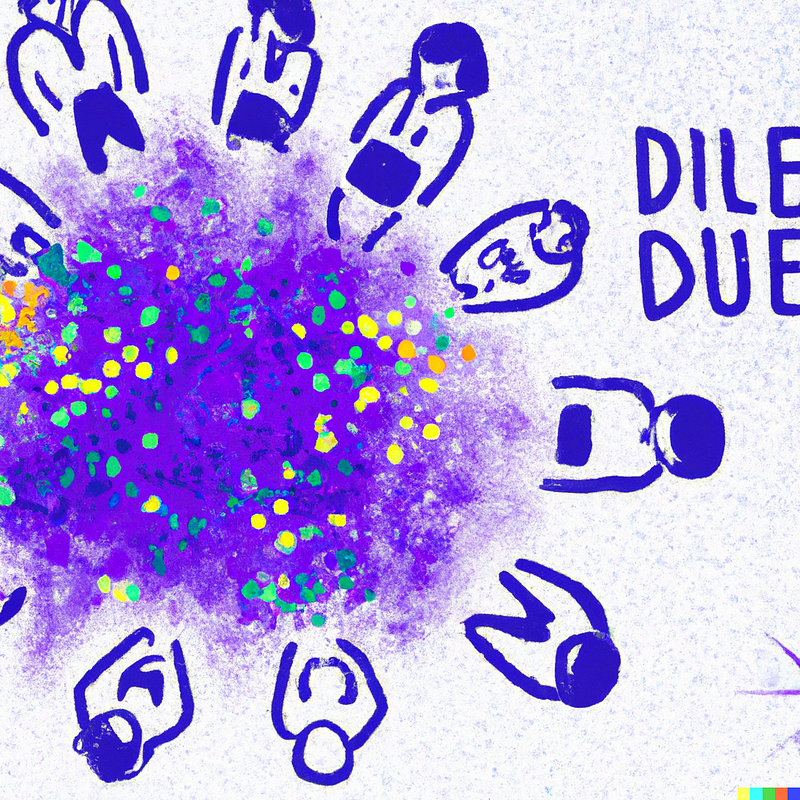
In the book, he presents a fictional scenario where a group of people is shown a series of dots that are either blue or purple.
- Participants are instructed to identify which color is more prevalent.
- As the test progresses, the experimenter purposefully manipulates the display of the dots, making it so that blue dots become rarer and purple dots more common.
- Participants, who have been primed to look for blue dots, continue to believe that blue dots are more prevalent than they are, even when presented with clear evidence to the contrary.
Manson uses this scenario to illustrate the concept of confirmation bias, where people tend to favor information that confirms their pre-existing beliefs or hypotheses while giving less consideration to alternative possibilities.
Essentially, the Blue Dot Effect refers to the tendency of individuals to focus on problems and threats, regardless of how safe or comfortable their environment is.
Here are a few examples that impact us in our day-to-day life:
- News Consumption: People often choose news sources that confirm their pre-existing views, limiting exposure to diverse perspectives.
- Health Choices: Confirmation bias can lead people to focus on information that supports their existing dietary beliefs, potentially overlooking the significant health benefits from alternate means.
- Shopping: Brand preference can make consumers focus on positive reviews and ignore negative ones, affecting the quality of their purchases.
- Investment Decisions: Investors may ignore contradicting data, focusing on information that supports their investment beliefs, increasing financial risk.
So is that what’s happening around the corporate compliance meetings where more issues and problems are being highlighted despite a better and safe environment?
The Impact of Unawareness
Though the Blue Dot Effect gives our minds some ‘automatic’ decision-making ability, it might prove harmful or problematic when we are unaware of its effects.
The effect is also known as Inattentional Blindness, i.e. a phenomenon where people tend to overlook or miss obvious things in their environment when they are focused on a specific task or goal.
- Our education, learning from family and colleagues, and our social environment lead us to believe certain things in a certain manner. This can lead to poor choices or errors in judgment.
- Experiences from work could create unhelpful assumptions and expectations in our personal lives, underscoring the importance of maintaining healthy boundaries.
- With our growth in an organization or improvement in external reputation, our words and actions are given greater significance. A single word or tone, if misinterpreted, can trigger the Blue Dot Effect, leading to unnecessary complications.
- When assessing our self-progress, the Blue Dot Effect can cause us to focus more on areas of improvement than on our achievements. For instance, focusing on peers’ success without acknowledging our progress can hinder personal growth.
The Sense of Discomfort
Another negative effect of unawareness about this effect is the sense of discomfort that the effect has left on us.
The Blue Dot Effect illustrates a significant paradox. While we’re living in greater comfort than ever before, we’re often plagued by a sense of discontent, seemingly never quite pleased with our current abundance compared to our past.
- Online Shopping: In the era before online shopping, we’d go to physical stores and be content with what was available. Now, with the endless options, we are still discontent with the variety available.
- Streaming Services: Before streaming services, we were happy to watch whatever was on television or go to the movie theatre for a film. Now, with more and more services, we feel overwhelmed.
- Social Media: A decade back, our comparisons used to be with people we interacted with personally. Now, we’re exposed to people worldwide, often leading to feelings of inadequacy despite leading comparably comfortable lives.
- Health and Fitness: Earlier people felt satisfied with moderate exercise and maintaining a generally healthy diet. Now, with new fitness trends and diets, we are discontent with the perfect body, despite being healthier overall.
But Wait, There are Positive Too!
If we can understand the effects of the Blue Dot Effect, it can help us mold the effects to our advantage.
If you can hit the effect back, the awareness will help you keep yourself calm, and look at the situation from a completely new perspective.
In “Mindset: The New Psychology of Success” by Carol Dweck, the author talks about the power of adopting a growth mindset. And, to counter the Blue Dot effect, we do need a growth mindset.
- Reading and Writing: Being aware of the effect, will allow you to be considerate about the diverse perspectives while reading and writing, Also, it will open you up to new genres and experimentation.
- Physical exercises: Acknowledging the effects of different regimes and activities, will help you celebrate small achievements and progress. Plus, it will help you bring excitement to your overall health journey.
- Diet: With an awareness of the Blue Dot Effect, you can make more informed and balanced dietary choices, considering various viewpoints and studies without being swayed by biased information.
- Professional Life: Openness to diverse opinions and ideas in your professional career can lead to better decision-making, collaboration, and innovation, enhancing your professional growth.
- Relationships: Actively listening to and appreciating different perspectives can strengthen personal and professional relationships.
- Stress Management: By recognizing the Blue Dot Effect and its influence on impatience and dissatisfaction, you can develop better-coping strategies and reduce stress.
Closing Thoughts
By excluding the blindness caused by such cognitive biases, you can essentially opt to look at things from the right perspective and make a wise choice of actions.
Tomorrow, when you take a stand or make a view about someone, question yourself — are you going through the Blue Dot Effect syndrome, or is there an opportunity to learn something new from the situation?
If you found this valuable, consider joining Medium. The paid membership allows unlimited access to stories from the best writers. If you wish to support me, sign up using my link. I’ll earn a tiny commission from Medium.
Nishith is an author and creator of a unique self-development platform — “Be Better Bit-By-Bit.”
Grab your copy of his books — Be Better Bit-By-Bit and My Daily 5-Minute Gratitude Journal. Also, listen to his podcasts Be Better Bit-By-Bit and 10 Bullets — 100 Words Book Summary.


