
Understanding Stress to Make Use of it as a Powerful Weapon
The science behind the impact of stress on our body; how our brain and body react to stress.

Have you ever wondered why do we stress? Let’s get into it step by step by breaking it down.
Stress is an unpleasant state of arousal when we perceive the demands of the situation threatening our ability to cope effectively. In simple words, when we feel like something is threatening our state of mind, we become alert.
We all say don’t stress out so much or chill out. If everyone preaches it, why do we continue stressing? Let’s understand why.
Let’s start with a simple example, when you’re in the jungle, you need to feed yourself and protect yourself for survival. Well, that seems obvious, right? Hence, our brain conceptualizes the situation and figures out a way to hunt. At this moment all our bodily functions are normal, meaning our heart rate and blood pressure are stable. You’re physically stable.
Suddenly you hear a lion roar. What do you think happens? You pause everything you’re doing and hide. You immediately start planning on what to do next and then implement it slowly. At that moment, you make all your decisions carefully as it is a matter of survival. Remember that it’s not just your brain that reacts, it’s your entire body. As you hear the lion roar, your heart rate and blood pressure increase rapidly. At that moment, we paused most of your bodily functions. It’s because your brain applies all of its focus and energy to handling the threat. As a result, your bodily functions pause like growth, digestion, and excretion. This is all possible because of stress. You can call stress to be a defense mechanism.
Why does our brain do this?
From an evolutionary point of view, animals grow so they can adapt to the new environment. This is possible because our genes inherit the favorable traits from the previous generation. It’s fair to say that our reaction to threats is one of the prime factors that determine our chance of survival. Imagine deers do not react to threats that endanger its life, none of the deers would have survived a Wild animal encounter. So inherently all organisms have developed a mechanism to protect themselves from threat. To be in control of such situations, our body harnesses all of its energy to focus on the threat. Eventually all our other body functions slow down.
As soon as a deer hears or witnesses a lion, the deer attempts to escape as it can divert its focus and energy. Most animals are always vigilant as they live in a stressful environment.
However, what happens if we prolong this period of stress? What happens inside our body?
Let’s look at the science behind stress.
Our body can handle stress through a steroid/hormone called Cortisol, which is produced by the adrenal gland in the kidney. Cortisol regulates our stress by regulating the heart and other functions, it’s our friends saying chill out. Although this hormone regulates stress, over a prolonged period it can harm us.
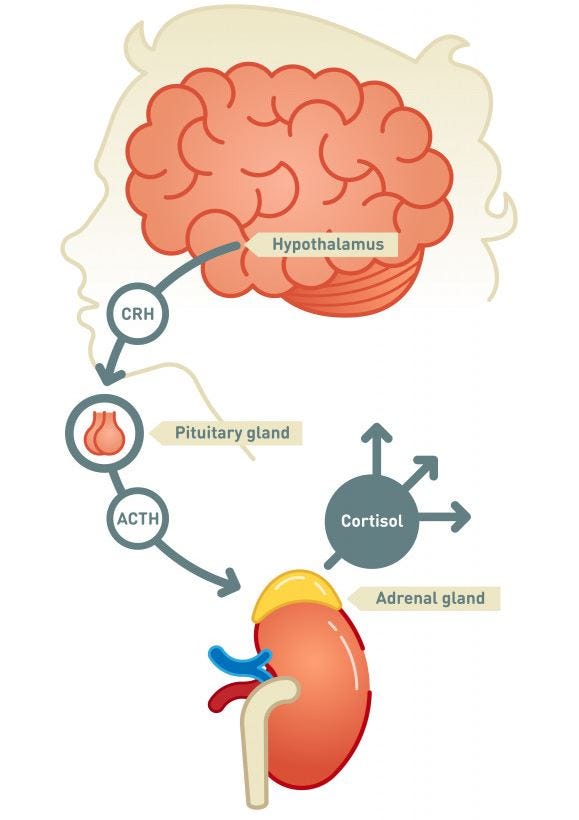
As the perception of the threat in our brain increases, the longer we stay stressed. Imagine a hypothetical situation where this process prolongs for 15 hours. This means that our heart rate and blood pressure are constantly high for the entirety whilst our bodily functions have slowed down drastically. Digestion takes more time, your body’s capability to produce new cells reduces, and excretion takes more time. As digestion doesn’t occur like it used to, we don’t attain sufficient energy from the food we eat. As the energy reduces, our capacity to deal with stressful situations also falls. It is because of lack of energy, all our organs don’t function normally, and we completely break down. Therefore, we get angry in stressful situations. Since the body can’t handle the stress, the brain relieves it via anger. So the next time your friend screams at you, just remember the science behind stress.
Side effects of stress on the body:
- Rapid weight gain
- Depression/Anxiety
- Lack of sleep
- Lack of sex drive
- Irregular menstrual cycles
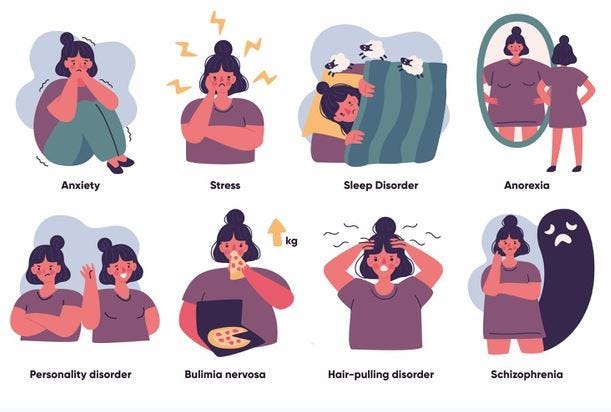
These are just some side effects of stress. Again, the reason for these reactions remains the same. If we keep encountering situations that threaten our state of being, our bodies stay alert. As a result, our bodily functions slow down, which damages the functionality of many organs over a long period.
Have you ever thought of the role of stress in our exams?
Let’s get back to the example in the jungle to answer this question. Let’s compare the jungle experience to the exams. Hunting is also like setting a timetable and planning to study. As we plan a proper system to study, we realize that there’s no immediate threat, so we become lethargic. As the exam date comes closer, the threat gets closer and requires immediate attention. As a result, we become more alert and we direct all our focus on clearing the exam. So we prepare because it’s better late than never. Therefore, some of us perform better when we study at the last moment. If there was no stress involved, we wouldn’t care about the exams, and nothing would motivate us to study. Controlled stress can be a very effective motivator and is essential for learning.
However, what stresses us is subjective to people. For example, for an over-performing individual, the stress might activate earlier as the threat triggers them 3–4 days before others. This can be because of societal, peer pressure, internal or external factors.
Now let’s understand what happens if you over-stress your body during exams. As your body becomes alert for a prolonged period, your bodily function slows down and your body doesn’t get enough energy to function normally. Research has shown that over-exerting yourself can be counterintuitive. This is because studying takes a lot of energy. Memory formation occurs by making new neural connections in the brain, which require ample amounts of energy for the formation. And because of over-exertion, the brain does not have enough energy to remember and understand the concepts we have learned properly. Therefore, studying with sleep deprivation can be counterintuitive. So the next time you over-exert yourself, remember that it backfires on your capacity to learn and deteriorates the process.
Why do we overthink?
Overthinking is a defense mechanism to protect us from the worst-case scenarios. Being an overthinker myself, I am going to defend myself. It’s good to overthink in situations where we are in control. For example, when NASA has to launch a rocket into space they have to dissect all the components and try to overestimate all the worst scenarios to increase their success rate. In such a scenario, the people at NASA are in control of all the elements in the rocket. In simple words, evaluating all the options might increase the chances of survival of the rocket.
So it makes sense for us to overthink, as it increases our chances of survival. Before you put a full stop to that, let’s examine another situation.
Now let’s take an example of a person who has stage fear. Let’s dissect some of his/her thoughts.
What will my friends think if I sound nervous on stage? What if I freeze in front of the entire school? What will my crush think if I embarrass myself?
Even though these might seem irrational to some people, these are genuine fears that escalate in many people’s minds. If you think about it, these are some of the feedback that we will receive after the speech. So it is important to think about these scenarios, right? Before you answer that, let’s see if we are in control of those scenarios. We don’t know what our friends and crush will say after our speech. We can imagine what will happen if we freeze, but we cannot contemplate how the crowd will react. These are things that are beyond our control. We can never imagine what 100 other people would think. In such a scenario, overthinking backfires on us. It’s like trying to control the weather for a Rocket launch. NASA can only prepare a rocket which launches weather, not the other way around.
When you try to control external factors, you are asking your brains to process limitless information. For example, you can run infinite loops of what your friends would think if you screw up your speech. As we have multiple thoughts running in our heads, we try to find answers to each of them. When we find no solutions to the bad things our friends think, we perceive a threat. As a result, we get stressed.
How to maintain and keep stress in check?
Problem-focused coping
Instead of overthinking, we must try to focus on the problem at hand. We must come to an understanding that no matter how much we think certain things are out of our control. However, we can work on the factors that are in our control. There’s an obvious yet powerful quote that goes like this:
“Feel the fear and do it, anyway”
-Susan Jeffers
The solution to public speaking is to practice your speech and perform. Research has shown that 90% of what we worry about never happens. Then what is there to worry about, go out there and face your fears.
But why are most people chasing the 10%?
The answer lies in your fear. Fear has a tremendous impact on our minds. As soon as we fear something, we perceive a threat. As a result, we get stressed. This is a loop that persists in all living organisms. We cannot escape it. This is how Religions and Countries influence people by using fear. Many people follow rules and regulations because they fear what the higher power will do if they get caught. Even though this maintains the sanctity amongst people, it can be dangerous if we misused the power.
So what’s a simple way to override this? We must develop a habit of being more aware of what we are thinking. For instance, we can make a note of what our problem is and what is the solution without overestimating the situation. Even though our brain can make complex decisions, it can cannot make a simple decision. We need to stop our thoughts before it escalates. If you have an alternative solution, mention it below.
Distract yourself from the stressor

When you are in a stressful environment, sometimes all you need is a minor distraction. When you’re in a state of stress, try talking or watching something which releases you from the stressful environment. As a result, it helps us regain our lost energy.
Social support
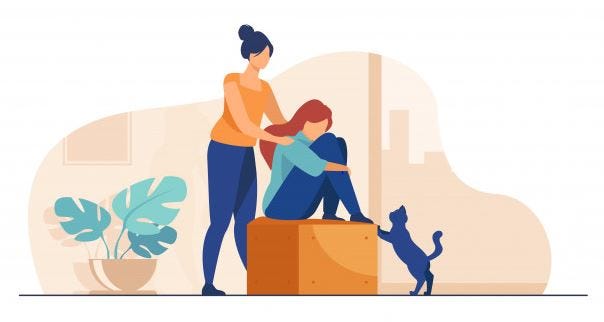
This can be one of the best proactive coping techniques for stress. Talking about your fear somehow releases a lot of stress. As our thoughts circle our minds, they can get suffocating. Sharing your problems with someone can give you a different opinion on your thoughts. Let’s go back to our speech problem. When you see the world from a negative perspective, your brain doesn’t stop you from doing it. A second opinion can show you another perspective that can contradict yours. Something our brain may not comprehend at first because it’s busy trying to find a solution for the worst-case scenarios.
Sleep and mindfulness
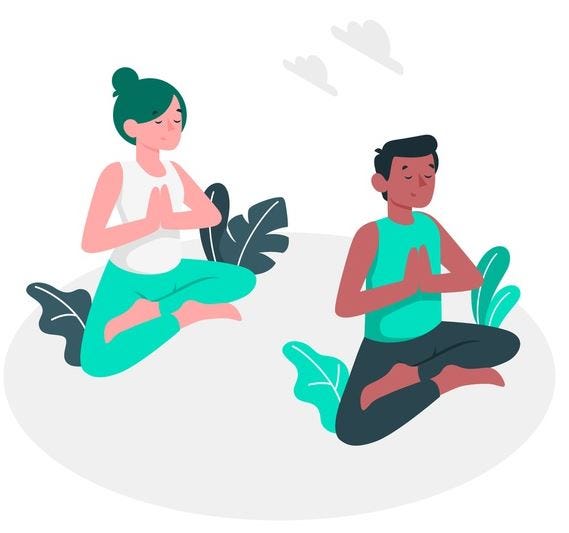
A regular consistent sleep cycle (6–8 hours) helps us regain the energy lost and rewires our brain and bodily functions. From recent research, sleep also increases our memory and merges what we learn in our sleep. The evidence shows that the same area of the brain is active when you’re reading a book and when you’re asleep. According to research, sleep helps in restructuring and merging what we learn.
Being mindful means being self-aware. Self-awareness is the key which helps you analyze the situation carefully and stops us from overthinking. Being consciously aware of everything we do will take us to self-actualization (Finding our true self).
Try these remedies and let us know about how it affects you, in the comments section below. Drop your opinions and remedies.