avatarCharles The Scientist

Free AI web copilot to create summaries, insights and extended knowledge, download it at here

2236

Abstract

was an issue remaining. The document used dark theme and the content in the external page used white background.</p><p id="0afe"><b>Hack 2: </b>Use dark-reader to automatically generate css for your external page</p><p id="f222">You can use <a href="https://darkreader.org/">dark-reader</a> to automatically apply dark style to your page. There are two options. First is to use dark-reader in your project via npm and apply dark theme automatically. For my case, this was a bit overkill and I choose the second option. Second option is to generate and export css file corresponding to dark theme of your external page and then adding that style-sheet to our <code>iframe</code>.</p><p id="df41">First install the <a href="https://darkreader.org/">dark-reader</a> add-on/extension to your browser. I have done it on Firefox. Then open your external page in that browser and enable the dark-mode in dark-reader add-on.</p><figure id="54a0"><img src="https://cdn-images-1.readmedium.com/v2/resize:fit:800/1*akq4Mmrutw6XTVdZMY9VBQ.png"><figcaption>dark-reader add-on in Mozilla Firefox</figcaption></figure><p id="ded5">When you enable dark-mode, the dark-reader has generated and applied appropriate styling to make your page dark-themed. It works great. You can also tweak around and set brightness, and contrast as well as use developer tools to further customize the design. Once you are happy with the design, click on the dark-reader browser-action button to open the popup menu and click on settings.</p><figure id="af34"><img src="https://cdn-images-1.readmedium.com/v2/resize:fit:800/1*B_-rTeDGalYJ-Ci6nyyapg.png"><figcaption></figcaption></figure><p id="0ea2">This will open up the settings view as displayed below.</p><figure id="bac9"><img src="https://cdn-images-1.readmedium.com/v2/resize:fit:800/1*dqdeQaWkTj38obrpRLEoVg.png"><figcaption></figcaption></figure><p id="1b63">Click on Manage settings and then on <b>Export Dynamic Theme</b>.</p><figure id="504a"><img src="https://cdn-images-1.readmedium.com/v2/resize:fit:800/1*eoK7sNZcYxZF-xWQ3NjEIg.png"><figcaption></figcaption></figure><p id="2bb4">Great job! This will download a css file that you can add to your page to apply the styles for dark theme. Hmmm… So far so g

Options

ood. I believe most of you would do the rest of the stuff on your own, but for the sake of completeness let us add a few lines of code to the event-listeners that we created in Hack1.</p><p id="2a64">Save the css file that was downloaded by the dark-reader as <code>dark-theme.css </code>in the <code>/public</code> directory of your Next.js app. Now, add following lines inside the <code>"load"</code> event-listener.</p><div id="d14f"><pre>const link <span class="hljs-operator">=</span> doc.createElement(<span class="hljs-string">"link"</span>)<span class="hljs-comment">;</span></pre></div><div id="e451"><pre><span class="hljs-attr">link.rel</span> = <span class="hljs-string">"stylesheet"</span><span class="hljs-comment">;</span></pre></div><div id="d811"><pre><span class="hljs-attr">link.href</span> = <span class="hljs-string">"/dark-theme.css"</span><span class="hljs-comment">;</span></pre></div><div id="214b"><pre>doc.head.appendChild(link)<span class="hljs-comment">;</span></pre></div><p id="caa5">Next time when you do this, you will be able to add existing HTML files to your project with custom themes in much lesser time than the time you spent reading this document.</p><p id="3a9a">Wish you all the best and happy coding!</p><p id="ad6f">Interested in building career in web development? Checkout E-degree in JS Frameworks</p><div id="2976" class="link-block"> <a href="https://www.eduonix.com/javascript-frameworks-mini-edegree/UHJvZHVjdC00NDExNjgw"> <div> <div> <h2>JavaScript Mini E-Degree: Master JS Frameworks To The Core!</h2> <div><h3>A perfect mini-e-degree suitable for everyone who wants to master JavaScript effectively without wasting any time…</h3></div> <div><p>www.eduonix.com</p></div> </div> <div> <div style="background-image: url(https://miro.readmedium.com/v2/resize:fit:320/0*OBLf0FHe3Jrk8Lbg)"></div> </div> </div> </a> </div><p id="79c1">Or my course on <a href="https://www.udemy.com/course/react-and-next-js-with-typescript/?referralCode=7202184A1E57C3DCA8B2">React + Next.js with TypeScript</a>.</p></article></body>

Understanding Meteorology: The Science of Weather and Climate

A Comprehensive Overview of the Study of the Atmosphere and Its Effects on the Earth
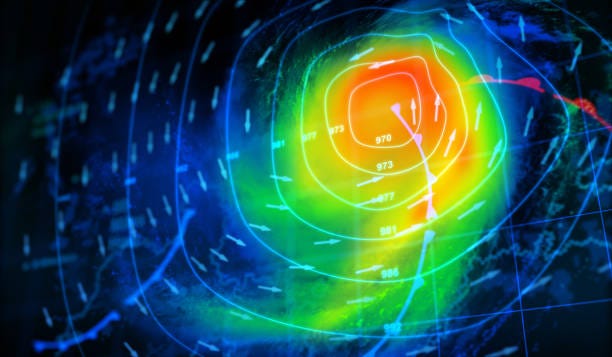
Meteorology is an interdisciplinary scientific field that focuses on the study of the atmosphere and its impact on the weather and climate patterns of the Earth. This field has been instrumental in providing critical information about the atmosphere and the Earth’s weather patterns, helping us to better understand and predict the weather, and to take appropriate measures to mitigate the effects of severe weather events.

What is Meteorology ?

Meteorology is the scientific study of the atmosphere, including its composition, structure, and physical processes. It involves the analysis of weather patterns and climate systems, and the use of computer models, satellite imagery, and ground-based observations to make predictions about future weather and climate conditions.

According to the American Meteorological Society (AMS), “Meteorology is the interdisciplinary scientific study of the atmosphere that focuses on weather forecasting and the study of weather patterns on the microscale and synoptic scale.”

The Atmosphere: A Complex System

The Earth’s atmosphere is a complex system that is constantly changing due to a variety of physical and chemical processes. It is made up of a mixture of gases, particles, and energy, and it interacts with the Earth’s surface, the oceans, and the sun to produce different types of weather patterns.

The Goals of Meteorology

The primary goal of meteorology is to understand how the atmosphere works and to make predictions about future weather and climate conditions. Meteorologists use a wide range of tools and techniques, including computer models, satellite imagery, and ground-based observations, to study the physical and chemical processes that occur in the atmosphere. They use this information to develop models that can predict the path and intensity of storms, including hurricanes, tornadoes, and other severe weather events, and to provide critical information to public safety officials.

Areas of Focus in Meteorology

Meteorologists study a variety of aspects of the atmosphere, including:

  • Atmospheric Dynamics: The study of air masses, fronts, and storms, and how they interact with other parts of the atmosphere to produce different types of weather.
  • Clouds: The study of clouds and their formation and behavior, including the impact of clouds on the Earth’s climate.
  • Precipitation: The study of precipitation, including rain, snow, and other forms of moisture, and how it affects the Earth’s climate.
  • Atmospheric Chemistry: The study of the composition of the atmosphere and how changes in atmospheric chemistry can affect the Earth’s climate.

Meteorologists at Work

Meteorologists work in a variety of settings, including academic institutions, government agencies, and private companies. They use their expertise to make forecasts for a variety of purposes, including aviation, agriculture, and energy production. They also provide critical information to public safety officials, helping to protect people from severe weather events and other hazardous conditions.

Meteorology is a critical field that provides valuable information about the Earth’s atmosphere and the weather and climate patterns that occur within it. Whether you are a researcher, a forecaster, or simply someone who is interested in the weather, understanding meteorology is important for a better appreciation of the world around us.

As the AMS states, “Meteorology is a fascinating and important field that is critical to understanding the atmosphere and the weather and climate patterns that occur within it.”

If after reading this post you still don’t have a headache, you might enjoy my other writings. So feel free to follow for more content!

Understanding
Science
Climate
Earth
Weather
Recommended from ReadMedium