avatarYvonne Wang

Free AI web copilot to create summaries, insights and extended knowledge, download it at here

5777

Abstract

nto the good part — the four levels of analysis are a great tool to form an in-depth understanding of what’s going on in the world.</p><figure id="4c99"><img src="https://cdn-images-1.readmedium.com/v2/resize:fit:800/0*bUO-YoPXmVFJqqTP"><figcaption>Photo by <a href="https://unsplash.com/@adibbehrooz?utm_source=medium&amp;utm_medium=referral">Mohammad Bagher Adib Behrooz</a> on <a href="https://unsplash.com?utm_source=medium&amp;utm_medium=referral">Unsplash</a></figcaption></figure><p id="0974">It looks at international relations and politics from four levels: the System level, the State level, the Organizational level, and the Individual level.</p><h2 id="2428">First, what is a State?</h2><blockquote id="d8e0"><p>A state is a nation or territory considered as an organized political community under one government. — Oxford Dictionary</p></blockquote><p id="16f2">Typically, states are countries.</p><figure id="1bc7"><img src="https://cdn-images-1.readmedium.com/v2/resize:fit:800/0*NYDMmSx_mR96Quyc"><figcaption>Photo by <a href="https://unsplash.com/@lemonvlad?utm_source=medium&amp;utm_medium=referral">Vladislav Klapin</a> on <a href="https://unsplash.com?utm_source=medium&amp;utm_medium=referral">Unsplash</a></figcaption></figure><p id="d0d6">Let’s dive in.</p><h2 id="d277">#1: System Level</h2><p id="4ea1">System level analysis looks at the international system — how the international system affects the behavior of each state within it.</p><p id="abe4">What’s special about the international system is that it’s composed of the power of each state. Even the United Stations isn’t independent of its members — this dependency is what makes things interesting.</p><h2 id="28e2">#2: State Level</h2><p id="aca5">State level analysis looks at how a state’s <i>own</i> characteristics influence its foreign policy behavior. The analyst will examine the state’s culture, religious, social, historical, economic, and geographic factors to understand its policy decisions.</p><h2 id="04d2">#3: Organization Level</h2><p id="c71f">Organization level analysis looks at how organizations within a state play a role in shaping its foreign policy, whether those organizations are domestic businesses, non-profits, educational institutions, or international corporations.</p><h2 id="8932">#4: Individual Level Analysis</h2><p id="277a">The word “individual” isn’t <i>any</i> individual — it focuses on the key decision-makers and influencers in a state’s foreign policy. Individual level analysis tries to understand, specifically, how state leaders influence foreign policy.</p><figure id="857e"><img src="https://cdn-images-1.readmedium.com/v2/resize:fit:800/0*la3MIdfPRIjf_E9W"><figcaption>Photo by <a href="https://unsplash.com/@eugene_tkachenko?utm_source=medium&amp;utm_medium=referral">Eugene Tkachenko</a> on <a href="https://unsplash.com?utm_source=medium&amp;utm_medium=referral">Unsplash</a></figcaption></figure><h2 id="bdb0">Pulling Them Together</h2><p id="79ed">The four-level analysis framework is a powerful one. If you pulled any article from the news, you’ll realize this framework helps understand it quite comprehensively. When we combine our analysis of system, state, organization, and individual level influence on an issue, it’s much easier for us to trace down the root cause and predict the future.</p><h1 id="77a1">Key Concepts in International Relations</h1><p id="9697">If you asked me to use one theme to describe international relations, it would be <b>conflict & cooperation</b>.</p><figure id="4afe"><img src="https://cdn-images-1.readmedium.com/v2/resize:fit:800/0*_cKaCZXrCyYqrKmE"><figcaption>Photo by <a href="https://unsplash.com/fr/@charlfolscher?utm_source=medium&amp;utm_medium=referral">Charl Folscher</a> on <a href="https://unsplash.com?utm_source=medium&amp;utm_medium=referral">Unsplash</a></figcaption></figure><p id="446d">That’s what most of the research in IR is about.</p><ul><li>When do states cooperate? Why do they cooperate? How do they cooperate? What happens when they cooperate?</li><li>When do states get into conflict? How does conflict emerge? How can we avoid paying the costs of conflict and get straight to a resolution?</li></ul><h2 id="b236">Game Theory</h2><p id="50cf">We can’t talk about conflict and cooperation without mentioning game theory.</p><blockquote id="8345"><p>In game theory, we model the strategic decisions between two or more rational players.</p></blockquote><p id="2f52">You’ve probably heard of the <b>Prisoner’s Dilemma</b> — that’s the simplest version of game theory.</p><figure id="a31c"><img src="https://cdn-images-1.readmedium.com/v2/resize:fit:800/0*p1QJMQJIM-hvXHja.jpg"><figcaption><a href="https://www.google.com/url?sa=i&amp;url=https%3A%2F%2Fwww.britannica.com%2Fscience%2Fgame-theory%2FThe-prisoners-dilemma&amp;psig=AOvVaw0oIXPgK1zMA9GkuKkDlBpY&amp;ust=1671931752797000&amp;source=images&amp;cd=vfe&amp;ved=0CBEQjhxqFwoTCNj4jqSNkfwCFQAAAAAdAAAAABAJ">Source</a></figcaption></figure><p id="1883">International relations is essentially a Prisoner’s Dilemma on a <b>very large scale</b>. Instead of two players, we now have <b>hundreds</b> — every state, every organization, and every person in power is a player in this massive game.</p><p id="ef6b" type="7">Just like in game theory, their decisions are heavily interdependent. But unlike in game theory, these players are not always rational — they don’t always do what’s most logical or reasonable.</p><p id="5c9a">On the foundation of game theory, we can discuss cooperation and conflict.</p><h2 id="ab70">Cooperation</h2><p id="35db" type="7">States tend to cooperate when they’re both better off doing so than not.</p><p id="02ce">The best example of state cooperation is <b>international trade</b> — whe

Options

re countries specialize in what they’re relatively better at producing to save on costs (through economies of scale) and trade with other countries to get the products they stopped producing.</p><blockquote id="2e66"><p>For example, France focuses on producing wine because it’s their best way to allocate resources. China focuses on manufacturing because of its special capabilities. Then, France can export wine to China and import “made in China” products in return.</p></blockquote><p id="b5fb">Cooperation isn’t limited to international trade. It’s also prevalent on the <i>military</i> side, and sometimes in <i>technology</i> research & development.</p><h2 id="e774">Conflict</h2><p id="70e8" type="7">It doesn’t always work out so nicely. Sometimes, there just isn’t a win-win solution, it might be a zero-sum game — if I get it, you can’t have it, and vice versa.</p><p id="934f">Conflicts escalate for many reasons, the biggest ones are:</p><ol><li>States trying to expand or retain political and economic power</li><li>Retaliation against severe government oppression</li><li>Disapproval of political decisions unaddressable via peaceful channels</li></ol><p id="183a">Conflicts are common <i>within</i> and <i>between</i> states. Conflicts can be <b>political & economical</b>, like pressing trade sanctions on other states to force them to comply with a request. They can also be <b>violent</b>, like <b>war and terrorism</b>.</p><figure id="f528"><img src="https://cdn-images-1.readmedium.com/v2/resize:fit:800/0*zxxS7co_0uslQFE5"><figcaption>Photo by <a href="https://unsplash.com/@uxgun?utm_source=medium&amp;utm_medium=referral">UX Gun</a> on <a href="https://unsplash.com?utm_source=medium&amp;utm_medium=referral">Unsplash</a></figcaption></figure><p id="2836">Research suggests that conflicts are more likely to happen between two non-democratic countries. There is some correlation between war and a state’s <b>political structure</b>.</p><h2 id="3968">Conflict — Information Asymmetry</h2><p id="03c9" type="7">If states all had access to the same information and were perfectly rational, they would never go to war with each other.</p><p id="7352">That’s because they <b>already know</b> the <b>outcome</b> of a war, and they’ll be in agreement on it because they’re rational, so they can just get to the <b>solution</b> associated with that outcome <b>directly</b>.</p><p id="26e3">However, because of this lack of information transparency between states, many have to pay the high cost of war before they can get enough information to reach an agreement on the realistic outcome, and make concessions accordingly.</p><h2 id="3b53">Conflict — The Agency Problem</h2><p id="1d79">On the individual level, <b>political leaders</b> often have the biggest say in the decision to engage in conflict. But they don’t always look out for the best interest of their people — that’s the agency problem.</p><blockquote id="a47d"><p>Because of their personal interest, political leaders are motivated to make decisions against the people’s will, and they won’t be caught for a long time or at all because they have exclusive access to secret information.</p></blockquote><figure id="45ae"><img src="https://cdn-images-1.readmedium.com/v2/resize:fit:800/0*FXXX1BkfbaNMRs7p"><figcaption>Photo by <a href="https://unsplash.com/@historyhd?utm_source=medium&amp;utm_medium=referral">History in HD</a> on <a href="https://unsplash.com?utm_source=medium&amp;utm_medium=referral">Unsplash</a></figcaption></figure><p id="6f61">There’s a lot more to international relations, and the concepts in game theory, conflict, and cooperation can be extended much further with mathematical models, but we’ll pause here for now.</p><h2 id="60c3">Quick Recap</h2><p id="0f1f">You just learned:</p><ol><li>Idealism vs. realism and their international relations implications</li><li>The four levels of analysis in international relations to understand any news topic comprehensively</li><li>The core concepts of game theory, cooperation, conflict, information asymmetry, and the agency problem in international relations</li></ol><h2 id="b7c4">Sources & helpful resources</h2><ul><li><a href="https://www.youtube.com/watch?v=NVCDnUZqLzU">LSE: Introduction to International Relations</a></li><li><a href="https://www.sciencedirect.com/topics/social-sciences/international-relations">Science Direct: International Relations</a></li><li><a href="https://www.internationalrelationsedu.org/what-is-international-relations/">InternationalRelationsEDU: What is International Relations?</a></li><li><a href="https://williamspaniel.com/2012/07/08/international-relations-101/">William Spaniel: International Relations 101</a></li></ul><p id="869d"><i>That’s all for today, thanks for reading!</i></p><p id="329b">Click <a href="https://medium.com/@yw124/subscribe">here</a> to join my email list and not miss similar content I share.</p><p id="e544">Not a Medium member yet? Consider joining 60+ million active readers with <a href="https://medium.com/@yw124/membership">unlimited access</a>. I’ll receive a small fee at no added cost to you.</p><p id="14d3"><i>You might benefit from my other business articles:</i></p><div id="f6d4" class="link-block"> <a href="https://readmedium.com/my-best-business-articles-9f3ac7e5776a"> <div> <div> <h2>My Best Business Articles</h2> <div><h3>All in one place for you.</h3></div> <div><p>medium.com</p></div> </div> <div> <div style="background-image: url(https://miro.readmedium.com/v2/resize:fit:320/0*ucA2r_hBXz_1hmhO)"></div> </div> </div> </a> </div></article></body>

Understand International Relations: a Powerful Lens to View the World

One article to help you understand the news objectively.
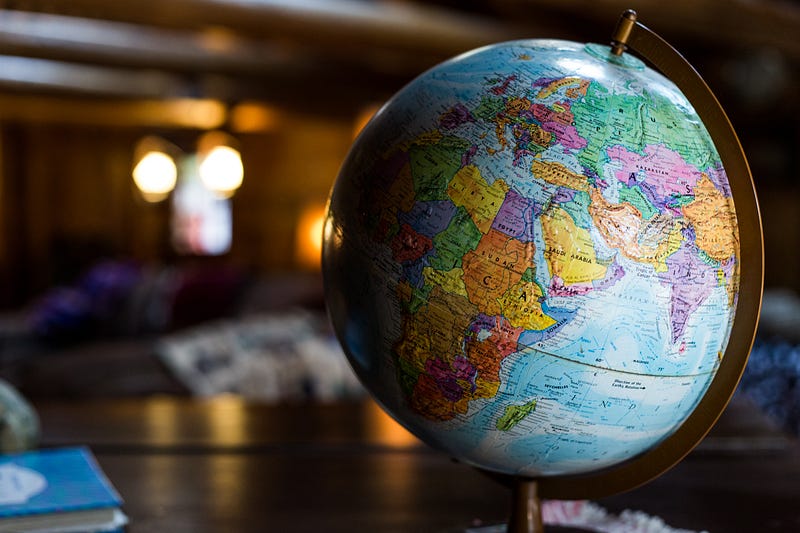
Photo by Kyle Glenn on Unsplash

International relations is the study of how states and countries interact with one another.

These interactions happen on a global scale, and every decision creates a large and magnifying impact on every business and individual across the globe, including you, me, and every company we work for or buy from.
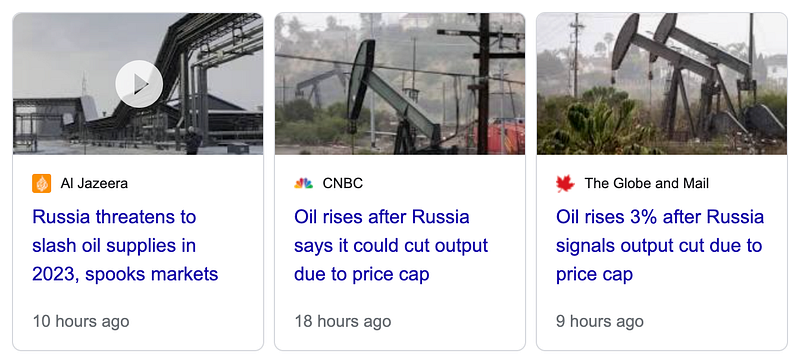
Source: Internet News Search

Oil is a great example of the interconnectedness of state decisions on the global stage, and what happens when countries fail to manage their international relations properly. Since the 19th century when oil was discovered, we’ve seen everything from American and European intervention in the Middle East to the Iran-Iraq, Iraq-Kuwait, and Saudi Arabian predatory pricing attacks — the cumulative gain was net negative.
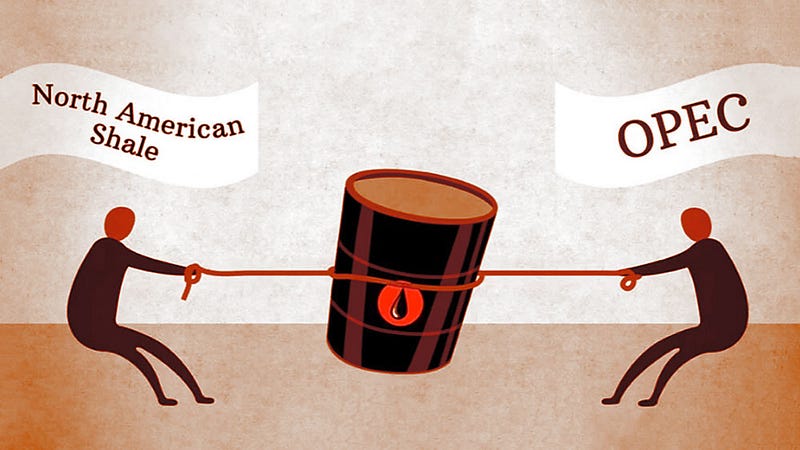
Source

Everyone wanted to maximize their piece of the pie in the oil game, and that led to decades of economic and military conflict — this shows the dreadful consequences of failed international relations.

Why Study International Relations?

If you, as an individual, understood international relations, you’ll be able to do at least three things:

  1. Make better investment decisions by understanding how international politics influence your domestic economy.
  2. Form a holistic and independent worldview to understand the causes and implications behind the news, instead of believing exactly what the media says.
  3. Learn important business and strategic principles on cooperation, conflict, and bargaining to apply them to your own life.

A Quick Roadmap

Just like I did for the other business topics, I’m designing this post to give you a holistic overview of the principles of international relations and how you can apply them in your life.

You’ll take away:

  1. The core IR ideologies of idealism vs. realism
  2. The four levels of analysis in IR
  3. Key concepts to understand IR

Idealism vs. Realism

In international relations (IR), people are split into two sides — we call them the idealists and the realists.

Realists believe that international relations are pre-set to repeatedly lead to conflict, so instead of trying to avoid conflict, we should just learn to manage them.

Idealists, on the other hand, are optimistic. They demand collaboration between states and see a future where countries can become politically united. They believe the world is getting better.

This is how philosophy separates them:

Idealists see the world as they want it to be. Realists see the world as it is.

Photo by Tingey Injury Law Firm on Unsplash

Idealists & Realists in Action

Realists see states’ primary focus as self-preservation, which transfers into increasing their own relative military power against other states. Under realism, international organizations like international courts have no power other than what they derive from being recognized by select states. They believe the international system drives states to use military force.

Idealists see a reduction in the use of military power because of the interdependence between states. They believe the consequences of military power outweigh the benefits, so international cooperation is in the interest of every state. They also claim economic power is proven more effective than military power.

As we dive deeper into the field, it’s important to keep these two different lenses in mind, because most disagreements in international relations will stem from this fundamental difference in belief.

The Four Levels of State Behavior

Now we’re getting into the good part — the four levels of analysis are a great tool to form an in-depth understanding of what’s going on in the world.

Photo by Mohammad Bagher Adib Behrooz on Unsplash

It looks at international relations and politics from four levels: the System level, the State level, the Organizational level, and the Individual level.

First, what is a State?

A state is a nation or territory considered as an organized political community under one government. — Oxford Dictionary

Typically, states are countries.
Photo by Vladislav Klapin on Unsplash

Let’s dive in.

#1: System Level

System level analysis looks at the international system — how the international system affects the behavior of each state within it.

What’s special about the international system is that it’s composed of the power of each state. Even the United Stations isn’t independent of its members — this dependency is what makes things interesting.

#2: State Level

State level analysis looks at how a state’s own characteristics influence its foreign policy behavior. The analyst will examine the state’s culture, religious, social, historical, economic, and geographic factors to understand its policy decisions.

#3: Organization Level

Organization level analysis looks at how organizations within a state play a role in shaping its foreign policy, whether those organizations are domestic businesses, non-profits, educational institutions, or international corporations.

#4: Individual Level Analysis

The word “individual” isn’t any individual — it focuses on the key decision-makers and influencers in a state’s foreign policy. Individual level analysis tries to understand, specifically, how state leaders influence foreign policy.

Photo by Eugene Tkachenko on Unsplash

Pulling Them Together

The four-level analysis framework is a powerful one. If you pulled any article from the news, you’ll realize this framework helps understand it quite comprehensively. When we combine our analysis of system, state, organization, and individual level influence on an issue, it’s much easier for us to trace down the root cause and predict the future.

Key Concepts in International Relations

If you asked me to use one theme to describe international relations, it would be conflict & cooperation.

Photo by Charl Folscher on Unsplash

That’s what most of the research in IR is about.

  • When do states cooperate? Why do they cooperate? How do they cooperate? What happens when they cooperate?
  • When do states get into conflict? How does conflict emerge? How can we avoid paying the costs of conflict and get straight to a resolution?

Game Theory

We can’t talk about conflict and cooperation without mentioning game theory.

In game theory, we model the strategic decisions between two or more rational players.

You’ve probably heard of the Prisoner’s Dilemma — that’s the simplest version of game theory.
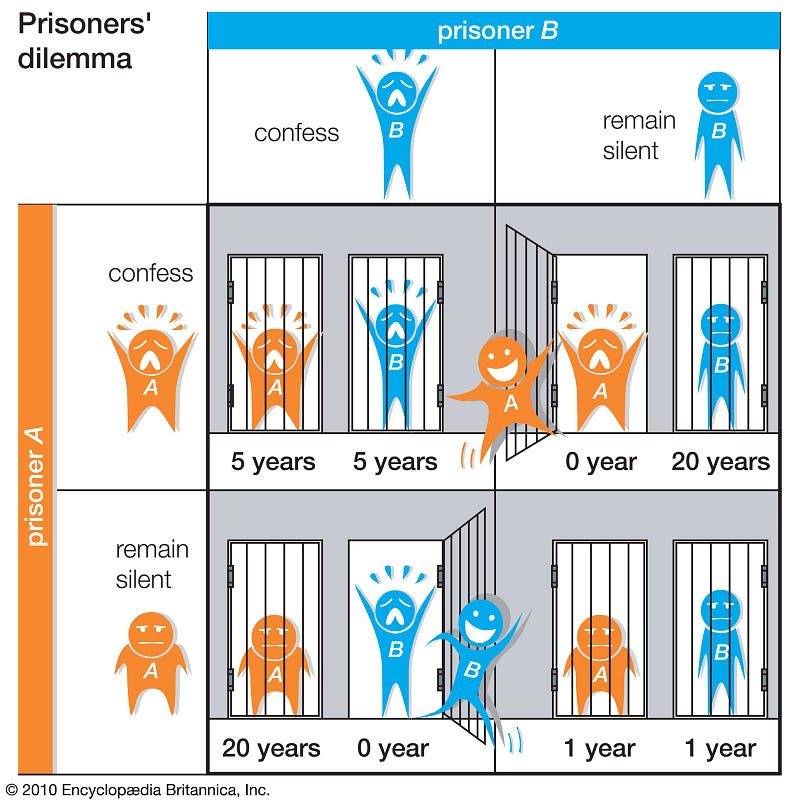
Source

International relations is essentially a Prisoner’s Dilemma on a very large scale. Instead of two players, we now have hundreds — every state, every organization, and every person in power is a player in this massive game.

Just like in game theory, their decisions are heavily interdependent. But unlike in game theory, these players are not always rational — they don’t always do what’s most logical or reasonable.

On the foundation of game theory, we can discuss cooperation and conflict.

Cooperation

States tend to cooperate when they’re both better off doing so than not.

The best example of state cooperation is international trade — where countries specialize in what they’re relatively better at producing to save on costs (through economies of scale) and trade with other countries to get the products they stopped producing.

For example, France focuses on producing wine because it’s their best way to allocate resources. China focuses on manufacturing because of its special capabilities. Then, France can export wine to China and import “made in China” products in return.

Cooperation isn’t limited to international trade. It’s also prevalent on the military side, and sometimes in technology research & development.

Conflict

It doesn’t always work out so nicely. Sometimes, there just isn’t a win-win solution, it might be a zero-sum game — if I get it, you can’t have it, and vice versa.

Conflicts escalate for many reasons, the biggest ones are:

  1. States trying to expand or retain political and economic power
  2. Retaliation against severe government oppression
  3. Disapproval of political decisions unaddressable via peaceful channels

Conflicts are common within and between states. Conflicts can be political & economical, like pressing trade sanctions on other states to force them to comply with a request. They can also be violent, like war and terrorism.
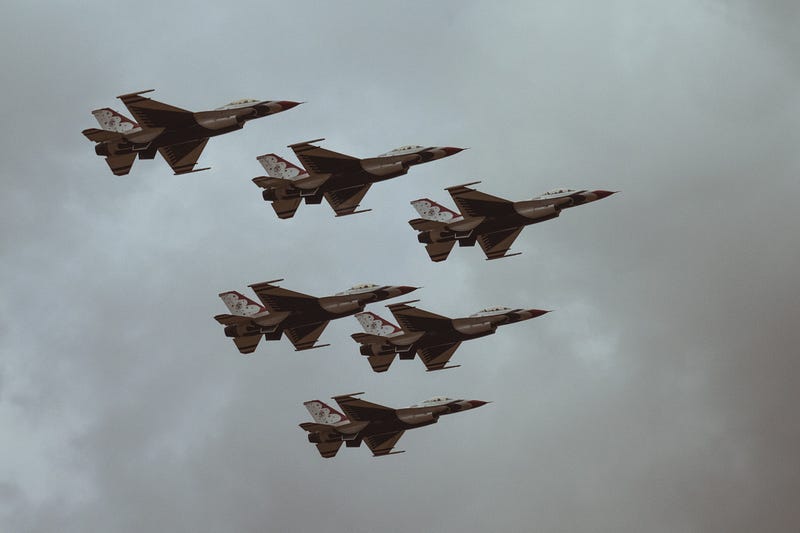
Photo by UX Gun on Unsplash

Research suggests that conflicts are more likely to happen between two non-democratic countries. There is some correlation between war and a state’s political structure.

Conflict — Information Asymmetry

If states all had access to the same information and were perfectly rational, they would never go to war with each other.

That’s because they already know the outcome of a war, and they’ll be in agreement on it because they’re rational, so they can just get to the solution associated with that outcome directly.

However, because of this lack of information transparency between states, many have to pay the high cost of war before they can get enough information to reach an agreement on the realistic outcome, and make concessions accordingly.

Conflict — The Agency Problem

On the individual level, political leaders often have the biggest say in the decision to engage in conflict. But they don’t always look out for the best interest of their people — that’s the agency problem.

Because of their personal interest, political leaders are motivated to make decisions against the people’s will, and they won’t be caught for a long time or at all because they have exclusive access to secret information.
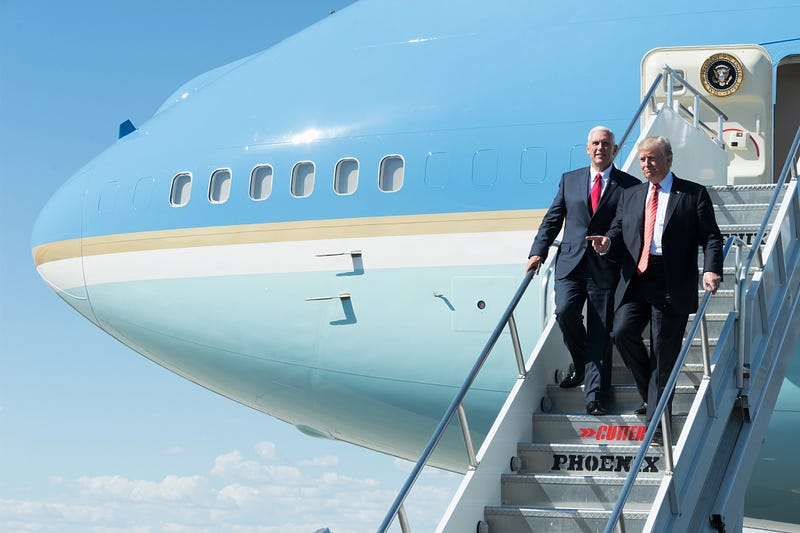
Photo by History in HD on Unsplash

There’s a lot more to international relations, and the concepts in game theory, conflict, and cooperation can be extended much further with mathematical models, but we’ll pause here for now.

Quick Recap

You just learned:

  1. Idealism vs. realism and their international relations implications
  2. The four levels of analysis in international relations to understand any news topic comprehensively
  3. The core concepts of game theory, cooperation, conflict, information asymmetry, and the agency problem in international relations

Sources & helpful resources

That’s all for today, thanks for reading!

Click here to join my email list and not miss similar content I share.

Not a Medium member yet? Consider joining 60+ million active readers with unlimited access. I’ll receive a small fee at no added cost to you.

You might benefit from my other business articles:

Business
Business Strategy
International Relations
Strategy
Personal Development
Recommended from ReadMedium