Underestimating our Asian enemies nearly led to defeat in the Korean War
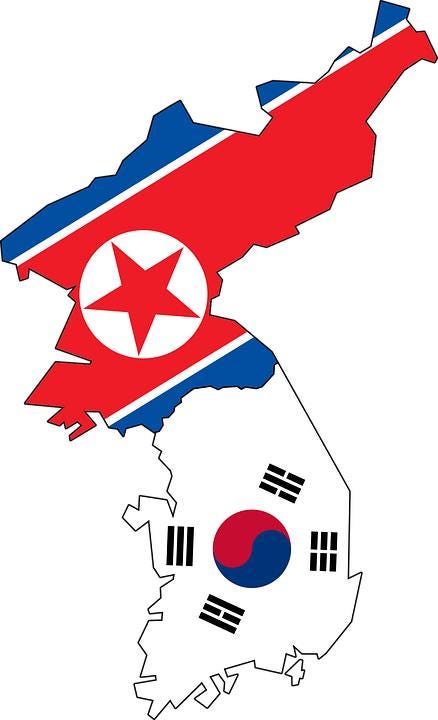
As we approach the 70th anniversary of the armistice that, on July 27, 1953, ended the hostilities of the Korean War, it’s worth looking back at what went wrong, and how mistakes similar to those made seven decades ago may today lead to dire consequences caused by an underestimation of the rising power of China. The attached article from The Atlantic gives a good analysis, written shortly after the armistice, of how American leaders thought what had once been expected to be an easy victory turned into a stalemate. Underestimating our enemy and misjudging what the Koreans and Chinese were capable of doing to the American army was a large part of the problem.
Here’s the link: Our Mistakes in Korea — The Atlantic
How could America go from defeating Japan in World War II to being surrounded in the Pusan Perimeter barely five years later?
We live in a world today in which too many people raise a cry of “racism” and blame it for all problems that befall us, but that doesn’t mean the word doesn’t apply in some cases. Chinese and North Korean forces, knowingly or otherwise, perfectly applied the advice of the ancient Chinese military strategist Sun Tzu to mislead enemies into underestimating the abilities of those on the other side of the fight.
To quote the article: “It is said that the original planners mistakenly calculated that they were dealing with a gook army and an essentially craven people who would collapse as soon as mobile men and modern weapons blew a hot breath their way. But the play didn’t follow the lines as written.”
Read that paragraph again. A racial slur that would never be used today in polite company was openly printed in the pages of a liberal publication.
What the author doesn’t mention is that one of the American generals in Korea who underestimated the ability of non-white soldiers to fight against him had a decade-long history of such problems. As the commander of a segregated Black unit of American troops during World War II, Maj. Gen. Edward Almond regularly despised his own troops even when they made heroic stands that in at least one case led, long after the general’s death, to one of his Black officers, 1st Lt. John Fox, receiving the Medal of Honor for calling an artillery barrage upon his own position while surrounded by German forces in Italy. Despite the heroic action of his subordinate, Almond didn’t learn his lesson that military valor exists in soldiers of other races. Years later when confronting North Korean and Chinese forces in the Korean War, his lack of respect for the fighting capacity of enemies he derided as “Chinese laundrymen” was responsible for some of the worst American defeats in Korea following foolhardy attacks. Almond found out the hard way that underestimating what people can do based on the color of their skin can have terrible consequences.
The Atlantic article proves a point — racism was at least one root of America’s failure to take seriously the military abilities of Asian soldiers, at least until the North Koreans came within a hairsbreadth of driving the United States Army into the sea at Pusan. If it had not been for General MacArthur’s brilliant counterattack at Incheon, we would have been faced with a humiliating Dunkirk as we tried to evacuate from Pusan while a North Korean army, augmented by Chinese “volunteers,” closed in. MacArthur’s counterattack drove the North Koreans almost to the Yalu River, but he was confronted with an entirely new war when the Chinese, under Mao’s leadership, dropped the facade of sending only Chinese “volunteers” to help the North Koreans and instead counterattacked in force, driving the United States and allied forces back to a line roughly equivalent to the pre-war borders between North and South Korea.
MacArthur had his problems, but unlike too many of his generals, he prided himself on understanding what he called the “Asian mind.” Long before the Korean War broke out, MacArthur spent many years living and fighting in Asia, both against and alongside soldiers from several different Asian ethnic groups. It’s too much to judge his racial attitudes by modern standards — after all, MacArthur’s first military actions were in Mexico before the First World War — but one thing MacArthur did **NOT** do was to underestimate the ability of Asians to fight.
It’s said that MacArthur kept a copy of “The Art of War” by Sun Tzu on his desk. It’s unclear how much MacArthur knew about ancient Chinese military theory, but he certainly knew from hard experience, if not from academic study, the importance that Asian armies have placed for thousands of years on getting their enemies to underestimate them. To quote the father of Chinese military strategy, “All warfare is based on deception. Hence, when we are able to attack, we must seem unable; when using our forces, we must appear inactive; when we are near, we must make the enemy believe we are far away; when far away, we must make him believe we are near.” Another quote: “If your enemy is secure at all points, be prepared for him. If he is in superior strength, evade him. If your opponent is temperamental, seek to irritate him. Pretend to be weak, that he may grow arrogant. If he is taking his ease, give him no rest. If his forces are united, separate them. If sovereign and subject are in accord, put division between them. Attack him where he is unprepared, appear where you are not expected.”
Much would have gone differently in the Pacific theater of World War II, in the Korean War, and in the Vietnam War if more Americans had studied Asian military tactics and history.
However, for most of American history, understanding foreign cultures was far from a priority. In fact, as the magazine’s name implies, the Atlantic was originally founded to combat that problem. In its earlier days, the Atlantic was dedicated to opposing the older isolationist mindset among American conservatives who had no interest in matters on the other side of the Atlantic Ocean, let alone on the other side of the Pacific.
“Fortress America” isolationism may have worked in the 1800s and the first half the 1900s, but Pearl Harbor showed American vulnerability to cross-oceanic attacks, including by people who too many Americans of an earlier era viewed as an “inferior race.”
The placement of nuclear weapons on long-range bombers and intercontinental ballistic missiles proved beyond question to conservatives that we simply cannot ignore world affairs.
It’s now widely assumed that conservatives are hawks who favor military intervention while liberals are doves who oppose it. It may be hard for younger Americans to believe what they are too young to remember, but there was a day not that many decades ago when the liberal-conservative polarity was reversed, and it was liberals who advocated armed intervention overseas while conservatives opposed it.
What happened in Korea, with the recognition of the need for a long-term military force to keep a Cold War stalemate from turning into a rekindled “hot war,” was a major factor in that switch, causing conservatives in America to be regarded as advocates of military preparedness and of overseas engagement.
American arrogance about our abilities led to a lack of preparation for war, causing Americans to fall into precisely the trap our North Korean and Chinese adversaries had set for us. This section from the Atlantic article fairly summarizes the problems as the Korean War began and progressed:
“In the first summer, we plunged on a sure thing, though the axiom has it that in war nothing is sure. We said we did it because there was no alternative to precipitate action; the future of collective security was at stake, and aggression left unchecked would soon ring the world with fire. So went the reasoning. But let’s look at the record. The decision to intervene was unanimous in the political and military councils of government. But no move toward even partial mobilization accompanied it. The reserves were not called. An ammunition build-up was not programmed, though in some types the stocks were nil. For three months thereafter the Defense Secretary continued to hack at our fighting resources. Relations between State and the Pentagon remained as cold as if they represented opposite sides in a war.”
Again:
“Initially two American divisions were sent from Japan along with a token air force and a hope that nothing more would be needed. It proved not enough, and so a third was sent along, to be rocked back on its heels. Belatedly a fourth division had been alerted in the United States. Moving into the battle along the Naktong line, its weight was still insufficient to alter the balance.
“When at last, in late summer, two additional divisions were landed behind the enemy lines at Inchon, the show, in so far as American field strength was concerned, was all but complete. One more division was added in the hour when the seemingly shattered Communist enemy was being pursued to the Yalu River. Strategy was then at its wishful best; it was wishing out of existence a Red Chinese Army which was already over the border.
“So there were seven American divisions to reap the disappointment of the wish and to know the shock of defeat when Communist China, with many times the fighting power of North Korea, entered the war. There were still seven in the following spring. By then the heroic Eighth Army, having been driven from North Korea, was already on the rebound. It was considered the appropriate time for the Joint Chiefs of Staff and others in high place to pass the word that the war was a strategic and tactical stalemate. Concern for Europe influenced the decision; Europe was rated the ‘decisive’ area; so additional American divisions were sent there. This was by way of saying that to stop aggression and make collective security work, it is better to give over a battle which could be won for the sake of one which, under existing conditions, would certainly be lost.
“Under both Administrations American policy continued to be guided on the estimates of that hour. At the time of the truce there were still seven American divisions in Korea. There were also sixteen ROK divisions, a British Commonwealth division, a Turkish brigade, and numerous stout battalions from other nations.
“But when they manned their fire trenches, there was about one fighting man to every 40 yards of distance. Along the general front they were outnumbered by the enemy three to one. The works they held were eggshell thin compared with the depth of the Chinese entrenchments. They consisted really of one line of bunkered trenches slashed through the ridgetops from coast to coast with an occasional half-organized backstop position somewhat to the rear. The Communist defensive zone was entrenched for 20,000 yards back, four times the depth of World War I systems. Their diggings were engineered to provide maximum protection against atomic attack. Ours were not.”
What that article describes is a situation in which American air power and artillery prevented a Communist assault from pushing south, but in which American and allied military power didn’t have anywhere close to the on-the-ground forces needed to make an aggressive attack into North Korea.
We can debate whether, particularly after the death of Joseph Stalin, the Korean stalemate was unavoidable or whether an attack into North Korea would have led to World War III. What’s not debatable is that American forces on the ground, by at least 1952, could not have made that attack even if we had wanted to do so. We made a deliberate decision to allow the North Koreans to create a system of military fortifications that were all but impregnable without committing a level of force that far exceeded anything we had on the Korean peninsula.
That stalemate, whether avoidable or otherwise, led directly to the problems we now face with a resurgent China.
Will we learn from our experience seven decades ago of what happens when we underestimate our adversary’s abilities?
Mao’s successor as China’s leader, President Xi Jinping, may be many things, but he is no fool.
Unlike Mao, who took control of a country that had been badly broken by decades of war, not only the civil war against the Nationalist Chinese but also the brutal Japanese invasion and many previous years of warlordism, and prior to that by centuries of isolationism that had left China both backward and weak, President Xi heads a rising regional power that aspires to much greater prominence on the world stage.
President Xi is the leader of a country that is one of the world’s oldest civilizations, dating back several thousand years before Rome was more than a small village. China, for better or worse, has been the dominant power in Asia for most of recorded history.
Who, during the days of Stalin and Mao, could have expected that Mao’s successor would become the dominant partner in the Russian-Chinese relationship, with Vladimir Putin heading a shrunken Russia that has spent a year trying and failing to reconquer Ukraine?
While Russia is in steep decline, the Chinese dragon — and I’m using a word of which many in China would be proud — is rousing itself from four centuries of slumber.
Underestimating its power today would be as foolish as underestimating the willingness and ability of Asian soldiers to fight was in the 1950s.