
Uncertainty: our greatest fear or your new way to learn super powers?
How’s the ‘decade of disruption’ been for you so far?
Even if you were one of the ‘lucky’ ones who kept their job / stayed healthy / successfully navigated the twin joys of home schooling and juggling childcare / sat it out on your own a private Caribbean island — delete as appropriate — there’s a good chance your answer sits somewhere fairly high on the OMFG scale.
And that’s before we even mention the actual pandemic in the room. Because whichever way you cut it and whatever colour your political stripes, the sheer scale and the collective trauma the past 18 months has wreaked across communities and the world has impacted each and every one of us in some way.
My own response, at least initially, took me by surprise. For all that I’m a serial sufferer of imposter syndrome, be at as author, entrepreneur or, as I currently am, a documentary maker, I’ve spent decades advocating for change and pushing beyond society’s parameters as well as — I thought — my own comfort zone. As a result, I’d long figured I’d become pretty good at rolling with the proverbial punches. And then the pandemic hit.
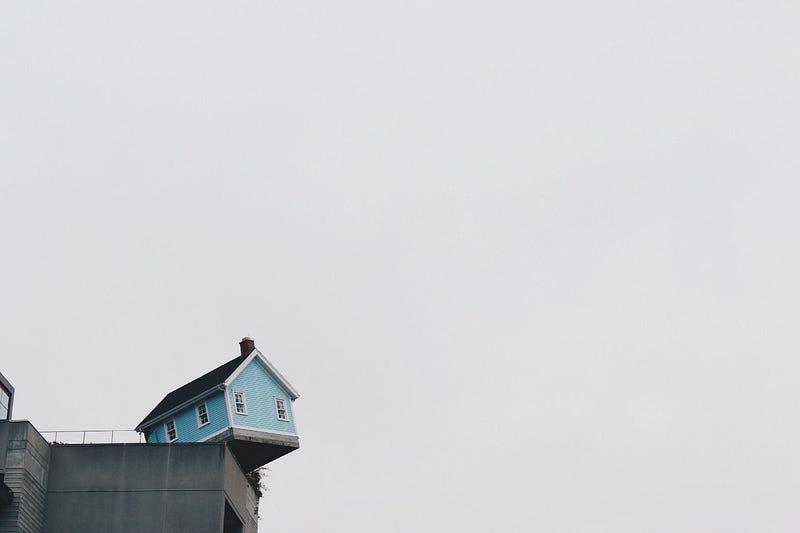
To say I felt wrongfooted — both personally and in context of the wider issues being played out — is an understatement: it was as if the floor had gone out from underneath me.
Stuck at home watching every contract, event, conference and booking disappear, I became more and more frustrated by the daily press briefings led by hapless politicians and scientists who were as clearly out of their depth as the rest of us. I felt panicky and helpless.
And I’m not the only one. Over that period, high anxiety increased by more than 50% in the UK alone. All of us confronted by this sudden, terrifying change. By a collective inability to answer: how do we move past this? Or better yet: how does this become the chance to make things better?
The surprising benefits of turning a problem upside down
My immediate impulse was to start to check in on some of the young entrepreneurs I’ve worked with or mentored over the years. Because I was worried about them, yes, but also because I know that by giving strength you get strength.
It was my hope that we might be able to help each other in that way. I was surprised — and not a little delighted — to discover that many of those I spoke to were doing remarkably well. Yes, their projects were facing tough times, but their mindsets — their willingness to roll with whatever was being thrown their way — showed them to be that they were far more adaptable than the world around them was proving to be.
The idea that I’d come into this with some high-minded notion that the 20 years I’ve spent mentoring young people might be some help to them was very quickly turned on its head.
It was far more of a case of what I might learn from them rather than the other way around.
Intrigued, I began to dig deeper. I wanted to know why I and so many others were left feeling so unmoored while these quite fearless young people, whose backgrounds often mean they’re under-appreciated in society, had adapted to the sudden changes wrought by the pandemic with relative ease.
I cast my interviews wider, speaking to more and more people. At the same time, I was digging into the economic and scientific theories around what was happening — not just now, but through human history — talking to people, reading everything I could, from social science to philosophy.
And guess what? Every. Single. Time it led back to the same place: the revelation that our most fundamental fear — both individually and collectively — is uncertainty.
How the great uncertainty paradox can truly free you, or totally f**k you
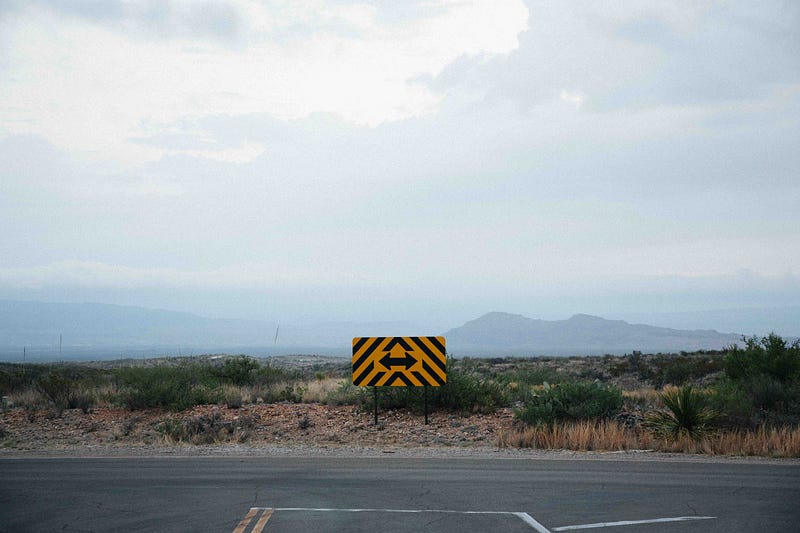
One of the key problems, I quickly realised, is calling uncertainty out for what it is. Most of the time we don’t. We blame our anxiety, our fears, on money, instability around employment, concerns about our health and myriad other things from global economics to climate change.
We successfully convince ourselves such issues are the root cause of our problems when they are merely the frosted tip of the bloody great iceberg of individual and collective uncertainty that lies, submerged and hidden, below.
Through this, I was able to understand what had happened to me back at the beginning of the pandemic. For all that I’d been encouraging people to tear up the rule book and Be More Pirate since publishing my book of the same name several years ago, what I was advocating then — for all that it is very effective — was still always to some degree change ‘by design’.
Presented with a sudden, genuine, unpredictable shift to my circumstances over which I had no control: aka actual uncertainty? Well, I’d fallen into exactly the same cycle — that of Fear, Fog and Statis (that’s right FFS) that I would come to understand is a perfectly typical human response.
Good to know, but how to get from there to a position closer to those fearless young people I’d found so inspiring? Fast-forward to January 2021 and the growing response I was getting from those attending the rolling series of Uncertainty workshops I’d first started to host between lockdowns the previous summer were bearing fruit.
All those who were attending — and we’re talking everyone from health workers to CEOs, all of whom had been feeling challenged by what 2020 had thrown at them — left feeling energised and inspired. There was, I was beginning to realise, an essential paradox at the heart of uncertainty.
How did that work? More importantly, how might we all make that work for us? For all that it holds us back, if we could harness and learn from uncertainty, the potential for positive change would surely be immense?
By this stage, I admit it: I had become somewhat obsessed. Taking the existing workshops to the next level, I began to develop a pilot for an online immersive documentary based around the experiences of the panel I’d now begun to call the Uncertainty Experts that, all going well, will see hundreds of people putting my theory to the test in real time.
How do you make great art, built on robust science?
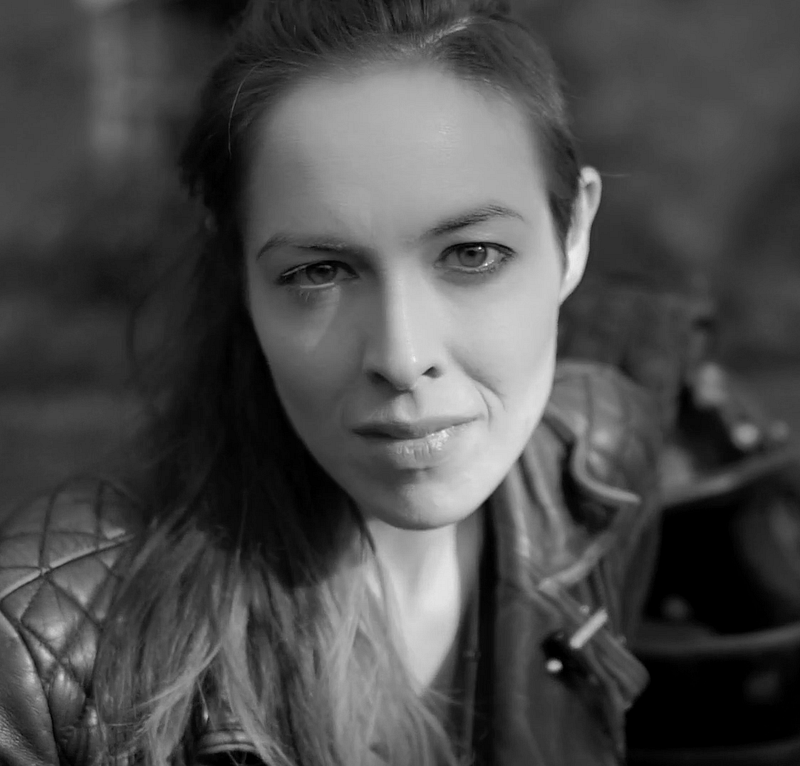
II was introduced to the extraordinary Creative Scientist Katherine Templar Lewis, who specialises in neuroscience and behavioural psychology, with a passion for interdisciplinary projects where art and science collide (not to mention an intriguing sideline starring in horror films). Katherine and the team she began to pull in from her lab at University College London (UCL) not only confirmed that uncertainty is, in behavioural science terms, A Thing, but why we respond to it the way we do.
Our brain, she explained, is there to protect us, designed first and foremost to keep us safe, and to do that it tends to err on the side of caution that’s underwritten with a firm negativity bias — and not a small one. Scientists have estimated it at about 200 to 1.
When it comes to spinning the great roulette wheel of life, then, the prediction machine that is our brain is never going to go for the highest stakes and risk it all on 21 black when it can opt for the nice polite even odds either red or black (and sometimes both) deliver. And even then, only for as long as those nice even odds are working for it. Slip up and the brain will send a warning signal that all those bets are bloody well off. Fear begets fear and all that.
However, what the predictive brain is also very good at — and NB people: this is where things get really interesting — is finding creative ways not just to survive but to thrive. Uncertainty has also been proven to unlock creativity and learning ability in the brain, increasing our capacity for collaboration, empathy and open mindedness. Just imagine the potential for all of us if we learn how to tap into that side of uncertainty’s effects.
How we define uncertainty, will define our experience of the 21st Century.
What if, rather than wait until we’re truly up against it, we don’t just recognise uncertainty, but harness it. Learn how to tap into our individual and collective uncertainty, manage it and lean into it? Use it for good? By giving ourselves that little bit of extra runway we have the opportunity to effect real and considered change.
Rather than being paralysed by uncertainty we can learn to first recognise then control what we do with it and the power of that could just be immense.
But the pandemic was a one-off, I hear you cry. Give it a year or two and we’ll be back in the same far-from-perfect-yet-familiar zone, travelling on more or less the same trajectory as before.
Except that’s part of the problem, isn’t it? It may have accelerated things, but we didn’t get to the situation we’re in by the pandemic alone. Setting the GPS to New Normal — a rather shit-sounding destination to me — hardly seems something to aspire to, when continuing along as ‘Normal’ is not a small part of got us into this mess in the first place. Just ask New Labour, or New Coke how well sticking ‘new’ on an old idea works out.
While lower than its 2020 spike, Western anxiety remains about 50% higher today than the historical average between 1996–2012. So while yes, the pandemic will one day (hopefully soon) be able to be something we’ve fully adapted to (ideally without leaving half the world behind as ‘normal’), the rest of it — from global climate change to individual employment insecurity — isn’t going away. In the West we’ve been moving away from a broad commitment to relative egalitarianism and global optimism for decades now. In fact, it’s likely to be accelerated.
Your invitation to the worlds largest experiment in uncertainty, will you join?
I believe we’re at a crossroads. Yes, uncertainty may be at record levels and the challenge under all the other challenges we, as humans, face. But as Peter Parker’s Uncle Ben never said, with great uncertainty comes the potential for great change.
Look at how Black Lives Matter went from grassroots movement to sweep the globe in that turbulent pandemic summer of 2020, as one big example of that, but chances are you’ll have seen others. Because, when they were pressed up hard against the pandemic’s coalface, while lots of people lost everything many others found something — or are on their way towards that if, like me, it was a bit of both.
My point is that uncertainty can free you up or fuck you up. Which one will you choose? Because while back then, most of us were flying on instinct, now if we play it right — and yes, I’m rolling with that gambling analogy from earlier — we have a choice. I’m going all in. Staking all my chips on ‘free you up’. And this is an invitation for you to join me at that table.
Why am I so convinced? Because based on the early evidence from the pilot, it seems that Uncertainty Experts — our live interactive documentary — works. And yes, I would say that, but I’ve got some real academic and scientific rigour backing this up.
Not to mention hundreds of testimonials from the audience who took part — the vast majority of whom attested to real, life-changing results simply through transforming their relationship to uncertainty. But more of that later. All that will be in the piece I’m planning to publish in the next week or so.
For now, I’ve opened the wait list — here — to what I’m calling Series One this November, but is really another test of the concept, with a larger (though still limited) sample size and even more scientific research around it, and even more impact on its audience. In fact, we think it’s going to the worlds largest experiment on the potential positive and negative impacts of uncertainty.
I can’t guarantee it won’t be a little bit bumpy (it will actually be a lot bumpy: this is potentially life-changing stuff, after all). But what I can tell you — having seen it first-hand from the other side — is that you’re going to be in for one hell of a ride.
Find out more at uncertaintyexperts.com;