
Ultrasounds Provide an Unusual Window Into The Abortion Debate
When, if at any point, does abortion go wrong?
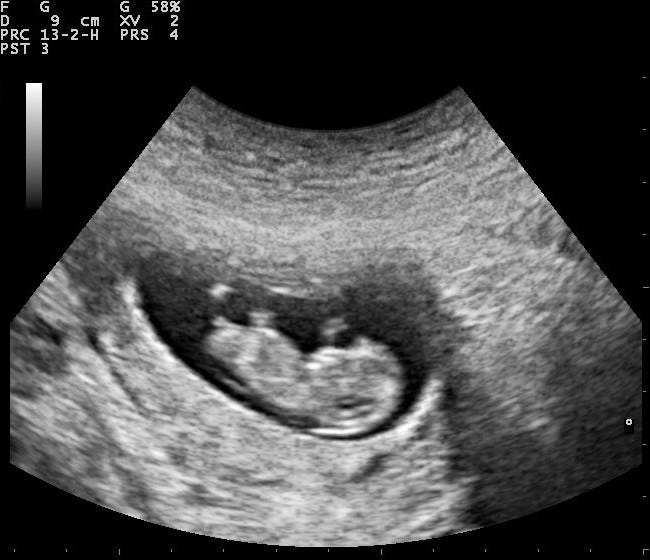

The vast majority of people who are pro-abortion, are not pro-abortion unequivocally. Even if it is just one caveat, they often draw a line in the sand to demarcate what is ethical and what is unethical.
For example, most people who are pro-abortion (like myself) do not support the idea of an abortion right up to the moment before birth.
So, there are caveats like these that are based on the developmental progress of the fetus. But there are other caveats that are based on discrimination that seem to land in murkier water. And by discrimination I mean, the fetus seems to possess some kind of undesirable genetic feature that might make the parents consider terminating the pregnancy.
India is powerful example of this. Despite it being illegal, abortions are often carried out based on the sex of the child. This is made possible because at around 20 weeks, it is possible to determine the sex of the fetus via ultrasound sonography.
Since it is viewed as less desirable by many to give birth to a daughter, this is estimated to result in 6,800,000 girls being selectively aborted by 2030.
On top of this, you have the mirror-image issue to designer babies. The easier and easier it becomes to understand the complex roles genes play in determining phenotypes, the more likely it seems that there will be a simultaneous rise in the temptation to abort a fetus based on its ever more selective aspects of its genome.
This begs the question, just where is the line in the sand where we can’t stomach letting genetic information influence the decision to progress with a pregnancy?
An inordinate amount of suffering
One point of common ground that may be relatively easy to reach (at least among those of whom are already in broad support of abortion) is the termination of a pregnancy based on true compassion. In other words, what I would say being ‘pro-life’ actually means.
If, upon finding out the genetic makeup of the fetus, a qualified and reasonable medical professional informs you that, after birth, your child is likely to face an existence with great and unusual suffering, you are within your legal and ethical right to abort the pregnancy.
An example of this would be finding out that your child would have a rare and incurable/not-feasibly-manageable disease like Tay-Sachs disease. According to the Mayo Clinic, its symptoms include: ‘seizures, muscle weakness, loss of hearing and sight, loss of motor skills’.
A gray area for this rule might be something like Down Syndrome, which is caused by having an extra 21st chromosome. This is because we can define suffering either by actual, subjective suffering felt by the individual, or, we can include the slightly more abstract idea of suffering as missing out on potential. Someone that is just not aware of what they are living without.
Down Syndrome seems to fall into this slightly more abstract definition, but it doesn’t seem to fulfill the first definition. This is because research has shown that individuals with Down Syndrome actually live very fulfilling lives. In fact, one survey has found 99% of them indicate they are ‘very happy’ with their lives.
Thus, I would be hesitant to support the abortion of a fetus with Down Syndrome as it seems we should give more weight to the more immediately experienced definition of suffering.
(This, in my view, is at the crux of why women possess the ethical right to abortion in general. Their immediate and real suffering trumps the argument some try to make on lost potential.)
Abortion based on discrimination
So, what about the abortion of a child based on their sex is so ethically repulsive?
Well, one could try to make a utilitarian argument against this practice by saying something to the effect of,
‘In India, the widespread practice of aborting girls, should it be allowed to go on for long enough, will effect the general demographic of India in ways that will be detrimental to both all Indian girls, and all Indians in general.’
And this, to be sure, is true. But I don’t think it quite captures the moral intuition we have when we view a practice such as this as wrong.
I think what we really have an issue with is the fact that two adults who want to have a child change their mind based on a discriminatory factor.
This is not the case of a woman having a child when she does not want to have a child. She wants a child, it is just that her or her husband (or both) do not want this specific child. Nor is it the case that the abortion would be happening out of compassion for the future life of the unborn fetus.
This, it seems to me, is why an abortion under these circumstances is morally impermissible.
Future ethical conundrums
So, we can now see why knowing biological information about a fetus can give ethical grounds for aborting a pregnancy and why it cannot.
I may be wrong! If you disagree with me, and are polite, I am interested to hear why!
Do you think my reasoning is unsound, or does it miss another fundamental consideration we should have that is drawn out by an example I have not considered?
It seems that future advances in biology are only going to continue to force us to be more and more exact in our understanding of what is wrong justification and what is right. An exactness that will only be borne out by well-meaning individuals having dispassionate, good-faith discussions with one another.
Let’s have that discussion now, before we are too far down the road.
If you found this to be of value and are not yet subscribed to Medium, please consider using this link to do so. It supports me directly with part of your monthly payment.