
Ukulele was my Gateway Drug
Pushing through the beginner’s blues to fulfill a lifelong goal
It wasn’t until I was standing at the counter with my brand new ukulele, padded case, 2 packs of strings, a felt pick, and a guitar strap that I stopped to think about the fact that I didn’t actually know how to play the ukulele.
The shop owner ignored my moment of panic and gestured to the payment terminal, with the uniquely Czech air of having far more important things to do.
It wasn’t my first time trying to elicit music out of a stringed instrument.
When I was a child, my mother desperately wanted me to play the piano and be a ballerina. I, forever challenging her deeply-held belief system, gravitated toward the drums and martial arts.
We compromised on guitar, and I took lessons for the better part of a year from a geriatric Cuban guitarist who was unapologetically disappointed with me to my face and praised me ad nauseam to my mother’s. It was a terrible experience, and I eventually convinced my mother that the instrument wasn’t in the cards for me.
In college and beyond, I befriended a group of artists and musicians, and was inspired to try again. I picked up friends’ guitars every chance I got. But despite their best efforts, they would eventually shake their heads and gently remove the guitar from my desperate grip.

And then, one random Tuesday afternoon on my way home from work a decade later, I bought a ukulele.
How it started
I’d love to say that I took to the ukulele immediately, but my cat and my partner would beg to differ. Those first few chords were painful, despite requiring minimal dexterity — both the C and the Am chord require only one finger placed on the fretboard… very beginner friendly (or so you would think)!
Still, I felt like my fingers were thick, ungainly sausages, and like I was trying to tame some kind of wriggling forest creature. The noises I produced those first few days could not be categorized as music.
Nevertheless, I wanted so badly to learn.
I kept trying.
I was older at this point, and far more stubborn. I had also learned other skills, and had gotten a feel for the rhythm of the learning process.
- Step 1: Enthusiasm
- Step 2: Challenge
- Step 3: Frustration
- Step 4: Sense of failure
- Step 5: Breakthrough
- Step 6: Competence
- Step 7: Repeat steps 1–6 as many times as it takes
- Step 8: Mastery
I knew that if I kept at it, I would eventually learn enough that it didn’t send the cat, emoting grumpily in displeasure, into the other room.
After a few weeks, I could string together enough chords to start attempting to play songs. The first song I learned, Vance Joy’s Riptide, surprised me, my partner, and probably also the neighbors.
I was doing it! I could play the ukulele!!
The cat, of course, remained unimpressed. He took to moving to another room as soon as he saw me move towards the instrument. But armed with the satisfying thrill of victory, I kept working on it.

And working on it….
And working on it….
Ukulele was my gateway drug
Two months after acquiring that first ukulele, I had 10 chords nailed down and had stopped driving the cat away with my noises.
My partner bought me my first guitar as a Christmas present that year, knowing that was my ultimate goal, and I threw myself into the learning process once again, this time with some calluses built up and some theoretical knowledge to help me along.
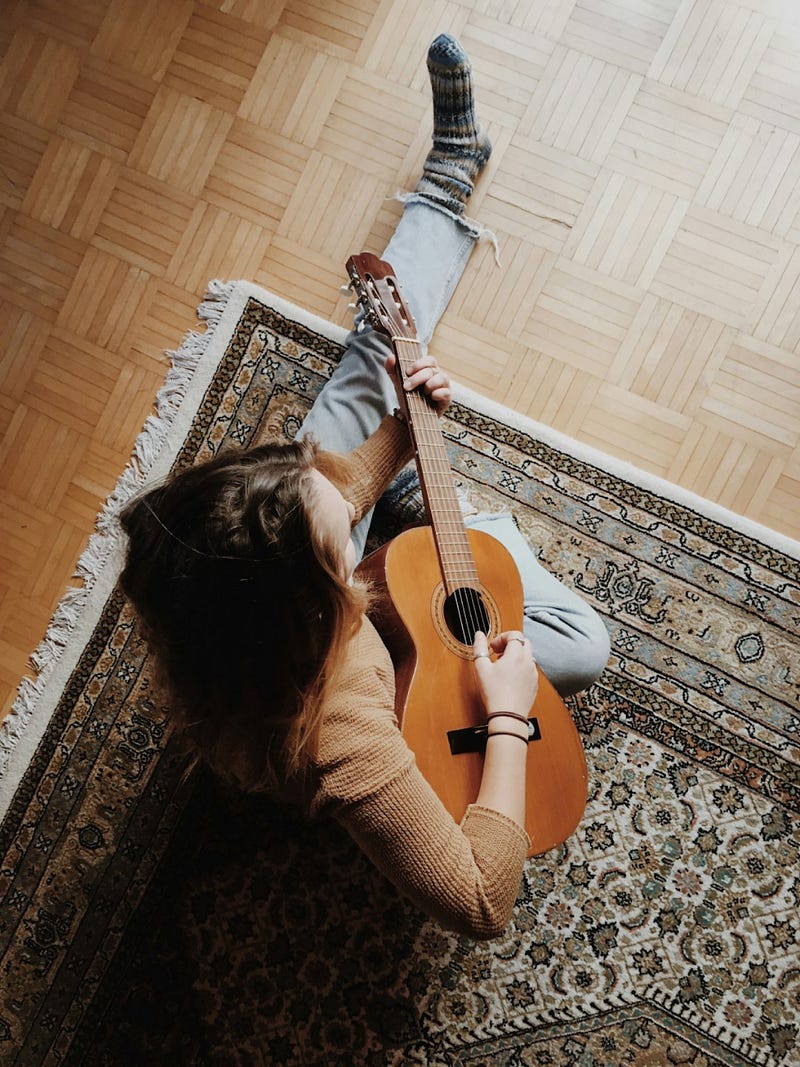
It wasn’t something I picked up without effort, but it was much easier to transition to guitar from ukulele than it had been to try to jump straight in the previous times I had tried.
The chords are different shapes, but muscle memory helped me catch on quickly, and within a couple weeks I was already relearning the songs I had mastered on the uke. Six strings are more complicated to play than four, but they also offer a lot of opportunity for exploration.

How it’s going
Inspired by my own progress, I started digging into some music theory, and picked up some basic piano skills on a children’s keyboard I purchased on a whim at the height of the pandemic.
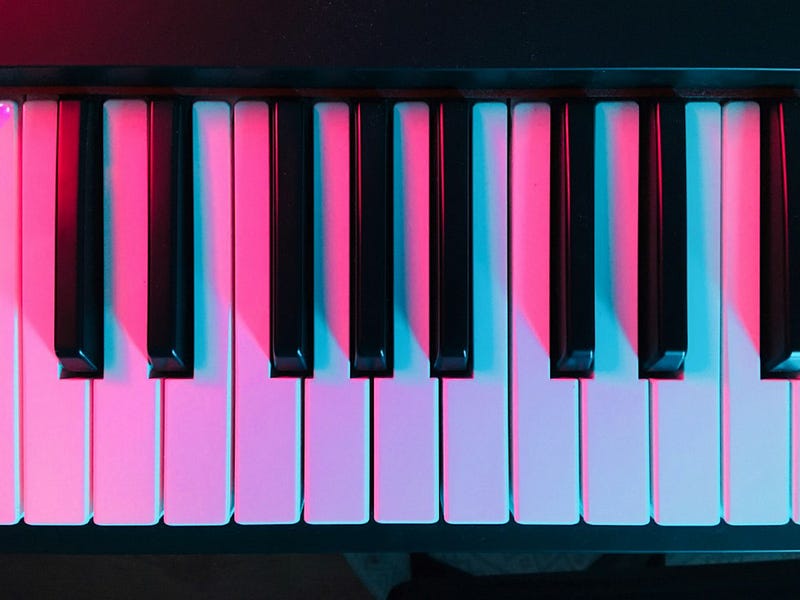
Things like chords and scales started to make a lot more sense, and I started exploring the whole neck of the guitar instead of staying safely within the first 5 frets.
Since then, I’ve also acquired a Bodhran and a tongue drum, and am finally fulfilling my childhood desire to play the drums. The cat really didn’t like this development, but he suffered through it admirably.
My partner also started playing the ukulele, on which she now composes her own pieces, and later picked up a banjo because she likes the twang of it.
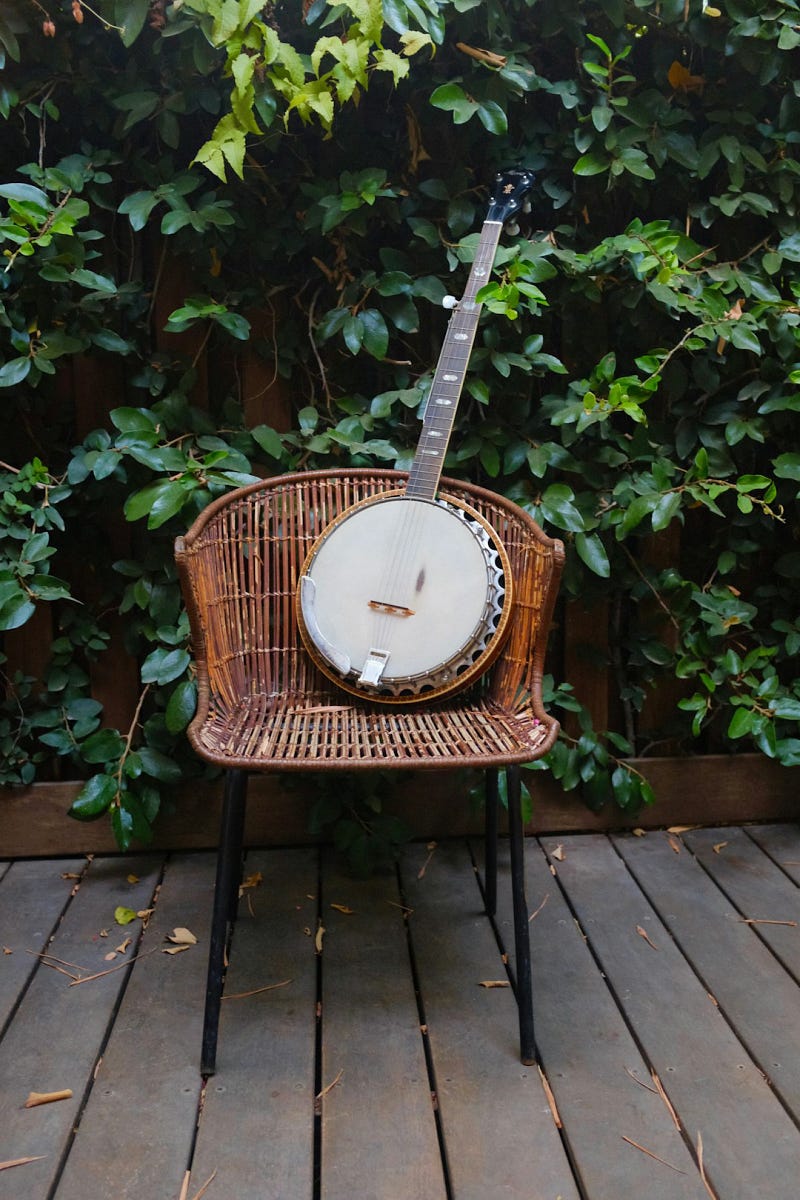
When the cat was at his sickest and refused to eat, her banjo-playing was the only thing that would make him hungry. While he was my toughest critic, he would flop onto his back whenever she started plucking at the ukulele strings.
Music had become an important part of our daily lives.
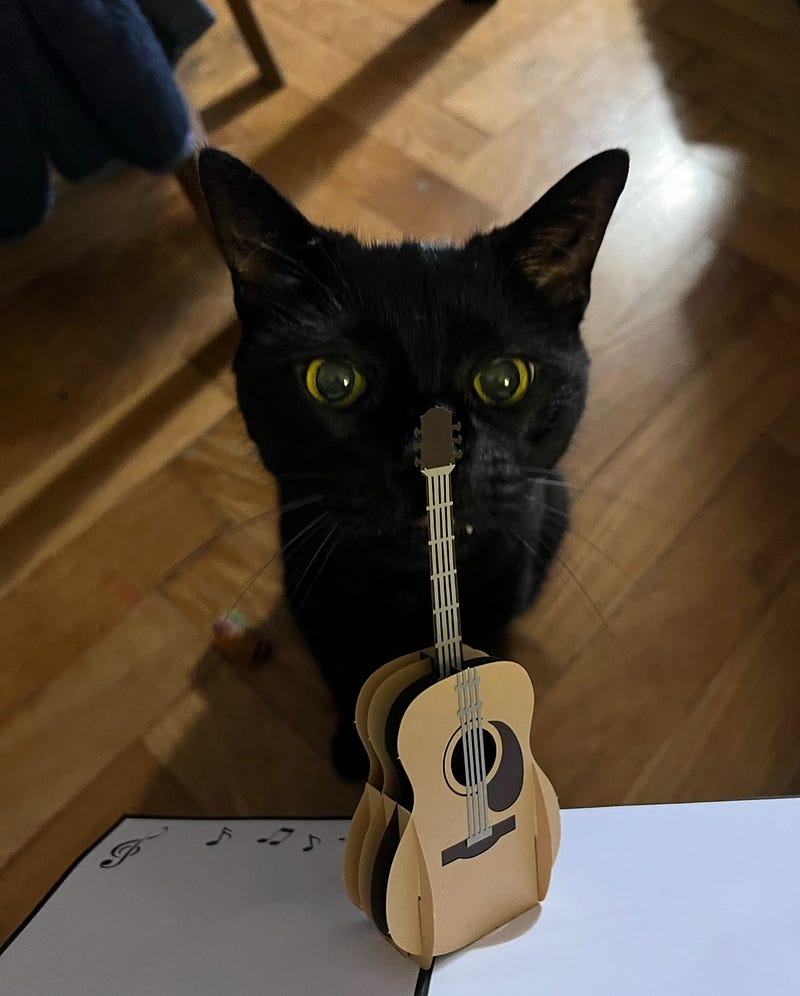
When the cat passed, I played him his favorite song of hers at the end, and I like to think it made it easier for all of us.
You can do hard things!
If you’re struggling to learn a new skill, keep going! It might not always be easy, but it is fun and satisfying!
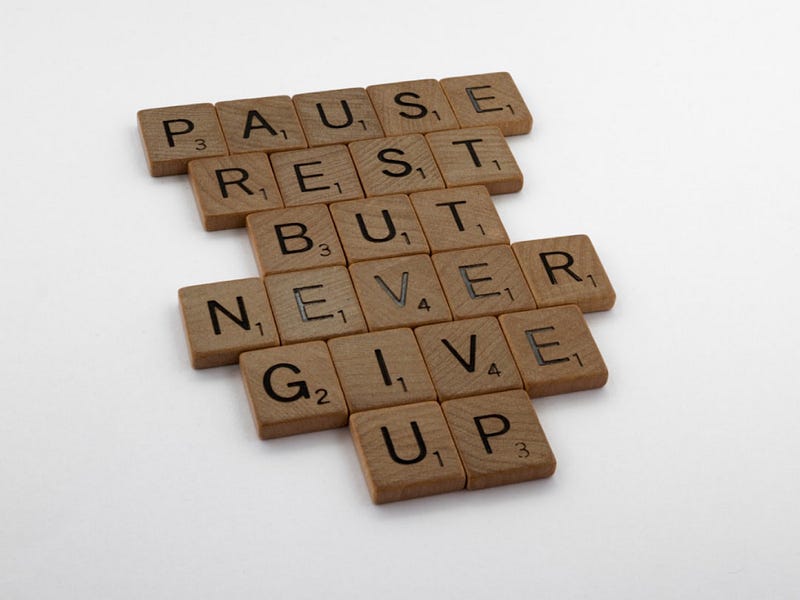
Here are a few of my favorite tips I’ve learned along the way:
Consistency is the key
Learning a new skill doesn’t need to be a daily endeavor; very few people truly have time for that, and insisting on it will only stress you out.
Making that new skill a habit you practice consistently, though, will go a long way to building up your muscle memory. Choose a time of day or a day of the week that works for you, and spend at least a few minutes on that new skill. You’ll be amazed at the progress you can make!
Make it impossible to ignore

A YouTuber I followed in the early days recommended always leaving the guitar out and within touching distance. I can’t recommend this enough if you’re struggling to find the time to practice.
Five to ten minutes is a hell of a lot better than none! I got into the habit of picking up my guitar for a minute or two whenever I walked by it; it never felt like a hardship, but it did often lead to longer sessions.
Let it be just for fun

Feeling frustrated? Then set it aside for a little while. Life is already stressful enough, and new skills and hobbies should be enjoyable. If it doesn’t feel good, maybe don’t do it!
When I was at the height of frustration in the beginning, my partner reminded me that I wasn’t going to be performing on a stage anytime soon… it was okay if it sounded choppy and horrible, because it was part of the process.
That was all the permission I needed to start experimenting and cutting myself some slack, and it got a lot more fun!

For more lessons learned in the skill acquisition process as a self-proclaimed serial hobbyist, check out my previous story:
Or, if you want to learn more about the cat: