
Ukrainian Forces Down Two More Fighters, Su-34 and Su-35, Bringing the Week’s Total to Six!
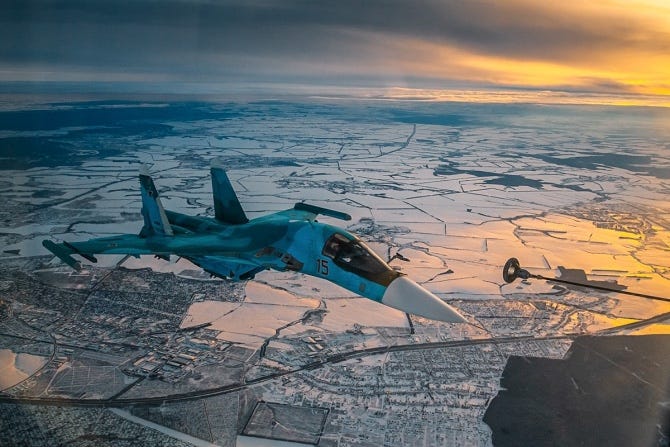
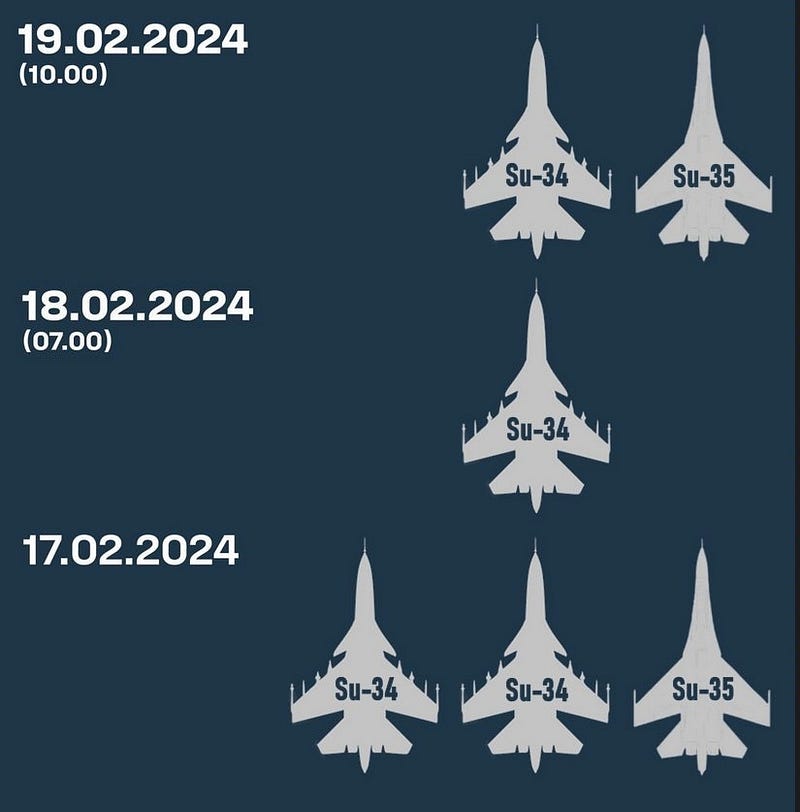
On February 19, 2024, a significant operational achievement was reported from the Eastern front of the Ukraine conflict, where the Ukrainian Air Forces successfully engaged and destroyed two Russian military aircraft: a Su-34 fighter-bomber and a Su-35 fighter. This operation, confirmed by the Commander-in-Chief of the Armed Forces of Ukraine, Alexander Syrsky, and the Commander of the Air Force, Lieutenant General Nikolay Oleshchuk, marks a notable escalation in the aerial combat dimension of the ongoing conflict. The commanders shared the news via social media, underlining the strategic importance of these actions in the broader context of the war.
General Syrsky provided a direct account of the operation, stating, “This morning, the Air Forces of the Armed Forces of Ukraine destroyed two Russian aircraft that were launching guided aerial bombs at our troops’ positions. One fighter-bomber Su-34 and one fighter Su-35S.” This statement not only signifies a tactical victory for Ukraine but also highlights the intensity of the aerial engagements and the direct impact they have on the ground situation. The operation’s timing and success underscore the Ukrainian forces’ preparedness and capability to counter advanced aerial threats, reflecting a significant boost in their defensive operations.
Echoing this sentiment, General Oleshchuk’s remarks, “Another two planes of the occupant down! This is our land, and our sky! Thank you all for the combat work!” resonate with a strong message of sovereignty and resistance. It reflects a broader narrative of national defense and the morale of the Ukrainian military and public in the face of aggression. These operations on the Eastern front, following the destruction of three enemy planes (two Su-34s and one Su-35) on February 17, illustrate a pattern of strategic aerial defense and the Ukrainian Air Force’s growing effectiveness in airspace control.
A quick heads-up: Medium’s been tweaking its algorithms and it’s getting trickier for my stories to land in your feed. So, if you enjoy my work, please make some noise! Hit that clap button, light up the highlights, or drop a comment. Every interaction helps keep the stories flowing. Thanks for your support!
Adding to the strategic narrative, the losses incurred by Russia in the ongoing Ukraine conflict, particularly concerning its Su-34 and Su-35 fleets, reveal significant insights into the resilience and adaptability of Russian military production capabilities and strategic planning. As of 2023, Russia’s arsenal included 132 Su-34 and at least 17 Su-34M aircraft in service, alongside a standing order for an additional 40 Su-34Ms. The Su-35S fleet comprised 114 units, according to the most recent data available. These figures provide a snapshot of Russia’s air power before accounting for the attrition faced over the skies of Ukraine.
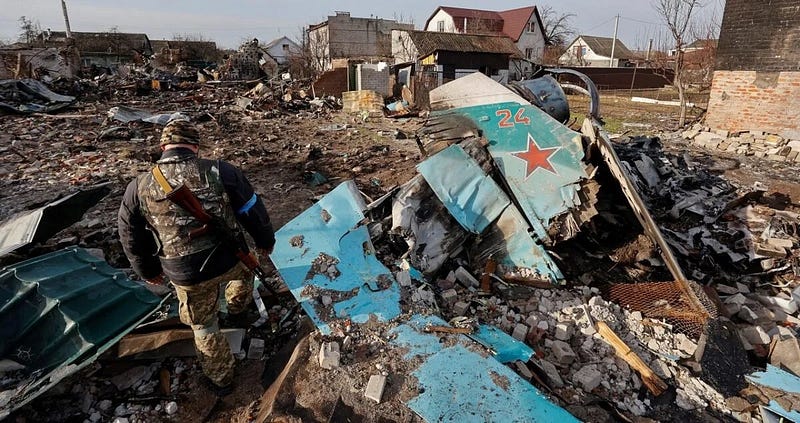
The conflict has exacted a heavy toll on Russia’s Su-34 Fullback fleet, with more than 10% of this specific fleet confirmed lost in combat operations over Ukraine. By October 2022, 16 Su-34s had been confirmed as combat losses, including both baseline Su-34s and what is reported to be an upgraded Su-34M, with an additional unconfirmed 17th Fullback loss. By January 2024, reports indicated that around 40 Su-34s had been lost to combat or accidents, representing approximately 29% of the 140 Su-34s that Russia could afford to purchase. This significant attrition rate not only underscores the operational challenges faced by Russian air forces but also highlights broader issues concerning the performance and resilience of Russian combat aircraft within the conflict’s demanding operational environment.
In response to these substantial losses, Russia has undertaken a considerable effort to bolster its military capabilities through an aggressive increase in the production of its Su-34 and Su-35 fighter aircraft. This strategic shift has effectively doubled the output of these critical assets, a move aimed at replenishing losses and sustaining the operational requirements of its military engagements in Ukraine. The decision to ramp up production reflects a broader initiative to modernize and expand Russia’s military infrastructure, including significant investments in the technological upgrade of production facilities and the specialized training of personnel. This concerted effort is indicative of Russia’s determination to maintain a competitive edge in military technology and capabilities on the global stage.
The increase in production volumes is underpinned by substantial state investments, facilitating the technical re-equipment and modernization of military production plants. This strategic investment is part of Russia’s larger ambition to ensure that its armed forces are well-equipped with advanced, reliable technology to meet the demands of modern warfare. Rostec, a key player in Russia’s defense industry, has announced plans to double the production of Su-30, Su-34, and Su-35 fighters, signaling a significant commitment to enhancing Russia’s aerial combat capabilities.
This escalation in production capacity, along with the associated financial and technological investments, highlights the strategic importance Russia places on maintaining a capable air force, projecting power, and supporting ground operations. However, the substantial losses of Su-34s, and to a lesser extent Su-35s, in the Ukraine conflict raise questions about the effectiveness of these aircraft against a determined and technologically adept adversary. The reported losses and the subsequent increase in production volumes underscore the challenges Russia faces in sustaining its military objectives in Ukraine, reflecting broader themes of resilience, adaptation, and the ongoing evolution of military strategy and capabilities in the face of dynamic operational realities.
Despite these losses, Russian propaganda efforts have sought to minimize the impact, acknowledging the loss of only one aircraft. Commander Oleshchuk countered this narrative by providing evidence to refute the misinformation, emphasizing the importance of accuracy and truth in the fog of war. The downing of these aircraft is not just a military setback for Russia but also a blow to the narrative control within the conflict, highlighting the ongoing information war that parallels the physical battles.
The incidents of February 19 and the preceding operations serve as a testament to Ukraine’s resilience and evolving military capability. The successful engagement and destruction of the Su-34 and Su-35 aircraft are indicative of Ukraine’s strategic application of military manuals and literature on air warfare, showcasing an adept understanding of aerial combat dynamics. This operational success reinforces the critical role of air superiority in contemporary conflicts and the significant challenges faced by invading forces in sustaining air operations in contested airspace.
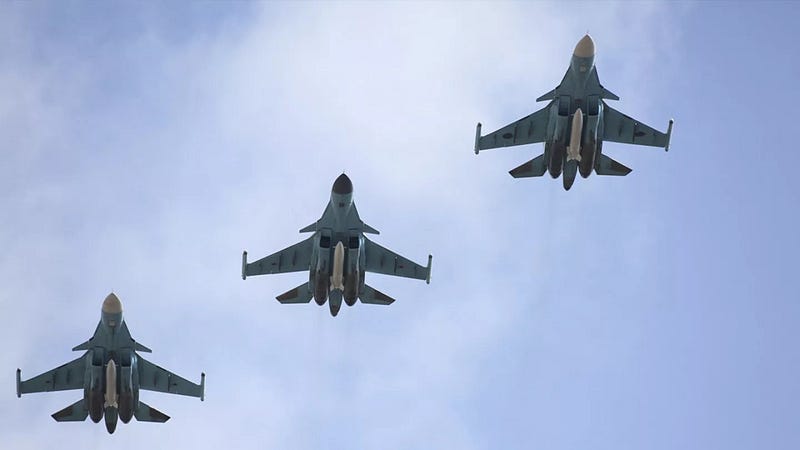
The broader implications of these engagements for the Ukraine-Russia conflict are profound. They not only demonstrate the Ukrainian forces’ ability to defend their airspace but also signify the challenges Russia faces in achieving air dominance. This dynamic interplay of military strategy, technology, and tactical execution provides a clear lens through which to view the evolving character of the conflict, reflecting both historical principles of warfare and the unique conditions of the current struggle for Ukrainian sovereignty and territorial integrity.
Strategically, these victories serve as a stark reminder of the challenges Russia faces in asserting air dominance over Ukrainian airspace. Air superiority is a cornerstone of modern military doctrine, offering not only the ability to conduct offensive operations but also to provide critical support and supply lines for ground forces. The Ukrainian defense forces, by demonstrating their capacity to threaten this superiority, disrupt the operational calculus for Russian commanders, forcing them to reconsider their approach to both air and ground operations. This recalibration has broader implications for the conflict’s trajectory, potentially constraining Russian strategic options and emboldening Ukrainian resistance.
Technologically, the engagements highlight the critical role of advanced weapons systems, electronic warfare capabilities, and intelligence in modern air warfare. The downing of the Su-34 and Su-35 suggests that Ukrainian forces have access to, and can effectively employ, sophisticated anti-aircraft systems and tactics. It also points to the possibility of significant intelligence support, likely from Western allies, enabling the targeting and engagement of Russian aircraft. This aspect of the conflict underscores the importance of technological parity and innovation on the modern battlefield, where access to cutting-edge technology can level the playing field between adversaries of disparate sizes and resources.
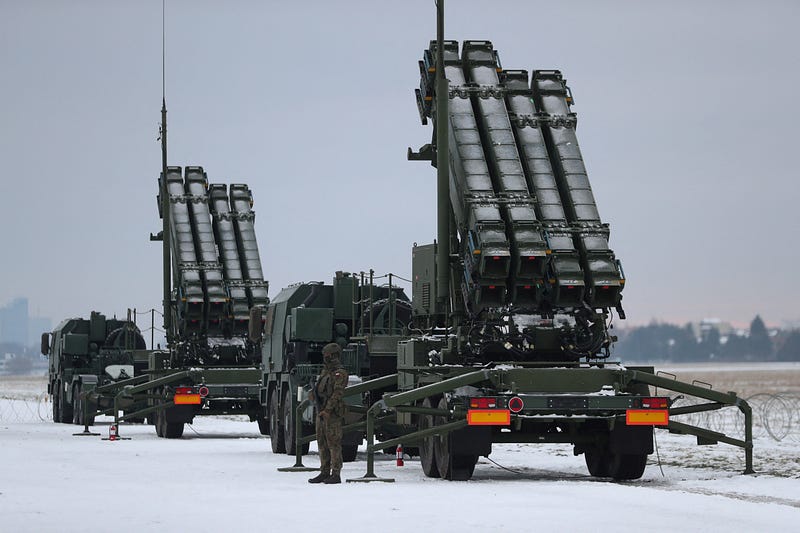
In conclusion, the successful engagement against the Su-34 and Su-35 aircraft underscores a pivotal juncture in the Ukraine-Russia conflict, showcasing Ukraine’s adept utilization of limited resources through strategic ingenuity and technological adaptability. Despite the challenge of not having sufficient air defenses to secure the entire country, Ukraine’s strategic deployment of the Patriot system as a mobile defense platform exemplifies their mastery in maximizing available assets. This approach keeps Russian forces perpetually uncertain about the safety of their aerial operations near the front lines. As the global community observes these developments, the insights gained from Ukraine’s tactical prowess are set to significantly shape the trajectory of this conflict and redefine the principles of modern military engagement.
Your insights and commentary enrich our understanding of these critical issues. Please clap and comment below to contribute to the discussion.


