
Ukraine War
Ukraine Using Re-Purposed S-200 AA Missiles for Long Range Ground Attack
There are reports that the 57 year-old SAM-5 from the Soviet era is being used as a long range ground attack missile after being re-engineered by Ukraine
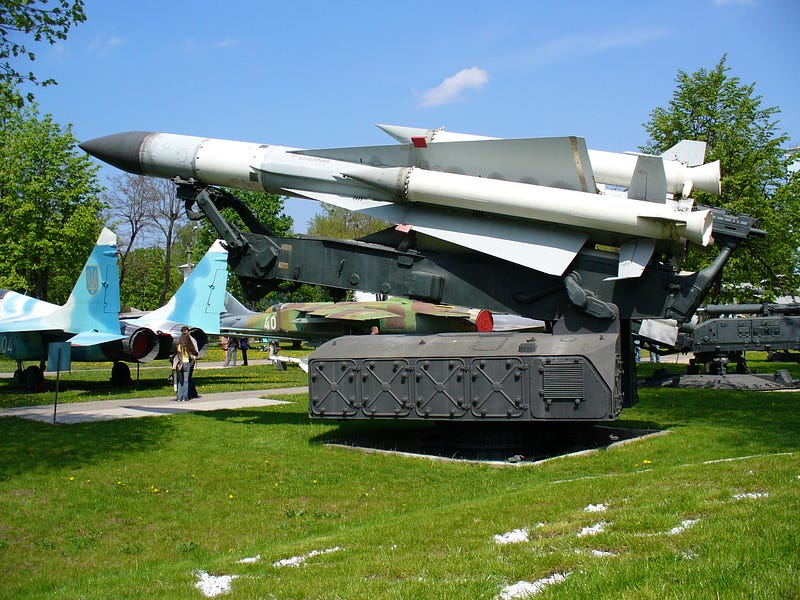
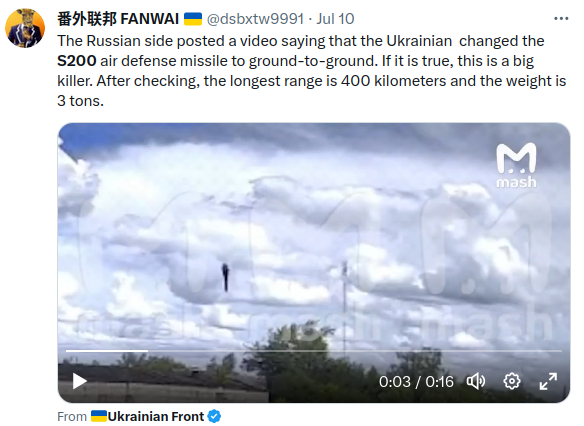
Russia has confirmed reports that Ukraine has attempted to hit the Kerch Bridge and two airfields with modified S-200 missiles.
The attempts by the Kiev regime to strike on July 9 with converted S-200 anti-aircraft missiles at the Kerch transport crossing, an airfield in the Rostov region and an airfield in the Kaluga region would not have been possible without the assistance of the US-led “Western coalition”, the Russian Foreign Ministry said.
The S-200 ‘Vega’ is a very old design and it’s good to see old technology being re-purposed against Russia.
Origin
During the Cold War, the Soviet Union developed an array of advanced military systems, including the formidable S-200 Anti-Aircraft Missile System.
Codenamed SA-5 “Gammon” by NATO, this 7.5 ton missile systems was developed in the 1960s as part of the USSR’s air defence strategy. It was intended to counter high-altitude strategic bombers, surveillance aircraft, and other aerial threats that could penetrate Soviet airspace. The system saw extensive deployment in Soviet territories, as well as among Soviet-aligned nations (including Ukraine), during the Cold War.
Specifications
The S-200 utilised a two-stage design, with the first stage being solid-fuelled and the second stage being liquid-fuelled. The solid-fueled first stage provided initial acceleration, while the liquid-fuelled second stage provided additional thrust for target interception.
The missile weighs around 7.5 tons and measures over 10 meters in length.
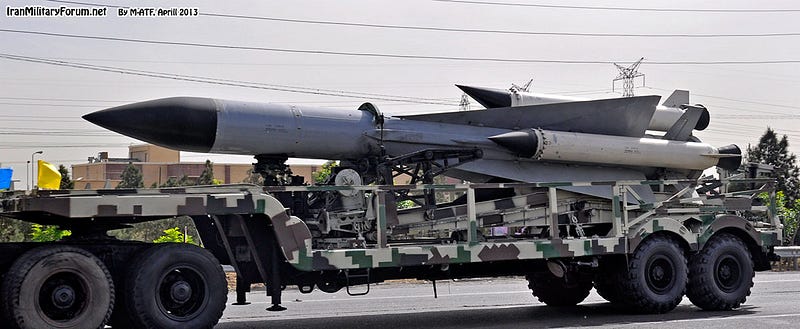
Range and speed: It has a maximum range of approximately 300 kilometers and can reach altitudes of up to 40 kilometers. The missile’s maximum speed is estimated to be Mach 8, making it a formidable weapon against aerial targets.
If Ukraine is using this at Mach 8 then technically it qualifies as a ground-launched hypersonic weapon (> Mach 5). As an anti-aircraft system it would have been agile (as opposed to ballistic)
Propulsion: Each missile is launched by 4 solid-fueled strap-on rocket boosters. After they burn out and drop away (between 3 and 5 seconds from launch) it fires a 5D67 liquid fueled sustainer rocket engine (for 51–150 seconds) which burns a tricky fuel called TG-02 Samin with a highly corrosive oxidiser.
Guidance and Radar Systems: The S-200 featured semi-active radar homing guidance, where the missile is guided towards the target by tracking the reflected energy from ground-based radar. The system incorporated several radars, including a target acquisition radar, a tracking radar, and a guidance radar, all working together to ensure accurate target engagement.
The earlier versions would almost certainly have had analogue electronic guidance, later upgraded to digital.
The latest versions had kill probabilities in the range 0,72–0,99.
These systems will have been modified by Ukraine as reflected radar would not be available for ground targets. Laser illumination would not be used either, unless special forces were in place with laser target designators.
It’s possible that Ukraine’s modifications include GPS and/or inertial guidance, although some commentators suggest it has been modified to remove guidance and make it a ballistic missile.
Warhead: Equipped with a 217-kilogram conventional or nuclear warhead, the S-200 was capable of inflicting significant damage on its intended targets. The warhead detonation was proximity-fused, increasing the probability of target destruction even if a direct hit was not achieved.
Radars and Command Center: The S-200 system operated with a network of ground-based radars and a command center. The target acquisition radar identified potential threats, while the tracking radar followed the target’s movement. Finally, the guidance radar facilitated the missile’s trajectory towards the target. The command center coordinated the overall engagement, providing vital data to operators and ensuring effective deployment.
The launch and control system will have been changed significantly by Ukraine.
Operational use
Yom Kippur War: One of the most significant engagements involving the S-200 system occurred during the 1973 Yom Kippur War. The Soviet-equipped Egyptian military deployed S-200 batteries, which proved to be a formidable challenge for Israeli aircraft, resulting in the downing of several planes. This demonstrated the system’s capabilities and impacted the strategies of potential adversaries.
Regional Deployments: Besides the Soviet Union, the S-200 system found its way into the arsenals of various countries, including Syria, Iraq, and Libya. During conflicts in the Middle East, these countries employed the S-200 system as part of their air defense networks, creating a significant deterrent against enemy incursions. It was in use in Syria as recently as 2021 against Israeli jets.
It’s scored some own goals, too.
On 4 October 2001 a Ukrainian S-200 operated by the Ukrainian military during a Ukrainian training exercise fired on a Tupolev Tu-154 passenger aircraft flying from Tel Aviv to Novosibirsk, Siberia Airlines Flight 1812. The airliner was destroyed over the Black Sea , killing all 78 people on board. (Wikipedia)
On September 17, 2018, a valuable Russian Il-20M ELINT plane was shot down by a Syrian S-200 surface-to-air missile killing all the 15 servicemen on board.
Legacy
However, as technology advanced, the S-200 system was gradually replaced by more modern air defense systems, such as the S-300 and S-400 missile systems (Ukraine has S-300 systems). These newer systems offered enhanced capabilities and improved performance in terms of range, accuracy, and target engagement.
Russia has used modified S-300s for ground attacks in Ukraine.
Ukraine 2023 usage
It has been reported that Ukraine used a 5V28 variant of the S-200 in its attacks. This would have to be heavily modified as I pointed out above.
TASS reported that:
MOSCOW, July 10. /TASS/. The Kiev regime attacked the Crimean Bridge with three S-200 missiles, with all the enemy weapons destroyed, Chief of the Russian Aerospace Forces Main Staff Viktor Afzalov reported on Monday.
“Air defense systems destroyed three missiles that attacked the Kerch transport link and the Morozovsk airfield. There are no casualties or destruction,” Afzalov reported to Chief of Russia’s General Staff Valery Gerasimov.
As the Russian Defense Ministry specified, the Kiev regime also attacked facilities in the Rostov and Kaluga Regions. Russian air defense capabilities destroyed two S-200 missiles and the other two missiles were deflected by electronic warfare systems, with no casualties or destruction reported.
Beyond the electronic jammers, it’s not clear what AA system Russia used to defend against the July 2023 Ukraine attacks — Pantsir, S-300 or S-400.
Analysis and implications
Wikipedia states that Ukraine inherited one division of S-200s from the Soviet Union.
The exact number of S-200 missiles in a division would depend on the specific composition and deployment strategy of that particular division. A rough estimate would suggest that an S-200 division could consist of around 24 to 36 S-200 missile launchers. The number of missiles in reserve is unknown, but in total it’s not unreasonable to assume that Ukraine might have had 100 in total ~ 3 per launcher. Some will have degraded.
If Ukraine could manufacture enough of these missiles then the implications may be profound and could mean that Ukraine would not need US ATACMS to attack ground targets inside Russian territory, or deep inside illegally annexed/invaded Ukraine lands.
That would let the US off the ATACMS hook.
It’s much easier to copy an old design provided that suitable tooling is available. The liquid fuel components are tricky and given that the launcher is not easily moved then Ukraine may just decide that other more modern designs are more attractive.
The near miss on the Kerch Bridge suggest that some guidance improvements are desirable if the narrow bridge is to be hit successfully.
https://twitter.com/NOELreports/status/1677972121706700800?s=20
The hit on the lumber yard in Bryansk (which TASS did not mention) may have been a miss, but the attacks on two airfields will be concerning to the Kremlins and force Moscow to move logistics hubs and aircraft even further back from the front line than they did after Ukraine acquired HIMARS.
As of 16 July 2023, Ukraine has not officially commented on theses attacks.
If you follow me I guarantee variety in your inbox with some unusual perspectives! I write on a wide range of topics that interest me including humour, tech, space, geopolitics and travel. I also write about…
…recycling
If you appreciate stories like these and want to support me and other writers, please consider signing up to become a Medium member. It’s only $5 a month, giving you unlimited access to incredible stories on Medium. If you sign up using my link, I’ll earn a small commission at no extra cost to you.

My novels are available at my Gumroad bookstore. Also at Amazon and Apple
Or maybe just buy me a coffee? and tell me what you liked reading (or not)…
Author’s note: The concept, structure, style and creative content in this story are all my own and I hope that is obvious to a reader. I do not employ third party writers. However, I do occasionally use an AI assistant to research and present small sections of factual content and data. All facts are checked where possible and sources quoted.