
Ukraine Update 21 January
And so it begins…
Russian Homefront
Gas exchange prices (wholesale) have risen by 7%, which will result in a 10–15% increase at the pump in the coming weeks. This is a result of mysterious fires at several oil refineries and other bits of oil infrastructure. The third-largest oil refinery in Russia, near Ryazan, caught fire on 19 January.
In air defense news, Ukrainian sources report that Russia has moved nearly all of its air defenses into the occupied territories, leaving Russian cities as open targets. According to Ukrainian intelligence, Crimea is the most saturated area, with the line of contact taking a secondary role. Note that regular air strikes are occurring in Crimea despite the high concentration of air defenses there. They also claim that the routes to places like Samara and St. Petersburg are nearly undefended.
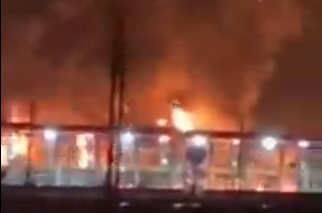
The oil refinery in Klintsy, Bryansk, which caught fire after a probable drone strike on 18 January, is still burning. The fire occupies several thousand square meters.
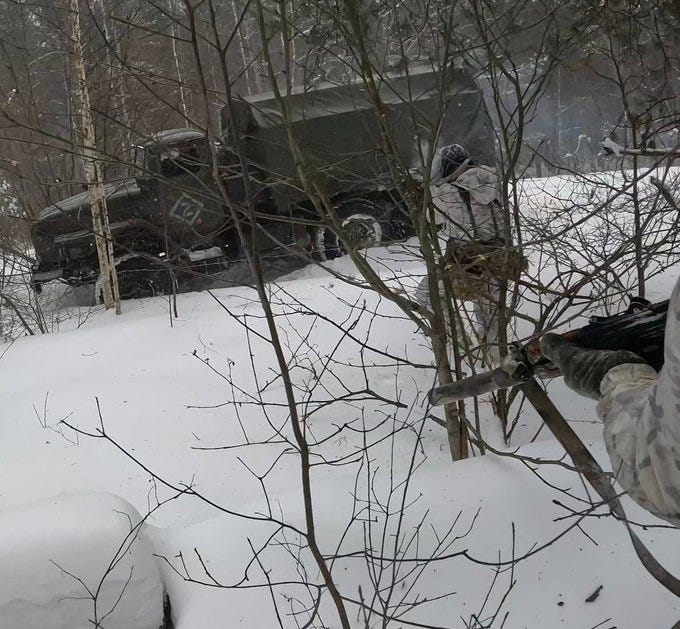
Also in the Bryansk region, the Russian Volunteer Corps carried out a raid in the Sezemsky district and attacked a Russian truck carrying military cargo.
Tula, Smolensk, and Oryol were attacked by drones, as reported in Russian media. These are major cities for manufacturing weapons and ammunition for the Russian war effort. The attack in Tula was targeted at the Shsceglovsky Val military plant, where the Pantsyr system is made, and armored vehicles are undergoing restoration. Whether the plant was damaged or not is unknown.
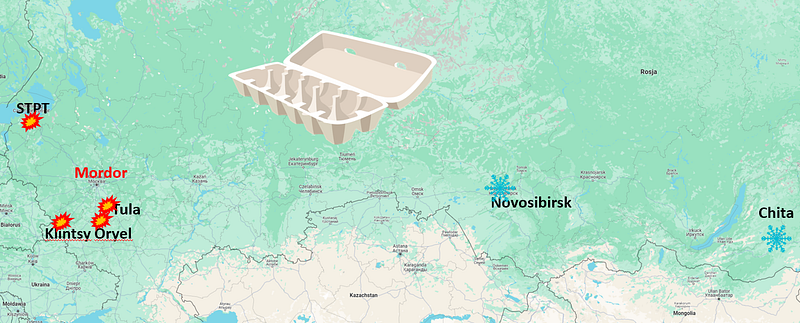
In Ust Luga, 30km from the Estonian border, west of St. Petersburg, an alleged Ukrainian drone hit an oil terminal in the port area, which has been burning for a day now. This occurred at the export terminal of Novatek, according to RT press release. The area has been evacuated, and first responders have been dispatched. This is a major export hub for Russian fossil fuels, and the port there was opened in 2001 by Putin himself. It was the projected home of the Second Baltic Pipeline, which is now in doubt and is also a major container hub.
Forty thousand residents of Chita are without gas due to supply disruptions caused by extreme cold. It is -29C in Chita, a city in Russia’s far East, located north of Mongolia and east of Lake Baikal. It is on the Trans-Siberian railway and has played an outsized role in Russian history. Decembrist intellectuals were exiled there in the 19th century, and it briefly declared independence in 1905. From 1918–1920 it was occupied by the Imperial Japanese Army. In 1945, the Last Emperor of China was held there by Soviet authorities. The 1987 film was about part of his life.
In Novosibirsk, a third steam-heat pipeline has burst, cutting off more heat and hot water to the city.
Russia is becoming dependent upon food imports. Egg prices are up 61% in 2023, imported from Turkey, Azerbaijan, and Iran. Importers are scrambling to cover deficits in eggs and chicken meat. Negotiations are ongoing with India, but there is not much surplus from the nation, with over a billion to feed.
A new law in Russia, FZ-381, creates a government register for access to economic data about Russia that was previously freely available. The object is to prevent foreign agents from analyzing the Russian economy. Already, more than 500 standard indicators have disappeared from government databases in Russia, which were all freely available prior to 2022. There is nothing to see here; please move along.
A-50
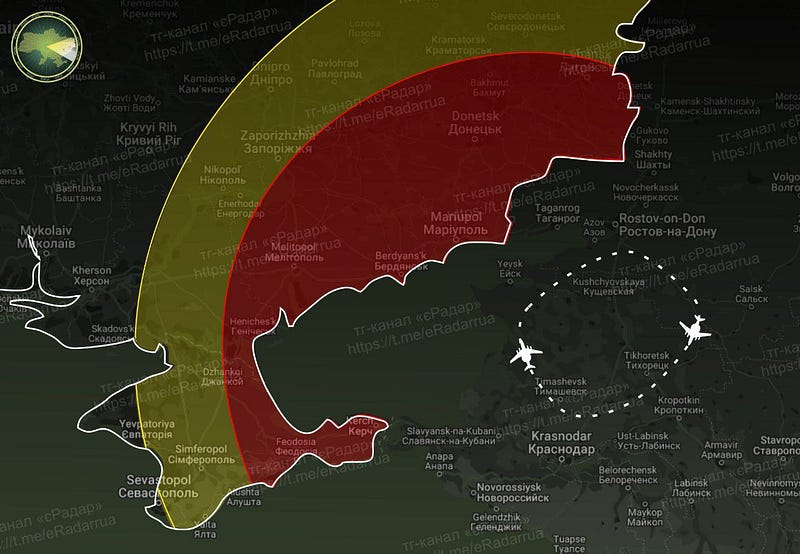
The loss of the $300 million A-50 some days ago over the Aral Sea has led to a change in flight paths for its replacement, which now remains over Russian territory. Yellow below represents the range when flying over water, with red the range with the restricted flight plan. Note that the red area only covers areas already occupied by Russia.
Baltic Barrier
Estonia, Latvia, and Lithuania plan to construct six hundred concrete bunkers and a trench system on the border with Belarus and Russia.
Chinese FAFO
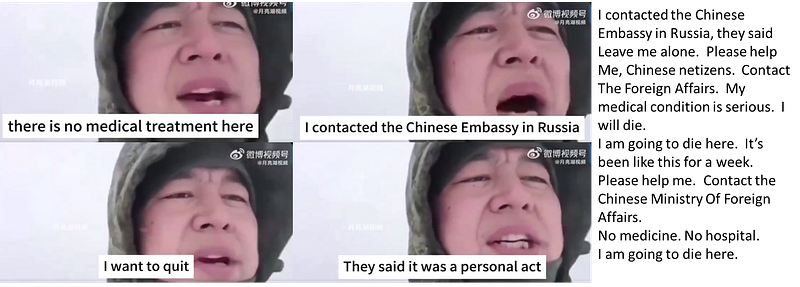
A Chinese citizen volunteered to serve in the Russian Army.
Russian FAFO
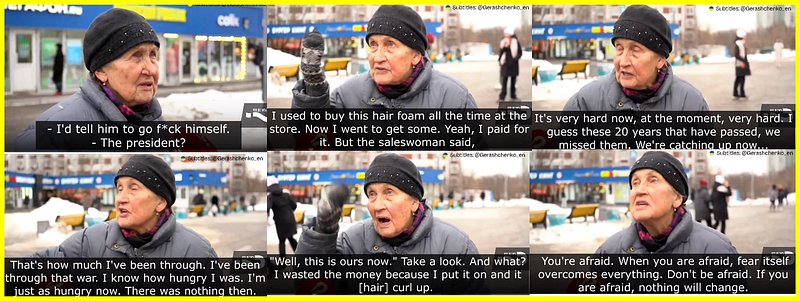
An 82-year-old woman was interviewed on the streets of Moscow. She is fed up with the war and Putin and has some advice for the young people.
Dig More Trenches!
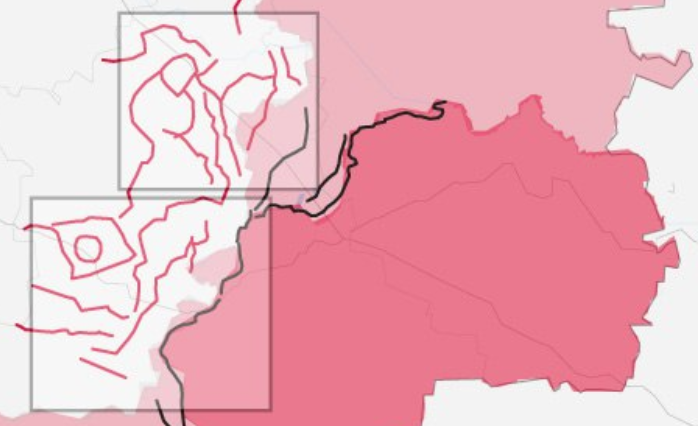
In a sign that this war will not end soon, Ukraine is digging trench lines along the front and in defense of major cities. The efforts in Donbas and Luhansk, projected to be the major Russian targets, are highlighted below.
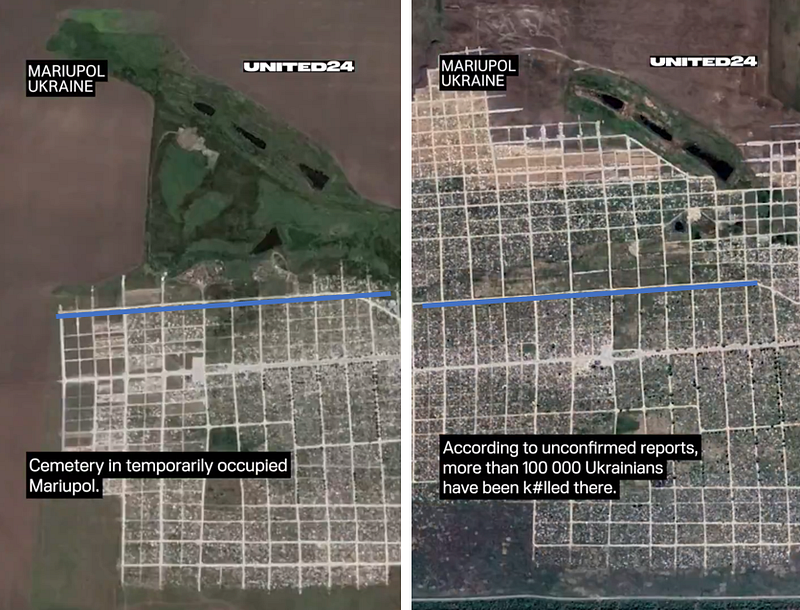
While Ukraine burns, the US Government twiddles its thumbs. The image above shows the expansion of just one graveyard outside Mariupol since the start of the war.
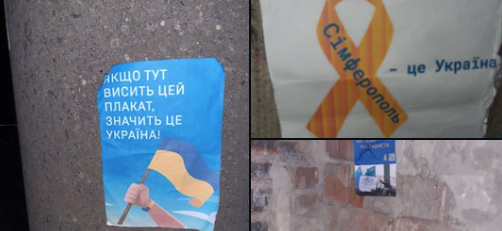
Ukrainian resistance in the occupied territories is becoming more and more open. Posters are being hung around cities in Crimea that say slogans like “Crimea is Ukraine” and “Simferopol is Ukraine.”
On the Front
Russia is making very incremental advances along much of the front. They have moved into the village of Krokhmalne in the northern part of the front and seem to be making a concerted attack in that direction. This is retaking territory they lost in 2022/23.
Russian bloggers are angry that members of Azov were exchanged for Russian POWs early in the war and that Azov is causing heavy Russian casualties around Kreminna. “Every inch we manage to squeeze during the day gets retaken at night. We can’t get a foothold because we have destroyed everything with our artillery. The Ukrainian cluster bombs hit us hard.”
Losses for the last couple of days.
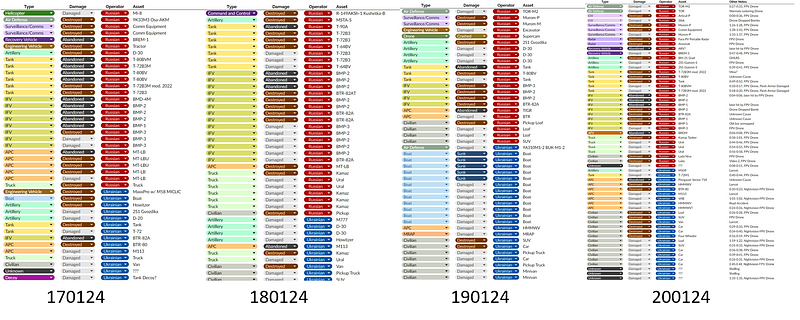
Ukraine continues to take very few losses of heavy equipment and almost zero losses of heavy NATO equipment, which they are probably keeping for a future attack. The number of boats lost on the 19th is probably the result of several days' worth of fighting because these are dated on the day the loss was recorded, not necessarily when it occurred. These losses are hard, though, as they are the resupply lines for the small group of men on the left bank of the Dnipro fighting in Krynky.


