
Ukraine War
Ukraine: UK ASRAAM Working Well, 200 More Shipped?
Originally air-launched, the rail launched version is proving to be effective, but could they also be on F-16s?
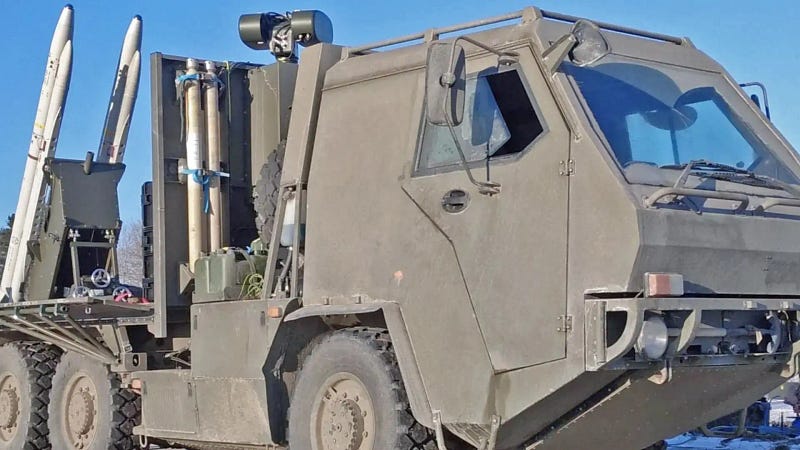
Following another of Russia’s bestial missile attacks on Ukraine in late December 2023, the UK announced within hours that it was sending another 200 air defence missiles to Ukraine. The missile type was not specified but is widely believed to be the AIM-132 AMRAAM.
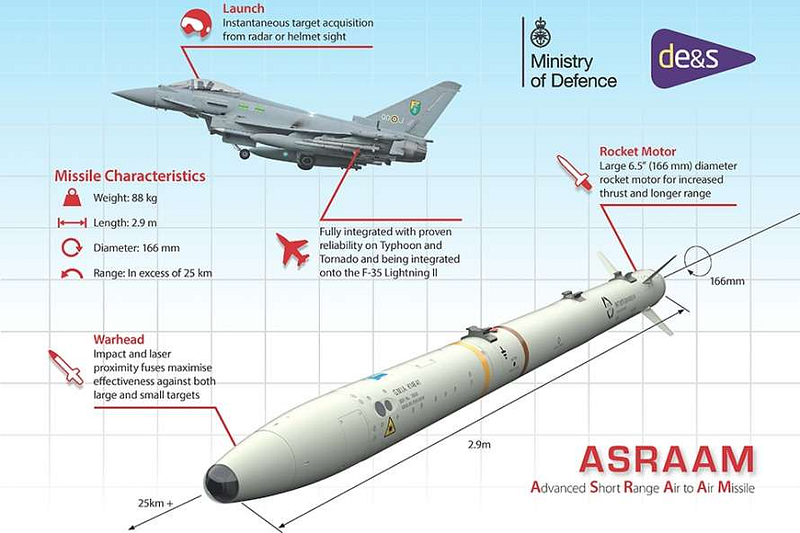
The UK deploys the original air-launched version AMRAAM on its Eurofighter Typhoons and F35s, but the manufacturer MDBA UK developed a ground-launched version mounted on a Supacat chassis.
In summer 2022, a joint MoD-MBDA team developed air defence systems to fire ASRAAM from the ground for the first time. Within four months of initiating the surface launched ASRAAM project, these air defence systems were developed, manufactured, trialled and Ukrainian crews trained on their usage, on UK soil, before being transferred into Ukrainian hands.
The surface launched ASRAAM project has demonstrated the best of British engineering ingenuity and the agility of MOD and British industry to rapidly deliver very effective yet low-cost solutions to the frontline to meet urgent requirements. The systems have proven highly effective — with a successful hit rate reported as high as 90% against some Russian air targets. Ukrainian operators have become adapt at their usage and have asked for more missiles to protect their country. — UK MOD
In early 2023, the UK provided Ukraine with the ground launched version of the short range missile. It’s not known how many launch chassis were provided, but The Times (UK) quoted an unnamed Ukrainian lieutenant colonel from Kyiv’s air defence cadre as saying that the UK had supplied “a handful of Supacat trucks rigged by British engineers to fire ASRAAM”
The AIM-132 ASRAAM offers superior maneuverability, range, and lethality, as compared with the AIM-9L Sidewinder, making it a formidable weapon in modern aerial dogfights, but it’s clearly also working very well in its surface-to-air variant form.
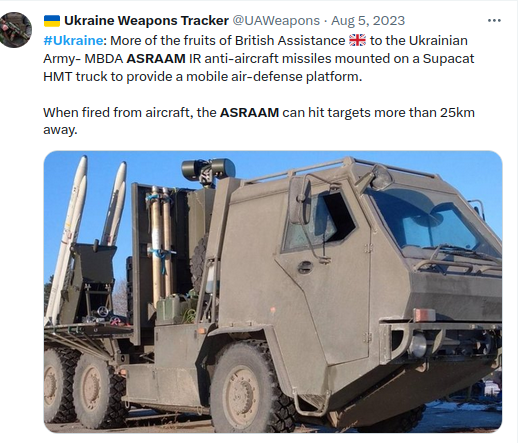
From the images we have, it appears that the high mobility Supacat 6x6 launch chassis is equipped with two launch rails. What may be rocket boosters for launch appear on the rails and slung under the ASRAAM itself. These would be required because the missile is usually launched from an aircraft and has immediate airspeed to enable the control surfaces to function, and energy to gain altitude is not required. So, the loss of range due to climbing may not be significant.
There may also be storage racks for four additional missiles although the size does not appear to match the deployed missiles.
Behind the truck’s cab is what could be a telescopic mast for sensors or a folded telescopic loading arm.
Key features
Imaging Infrared Homing: Unlike the Sidewinder’s conical scanning seeker, the ASRAAM utilises a more sophisticated imaging infrared seeker that generates a two-dimensional picture of the target. This allows for better discrimination against countermeasures and improved tracking performance in both cluttered and head-on engagements.
High Maneuverability: Employing a combination of body lift and tail control surfaces, the ASRAAM delivers exceptional agility, enabling it to outmanoeuvre even the most nimble enemy aircraft. This makes it highly effective against fast and agile targets at close range. However, we don’t know whether it has yet been tested in combat against super-manoeuvrable fifth generation fighters.
Lock-on-After-Launch: The ASRAAM can be launched without a lock on the target, relying on its seeker to acquire and track the enemy after launch. This increases situational awareness for the pilot and reduces the time required to engage targets.
Target seeking and discrimination: The missile’s Hughes focal plane array imaging array seeker has a long acquisition range, approximately 90-degree off-boresight lock-on capability, and the possibility to designate specific parts of the targeted aircraft (such as cockpit or engines) as it uses imaging IR which ‘maps’ an object and can therefore more easily discriminate against point sources of heat such as flares.
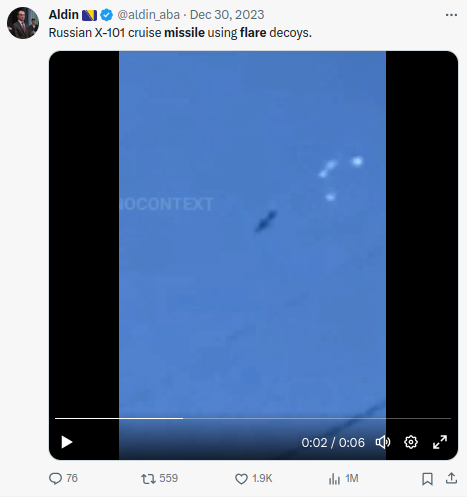
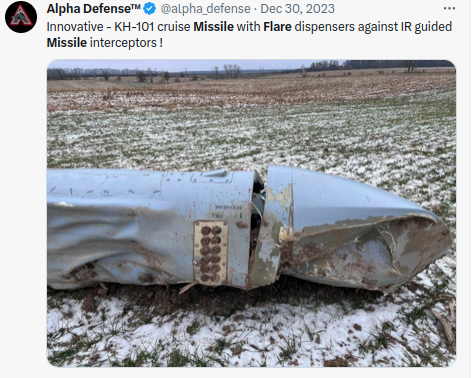
Note that Russia is now fitting flare ejectors to some of its cruise missiles.
Fusing: The UK’s Royal Airforce uses laser proximity fuses as these are considered to be less susceptible to ECM. We do not know what type of fusing has been supplied to Ukraine — impact and RF proximity fuses are also available for the AMRAAM but RF (radio frequency) fuses are jammable.
Internal Carriage: The ASRAAM is the only short-range air-to-air missile currently capable of being carried internally on the F-35 Lightning II. This preserves the aircraft’s stealth characteristics and allows for a larger number of missiles to be carried.
Could they be on F-16s?
Later versions of the F-16 are capable of carrying the 80% larger AIM-120 which is a long range AAM using different guidance technology and a larger engine.
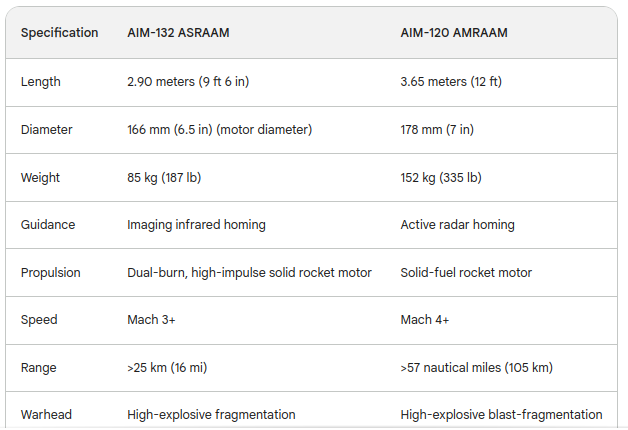
Size-wise, the ASRAAM can certainly be carried by and F-16, but the missiles are different beasts for different purposes, the AIM-132 ASRAAM being more suitable for close-in dog fighting with its off-boresight launch capability and loadable in an internal weapons bay. It is considered to be much more effective than the AIM-9 Sidewinder. Of course ‘close-in’ is a relative term here.
I cannot see that Ukraine would wish to engage Russian aircraft with the ASRAAM — the F-16s would be considered much too precious and would more likely be equipped with the longer range AIM-120 or alternatives. They would be kept well away from any front-line SAM or AAM threat.
The other consideration is the targeting/guidance system. I’m speculating here: Launching the AMRAAM (AIM-120) requires long range radar cueing and possibly lock-on at ~50 miles — in other words at a target more or less directly ahead (boresight). The imaging IR-guided ASRAAM (AIM-132) offers cueing/lock-on behind the wing line (off-boresight) which, it seems to me, would require a different target acquisition system in the cockpit. That would require a new launch control set-up for the F-16.
So, on balance I doubt that Ukraine would be using AIM-132 ASRAAMs on an F-16. They would not want further delays in F-16 deployment — if and when it happens.