dth="854">
</div>
</div>
</figure></iframe></div></div></figure><h2 id="f7df">SU-35S multi-role (NATO: Flanker-E)</h2><figure id="5554"><img src="https://cdn-images-1.readmedium.com/v2/resize:fit:800/1*uLnF4TrG0oyLaUSzZyNqag.jpeg"><figcaption>Image credit: By Anna Zvereva from Tallinn, Estonia — Russian Air Force, RF-81719, Sukhoi Su-35S, CC BY-SA 2.0, <a href="https://commons.wikimedia.org/w/index.php?curid=87442117">https://commons.wikimedia.org/w/index.php?curid=87442117</a></figcaption></figure><p id="0646">The Sukhoi Su-35 Flanker-E, dating back to 2008, is a derivative of the Su-27 air-defence fighter They are single-seat, twin-engined, super-manoeuverable aircraft based on the SU-27 but with the canards replaced by thrust-vectored engines.</p><p id="3cc3">Introduced into service in 2014, Russia is believed to have around 100 available (Wikipedia). Oryx lists 1 as having been destroyed.</p><h2 id="2ab2">SU-34 strike (NATO: Fullback)</h2><figure id="40bc"><img src="https://cdn-images-1.readmedium.com/v2/resize:fit:800/1*uSl1Bku3lX86Ep3wO_aGPg.jpeg"><figcaption>Sukhoi SU-34. Image credit: By Vitaly V. Kuzmin — <a href="http://vitalykuzmin.net/?q=node/615">http://vitalykuzmin.net/?q=node/615</a>, CC BY-SA 4.0, <a href="https://commons.wikimedia.org/w/index.php?curid=50477221">https://commons.wikimedia.org/w/index.php?curid=50477221</a></figcaption></figure><p id="e33c">The Sukhoi Su-34 is a Soviet-origin Russian twin-engined, two-seat, all-weather supersonic medium-range fighter-bomber/strike aircraft designed to meet an operational brief of engaging ground and naval targets. The two crew sit side by side.</p><p id="f51c">It first came into service in 2014. Russia is believed to have <a href="https://en.wikipedia.org/wiki/List_of_active_Russian_Air_Force_aircraft">132 available</a>. Oryx lists 10 as having been destroyed.</p><h2 id="e570">Not downed?</h2><p id="af15">What isn’t in the list of destroyed aircraft is the SU-57. These are very new stealth multi-role combat aircraft with only 4 thought to be operational and it is unlikely that they were deployed.</p><h1 id="de6d">Ukrainian combat aircraft</h1><p id="aed2">Data source: <a href="https://en.wikipedia.org/wiki/Ukrainian_Air_Force">Wikipedia</a></p><h2 id="a584">Mikoyan Mig-29 air-superiority/multi-role fighter (NATO: Fulcrum)</h2><figure id="a391"><img src="https://cdn-images-1.readmedium.com/v2/resize:fit:800/1*NSfHyKJTkVIRMInMfmJwJA.jpeg"><figcaption>A Russian Mig-29. Image credit: By Vitaly V. Kuzmin — <a href="http://www.vitalykuzmin.net/Military/Aviamix-2015/">http://www.vitalykuzmin.net/Military/Aviamix-2015/</a>, CC BY-SA 4.0, <a href="https://commons.wikimedia.org/w/index.php?curid=50773193">https://commons.wikimedia.org/w/index.php?curid=50773193</a></figcaption></figure><p id="71bd">The Mikoyan MiG-29 is a twin-engined fighter aircraft designed in the Soviet Union. Developed by the Mikoyan design bureau as an air superiority fighter during the 1970s it has been adapted for multi-role capabilities.</p><p id="1125">Ukraine was believed to have 51 before the current conflict (8 of them used for conversion training).</p><p id="1cb1">6 are reported lost by Oryx.</p><h2 id="f84e">SU-24M strike (NATO: Fencer)</h2><figure id="37d6"><img src="https://cdn-images-1.readmedium.com/v2/resize:fit:800/1*bw8KXdAomJK2D0ng6qOquA.jpeg"><figcaption>A Russian SU-24M. Image credit: By Alexander Mishin — <a href="http://www.airliners.net/photo/Russia---Air/Sukhoi-Su-24M/1536990/L/">http://www.airliners.net/photo/Russia---Air/Sukhoi-Su-24M/1536990/L/</a>, CC BY-SA 3.0, <a href="https://commons.wikimedia.org/w/index.php?curid=17094723">https://commons.wikimedia.org/w/index.php?curid=17094723</a></figcaption></figure><p id="3e34">The Sukhoi Su-24 is a supersonic, all-weather attack aircraft developed in the Soviet Union. The aircraft has a variable-sweep wing, twin-engines and a side-by-side seating arrangement for its crew of two. First introduced in 1974, Ukraine was believed to have 12 pre-war.</p><p id="7107">4 are reported as lost (<a href="https://www.oryxspioenkop.com/2022/03/list-of-aircraft-losses-during-2022.html">Oryx</a>)</p><h2 id="58e4">SU-27 fighter (NATO: Flanker)</h2><figure id="905c"><img src="https://cdn-images-1.readmedium.com/v2/resize:fit:800/1*eghrgS7TUKjpnYR8mezGEw.jpeg"><figcaption>A Ukrainian Airforce SU-27. Image credit: By Dave_S. from Witney, England — Ukrainian Air Force Sukhoi Su-27P Flanker, CC BY 2.0, <a href="https://commons.wikimedia.org/w/index.php?curid=71189659">https://commons.wikimedia.org/w/index.php?curid=71189659</a></figcaption></figure><p id="038c">Also listed under Russian aircraft.The Sukhoi wat designed by Sukhoi as a direct competitor for the large United States fourth-generation fighters such as the Grumman F-14 Tomcat and McDonnell Douglas F-15 Eagle. It came into service in 1985.</p><p id="dc10">Ukraine is reported as having 32, with 6 of them used for conversion training.</p><p id="1954">Oryx reports 4 as lost, plus 1 doubtful.</p><h2 id="4a55">SU-25 attack (NATO: Frogfoot)</h2><figure id="bfa7"><img src="https://cdn-images-1.readmedium.com/v2/resize:fit:800/1*b1GhY0E3SZ6b20nlmKsl0g.jpeg"><figcaption>A Ukrainian SU-25. Image credit: By Ministry of Defense of Ukraine — commons file, CC BY-SA 4.0, <a href="https://commons.wikimedia.org/w/index.php?curid=61588059">https://commons.wikimedia.org/w/index.php?curid=61588059</a></figcaption></figure><p id="fc76">Also listed under Russian aircraft, the Sukhoi Su-25 was introduced in 1985.</p><p id="7a01">Ukraine was believed to have 17 pre-war with Oryx reporting 8 lost.</p><h1 id="333f">Fixed wing aircraft — Russian loss trend</h1><p id="dd4d">I’ve been watching the daily Ukraine reports of Russian aircraft casualties. (source: <a href="https://t.me/ukrainenowenglish">https://t.me/ukrainenowenglish</a>). I’ve taken weekly snapshots.</p><p id="2f62">Currently, Ukraine is claiming 212 Russian aircraft destroyed or captured. This number is now changing only occasionally, and it’s apparent that Russia is now losing very few.</p><figure id="3751"><img src="https://cdn-images-1.readmedium.com/v2/resize:fit:800/1*pu7vA7gKK6lV-ep-dhPVBw.png"><figcapt
Options
ion>Author graphic</figcaption></figure><p id="e456">I have no equivalent time-series data on Ukrainian losses.</p><p id="3464">Here are the Ukrainian claims as of 6 June 2022.</p><figure id="0497"><img src="https://cdn-images-1.readmedium.com/v2/resize:fit:800/1*pXniL8QDP39nXxdTQY-5zg.png"><figcaption>Image source: <a href="https://t.me/ukrainenowenglish/10135">Telegram</a></figcaption></figure><h1 id="b9f0">Conclusions</h1><p id="6766">When I looked at the data in detail and the dates of the losses, it became clear that the air war has diminished in intensity, at least with the aircraft subject of this story (accepting that the Oryx data may not be current).</p><p id="35a3">The Oryx data as it stands shows Russian combat aircraft losses as 29 against 23 for Ukraine.</p><p id="cb4c">Ukraine claims 212 downed Russian aircraft (10 June).</p><h2 id="6a67">Russian aircraft losses</h2><p id="6f2e">Based on the Oryx data, it is the Russian strike aircraft that have taken the majority of their casualties, but we do not have access to all the data about the downings. Some were destroyed on the ground but whether the others were downed by AA activity or Ukraine fighter defence we don’t know.</p><p id="bcbe">Irrespective of the absolute values of aircraft lost, I believe that this flattening of the cumulative loss curve is indicative of changed Russian tactics <i>vis a vis</i> the use of aircraft within range of Ukrainian air defences. Russia hasn’t run out of aircraft, it’s just not deploying them.</p><p id="383e">Just saying (late edit 17 June 2022):</p><div id="8f5f" class="link-block">
<a href="https://t.me/ukrainenowenglish/10988">
<div>
<div>
<h2>Ukraine NOW [English]</h2>
<div><h3>📞''There are no offensive operations by Russia. If we go, we will be slammed right away. We already have pilots afraid…</h3></div>
<div><p>t.me</p></div>
</div>
<div>
<div style="background-image: url(https://miro.readmedium.com/v2/resize:fit:320/0*E-ogyq0Dia5UiKJh)"></div>
</div>
</div>
</a>
</div><p id="2df7">The Russians are afraid to fly their aircraft. Okay, it’s a Ukrainian source.</p><blockquote id="c411"><p>📞’’There are no offensive operations by Russia. If we go, we will be slammed right away. We already have pilots afraid to fly,” the Security Service of Ukraine intercepted a phone conversation of a Russian military man.</p></blockquote><blockquote id="3344"><p>In addition, the man complains that the military “goes full psycho because of 24/7 shelling”, the Russian army fighters turn grey from fear and they already see a colonel-spotter in every granny with patties.</p></blockquote><h2 id="3d00">Ukrainian casualties</h2><p id="d9dc">Oryx is reporting 23 Ukrainian losses, but there is a question as to whether the data is now being maintained, as I mentioned earlier.</p><h2 id="0cf4">Are the Russians ‘keeping their powder dry’?</h2><p id="edd9">I’m speculating that the Russian armed forces command has decided to preserve their planes given that the British Starstreak and other NATO-supplied AA missiles are now in theatre.</p><p id="d09b">Shortage of planes is unlikely to be an issue for Russia, but the loss rate might have been unacceptable. They have multiple launch rocket systems and cruise missiles aplenty, plus adequate artillery, so it would seem to me that the need for close air support is less apparent. I’d note my impression that offensive combat drones do not seem to be playing a big part (yet) in Russia’s aggression.</p><p id="6394">While Ukraine certainly does have a shortage of aircraft, it does not need an offensive capability to strike into Russia and can attack Russian forces with effective artillery and multiple launch rocket systems at lower cost and with seemingly ‘endless’ replenishment from other countries. And it can do this with effective AA missile cover.</p><h2 id="1e5a">And, as I asked at the beginning — is the air battle over?</h2><p id="d307">The most interesting point for me (an armchair amateur) is that the doctrine of gaining air supremacy seems to have been laid aside. Modern AA systems (gunnery and missiles) may be proving to be too effective, even given the ECM, chaff and flares that these planes can deploy to misdirect incoming missiles.</p><p id="26d6">I wonder if there’s a wider lesson here for military analysts and planners?</p><p id="82e1"><b>Note:</b> This story is based on publicly available data which may not be current and which is possibly subject to manipulation or falsification.</p><p id="0b63"><i>About me: If you follow me I guarantee variety in your inbox! I write on a wide range of topics including humor, tech and travel, together with daily news events and the minutiae of my daily life living on a boat. I also write about</i></p><p id="724a"><b>…trying to make sense of wartime data</b></p><p id="d5c8"><i>If you appreciate stories like these and want to support other writers and me, consider signing up to become a Medium member. It’s only $5 a month, giving you unlimited access to incredible stories on Medium. If you sign up using my link below, I’ll earn a small commission at no extra cost to you.</i></p><div id="935b" class="link-block">
<a href="https://james-marinero.medium.com/membership">
<div>
<div>
<h2>Join Medium with my referral link - James Marinero</h2>
<div><h3>As a Medium member, a portion of your membership fee goes to writers you read, and you get full access to every story…</h3></div>
<div><p>james-marinero.medium.com</p></div>
</div>
<div>
<div style="background-image: url(https://miro.readmedium.com/v2/resize:fit:320/0*U9yusvoM2B03f0XJ)"></div>
</div>
</div>
</a>
</div><p id="61fa"><i>Or maybe just <a href="https://ko-fi.com/jamesmarinero">buy me a coffee?</a></i></p><figure id="7e2e"><img src="https://cdn-images-1.readmedium.com/v2/resize:fit:800/1*F7CRvNpnsbM3yYySfOeIjA.png"><figcaption></figcaption></figure></article></body>
War
Ukraine: This Air Battle is Different
What aircraft have been deployed and is the battle over? Can we learn anything from the statistics?
When Russian forces breezed over the Belorussian border into Ukraine on 24 February 2022, Moscow believed that they’d be in Kyiv in 3 days, Zelenskyy would have been toppled and Ukraine would be, illegally but forcibly, part of a new and growing Russian empire.
Now we’re over 100 days in to the ‘special military operation’ and Putin’s nose is well out of joint, his country is virtually cut off from world commerce and he is largely locked out from his currency reserves.
It was a totally botched operation and the combined ops approach failed miserably for several reasons (e.g. poor comms, command structure issues, logistics) which I’ve addressed in other articles.
Over the last couple of months I’ve taken an objective look at the losses and the equipment used by both sides, spanning armour and artillery. Now in this story I’m going to look at aircraft.
Fixed wing, piloted combat aircraft. And therefore not transport aircraft, not UAVs and not helicopters.
And there are some specific aspects to the air conflict that may have much wider implications.
Why this story is different
In the previous pieces I’ve written, there has been a face-off between Russian equipment and the Ukraine’s mix of ex-Soviet and Western-supplied matériel. In the case of aircraft, the Ukraine has no serious Western planes nor can it expect to receive any, despite repeated begging.
It’s been clear from the start that any Western supply of aircraft — either directly or through proxy countries — would trigger a much wider and more dangerous war. It would boil down to NATO versus Russia. And nobody, other than than the craziest hawk, wants that.
So basically the air battle in Ukraine has been down to Soviet aircraft versus Russian aircraft.
Ukraine has upgraded its Soviet-era aircraft but its capacity to do so has been limited probably to radar, communications and missiles.
Russia has had entirely new planes at its command (such as the SU-57 Felon), plus the old (maybe upgraded) models that Ukraine also has in its fleet.
What’s been deployed?
My approach to this was to look at what’s been claimed as shot down, destroyed or captured. The data has come from Oryx and from Wikipedia and may not be entirely current, but it is good enough to give us a reasonable picture of what has been deployed— with one exception:
Russia may have deployed aircraft that have not been shot down, destroyed or captured, aircraft that have evaded all attempts to detect or down them. Or they might not have deployed their more advanced aircraft such as the SU-57 Felon, perhaps out of concern that the technology could fall into enemy hands. It’s unlikely that this applies to Ukraine.
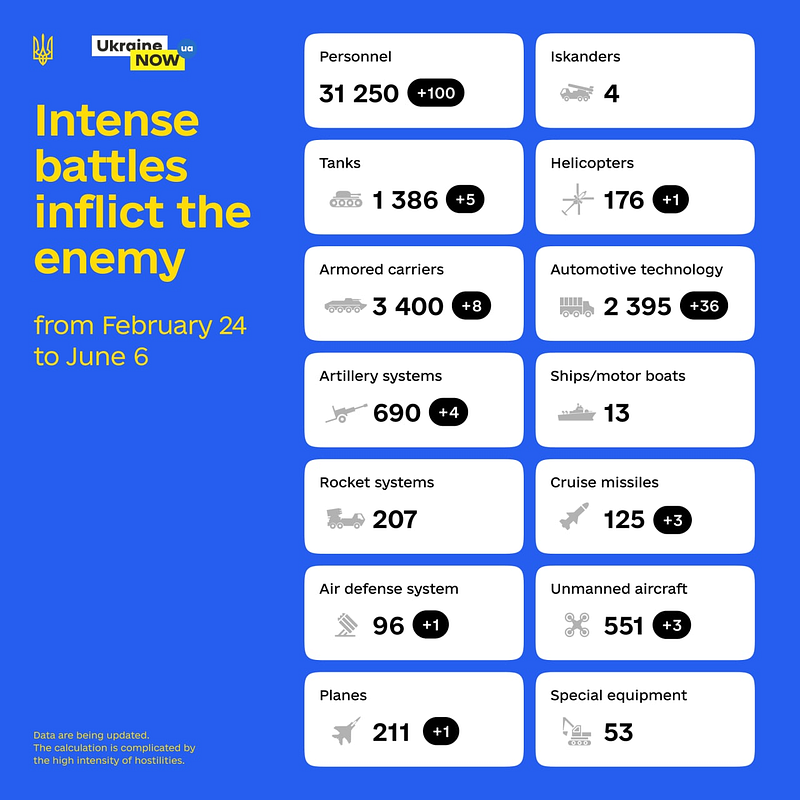
I’m not convinced that Oryx and Wikipedia data is up to date on numbers. For what it’s worth, currently Ukraine is claiming over 200 fixed wing aircraft losses for Russia including transport planes. Oryx is showing 29.
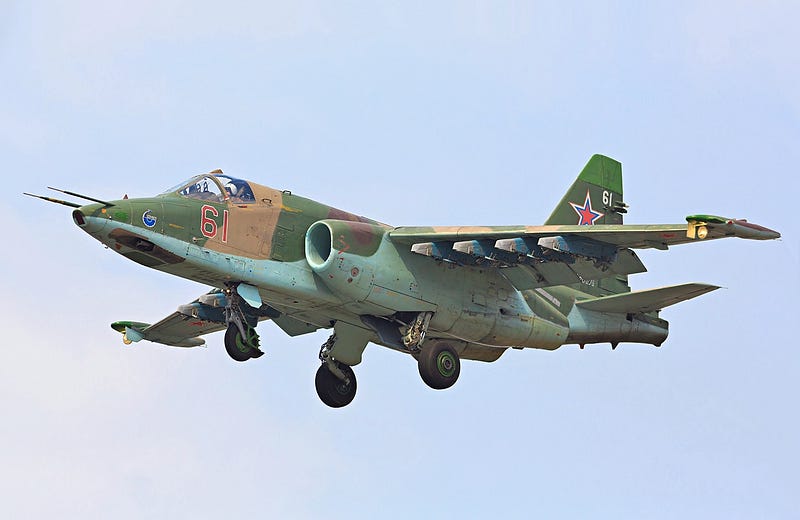
The Sukhoi Su-25 is a subsonic, single-seat, twin-jet aircraft developed in the Soviet Union by Sukhoi and first came into service in 1981. Wikipedia lists 194 as being in service (assumed prior to Ukraine war).
Designed to provide close air support to Soviet ground forces, 12 have been confirmed by Oryx as downed. Numbers downed may not be current.
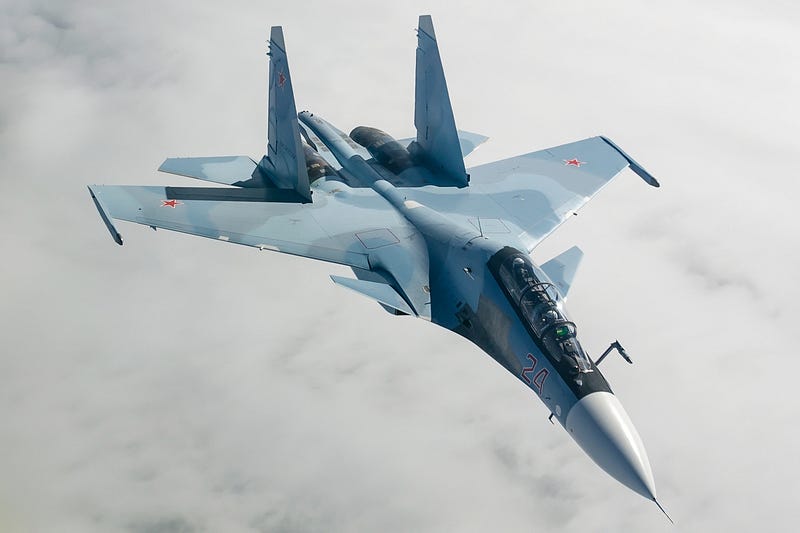
TheSukhoi S30 is a twin-engine, two-seat super-manoeuverable fighter aircraft . It is a multi-role all weather fighter developed for air-to-air and air interdiction missions.
Introduced into service in 1996 and still in production, Russia is believed to have at least 111 available. Oryx lists 5 as having been destroyed.
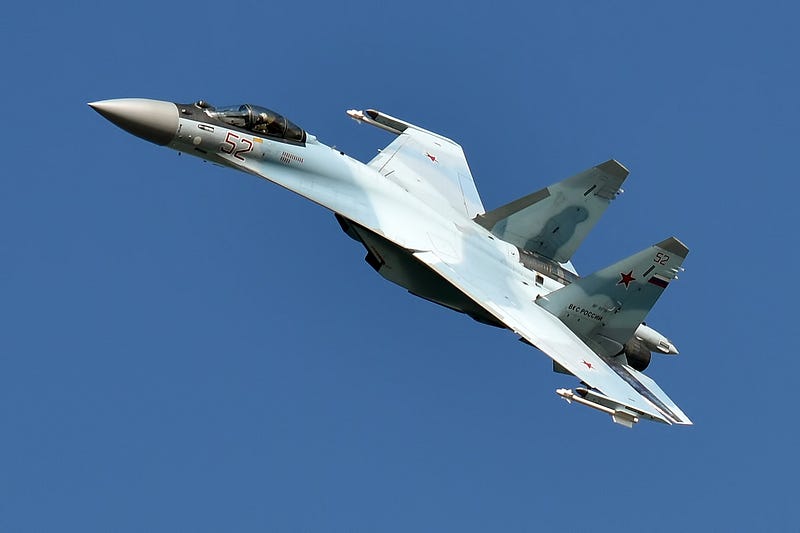
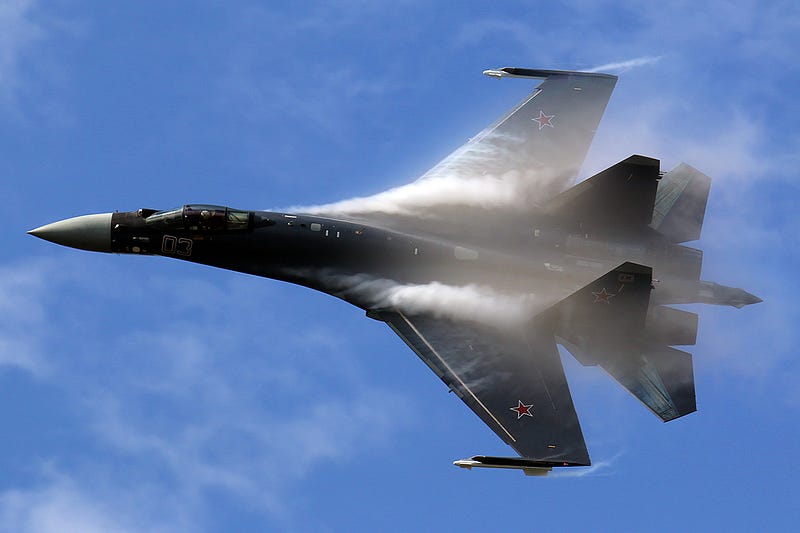
The Sukhoi Su-35 Flanker-E, dating back to 2008, is a derivative of the Su-27 air-defence fighter They are single-seat, twin-engined, super-manoeuverable aircraft based on the SU-27 but with the canards replaced by thrust-vectored engines.
Introduced into service in 2014, Russia is believed to have around 100 available (Wikipedia). Oryx lists 1 as having been destroyed.
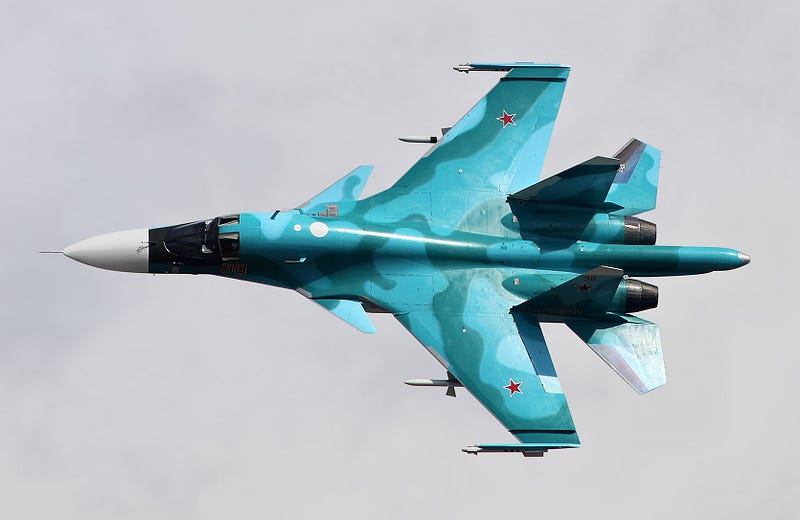
The Sukhoi Su-34 is a Soviet-origin Russian twin-engined, two-seat, all-weather supersonic medium-range fighter-bomber/strike aircraft designed to meet an operational brief of engaging ground and naval targets. The two crew sit side by side.
It first came into service in 2014. Russia is believed to have 132 available. Oryx lists 10 as having been destroyed.
Not downed?
What isn’t in the list of destroyed aircraft is the SU-57. These are very new stealth multi-role combat aircraft with only 4 thought to be operational and it is unlikely that they were deployed.
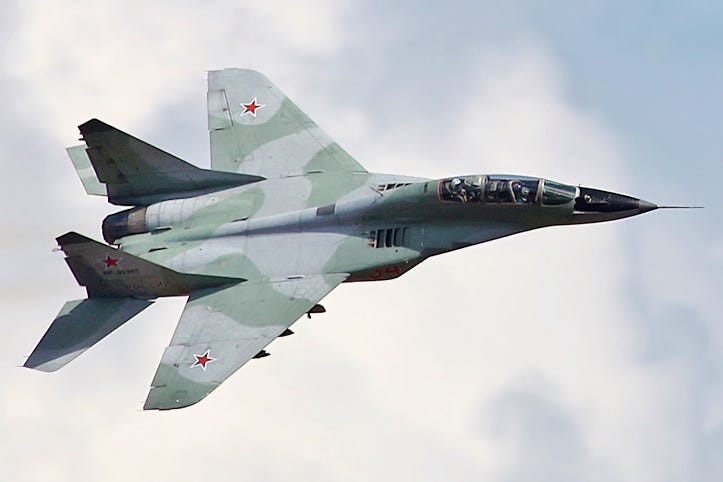
The Mikoyan MiG-29 is a twin-engined fighter aircraft designed in the Soviet Union. Developed by the Mikoyan design bureau as an air superiority fighter during the 1970s it has been adapted for multi-role capabilities.
Ukraine was believed to have 51 before the current conflict (8 of them used for conversion training).
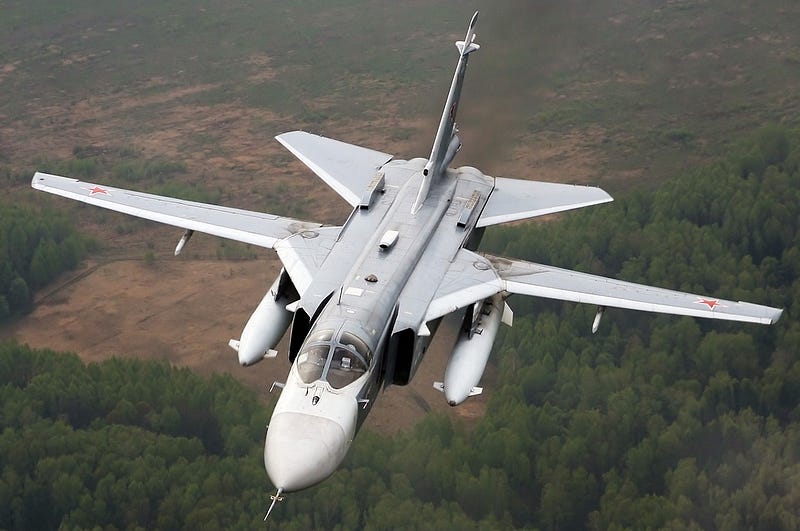
The Sukhoi Su-24 is a supersonic, all-weather attack aircraft developed in the Soviet Union. The aircraft has a variable-sweep wing, twin-engines and a side-by-side seating arrangement for its crew of two. First introduced in 1974, Ukraine was believed to have 12 pre-war.
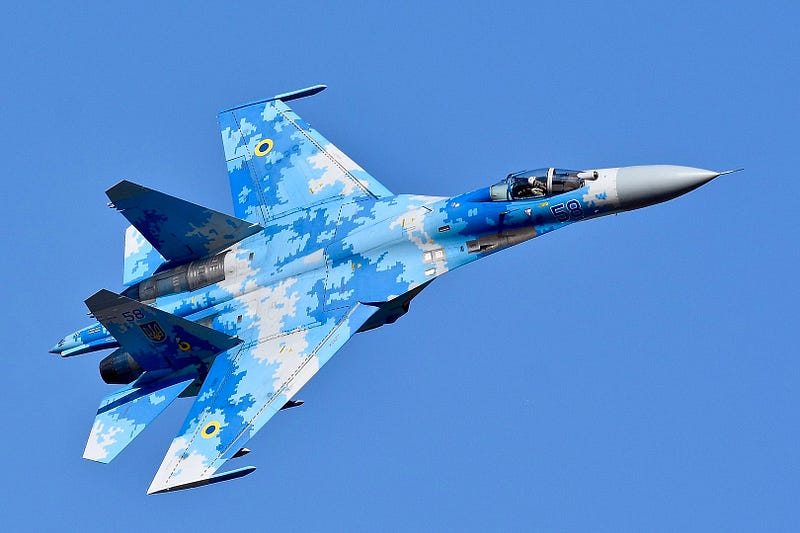
Also listed under Russian aircraft.The Sukhoi wat designed by Sukhoi as a direct competitor for the large United States fourth-generation fighters such as the Grumman F-14 Tomcat and McDonnell Douglas F-15 Eagle. It came into service in 1985.
Ukraine is reported as having 32, with 6 of them used for conversion training.
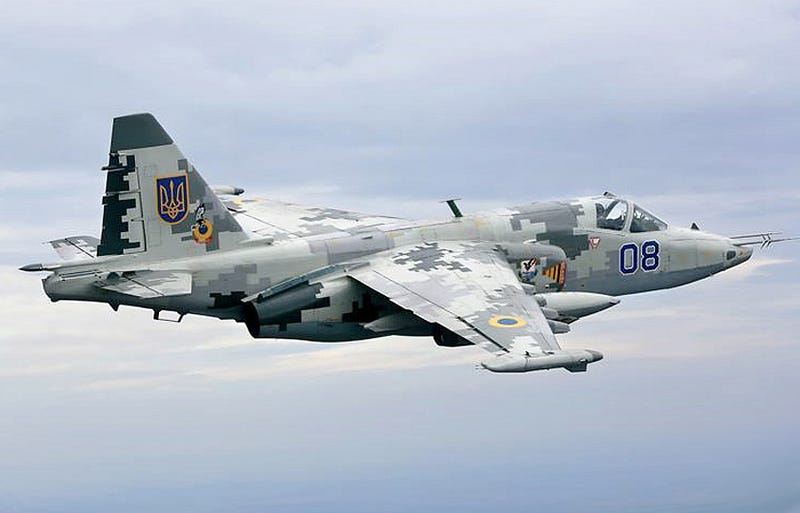
Also listed under Russian aircraft, the Sukhoi Su-25 was introduced in 1985.
Ukraine was believed to have 17 pre-war with Oryx reporting 8 lost.
Fixed wing aircraft — Russian loss trend
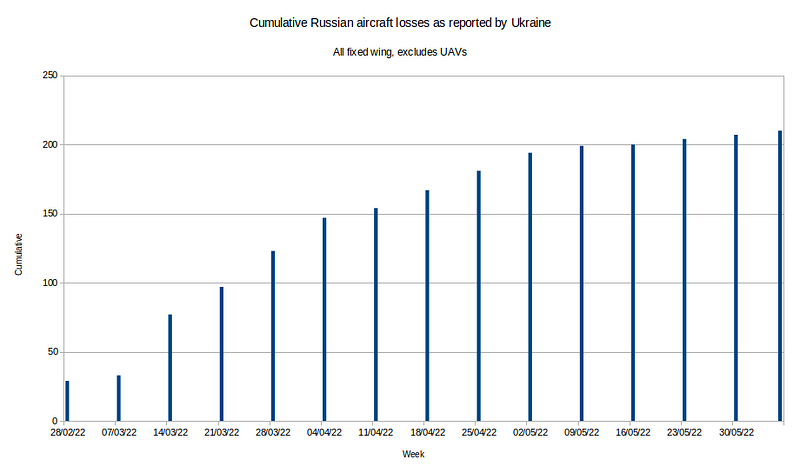
I’ve been watching the daily Ukraine reports of Russian aircraft casualties. (source: https://t.me/ukrainenowenglish). I’ve taken weekly snapshots.
Currently, Ukraine is claiming 212 Russian aircraft destroyed or captured. This number is now changing only occasionally, and it’s apparent that Russia is now losing very few.
Author graphic
I have no equivalent time-series data on Ukrainian losses.
When I looked at the data in detail and the dates of the losses, it became clear that the air war has diminished in intensity, at least with the aircraft subject of this story (accepting that the Oryx data may not be current).
The Oryx data as it stands shows Russian combat aircraft losses as 29 against 23 for Ukraine.
Based on the Oryx data, it is the Russian strike aircraft that have taken the majority of their casualties, but we do not have access to all the data about the downings. Some were destroyed on the ground but whether the others were downed by AA activity or Ukraine fighter defence we don’t know.
Irrespective of the absolute values of aircraft lost, I believe that this flattening of the cumulative loss curve is indicative of changed Russian tactics vis a vis the use of aircraft within range of Ukrainian air defences. Russia hasn’t run out of aircraft, it’s just not deploying them.
The Russians are afraid to fly their aircraft. Okay, it’s a Ukrainian source.
📞’’There are no offensive operations by Russia. If we go, we will be slammed right away. We already have pilots afraid to fly,” the Security Service of Ukraine intercepted a phone conversation of a Russian military man.
In addition, the man complains that the military “goes full psycho because of 24/7 shelling”, the Russian army fighters turn grey from fear and they already see a colonel-spotter in every granny with patties.
Ukrainian casualties
Oryx is reporting 23 Ukrainian losses, but there is a question as to whether the data is now being maintained, as I mentioned earlier.
Are the Russians ‘keeping their powder dry’?
I’m speculating that the Russian armed forces command has decided to preserve their planes given that the British Starstreak and other NATO-supplied AA missiles are now in theatre.
Shortage of planes is unlikely to be an issue for Russia, but the loss rate might have been unacceptable. They have multiple launch rocket systems and cruise missiles aplenty, plus adequate artillery, so it would seem to me that the need for close air support is less apparent. I’d note my impression that offensive combat drones do not seem to be playing a big part (yet) in Russia’s aggression.
While Ukraine certainly does have a shortage of aircraft, it does not need an offensive capability to strike into Russia and can attack Russian forces with effective artillery and multiple launch rocket systems at lower cost and with seemingly ‘endless’ replenishment from other countries. And it can do this with effective AA missile cover.
And, as I asked at the beginning — is the air battle over?
The most interesting point for me (an armchair amateur) is that the doctrine of gaining air supremacy seems to have been laid aside. Modern AA systems (gunnery and missiles) may be proving to be too effective, even given the ECM, chaff and flares that these planes can deploy to misdirect incoming missiles.
I wonder if there’s a wider lesson here for military analysts and planners?
Note: This story is based on publicly available data which may not be current and which is possibly subject to manipulation or falsification.
About me: If you follow me I guarantee variety in your inbox! I write on a wide range of topics including humor, tech and travel, together with daily news events and the minutiae of my daily life living on a boat. I also write about
…trying to make sense of wartime data
If you appreciate stories like these and want to support other writers and me, consider signing up to become a Medium member. It’s only $5 a month, giving you unlimited access to incredible stories on Medium. If you sign up using my link below, I’ll earn a small commission at no extra cost to you.