
Ukraine: is Germany taking time?
The difficult decisions on weapons and energy resources
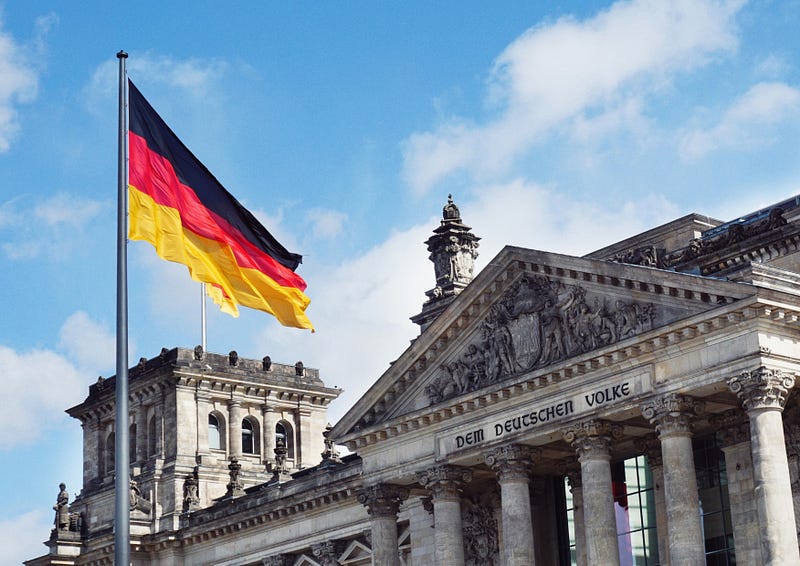
Due to its diversified political composition, the new German government is called a “traffic light” coalition, made up of social democrats, greens and liberals. Since the months leading up to the war in Ukraine, the international world knew how ambitious and interesting but at the same time difficult this project was. When the conflict broke out, the first complexities arose in a short time.
The taboild “Bild” has already coined a new verb, “scholzen”, whose meaning is to waver. Indeed, the German Chancellor seems to want to take time on the Ukraine question, taking advantage of the benefits given by the position that the nation holds, namely that of the leading European economy. In order not to compromise its own interests, Germany is holding back on the gas embargo and on the shipment of weapons to Ukraine.
Of course, Berlin still contributed to Western aid to Kiev. The German government has recently dispatched machine guns, anti-missile systems and anti-aircraft missiles. However, it later vetoed heavy weapons, which are very relevant for defense in the Donbass. Indeed, this is precisely the topic on which the major internal and European debates arise.
With regard to armaments, after an initial phase of reluctance to send means of defense to Ukraine and the controversy over the historic proximity of part of the German ruling class to Russia, Germany seemed to have found a balance by aligning itself with its Western allies. Berlin had in fact announced an investment in defense of 100 billion euros.
However, the problem of shipping heavy weapons is now undermining the stability of the ruling majority. Greens and Liberals are in favor, but Sholz and the SPD hold their own. To make matters worse, the chancellor claimed that he had provided Kiev with a list of weapons that Ukraine will be able to buy from the war industry, taking advantage of the two billion euros promised by Berlin itself. The Ukrainian ambassador, however, reiterated that on this list “there are no weapons the country needs”.
At the same time, the German chancellery declared that it could not send the armored vehicles that Kiev requests. The reason is linked to the fact that the Bundeswehr cannot remain without them, in order to be able to participate in international missions. Even in this case, however, the ambassador recalled that one hundred of the 400 vehicles that would be sent could be released in a short time, as they would be used only for training. Argument later refuted by Berlin.
Obviously, another major issue to be addressed is the Russian gas emabargo. From the 1990s onwards, the Kremlin has been able, in a very skilful way, to forge ever closer relations with Germany. These were based on personal understandings between the then chancellor Gerhard Schröder and Putin himself, then accompanied by the interests of private companies drawn from economic returns and profits.
During the years of Angela Merkel this approach has not changed, despite Merkel has always stressed how much her country protected human rights and the rule of law with respect to Russia. However, the Chancellor has never stopped the North Streat II pipeline, always basing her choices on a difficult economic and political balance.
These past agreements have thus influenced the recent decision taken by the Ukrainian government to reject the visit to Kiev of the President of the German Republic Frank Walter Steinmeier. In the last few weeks, images have often circulated, through the German press, of photos regarding agreements between Steinmeier and Russian Minister Lavrov. Likewise, Steinmeier was one of the most important figures for Russian-German relations in the governments of Gerhard Schröder and Angela Merkel, particularly in the role of foreign minister.
However, the hypothesis of an embargo on Russian gas is not only rejected by the German chancellery. The Bda, the association of German industrialists, and the Dgb, the association of German trade unions, also signed a joint note expressing opposition to this possible sanction against the Kremlin. The presidents of the two unions stressed how much this decision could damage the domestic economy, leading to a de-industrialization of Germany. In their opinion, the disastrous consequences would indeed have a more rapid effect on the German economy and labor market than on the Russian ones.
The main problem is the time it takes to replace the gas imports from Moscow. For this reason, Germany has spoken out several times against the immediate introduction of an energy emargo discussed in the EU. Of course, it is wrong to regard Berlin as pro-Russian. Scholz and his executive have repeatedly stressed that the government is already following a strategy of gradually reducing its dependence on Russian energy supplies. Likewise, German Finance Minister Lindner stressed that “the West is facing a criminal war and it is clear that all economic ties with Russia must be ended as soon as possible”. However, he also reiterated that “it is necessary to plan tough sanctions, but gas can not be replaced in the short term”.
According to official forecasts, Germany will not be able to achieve energy independence before the summer of 2024. Linder thus suggested considering oil, coal and gas separately. This is because alternative suppliers could be found at different rates. However, the important thing is to act as quickly as possible: Russian imports have allowed long years of prosperity in the country, but now this turnover is only financing the invasion of Ukraine.
Sources I was inspired by to write this article:
- La Germania vacilla su armi e sanzioni. La guerra ucraina diventa una resa dei conti interna, published by Huffington Post
- Embargo sul gas russo: in Germania aziende e sindacati dicono «no», published by Il Corriere della Sera
- Scholz frena anche sulle armi: polemica sui tedeschi riluttanti, published by La Repubblica
I am an Italian student who tries every day to improve her English. I really like writing and studying in this language, also to be able to reach more people. However, I still often run into mistakes. So, if while reading my article you have found some, do not hesitate to contact me, either though a comment or private note!


