avatarJames Marinero, MSc, MBA

Free AI web copilot to create summaries, insights and extended knowledge, download it at here

4158

Abstract

which led to the Bosnian War and the Kosovo War.</li><li>The fall of the Soviet Union in the 1990s: The fall of the Soviet Union in the 1990s created a power vacuum in Eastern Europe and the Caucasus, which led to conflicts in Georgia, Ukraine, and other parts of the region.</li><li>The Arab Spring uprisings in the 2010s: The Arab Spring uprisings, which began in 2010, toppled several long-standing authoritarian regimes in the Middle East and North Africa. This created power vacuums in several countries, including Syria, Libya, and Yemen, which have led to ongoing conflicts and wars.</li></ol><p id="ff28">Power vacuums do not <i>always</i> lead to war, and other factors, such as competing territorial claims, oil & gas rights, water supplies, ethnic and religious tensions, and external interference, can also play a role in the emergence of conflict.</p><p id="6fe8">The recent power vacuum in Europe led to the war between Russia and Ukraine for several reasons.</p><p id="e07d">One reason is the longstanding historical, cultural, and political ties between the two countries. Ukraine has a complex history, and has at various times been under the control of different empires, including the Russian Empire.</p><p id="cf5c">Ukraine has also struggled to define its own national identity and independence, and has at times been at odds with Russia over issues such as border disputes, economic integration, and political influence. These tensions have been exacerbated by the fact that Ukraine has sought to move closer to the West and integrate with European institutions, while Russia has historically viewed Ukraine as part of its sphere of influence.</p><p id="c962">There was no dominant power in Europe capable of filling the power vacuum. NATO to Putin was like a red rag to a bull, and the EU was arguably viewed by Putin as an ineffectual talking shop, with most of its member highly dependent on cheap Russian gas.</p><p id="0711">Ukraine was a major transit route for Russian natural gas to Europe, and Russia has used its energy exports as a tool of political influence in the past and continues to do so, increasingly.</p><h1 id="1f1b">The effects of Putin’s misadventure</h1><p id="c104">The power vacuum encouraged Putin’s special military operation (now being talked of as a war in Russia media).</p><figure id="ba2a"><img src="https://cdn-images-1.readmedium.com/v2/resize:fit:800/1*ioM7d51Dfln55ODmM6p9cg.png"><figcaption>NATO in Europe. Image screengrab from: <a href="https://www.nato.int/nato-on-the-map/#lat=50.401217960376606&amp;lon=1.4213826394090345&amp;zoom=0&amp;layer-1">https://www.nato.int/nato-on-the-map/#lat=50.401217960376606&amp;lon=1.4213826394090345&amp;zoom=0&amp;layer-1</a> contains material © Google Maps/Google Earth</figcaption></figure><p id="5b2f">But there have been consequences.</p><p id="a07c">The blowback for Putin is this:</p><ul><li>Finland and Sweden have applied to join NATO, reversing a long tradition (at least for Sweden) of neutrality. Until now, Finland had lived in a demi-world of seeming neutrality, cowed by the Russian bear at its borders.</li></ul><p id="9972">However, “As to enlargement, Russia has no problem with these states — none. And so in this sense there is no immediate threat to Russia from an expansion (of NATO) to include these countries,” Putin<a href="https://www.ibtimes.com/putin-sees-no-threat-nato-expansion-warns-against-military-build-3509069"> told the leaders of a Russian-dominated military alliance</a> of former Soviet states in May 2022.</p><p id="7d9d">Who believes him?</p><ul><li>There is unrest in the Caucasus with <a href="https://www.reuters.com/world/europe/georgias-pm-says-committed-joining-nato-2022-06-21/">Georgia seeking to join NATO</a> and Kazakhstan <a href="https://foreignpolicy.com/2022/09/16/kazakhstan-russia-ukraine-war/">distancing itself from Russia</a>, being ‘<a href="https://www.msn.com/en-us/news/world/how-russian-ally-kazakhstan-is-taking-a-stand-against-the-ukraine-war/ar-AA14BwxM">subtle but firm</a>’ in its opposition to the Ukraine war.</li></ul><p id="b553">There is no question in my mind that the escalat

Options

ing tension in the Balkans <a href="https://www.washingtonpost.com/business/what-you-need-to-know-about-rising-serbia-kosovo-tensions/2022/12/27/3b7e02a8-861c-11ed-b5ac-411280b122ef_story.html">between Serbia and Kosovo</a> is being stoked by Putin as a diversion, with Serbia seizing an opportunity in a diplomatic vacuum.</p><p id="4e96">And Putin has ‘peacekeepers’ in Nagorno-Karabakh who have been less than enthusiastic about their mission, <a href="https://www.aljazeera.com/news/2022/12/30/russia-denounces-criticism-of-nagorno-karabakh-peacekeepers">letting the locals get on with the fighting</a>.</p><p id="0cd2">Apart from the war in Europe, regional flare ups will continue to extend and intensify, with stresses between Russia and its old allies increasing.</p><p id="9cfc">Even China is uncomfortable about the Ukraine invasion and has been <a href="https://www.reuters.com/world/xi-tells-putin-that-road-peace-talks-ukraine-will-not-be-smooth-2022-12-30/">less than enthusiastic</a> about Putin’s misadventure.</p><p id="d6be">Would a unified European defence command have been able to fill that vacuum and keep Putin out of Ukraine?</p><p id="9955">I very much doubt it. There would never have been consensus for the idea.</p><p id="360c">2023 will be an interesting and desperately sad year, with the Ukraine war forecast to continue throughout the year.</p><div id="56e4" class="link-block"> <a href="https://news.yahoo.com/war-ukraine-last-2023-may-101200079.html"> <div> <div> <h2>'War in Ukraine will last all of 2023, there may be blackouts in EU,' FT forecasts</h2> <div><h3>Ukraine's war will drag on through the whole of 2023, and the European Union may also see widespread power outages due…</h3></div> <div><p>news.yahoo.com</p></div> </div> <div> <div style="background-image: url(https://miro.readmedium.com/v2/resize:fit:320/0*DKeph6ZG_l1ET-Jg)"></div> </div> </div> </a> </div><p id="f089"><i>Author’s note: The concept, structure, style and creative content in this story are all my own and I hope that is obvious to a reader. I do not employ third party writers. However, I do occasionally use an AI assistant to research and present small sections of factual content and data. All facts are checked where possible and sources quoted.</i></p><p id="97da"><i>About me: If you follow me I guarantee variety in your inbox with some unusual perspectives! I write on a wide range of topics including humor, tech, space, geopolitics and travel, together with daily news events and the minutiae of my daily life living on a boat. Yes, I really do live on a boat (some readers don’t believe that). I also write about…</i></p><p id="1ed1"><b>…vacuum cleaners</b></p><p id="ea95"><i>If you appreciate stories like these and want to support other writers and me, consider signing up to become a Medium member. It’s only $5 a month, giving you unlimited access to incredible stories on Medium. If you sign up using my link below, I’ll earn a small commission at no extra cost to you.</i></p><div id="c7f8" class="link-block"> <a href="https://james-marinero.medium.com/membership"> <div> <div> <h2>Join Medium with my referral link - James Marinero</h2> <div><h3>Read every story from James Marinero (and thousands of other writers on Medium). Your membership fee directly supports…</h3></div> <div><p>james-marinero.medium.com</p></div> </div> <div> <div style="background-image: url(https://miro.readmedium.com/v2/resize:fit:320/0*wEeEegzT_BReFyT5)"></div> </div> </div> </a> </div><p id="1764"><i>Or maybe just <a href="https://ko-fi.com/jamesmarinero">buy me a coffee?</a> and tell me what you liked reading (or not)…</i></p><figure id="2691"><img src="https://cdn-images-1.readmedium.com/v2/resize:fit:800/1*F7CRvNpnsbM3yYySfOeIjA.png"><figcaption></figcaption></figure></article></body>

Geopolitics

Ukraine: Expansionism Will Always Find a Vacuum

…and filling a vacuum usually means war
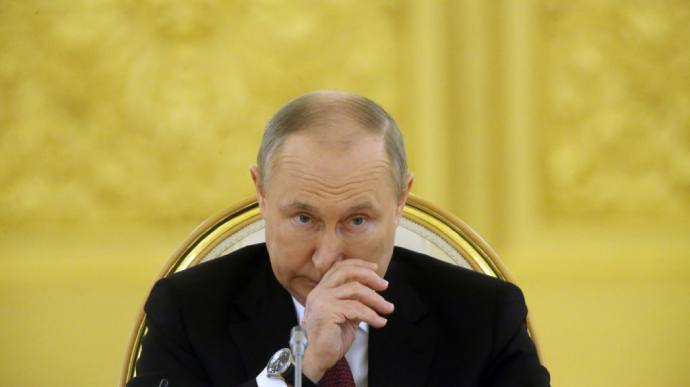
Image source: Telegram

As long ago as 2008, Putin was warning against the expansion of NATO.

“The Russian president, Vladimir Putin, today repeated his warning that Moscow would view any attempt to expand Nato [sic] to its borders as a “direct threat”.” — The Guardian, 4 April 2008

Since then, Putin has repeatedly warned NATO about its expansion being a threat to peace in Europe.

Moscow warned in the early 2000s that NATO expansion would be a major political mistake, the Times writes, citing declassified documents.

According to the publication, Putin told Tony Blair in 2001 that he did not want to be considered an enemy of NATO.

At the same time, Russia already then noted that in the event of an expansion of the alliance, retaliatory steps would follow, Igor Sergeyev, head of the Defense Ministry, told his colleagues from NATO about this. — Ukraine War Intel News on Telegram

Many people have told me that the war in Ukraine is a direct result of that movement eastward of NATO’s borders.

Tosh!

If NATO hadn’t accepted new members, then Putin’s puppets would by now be playing in states from Estonia to Ukraine, just as the Belarus sycophant Lukashenko is. In Hungary (a NATO and EU member), Viktor Orban is trying to stay on the edge of Putin’s orbit without being drawn in, but Hungary is closest to becoming vassal state of Russia.

Choice

The fact is that when given a truly free vote, most people will opt for a form of Western democratic model of government and economy and not the totalitarian models that countries such as China, Russia, North Korea or Iran offer. And of course I should add to that list countries such as Saudi Arabia, Myanmar and a few others besides.

However, those countries all have an absolute, ruthless ruler at their head, although they might deny it.

A power vacuum

A power vacuum is a situation where there is a lack of effective leadership or control in a particular area or sphere of influence. When a power vacuum exists, it can often lead to conflict and even war, as various groups or individuals try to fill the void and assert their own power and influence.

There are many examples throughout history of how power vacuums have led to wars. Here are just a few from the last hundred years or so:

  1. The collapse of the Ottoman Empire after World War I: The Ottoman Empire, which had controlled much of the Middle East and North Africa for centuries, collapsed after World War I. This created a power vacuum in the region, which led to numerous conflicts and wars, including the Arab-Israeli conflict and the ongoing conflict in Syria.
  2. The breakup of Yugoslavia in the 1990s: The breakup of Yugoslavia in the 1990s created a power vacuum in the Balkans, which led to the Bosnian War and the Kosovo War.
  3. The fall of the Soviet Union in the 1990s: The fall of the Soviet Union in the 1990s created a power vacuum in Eastern Europe and the Caucasus, which led to conflicts in Georgia, Ukraine, and other parts of the region.
  4. The Arab Spring uprisings in the 2010s: The Arab Spring uprisings, which began in 2010, toppled several long-standing authoritarian regimes in the Middle East and North Africa. This created power vacuums in several countries, including Syria, Libya, and Yemen, which have led to ongoing conflicts and wars.

Power vacuums do not always lead to war, and other factors, such as competing territorial claims, oil & gas rights, water supplies, ethnic and religious tensions, and external interference, can also play a role in the emergence of conflict.

The recent power vacuum in Europe led to the war between Russia and Ukraine for several reasons.

One reason is the longstanding historical, cultural, and political ties between the two countries. Ukraine has a complex history, and has at various times been under the control of different empires, including the Russian Empire.

Ukraine has also struggled to define its own national identity and independence, and has at times been at odds with Russia over issues such as border disputes, economic integration, and political influence. These tensions have been exacerbated by the fact that Ukraine has sought to move closer to the West and integrate with European institutions, while Russia has historically viewed Ukraine as part of its sphere of influence.

There was no dominant power in Europe capable of filling the power vacuum. NATO to Putin was like a red rag to a bull, and the EU was arguably viewed by Putin as an ineffectual talking shop, with most of its member highly dependent on cheap Russian gas.

Ukraine was a major transit route for Russian natural gas to Europe, and Russia has used its energy exports as a tool of political influence in the past and continues to do so, increasingly.

The effects of Putin’s misadventure

The power vacuum encouraged Putin’s special military operation (now being talked of as a war in Russia media).
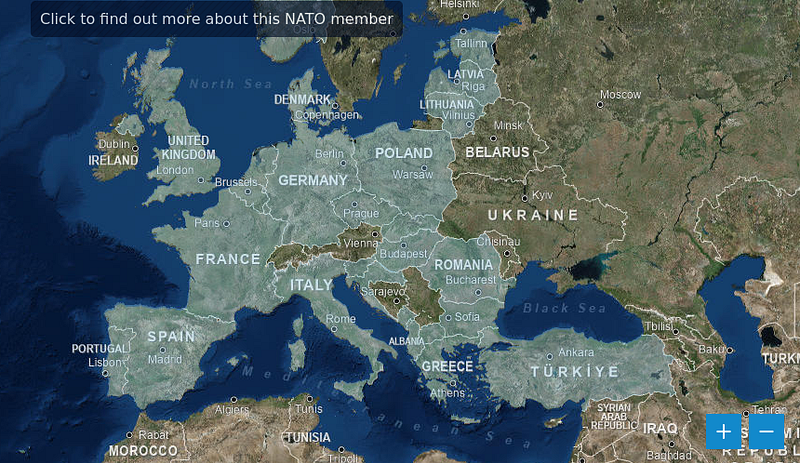
NATO in Europe. Image screengrab from: https://www.nato.int/nato-on-the-map/#lat=50.401217960376606&lon=1.4213826394090345&zoom=0&layer-1 contains material © Google Maps/Google Earth

But there have been consequences.

The blowback for Putin is this:

  • Finland and Sweden have applied to join NATO, reversing a long tradition (at least for Sweden) of neutrality. Until now, Finland had lived in a demi-world of seeming neutrality, cowed by the Russian bear at its borders.

However, “As to enlargement, Russia has no problem with these states — none. And so in this sense there is no immediate threat to Russia from an expansion (of NATO) to include these countries,” Putin told the leaders of a Russian-dominated military alliance of former Soviet states in May 2022.

Who believes him?

There is no question in my mind that the escalating tension in the Balkans between Serbia and Kosovo is being stoked by Putin as a diversion, with Serbia seizing an opportunity in a diplomatic vacuum.

And Putin has ‘peacekeepers’ in Nagorno-Karabakh who have been less than enthusiastic about their mission, letting the locals get on with the fighting.

Apart from the war in Europe, regional flare ups will continue to extend and intensify, with stresses between Russia and its old allies increasing.

Even China is uncomfortable about the Ukraine invasion and has been less than enthusiastic about Putin’s misadventure.

Would a unified European defence command have been able to fill that vacuum and keep Putin out of Ukraine?

I very much doubt it. There would never have been consensus for the idea.

2023 will be an interesting and desperately sad year, with the Ukraine war forecast to continue throughout the year.

Author’s note: The concept, structure, style and creative content in this story are all my own and I hope that is obvious to a reader. I do not employ third party writers. However, I do occasionally use an AI assistant to research and present small sections of factual content and data. All facts are checked where possible and sources quoted.

About me: If you follow me I guarantee variety in your inbox with some unusual perspectives! I write on a wide range of topics including humor, tech, space, geopolitics and travel, together with daily news events and the minutiae of my daily life living on a boat. Yes, I really do live on a boat (some readers don’t believe that). I also write about…

…vacuum cleaners

If you appreciate stories like these and want to support other writers and me, consider signing up to become a Medium member. It’s only $5 a month, giving you unlimited access to incredible stories on Medium. If you sign up using my link below, I’ll earn a small commission at no extra cost to you.

Or maybe just buy me a coffee? and tell me what you liked reading (or not)…

Politics
Geopolitics
Ukraine War
History
Current Affairs
Recommended from ReadMedium