
Drone Wars
Ukraine: Coming Soon, Air to Air Drone Engagements
Ukraine is actively engaged in developing anti-drone drones. Why? And how will they engage?
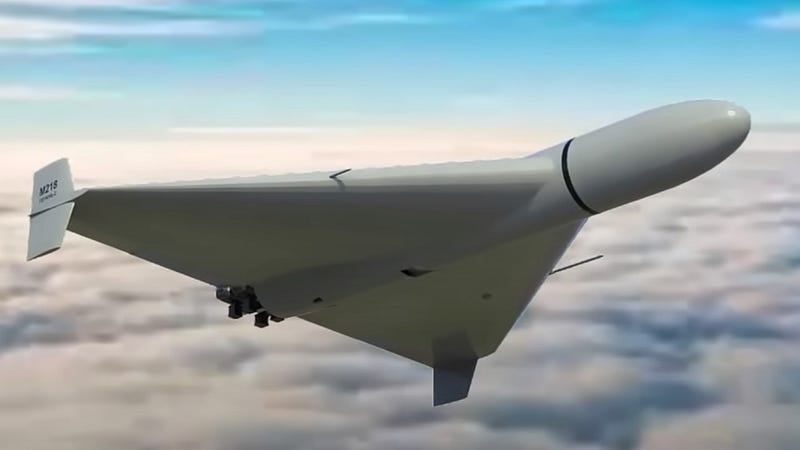
In response to the recent large scale attacks by clouds of kamikaze drones, Ukraine has announced that it is developing air-to-air drones that will fight against Russian UAVs, in particular Iranian-made Shahed 131 and 136 kamikaze drones as these seem to form the bulk of the Russian drone onslaught.
Digital Transformation Minister Mykhailo Fedorov says Ukraine is already researching and developing UAVs that can fight other drones. “I can already say that in February-March the situation with drones will change dramatically,” he said. — Telegram
The drone attacks have proven effective in degrading Ukraine’s power transmission grid and hitting other targets, but Ukraine claims to have destroyed a large percentage of them during the aerial assaults.
Ukrainian Air Force spokesman Yuri Ihnat told Reuters that Ukrainian defenses have shot down 85 percent of the Shahed-136 drones launched by Russia as of October 19, 2022. Although that seems like a high number, since then Ukraine is claiming high kill rates of that order as their skills and tactics improve against the slow-flying, low-flying Shaheds.
The Shahed drones are now being being continually delivered by Iran, but there surely has to be a manufacturing limit, given the advanced electronics (embargoed) that they use?
This is what sandboxx.us reported:
… effectively an admission by Moscow that its industry is incapable of producing the drones that they are now using and has turned to the Iranians. This has been echoed by some in Russia.
“The defense ministry has worked out tactical and technical requirements for drones. And unfortunately, most (Russian) manufacturers can’t meet them,” Colonel Igor Ischchuk recently said to TASS news agency.
While Russian defense manufacturers can produce missiles, their interior technical components inside are made in the U.S., and the economic sanctions have dried up their supply. This is affecting many Russian weapons.
Just recently (20 December 2022), Ukraine disclosed that another batch of 250 Shaheds was en route to Russia from the Ayatollah. True or false? I’ll bet on true.
This new weapons supply axis between Iran and Russia is causing widespread concern.
What is Russia supplying in return? Nuclear technology? Iran certainly does not need Putin’s oil. Well, it seems that Russia will give them advanced military components, according to the UK’s MOD.
I’m surprised that Russia has any ‘advanced military components’ to spare.
Cheap Shaheds are a problem for Ukraine
To defend against inexpensive drones, Ukraine is forced to use much more expensive missiles, writes The New York Times.
One “Shahid” (sic) can cost 20 thousand dollars, and the cost of launching a rocket — from 140 thousand dollars for the S-300 to half a million dollars in the case of the American NASAMS (according to other sources, about a million dollars).
Although they try to use anti-aircraft guns or small arms against drones, the night use of Shahids forces the use of ground-based air defense missiles.
Drone profiles
Iranian Shaheds
Depending on which source I look at, there is some debate as to whether the Iranian Shahed drones are simply programmed to find their target and hit it — direct attack — or whether they loiter until instructed to attack.
Special Ops Magazine reports that the Shahed 136 was developed by HESA as a loitering autonomous swarm pusher-prop aerial drone with a 35 kg explosive warhead and GPS guidance. Shahed 136 is a relatively cheap drone with a price estimated somewhere between $20,000 and $60,000 per unit. With a wingspan of 2.5 metres it’s by no means tiny and can be launched (rocket assisted) from a shipping container in batches of five.
With an operational range said to be up to 2,500 km it can be launched against any target in Ukraine from Russia territory. But its flight speed of 185 kph is relatively slow, allowing plenty of interception time, especially if it does loiter.
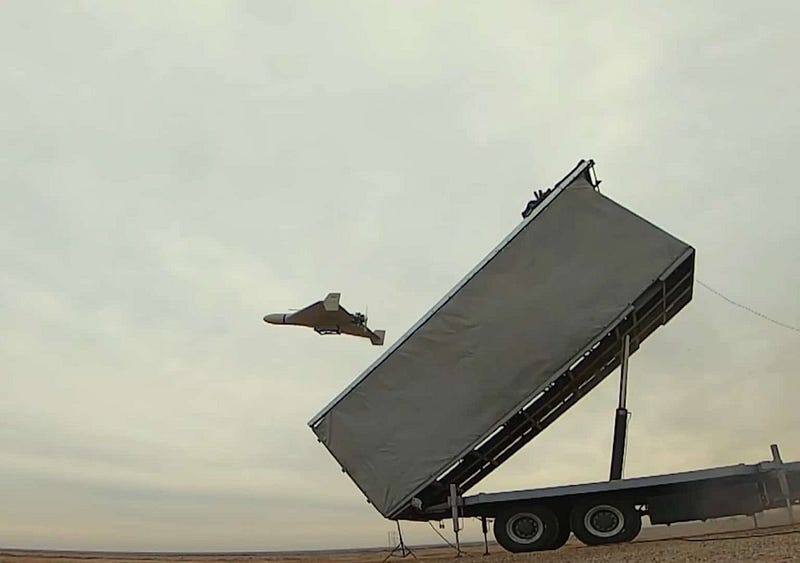
I don’t know if the drones have any ECM systems (unlikely due to component requirements), but there many reports of the Shahed’s susceptibility to ground fire and other anti-aircraft systems such as MANPADS.
So why is Ukraine building anti-drone drones? It could be because they could be much cheaper than AA missiles or manpads and probably more accurate than ground fire.
Also they could work in the dark when ground fire from soldiers might be more difficult because of target acquisition issues — if the drone had infrared cameras.
How would they down another drone?
There could be several methods:
- straight ballistic impact — i.e. ramming
- air-to-air gunnery — likely to be highly inaccurate
- small, cheap IR homing missiles — unlikely: complexity and cost
- lasers — unlikely due to power and aiming issues
- electronic systems jamming (drone busters) which would locally degrade the Russian Glonass GPS signals
- self-destruction with a close fly-by and grenade detonation
That’s all I can come up with for now.
They’d be needed in large numbers and to be simple and cheap with easily available components, and my best bet is the jamming or fly-by grenade solutions for target destruction.
Command and control
Of course, each would need a ground controller.
Or would they? Suppose that they were launched in clouds of maybe five, with a cloud being controlled as a unit by one controller?
Could they be autonomous? Maybe, but I very much doubt that will be the design although being cloud-cooperative for target acquisition and handover within a small is certainly a possibility.
The Ukrainian designers and engineers have a lot of leading edge experience and I’m sure that their designs will surprise us when they finally appear above the battlefield.
However, the latest news is that Forbes is reporting the use of FPV (first person view) racing drones which are already in use by the Ukraine forces.
“Racing” drones have become a deadly weapon in the hands of the Armed Forces, — Forbes
Analysts note the cases of effective use of small maneuverable helicopters with an attached warhead, which easily hit the occupants’ armored vehicles.
We are talking about the so-called racing FPV drones (FPV — short for First Person View), designed to be piloted by operators wearing glasses, to which the drone transmits images from the high-resolution front camera via Wi-Fi.
Soldiers of the Armed Forces of Ukraine turned them into real kamikaze drones.
Was this an FPV racing drone in action, coming up the rear of a Russian BMP?
While the fastest racing drones are reportedly capable of 180 mph, when loaded with a grenade then the performance envelope would certainly be degraded. However, the concept may well be behind Ukraine’s designs.
Of course it could all be misinformation. Who knows?
And then I look at that image…
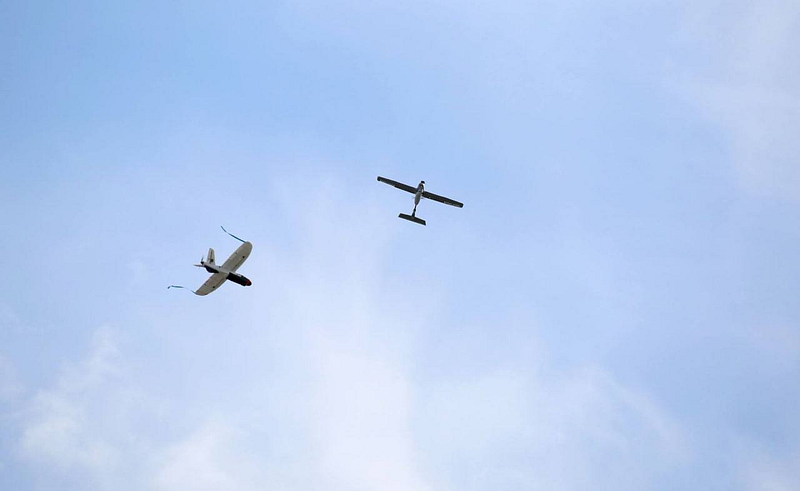
…and I remember that the Chinese had fighting kites centuries ago…


There’s nothing new under the sun.
About me: If you follow me I guarantee variety in your inbox with some unusual perspectives! I write on a wide range of topics including humor, tech, space, geopolitics and travel, together with daily news events and the minutiae of my daily life living on a boat. Yes, I really do live on a boat (some readers don’t believe that). I also write about…
…fighting kites
If you appreciate stories like these and want to support other writers and me, consider signing up to become a Medium member. It’s only $5 a month, giving you unlimited access to incredible stories on Medium. If you sign up using my link below, I’ll earn a small commission at no extra cost to you.
Or maybe just buy me a coffee? and tell me what you liked reading (or not)…
