
Social Media
Ukraine: Cats at War
Sound social media principles drive Ukraine’s public information strategy but why are cats in particular so important?
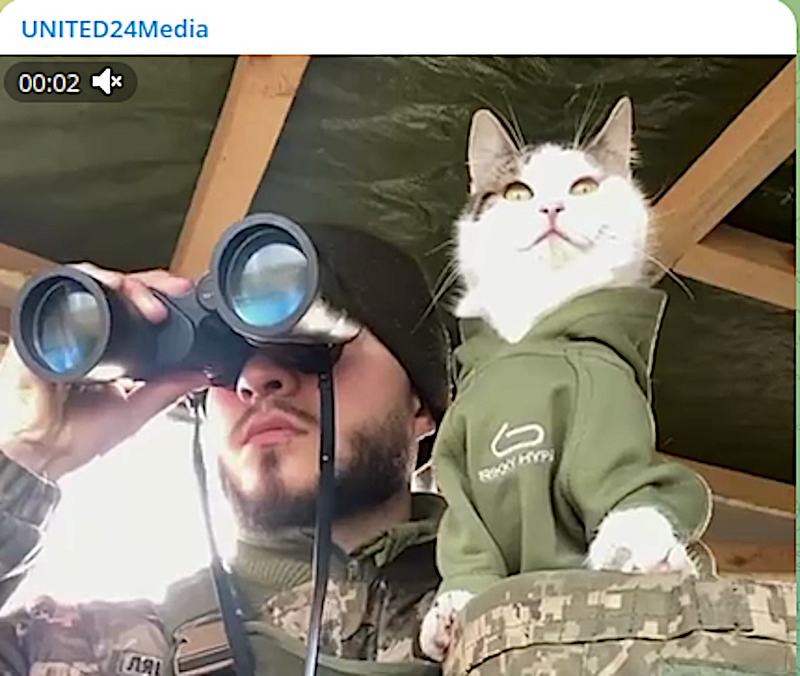
As the end of the first year of the Ukraine War approached, I performed my regular evening trawl of Telegram and news sites to keep up with events in Ukraine. I was once again faced with cats.
Many cats.
Posing cats, cats on patrol, cats as comforters, cats in camo, cats in costumes.
Cats seem to have become so much a part of the war, cleverly used by Ukraine in its social media campaigns which have generated enormous international support.
Everyone loves a cat.
There are plenty of dogs in Ukraine’s campaigns too. They help with searches for explosives, booby traps, mines and buried people — alive and dead.
But cats look wise.
Putin’s pussy problems
Cats are causing problems for Putin. They have helped Ukraine capture many gigabytes of social media space. Ukraine is certainly winning the social media war, at least in the free world.
You may remember that Putin has had some other problems with pussies. He jailed them.
Pussy Riots

Pussy Riot is a Russian feminist protest and performance art group based in Moscow that became popular for its provocative punk rock music which later turned into a more accessible style. Founded in August 2011, it has had a membership of approximately 11 women. The group staged unauthorized, provocative guerrilla gigs in public places. These performances were filmed as music videos and posted on the internet. The group’s lyrical themes included feminism, LGBT rights, opposition to Russian President Vladimir Putin and his policies, and Putin’s links to the leadership of the Russian Orthodox Church. — Wikipedia
Cats in social media
There are sound marketing reasons for using cats (and pets in general) in social media. Cat images are often shared as cute or humorous posts, and have been shown to generate high levels of engagement and positive emotions among users.
Some popular types of cat images include photos of cats in silly or unusual poses, videos of cats playing or interacting with their owners, and memes featuring cats in various humorous contexts.
But now we have them in war scenarios.
Why?
I’ll put my marketing hat on to answer that. Yes, sadly, I did qualify in marketing many years ago and worked in the sector for some time. And now marketing is very much a part of war. Here’s my take on it.
The reason that cats (and dogs) are being used by Ukraine in a war setting is because people will engage with the posts and smile (usually). Did you when you saw that headline picture?
A social media feed which constantly portrays bombed out buildings, pain, suffering and death will quickly fatigue people. They will turn away from the subject.
But a picture of a cat or dog even in war will make them stop, read and maybe think. It makes them realise that amongst all the trauma, life goes on for these animals, they have to find food, they have to survive. And the parallel with real people in these situations is not lost on most observers. They reset the ‘fatigue meter’.
Engagement is the word, and it’s essential in a social media campaign.
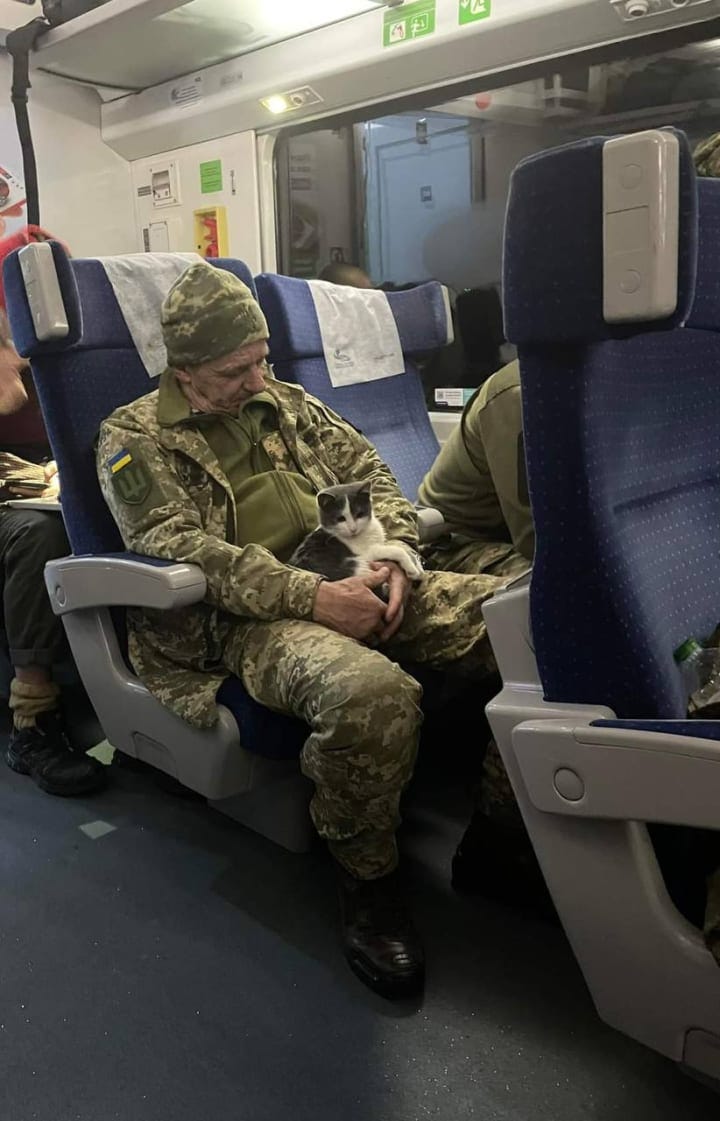
I’d like to think that a soldier caring for a cat means that he or she is still grounded with the sanctity of life, and although they may take lives, it is not done carelessly and minimises the risk of atrocities. But I could be wrong.
If the public — as individuals — are engaged it will, to some extent, influence their attitude to their government’s assistance to Ukraine.
We have seen the very sad situation in the USA where members of the GOP have been supporting Putin and arguing for a reduction in support for Ukraine. They are entitled to their views — and free speech, after all is one of the reasons for supporting Ukraine. The alternative is Putin’s gulag.
And so the influencing of public opinion is important.
And cats play their part.
Cats in war
Throughout history, cats have often been associated with warfare. During the times of Ancient Egypt, cats were used to protect grain stores from rodents and snakes.
In ancient Rome, felines were kept as mousers on ships and in encampments to keep vermin away from food supplies. Cats have even been involved in battle — Emperor Charlemagne had a cat-sized armoured suit made for his feline companion.
In World War I, cats were brought onto the battlefield to help soldiers cope with their intense emotions. Cats were known to provide comfort in times of stress and distress, helping bring solace and a sense of security to those in dangerous situations. They were also used as mascots, and soldiers wrote home about their feline friends.
The only problem with cats is that you can’t train them. Dogs have masters, cats have servants.
But although I live on boat, I don’t have a ships cat. I have a stuffed dog, known as ‘Blue’. And yes I do talk to him every day. I don’t have to feed him or clean up his poop. And I hate walking, so no problem there.
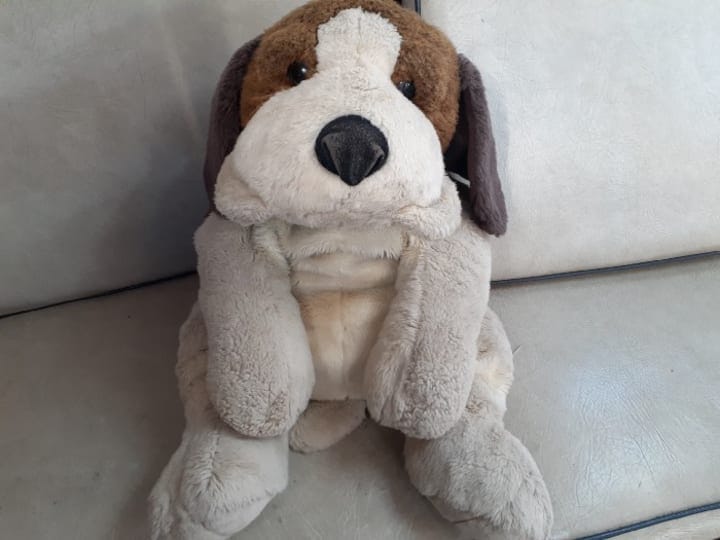
Blue helps keep me sane, particularly when the first mate is not aboard — she’s travelling right now.
I’m not at directly at war, but I am writing in support of a charity push to help Ukraine, so please keep an eye out for my stories and support the push, every dollar helps.
And to round off here are a few more cat pics from Ukraine (all are credited to the United24Media channel on Telegram:
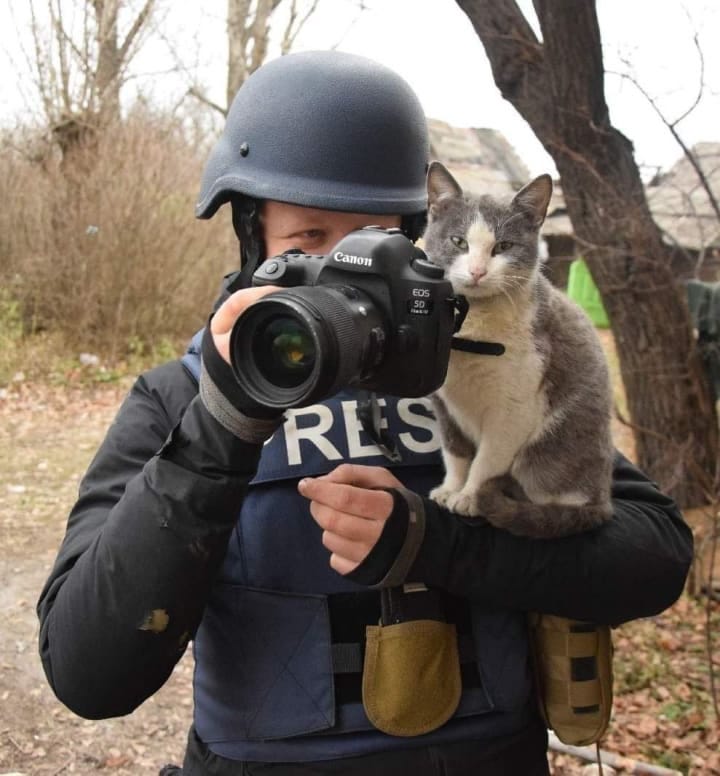
And this one has the camouflage:
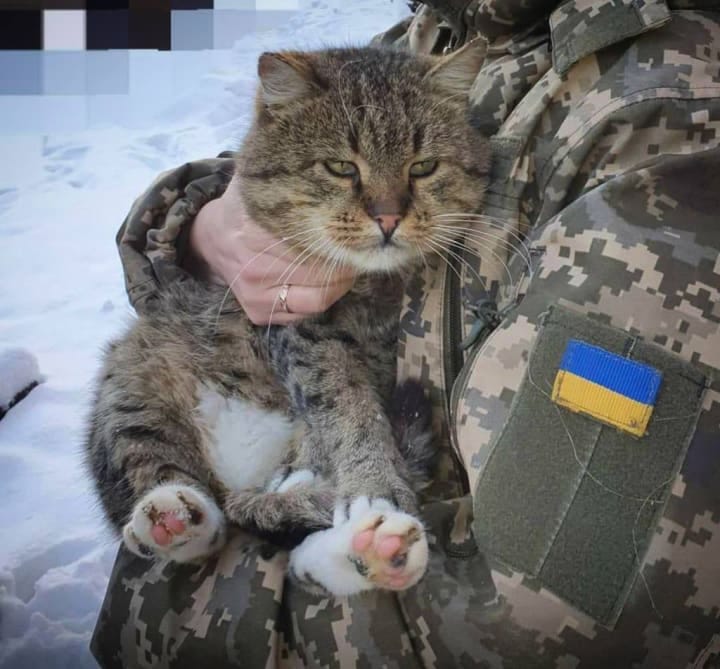
Warmth flows both ways!
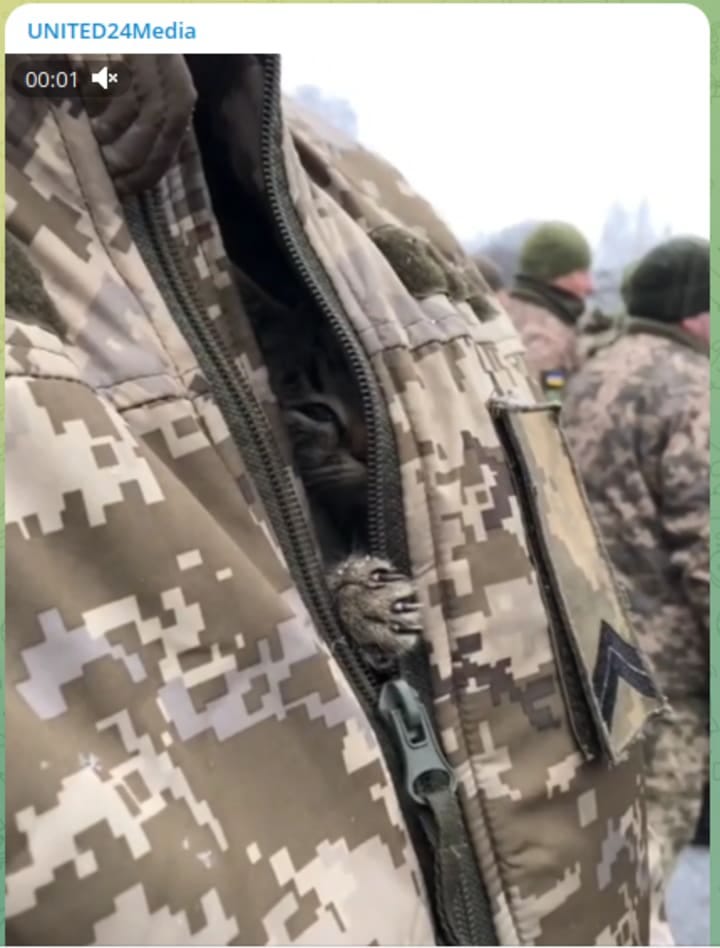
And in the interests of balance:
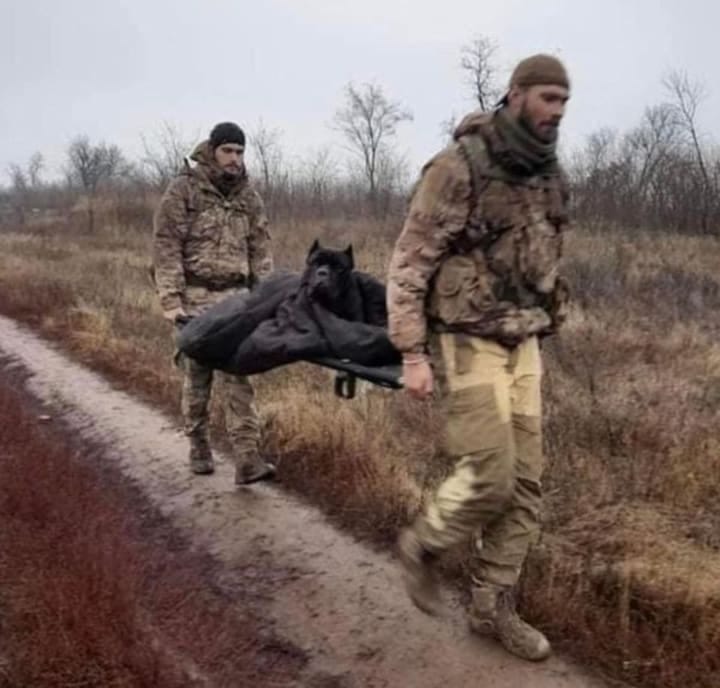
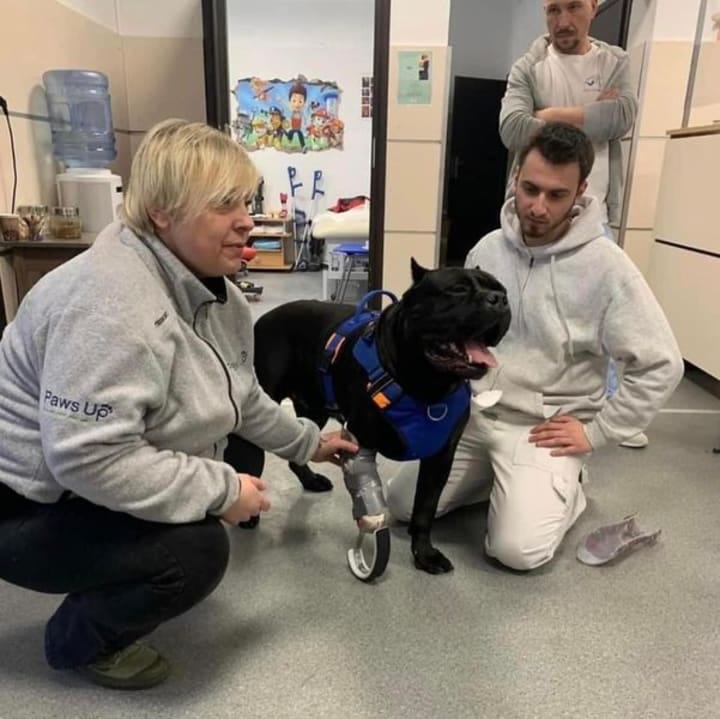
Vasya the dog served in the reconnaissance of the marines. Once at the front near the enemy’s positions, he became entangled in a wire and fell into a trap. The poor dog bit off his paw and returned to Ukrainian troops. Therefore, Vasya escaped from captivity.
And now he’s mobile again!
Hopefully, I’ve engaged you.
Help Ukraine.


