
Ukraine War
Ukraine: Can Russia’s ‘Meat Wave’ Strategy Succeed?
The human wave strategy stretches back for many years — it’s a tool of despots and dictators who place no value on human life, from Stalin, Saddam Hussein and Ruhollah Khomeini to Putin,
In a week when Ukraine’s President Zelenskyy said that his military were requesting 450,000 to 500,000 extra troops, I pondered about the efficiency of Russia’s so-called ‘meat wave’ strategy in its current war on Ukrainian people, history and culture. This is basically the throwing forward of waves of trained and poorly trained, well-armed and poorly-armed troops in both large and small formations against Ukrainian defenders with an apparent hope of overwhelming the defences or finding weak spots. Just throw bodies forward.
You may have seen videos of Russian soldiers out in the open and being decimated by drones, HIMARS and precision artillery strikes. Most ‘Westerners’ are horrified by such apparently callous tactics where Russian commanders (well away from the contact line) order their troops forward with little regard for the consequences.
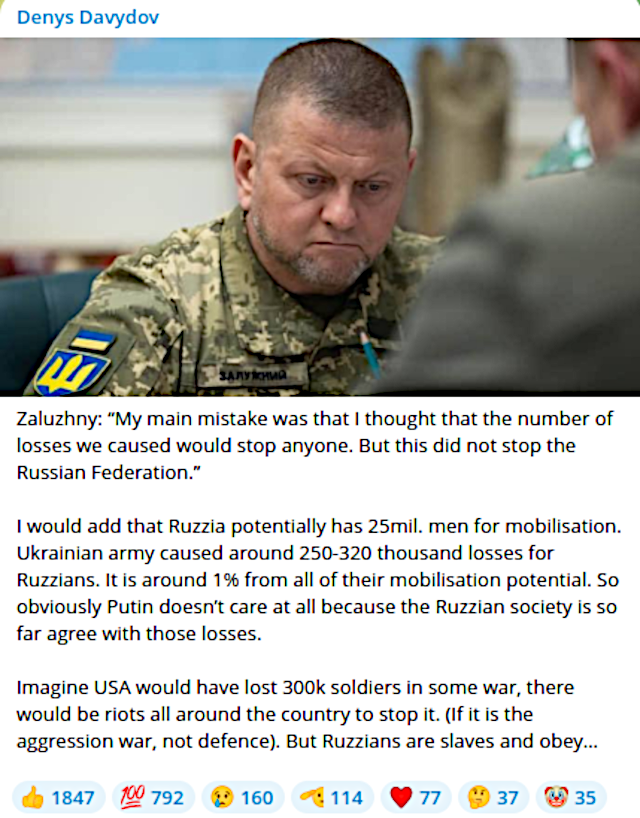
Many observers would say that Russia’s strategy is stupid, wasting soldiers on a huge scale with losses currently running at over 1,000 per day and credible estimates of well over 300,000 since the current phase of the war began in February 2022. As of December 10, 2023, US intelligence estimated Russian KIA at 315,000 (Reuters).
Compare that to the Western Front in WWI, when as many as 20,000 lives were lost in a single day — not Russian lives, but British and Allied lives.
Historical context
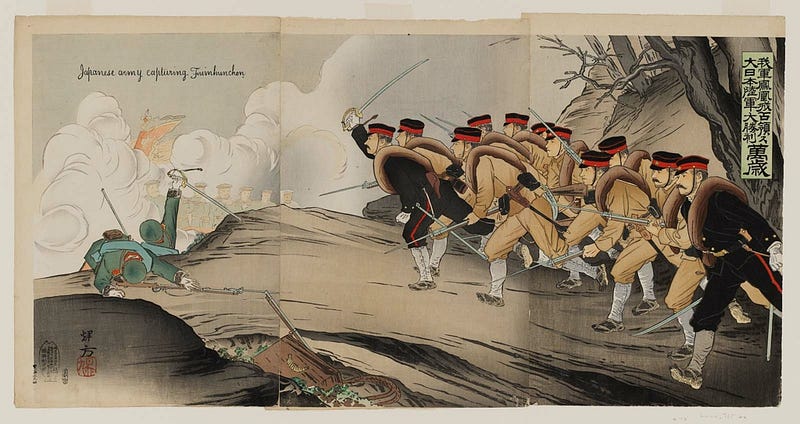
The concept of the ‘human wave attack’ stretches back at least to the Boxer Rebellion in China (circa 1900) and then was seen again in the Russo-Japanese War (1904–05) by Japan, the Spanish Civil War (by the Republican side).
Western Front, World War I
The First World War witnessed numerous large-scale offensives, particularly on the Western Front, where trench warfare led to immense casualties. While these offensives sometimes relied on concentrated troop deployments, the primary focus was on artillery bombardments and coordinated infantry advances, not solely overwhelming the enemy through sheer numbers.
On July 1, 1916, during the Battle of the Somme, the British Army suffered a staggering 57,470 casualties, with approximately 19,240 confirmed killed or died of wounds. This represented the bloodiest day in British military history.
If you have seen old film of dense troop formations advancing hopelessly into enemy artillery and machine gun fire then you will understand why I have included this here.
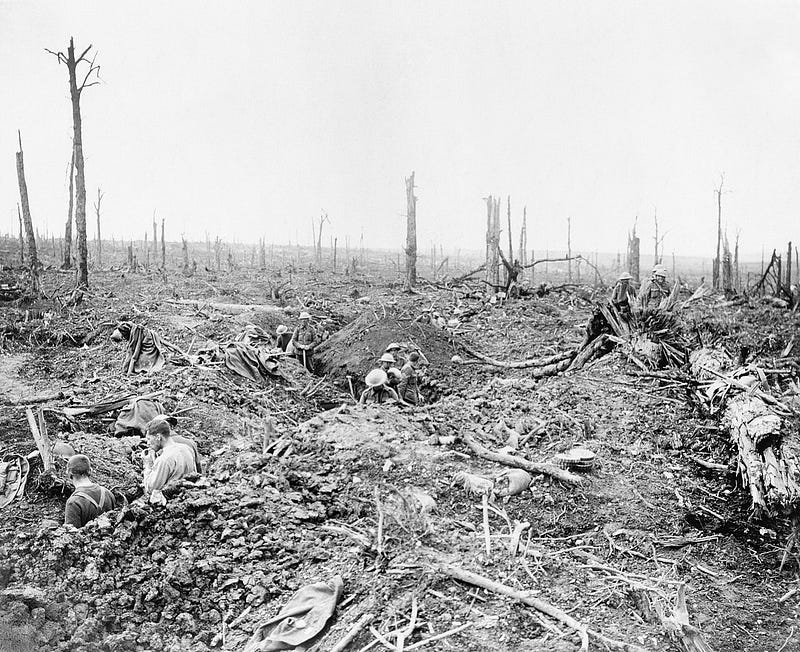
Many areas of the front line in Ukraine today look just like the above and are littered with Russian corpses.
It can be argued that World War I taught ‘free world’ military commanders a painful lesson. War had changed, it had become industrialised and the scale of slaughter was frightening to those who placed a high value on individual human life.
Russian Civil War
As World War 1 ended the Russian Civil War was under way and 5,000 US troops were in the Archangel area of northern Russia supporting the White Russians against the Soviet Red Army. Curious isn’t it? Five thousand US troops fighting the Red Army on Russian territory! The US troops reported the use of human wave attacks by the Red Army. Was the motivation their belief in a political philosophy?
World War II
Banzai charge or Banzai attack is the term that was used by the Allied forces of World War II to refer to Japanese human wave attacks and swarming staged by infantry units used by the Imperial Japanese Army during the Pacific War. This term came from the Japanese battle cry tennōheika banzai (“long live His Majesty the Emperor”).
This tactic was used when the Japanese commanders of infantry battalions expected that a battle was about to be lost, as a last ditch effort in thwarting Allied forces. It is worth noting that the Japanese troops were motivated by the belief that Hirohito, the Japanese emperor, was their divine god. They would die rather than surrender or retreat. These human wave attacks were positively energised and not driven by fear from the rear.
Korean War
The Chinese People’s Volunteer Army (CPVA) employed human wave tactics during the Korean War, particularly in the early stages. These tactics involved massive infantry charges against entrenched positions, often resulting in significant losses. However, it’s important to note that the CPVA also used flanking manouevres, deception tactics, and combined arms strategies to achieve objectives.
If anything symbolized the madness of the Korean War, it was the human-wave assaults. Many soldiers thought the Chinese fighters were crazed by drugs or alcohol. How else could they charge unarmed into near-certain death, hurling themselves against the machine-gun fire of their enemies?
“They were like a tide, ceaselessly crashing on the shore, one after another,” said Ju Sung-ro, a 73-year-old South Korean veteran, recalling a Chinese attack in 1951.
“If one wave was destroyed, the next unit went forward, and then the third unit. They had no guns, only grenades, so they needed to get within 25 metres of us. We were firing all the time, yet they kept coming and coming. Their faces were expressionless. The barrels of our machine guns were turning red and warping from the overheating. We had to pour water on our guns to keep using them. I was surrounded by the human wave, and I was sure I was going to die. And all around me, I could hear the Chinese singing.” — TheGlobeAndMail
The motivation here seems to have been a commitment to a political philosophy.
Other major wars
It’s interesting to note that in Mao Zhedong’s Long March (a war against the Kuomintang, Communists versus Nationalists in China), there was no significant use of human wave tactics reported.
However, during the the First Indochina War (1946–54), Võ Nguyên Giáp — assisted by training, weapons, equipment and advice from Communist China — launched Vietnam’s struggle for independence from France. In 1951 and 1952, Giap was heavily criticized for using costly, big-unit “human wave” attacks against French forces.
When the French left Vietnam and the US moved in, the next phase of the Vietnam War started. This was principally a war of insurgency and guerilla tactics, with no widescale use of human wave attacks as a strategy.
Beyond Sheer Numbers
Consider that human wave tactics are not simply about throwing bodies at the enemy. These approaches often involve:
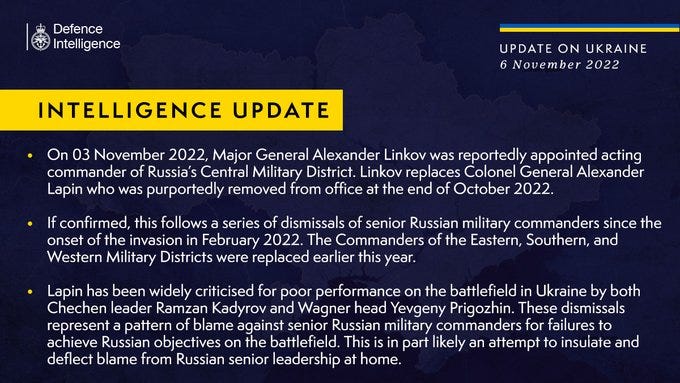
Psychological warfare: Demonstrating overwhelming force and resilience to demoralise the opponent is one possible aspect of the meat wave approach, but it can work both ways. Forcing waves of troops forward when their lines are being decimated can be counter-productive to morale. Russia (and its predecessor states) has used barrier troop formations to kill retreating soldiers since WWI and the tactic has been repeated in Ukraine.
Exploiting weaknesses: Targeting enemy positions with concentrated attacks to find and exploit vulnerabilities is an apparently obvious use of large formations and it can work, for example in some battles during the Korean War. However, with the modern day widespread use of drones and satellite data there are relatively fewer surprises for defending troops in a competently organised defensive formation.
Limited resources: Utilising manpower as a readily available resource when other options are scarce can be considered as a tactic but is of more use in a defensive context. In the context of the 1980–88 Iraq-Iran War, Iran initially possessed a smaller army and air force, leading to an emphasis on human wave attacks in the early stages.
Iranians were motivated by a religious fervour and national identity generated by the 1979 Iranian Revolution which had ushered in a new era of Islamic rule under Ayatollah Khomeini. We see the continuance of this today and the low value placed on human life by militant Islamists who use civilians as humans shields.
The purpose is?
This article started with the idea that there may be more to what Russia is doing in Ukraine with its ‘meat wave’ tactics than just stupidity.
The apparent aim to overwhelm battlefield defences is seemingly the objective, but could the objective really be human-attritional? The ratio of offensive to defensive forces required for an attack to succeed depends on many variables, including the weather.
If we assume that Russian commanders place a very low value on individual human life (especially if they come from ‘the provinces’ and not St Petersberg or Moscow) then does it matter if it takes 10 Russians to kill 1 Ukrainian in an attack, does it matter if there are plenty of troops available?
Russia has population of 144 million, Ukraine 44 million. So, can Russia afford to lose, say 5 million troops to defeat Ukraine and in the process kill 1 million Ukrainians?
It’s a dreadful metric to consider, but of little concern to a psychopath such as Putin. At what point would Ukraine break? We don’t know the scales of Ukraine’s losses in this war, it is a state secret and estimates are very hard to come by.
At what point would Western governments say ‘Enough is enough’?
Its very clear that Russia is prepared to throw bodies at their perceived problem of Ukraine, but even Russia has practical limits. It seems that they are short of reservists and new recruits are sent almost immediately to the front lines. Shortage of manpower has led to a reducing scale of attacks, not in number of attacks, but in the size of the waves. Their strategy has changed, of necessity. That much seems clear to me from the chatter I see on Telegram channels and other feeds, but it gives me no comfort because Ukrainians are dying in defence of their country.
One thing is certain, it is not religious fervour that drives those Russian troops forward. Many of those fighting today have been incentivised to join the Russian army by big sign-on payments, but there are many instances of disillusionment in the Russian ranks. And the value of their lives? It seems their families are happy to receive a truckload of logs or a few sacks of potatoes as death benefit.
Ammunition
I should mention that defeating large formations of troops requires ammunition. Preserving the lives of scarce defenders against large advancing troop and armour formations requires heavy use of artillery and extensive minefields. Ukraine is currently suffering a shortage of artillery ammunition and Western stocks are said to be low. This increases the likelihood of close-quarters action and greater loss of life for Ukraine.
More cannon fodder
There is speculation that Putin is under pressure to extend conscription — he has tinkered with age ranges and exhausted prison conscripts. He’s done the rounds of the provinces and the far reaches of the Russian ‘empire’ and has been avoiding conscription from the larger Russian cities where the elites live. As the war drags on he will have to extend the conscription net once his re-election in March 2024 is over (it’s already decided, we know).
This week’s announcement by President Zelenskyy about needing more volunteers and potentially recalling Ukrainians from overseas to fight should be a wake-up call to the West.
It will also be an encouragement to Moscow.
Whatever size of meat waves Russia deploys, the numbers suggest that they can ‘outdie’ Ukraine by sheer numbers in a war of human body attrition.
The Russian meat machine could be working.
It’s also a war about freedom, morality and the value of human life. The West must step up to the plate and provide more and better weapons now. If the West continues to prevaricate then in a few years the West will be putting their own bodies on the line when Ukraine is no more and Putin attacks the Baltic states.
Sources and additional context:


