
Ukraine War
Ukraine and HIMARS: New Tactics
The Ukrainian military has developed new tactics for this weapon
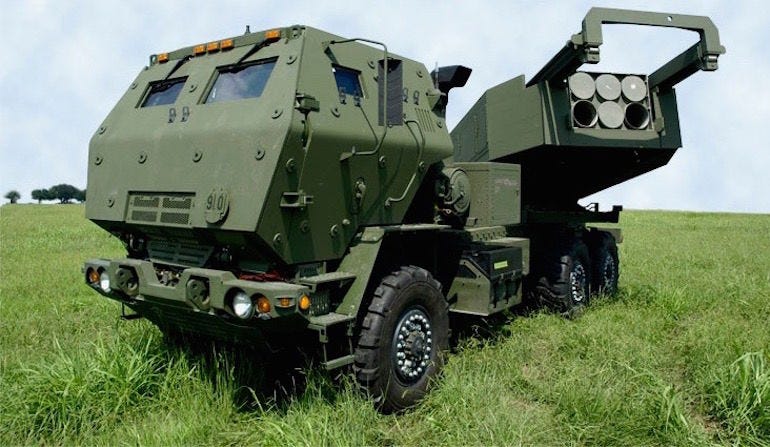
I just saw on Telegram that Ukraine is claiming to have developed new tactics for use of the HIMARS GMLRS system that has been devastating Russian ammunition dumps and command posts in the war. It has also apparently been used with success in the Kherson region to destroy key bridges and fracture Russian supply lines. And officers too:
The introduction of HIMARS has once again changed the battlefield calculus in the fight for Ukraine. Over a dozen major Russian supply depots, used to store artillery ammunition, have been destroyed by HIMARS rockets in the past week. The Ukrainians have also attacked Russian command posts, killing even more senior Russian commanders. And they have used it to destroy Russian air defence systems, allowing the Ukrainian air force greater freedom to support the fight on the ground. — UkraineToday.org
There has been a lot of news about HIMARS but I’ve been researching and writing about other weapons and aspects of the war.
However, the announcement of new tactics piqued my interest and I decide to delve into HIMARS which has a lot of interesting aspects which I’ll come to in the story (like being fired from a truck on an amphibious transport ship). But first, those new HIMARS tactics.
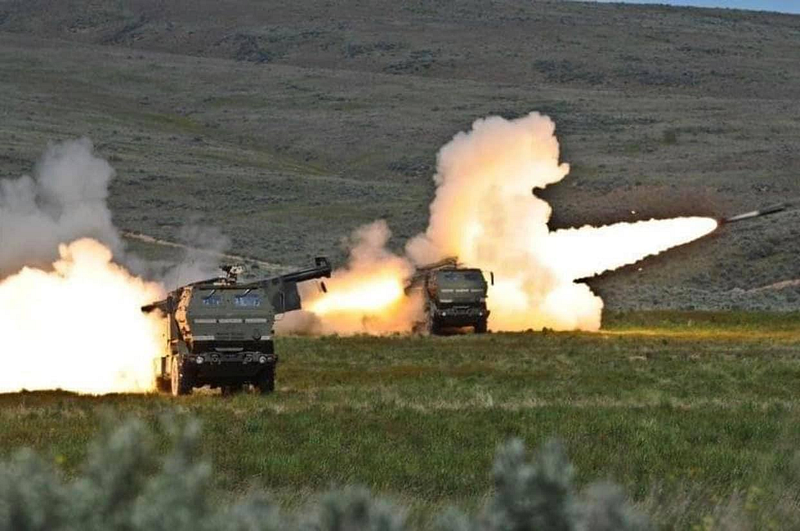
New HIMARS tactics
In my amateur armchair I’m still puzzling over the Ukraine announcement on Telegram:
Here’s the verbatim text of that Telegram post:
⚡️The new tactics of the Armed Forces of Ukraine in the use of the M142 HIMARS brought the US military into complete shock
Namely, the movement of “empty” missiles between caches hidden in different places, scattered over several hundred kilometers.
Such a tactic of combat with HIMARS has not yet been used by any army in the world that has these MLRS.
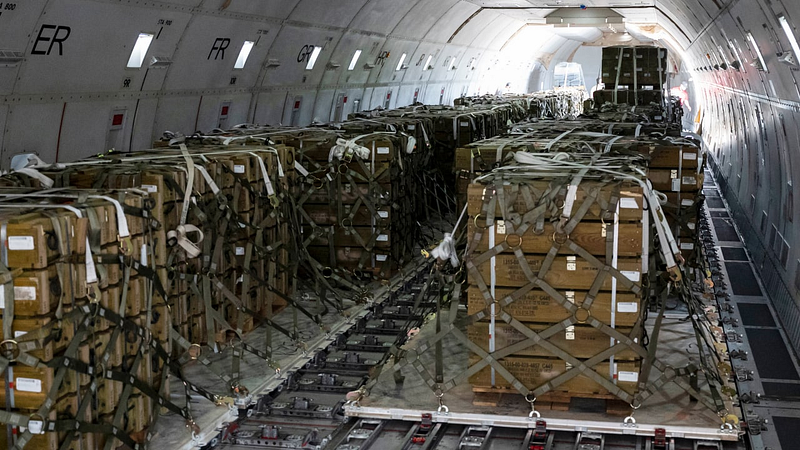
I guess it’s all about deception, trying to fool the Russian drones and satellites. That way they can eat up the Russian missile stocks and misdirect the Russian artillery by laying false logistics tracks and creating dummy stores of the empty HIMARS rocket pods:
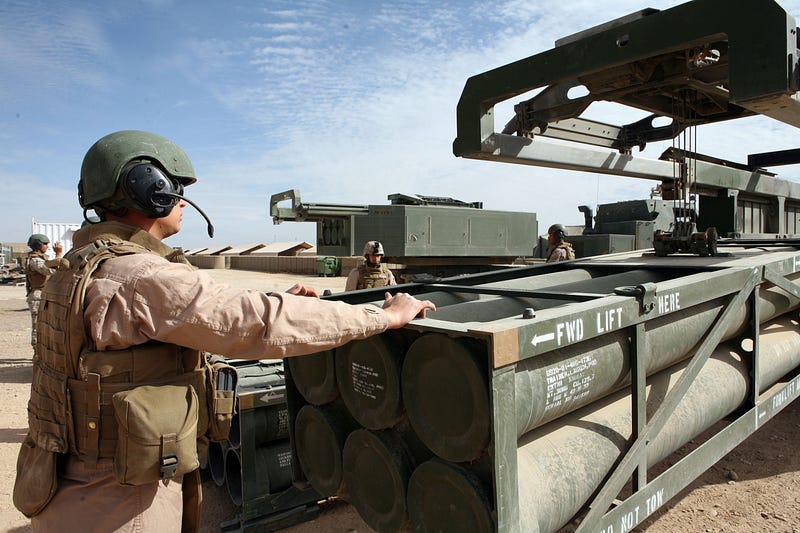
In the picture I believe there is an empty pod to the left.
I very much doubt that they are sending them back empty to the US, so why not make creative use of them?
Dump them, literally.
The M142 launcher is usually accompanied by a support vehicle with reloads, but these reloads can be pre-positioned in advance along an agreed route. The launcher stops to reload then moves to a firing position and then immediately moves onward to the next reload point. The launcher does not reload at the firing point. This minimises the effect of counter-battery fire which can respond within minutes.
My guess is that the empty pods are being laid out, or concentrated in groups to attract attack.
Maybe.
‘All warfare is based on deception’ — Sun Tzu
HIMARS M142 — What’s special?
I’ve picked out some of the key features of this weapon that make it one the Russian troops fear and the Russian commanders curse.
It appears that Russian air defense systems are not effective against saturated attacks of guided missiles launched by HIMARS. — Military Today
Russia is already trying hard to disrupt the weapons supply lines from NATO countries. So severe is the damage that HIMARS is wreaking on Russian war efforts that I’m expecting an escalation from Putin.
M142 Launch platform
The M142 is actually just the launch system, which can fire the complete range of MFOM (MLRS Family of Missiles) rockets.
The US has supplied Ukraine with M31 rockets which come in Unitary Pods of six for the M142 6x6 5 ton truck platform (12 for the larger M270 which handles 2 pods of 6).
Key features
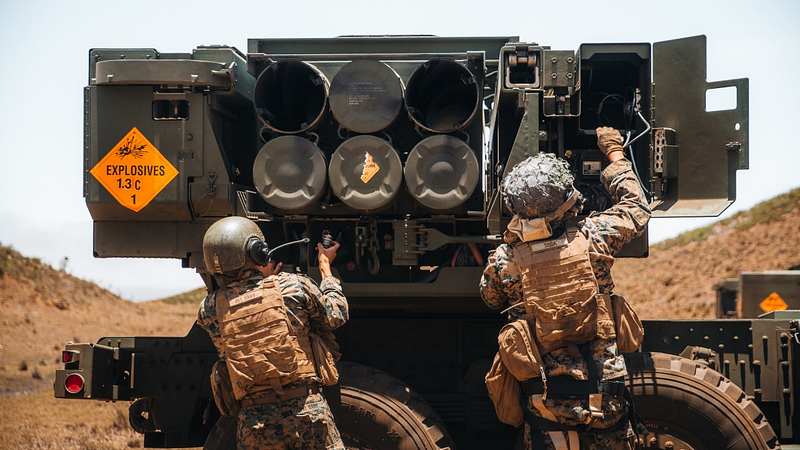
- The M142 can fit inside a C130-Hercules transport.
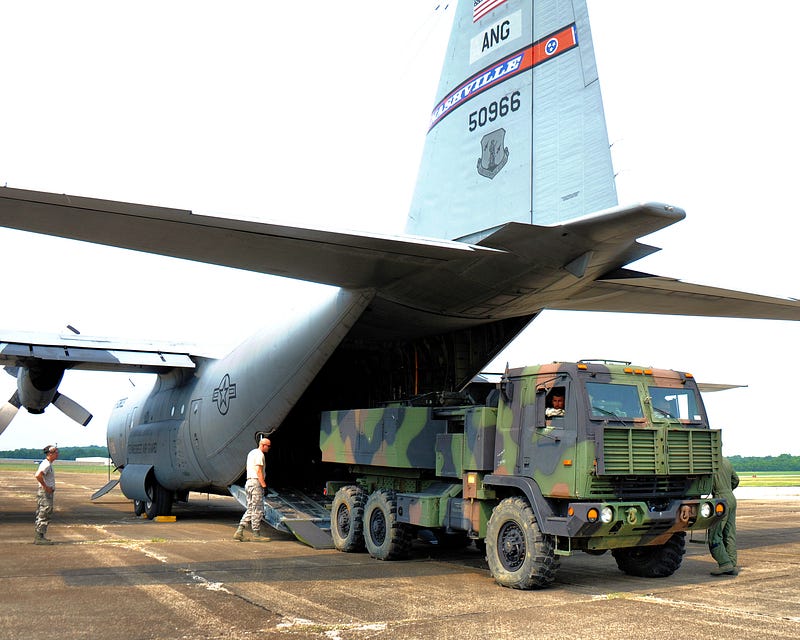
- Armoured cab option (as supplied to Ukraine)
- Reloading time is 4–5 minutes using integral crane
- Versatile:
In October 2017, a Marine Corps M142 fired a rocket while at sea against a land target for the first time from the deck of the amphibious transport dock USS Anchorage, demonstrating the system’s ability to operate while on ships to deliver precision fire from a standoff range against shore defenses. The vehicle’s targeting software was reworked so it can better fire while on a constantly moving and maneuvering launch platform. — Wikipedia
The system was widely used by US forces in Afghanistan and Iraq.
M31 Rocket
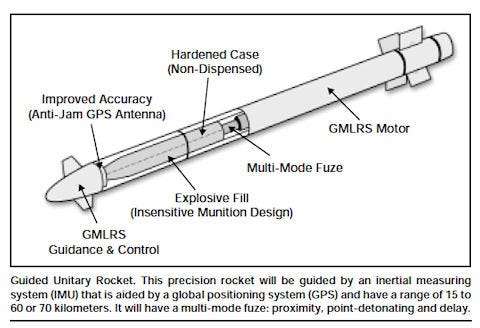
These are guided rockets are designated M31 GMLRS Unitary, as supplied to Ukraine. Development started about 20 years ago.
Key features
- GPS guidance
A missile and artillery troops reserve officer in commentary for Russian state media … said that it was unrealistic to jam GPS-guided missiles and others say that the rockets fly too fast and too low for Russian air defences to intercept them. — Wikipedia
- Accurate:
As well as having accurate target coordinates, strike accuracy depends on knowing the launcher position precisely and this can be taken from survey data or real time GPS.
Ukrainians reported that there were cases when the first HIMARS rocket would hit the building and the second rocket would go through the same hole in the building, that was created by the first rocket. — Military Today
- Long range with the extended range version for Ukraine, 60–100 km;
- Multiple fusing:
GMLRS unitary has three fuze settings for use against personnel in the open (proximity fuze); lightly fortified bunkers (delayed fuze); or a single, lightly armored target (point detonating fuze). The new Tri-mode fuze allows airburst, point impact and delay modes for penetrator capability. Proximity sensor firing mode is selectable for 3 Meter & 10 Meter height of burst [HOB] at approach velocities near Mach 2.5. — GlobalSecurity.org
- 100 kg HE warhead;
- Weather compensation: a meteorological feed enables the launch platform fire control system to compensate for weather conditions such as wind.
All in all it’s a powerful, accurate and feared system.
Just in:
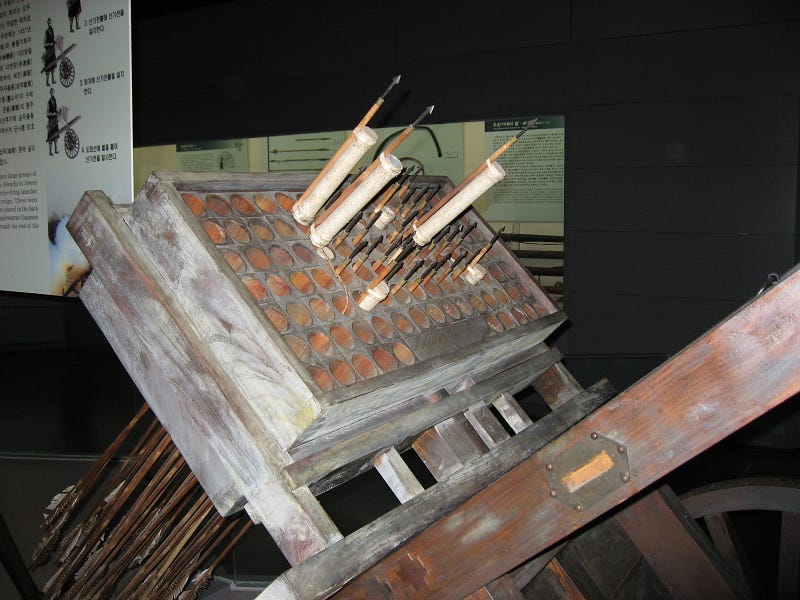
600 years
I was amazed to discover that a MLRS was designed in the year 1409. Things have certainly moved on in 600 years.
Here is a long video of the M142 GMLRS in action:
About me: If you follow me I guarantee variety in your inbox with some peculiar perspectives! I write on a wide range of topics including humor, tech, space, geopolitics and travel, together with daily news events and the minutiae of my daily life living on a boat. Yes, I really do live on a boat (some readers don’t believe that). I also write about…
…high technology in war
If you appreciate stories like these and want to support other writers and me, consider signing up to become a Medium member. It’s only $5 a month, giving you unlimited access to incredible stories on Medium. If you sign up using my link below, I’ll earn a small commission at no extra cost to you.
Or maybe just buy me a coffee?
