
Uganda - The ‘Switzerland of Africa’. Memories From The Road
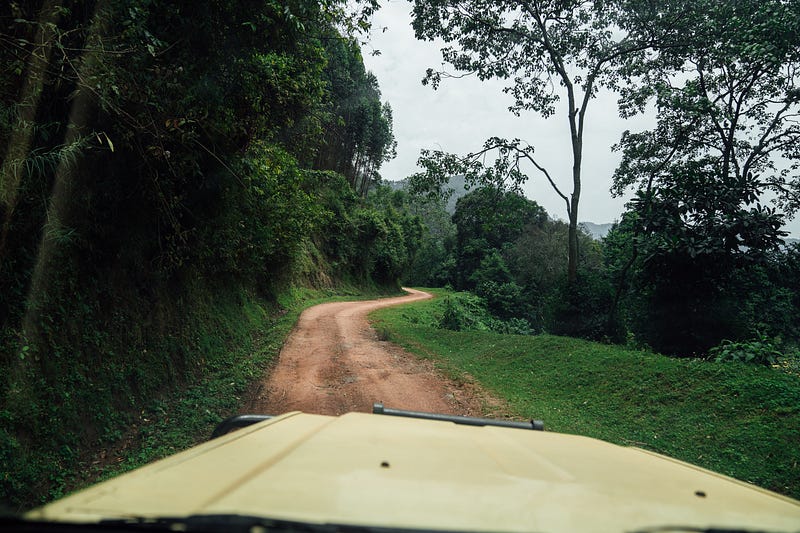
We traveled in an old, rickety Land Cruiser, which, contrary to its appearance, was doing great even on the most challenging parts of our route.
-Joanna, our mechanic is looking in the wrong direction. -Maybe he’s fixing someone’s else car. — I joked, but Emmy thought the same because he got up from the table and ran towards the guy.
Emmy’s Ugandan name is Maseruka, although he agreed with me that it could also be a name of a good Japanese car. - It almost sounds like a Mitsubishi. — I said the other day. He choked on his laughter and repeated this joke regularly throughout the trip.
We traveled in an old, rickety Land Cruiser, which, contrary to its appearance, was doing great even on the most challenging parts of our route. Sometimes it clicked and squeaked. Sometimes we had to inflate the flat tire, slam the door a little harder, or use our body weight to open the window. We “cooled” ourselves with a gust of hot air because the air conditioning was not working. At 80 km/h speed, Emmy had to hold the steering wheel tighter; otherwise, the car was making some strange, uncontrolled moves and jerks.
However, with a bit of help from a mechanic, we drove over a thousand kilometers and reached the airport in one piece. I consider it a minor success if you ask me. At times, especially in Bwindi National Park, we traveled along such steep, unpaved roads that my fingers turned white as I clenched the handles. The car roared then, steamed, boiled water in the engine, but painstakingly, centimeter by centimeter, it always climbed up to the top.
I have been to Uganda many times, but I have never left the vicinity of Kampala and Lake Victoria. Hence, it was a great joy for me to return to these regions. I love Africa, especially the equatorial one. There is some magic in this place; people above all, wrapped in a thick, dense coat soaked in juicy greenery.
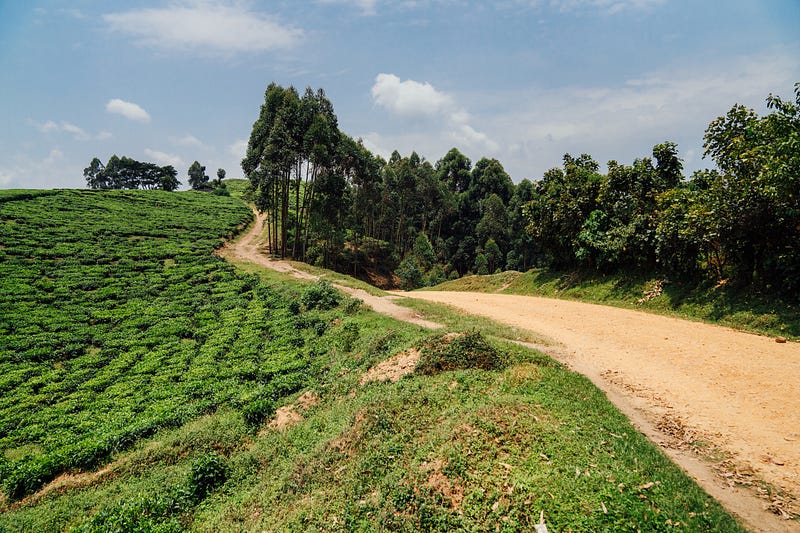
I must admit that I did not realize how rich in nature and diverse this country’s was. It’s a land of lakes, as well as of impressive mountain ranges, which include the legendary ‘Mountains of the Moon’, the snow-capped Ruwenzoris. Its hilly landscape and coldness of certain regions earned Uganda a nickname “Switzerland of Africa.”
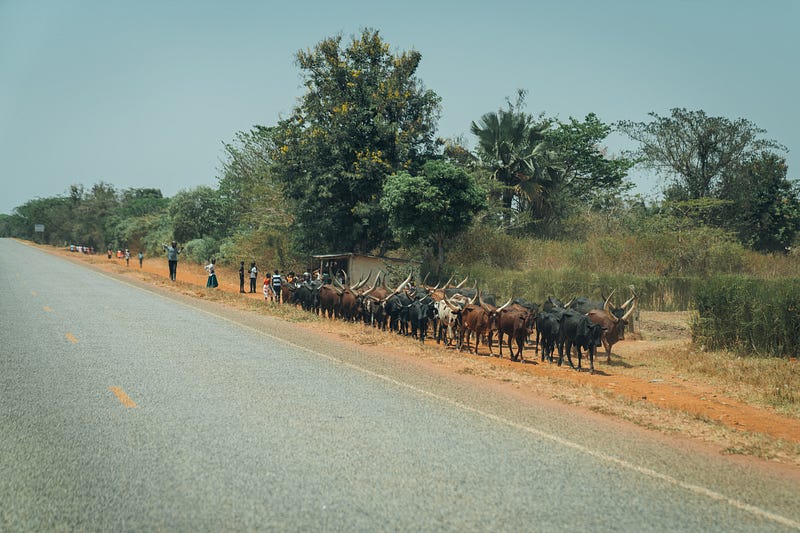
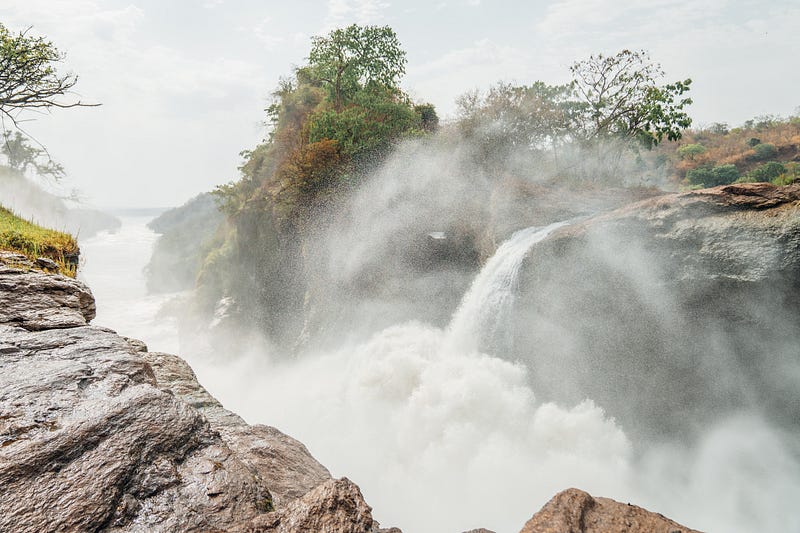
We didn’t even have to go on a safari to admire the number of animals that were literally at our fingertips. Buffalos, elephants, warthogs, baboons, thousands of antelopes filled the horizon on either side of the newly constructed asphalt road across Murchison Falls National Park.
Uganda is a former British colony. The sad fact about colonization is that occupying countries were often convinced they contributed to the civilization progress of their subordinate colonies. In reality, colonialism led to their economic exploitation and treated the local population as objects. Indigenous people were often left behind. No one cared about their opinions, needs, traditions, and customs.
Fortunately, in the twentieth century, colonialism came under severe criticism. In the 1960s, most of the colonies gained independence, including Uganda. However, due to many armed conflicts, the struggle for power, and Idi Amin’s dictatorship, the country was unstable for many following years.
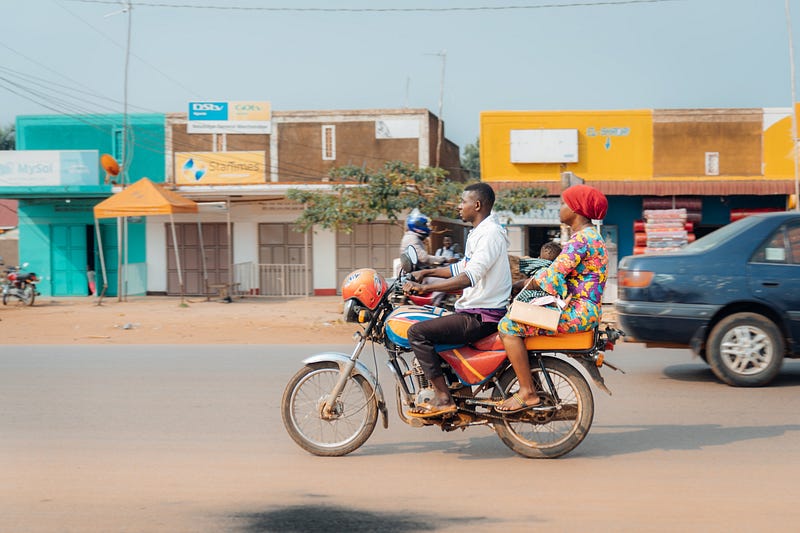
-Do we blame them? Are we still upset? My generation does not remember it anymore, but the older does. Do they hold a grudge against them? Some yes. My only question is, is it worth it? What will we get from those memories? We will not change the past; we have to let go, draw conclusions and carry on with our lives. There are different challenges we should focus on, like neo-colonialism. Look what China is doing. They say: we will build you a road, and you will give us an airport. It frustrates me that people don’t see or understand what is happening. These hundreds of kilometers of roads, these buildings, and investments don’t come from a good heart. It is sheer manipulation that our government gulps without thinking.
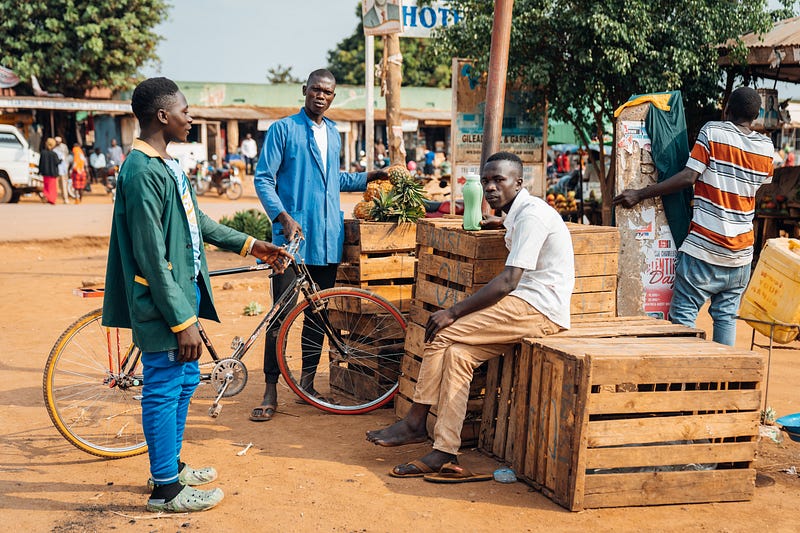
There was some unbearable truth to it. For several good hours, we have been moving almost silently on polished, immaculate roads; Poland could envy them. However, everything comes at a price.
For years, Beijing has supported the efforts of African rulers while strengthening its position on the continent through trade, investments, building infrastructure, and granting loans.
In addition, China’s relentless appetite for natural resources and new markets makes Africa one of the main directions of expansion. Obtaining them makes it easier for Beijing to withdraw from the West, and due to the lack of solid-state bodies and control mechanisms, there is no easy way to stop this. Africa has a huge demand for building infrastructure and capital inflows. Often unstable, torn by conflicts, ruled by an authoritarian hand or/and highly corruptive countries are happily accepting this form of “support.” Moreover, China offers them a pragmatic deal, based on unconditional financial aid, without showing the political path and interfering in internal affairs, and without the requirements of respecting human rights or fighting corruption.
What’s worrying the Western world is that China’s military expansion is slowly following the development of the economy in Africa. They established their first military base in Equatorial Guinea. Creating this military power on the continent — combined with the economic influence — would shift global power dynamics, eroding US dominance and relegating Europe to the sidelines of international affairs.
We call it here in Poland: a colonization in white gloves.
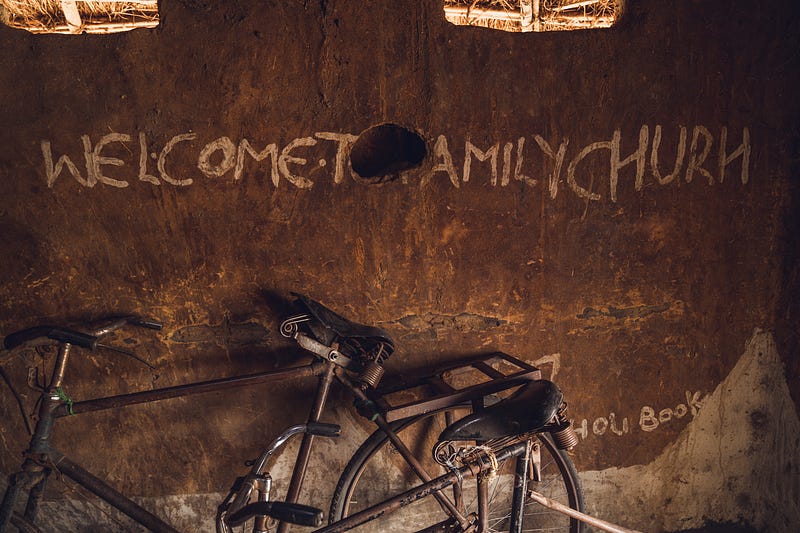
After a long day of driving, we finally reached the place to spend the night. At first, I thought Emmy was wrong. The main building seemed abandoned. It was barely holding up on the wooden stilts; paint was peeling from the walls, boards were falling apart. The dusty, darkling African masks curdled my blood, same as motionless lizards, staring at us from the lobby’s walls. The whole thing deterred, tightened, and mobilized my senses to constantly analyze the situation, to be ready for a quick evacuation.
It was supposed to be a realistic and budgetary trip, so I tried to turn everything into a joke. It was closer to Ugandan reality than polished hotels, separated from the world by a thick wall.
There was no wall here. There wasn’t even a fence to keep uninvited guests away from our cabin.
The elephant crawling through the hotel bushes was the best proof it would make no sense. No fence would stop this giant from getting inside. When we saw it from the terrace, Emmy — terrified — ran towards the car to remove the fruit we had left behind.
-If I had left them there, we would have found a car wreck in the morning; it would have demolished it completely — he explained to us as soon as he returned.
Elephants have a fantastic sense of smell and even greater strength. They are beautiful but hazardous animals — nothing really can stop them.
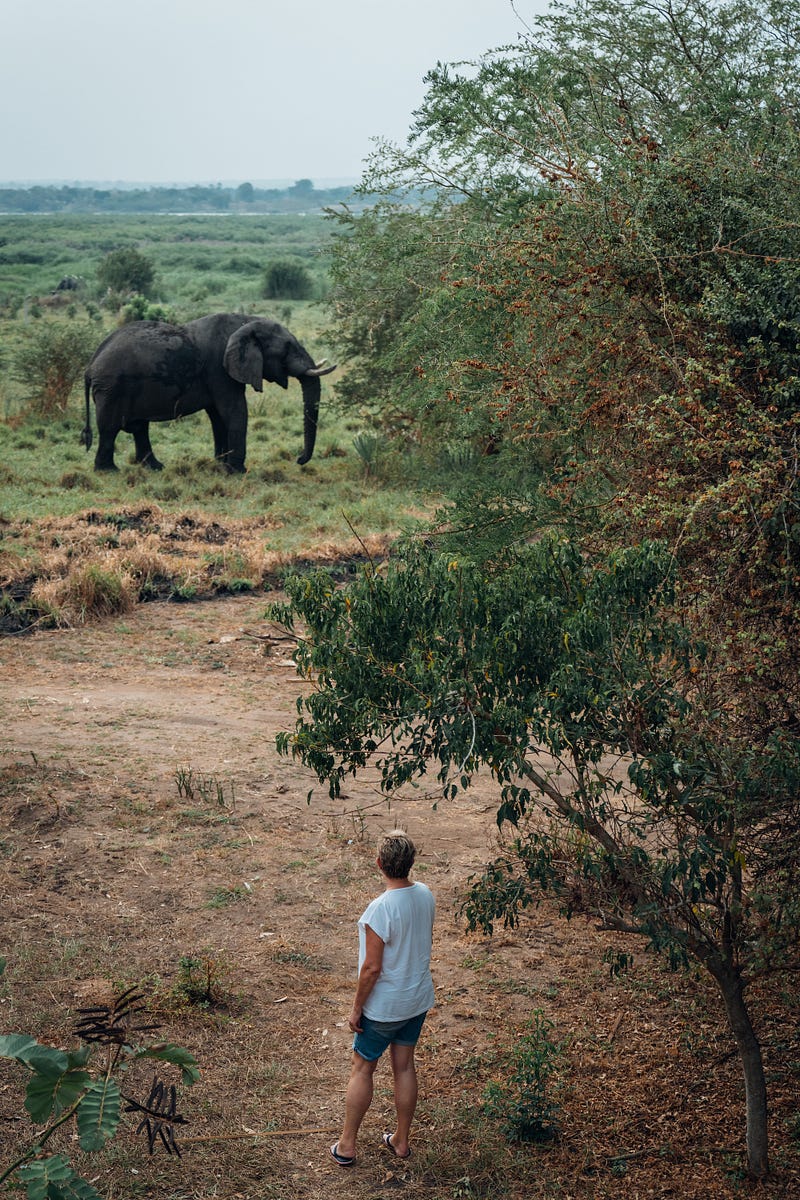
For a moment, we watched it walk right next to us, but soon the African night covered everything with a black blanket. The elephant eventually disappeared. At least that’s what we all wanted to think because we needed to move to our cabins.
That two-hundred-meter walk in the company of a small boy with a flashlight in his hand wasn’t really that carefree.
-Elephants do not like the light at night. They run away from it — he said aloud, although I’m not sure if he wanted to cheer himself or us up.
If an elephant suddenly appeared from the bush, no flashlight would help us. Moments later, we closed the door from the inside, and the boy disappeared into the darkness. Not even five minutes later, the giant returned and was carelessly eating the leaves again, right next to our house. I was aware of the dubious quality of the window frames, which instead of panes had a thin mesh, and were no obstacle for him. But what could I do? Nothing but believe those guys we’re safe.
We made it through that night, though.
-We laugh here that animals are more protected than humans — said Emmy one day. — If the natives find you in Bwindi without a ranger, the chances they will kill you are pretty high. They will think you are a poacher hunting gorillas.
Tracking chimpanzees comes with the risk of encountering forest elephants, smaller, more agile, and dangerous versions of their bigger brothers. If this individual decides to ram you, the rangers will shoot … into the air, hoping that this will be enough to discourage them.
-If a chimpanzees attack you, well, it’s their house, we won’t kill them — said one of the rangers. The same goes for gorillas.
There is a life sentence for killing a bird that appears on the Ugandan flag. There are salty fines for littering in parks, killing or feeding animals, far beyond the financial capacity of most Ugandans living in those regions.
Children are being taught how wildlife and tourism influence their benefits from early years. -A living gorilla = Mzungu (white man) = Dollars = New school, hospital, uniform, job — Felix, a young teacher from Ishasha, who also ran an organization, told me.
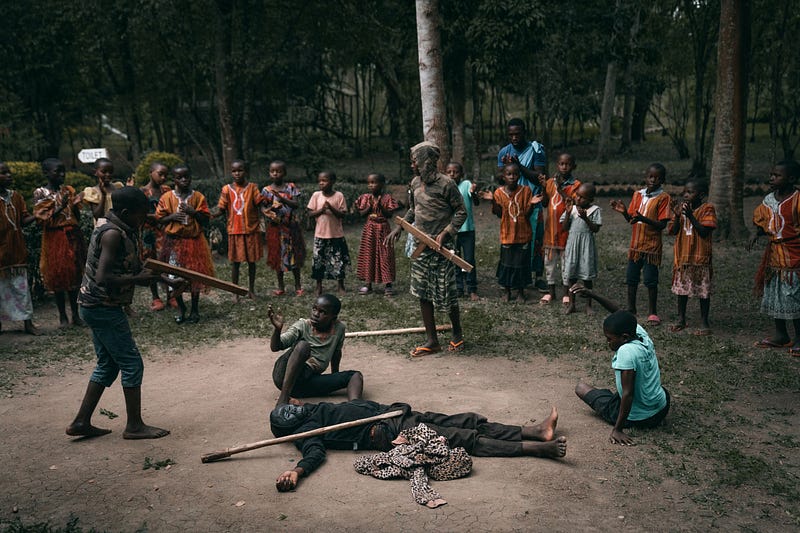
-It’s challenging to teach a child to respect the environment here. Elephants destroy their farms, destroy their homes. Gorillas also penetrate their fields from time to time. Killing them or any other animal is nothing compared to the potential financial gain. For them, it is a fortune; besides, they kill something practically every day to have something to put in the pot: goats, cows, pigs, chickens. Gorilla or goat: for them, there is no difference.
Many poachers were convinced to give up this form of income in exchange for other jobs, even inside the park, to save what they had at their fingertips instead of destroying it. Rangers risk their lives sleeping in the bush or total wilderness to protect the animals from poachers. The Ugandan army trains them to survive in the jungle among wild animals to cope with all conditions.
It’s awe-inspiring how the country takes care of and protects its wildlife.
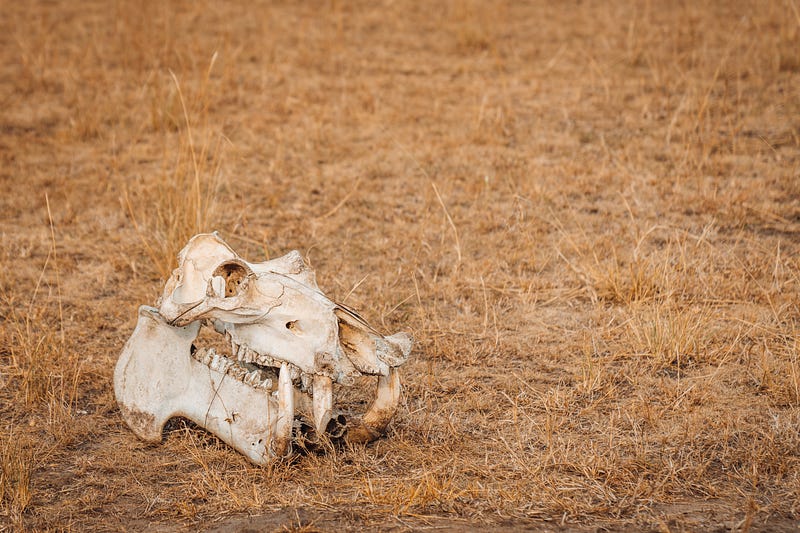
-If I got out here, what would be my chances of surviving? — I asked Emmy a moment after we drove next to the buffalo skull. Looking at the position of the horns, it was most likely a male.
-Zero percent. — he replied without even thinking. — Most probably, you would have been eaten by a lion or some other cat very quickly. If not, then a snake would have bitten you. If you had still been alive after one hour, then you would have been rammed by an elephant or a buffalo. Or possibly a hippo if you had miraculously survived until sunset.
Buffalos — seemingly lazy, slightly withdrawn, even fearful at times — have an excellent sense of smell and a powerful survival instinct. They live in large flocks because it is safer that way. Sometimes when they fight each other, the loser has to leave the group and start living alone until he finds another abandoned individual. They merge and slowly begin to form their group.
-We call them “a bunch of losers” — Maseruka joked.
Losers, however, are more dangerous to humans than the whole herd. They are fighting for survival; therefore, they will kill anything that stands in their way.
There are also pythons, lizards, spiders. And hippos at night. Everything can either kill you or cause permanent wounds and injuries.
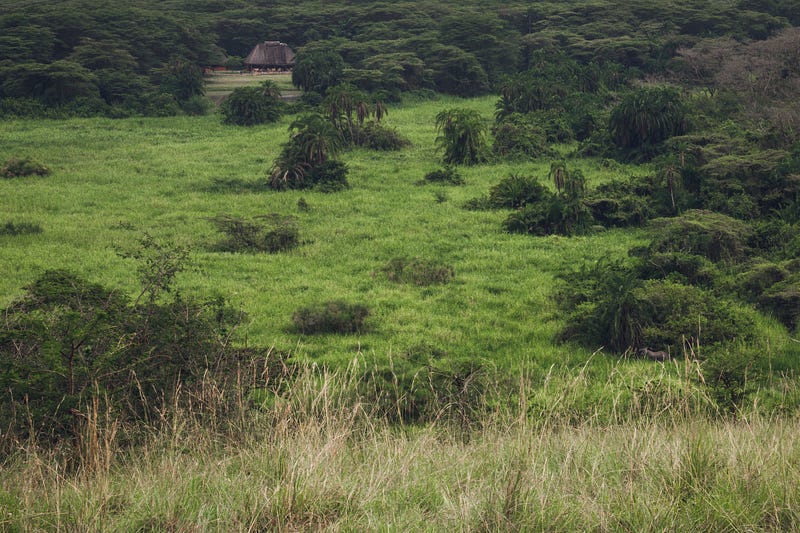
-Ok, I think we can start talking about family issues. — Emmy laughed after the first week.
I nodded, smiling, because several hundred kilometers were already behind us, as well as many evenings spent on constant conversations.
-Do you know what “learning as it goes” means? Well, I didn’t. I only found out after I had got married. Before, for example, I did not know that it is a woman who decides about the number of children you’re gonna have. Somehow I always thought it was a joint decision, but apparently, I was ignorant. — He laughed aloud, showing on his fingers how many kids he already has.
Five. The youngest has just turned two months.
African women are tough, independent, and stubborn. They know their way, and they know how to get there.
-There is only one person I don’t argue with — Emmy continued — my wife.
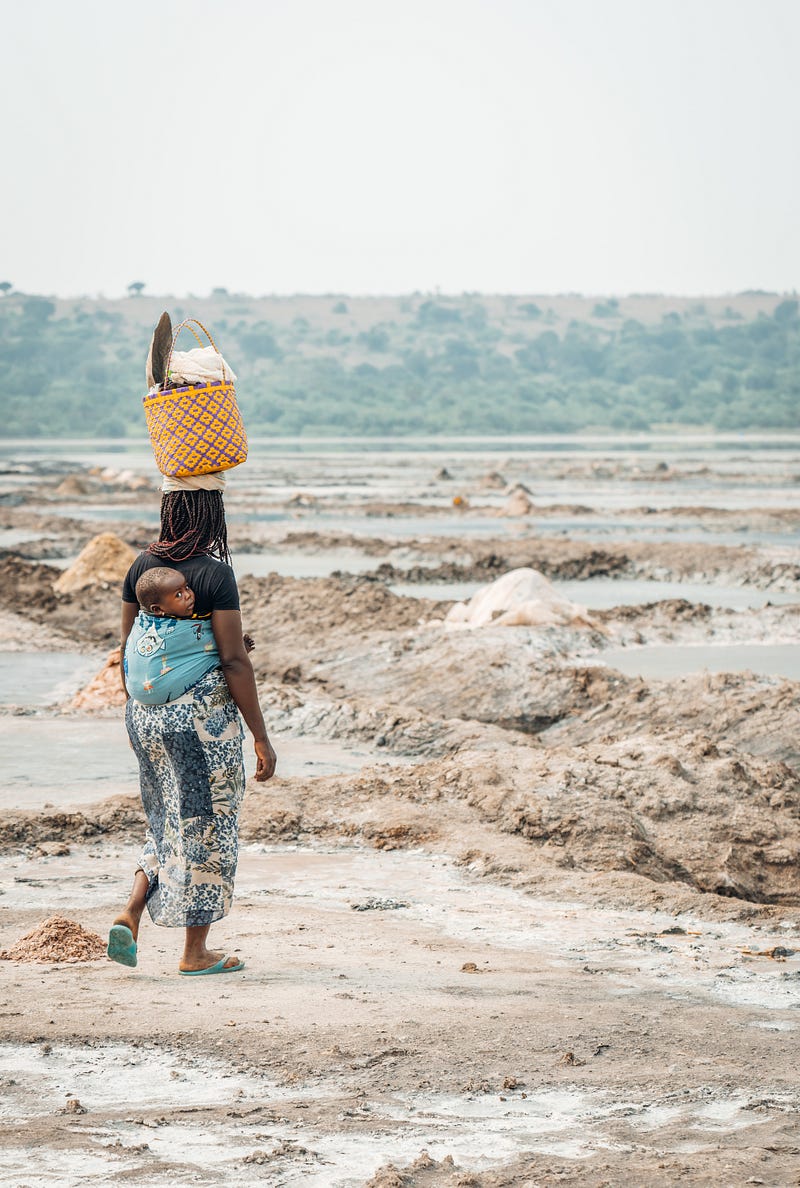
-Wateke — I thanked the waitress after dinner. She looked at me with dismay. Emmy bursted out laughing.
-What did I say? I meant “thank you,” that’s what you said!
-No, Joanna*. You just kicked her in the ass. Wateka means thank you.
Thankfully, being muzungu comes with some privilege, and these “small” linguistic faux pas are usually treated with a little dose of understanding.
About me: My name is Joanna Skladanek. I was born in Poland but for the last 15 years, I’ve worked as a flight attendant and was based in Dubai, United Arab Emirates. I studied Tourism, as well as Human Rights and Humanitarian Law. I am a photographer, writer, and content creator (mainly) on Instagram. On Medium I will write about everything that interests me: traveling, photography, cultures, wellness, self-improvement, self-development, and a tiny bit of fictional short stories.
Want to stay in touch? Follow me and join my e-mail list here.


