
Life Lesson
The Art of Sharing
The meaning of the African way of life — Ubuntu.
Very recently, we were having dinner with our South African friend while staying in Lusaka, Zambia, and we were recalling a story of people sharing, that we had witnessed while living in Uganda.
He nodded his head and said “Ubuntu.”
“Ubuntu. I’ve heard that word before, but what does it mean?” I asked.
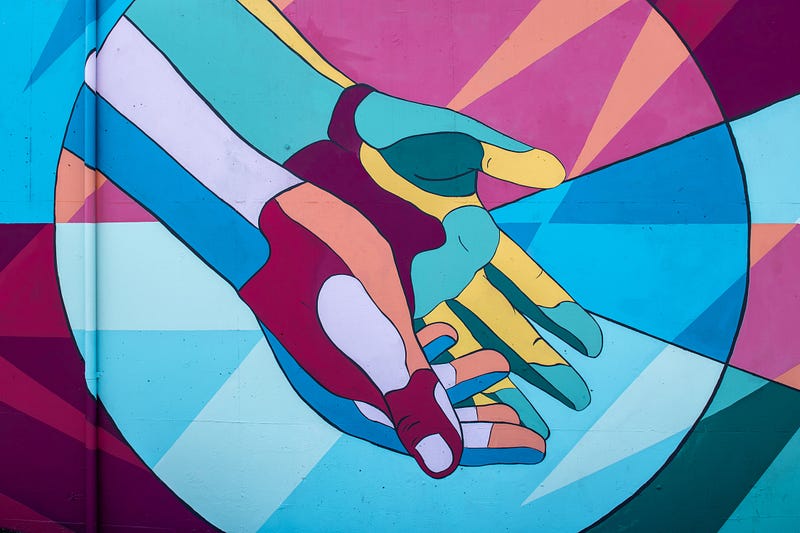
“It means that nobody gets more than the other. They share all of what they have with everybody so that they all have enough together. Nobody gets left behind.”
Aaaaahhh YES! UBUNTU! Finally, there was a word for what we have been experiencing and witnessing since we set down in Africa!

Wikipedias explanation of Ubuntu goes like this: Ubuntu term meaning “humanity”. It is sometimes translated as “I am because we are” (also “I am because you are”), or “humanity towards others” ………often meant in a more philosophical sense to mean “the belief in a universal bond of sharing that connects all humanity”.
We have witnessed Ubuntu time and time again through our travels in Africa, but an obvious one that comes to mind was one evening in Uganda.
My partner and I were staying up in the foothills of the Rwenzori Mountains in a small village called Ruboni. We were staying back in the hills in a ‘white zone’, where there is no cell service or internet signal of any kind. Each evening we would head down the road on a 15-minute walk towards the village center, where we would finally scrape out a bit of cell signal so that we could go online to check emails and messages.
We had a few dates left in a package that we had eaten on the bus on the way there, from the capital city of Kampala, and we thought nothing of it as we grabbed them and headed out for our walk one evening.
We didn’t know what those dates would teach us!
Soon we came across two small boys that were walking along the road. They looked at us eagerly and were very interested in what we were eating. We pulled out a couple of dates and handed them over to them. One of the boys looked at us with astonishment, then immediately dug into his friend’s hand and pulled out a beautiful stone. It was a clear piece of quartz that they had found, and he wanted us to have it.
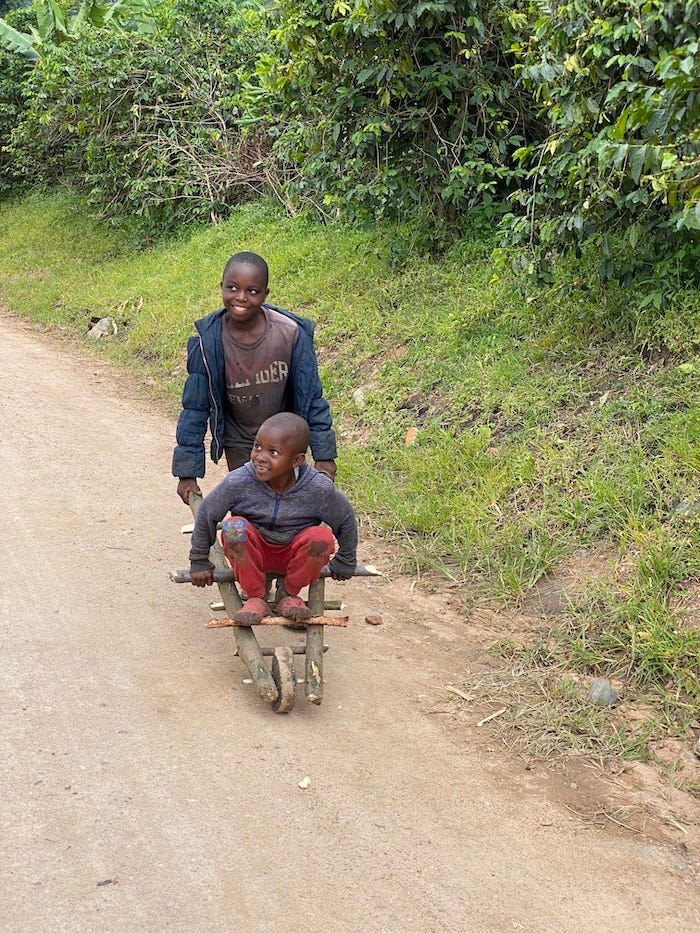
“Wasinja!” (thank you in their local dialect), we both said. We were both a bit in shock with the exchange as the boys were only about 5 or 6 years old. We graciously accepted their gift, in exchange for what we had given them, and went on our way. I looked back over my shoulder at them once, and they were both eagerly gobbling down their dates, and frantically still waving at us. Foreigners are not common in these parts, and certainly not since covid19 came along. I’m sure they were also simply excited by the novelty of having us in the village.
As we made our way further down the road, we passed a bunch of kids that were hanging in the trees and playing in the bushes. “Wasibiri” (good afternoon), they yelled from their perches in the trees. We remarked to each other about how nice it is that kids are still free to play in the wilderness in this part of the world.
We passed them and continued on to the rocks by the river, where we were finally able to get a little bit of signal. After a while, one of the children that had been hanging in the trees approached us and offered us a gift. It was two very small and underripe, but still edible, guavas. We thanked her and commenced eating them.
She stood and watched us for a minute or so curiously, then I remembered that we hadn’t finished the dates yet. I reached into my bag and pulled them out, handing the rest of the package over to her. Knowing that this was a real treat for them, I assumed that she would just sit down and eat them all. However, when she pulled one out, she simply licked it. Her eyes grew huge and full of delight, and she quickly turned and ran back to her friends in the trees.
We could see her small body in the tall grass, from where we sat. She was stretching and reaching out to all of her friends in the branches, sharing them around. We sat, marveling at what we had just witnessed. ‘Wow, these kids really know how to treat each other.’ I couldn’t help but think.
In time we started to hear the giggles coming from the branches and a few “Wasinjas!” as well. It was clear that they were happy with their snack. Over our time in Uganda, we would realize what a rare treat that dates are, and I’m sure it is the first and only time that these children have had them.
This is Ubuntu. Simply put, it is the belief that sharing what they have, brings prosperity and happiness to everyone. When they are all happy, then they are all better off for it.
In a sense, we also witnessed this in other ways in Morocco, when shopkeepers told us that they were always happy when their competition was making sales because they knew that the whole community benefitted from it, not just the store owner. We heard this more than once in our time there.
You see, these societies don’t operate on ‘every-man-for-himself’ beliefs.
They KNOW, without a doubt, that they all need each other to survive. They need to help each other and lift each other up. Because they know that when one does better in life, they will all do better in life.
And I for one can’t imagine a more beautiful thing!
Suffice to say, Ubuntu is completely lost in western societies. Instead, we crawl over each other in an attempt to outdo each other, make more than each other, climb the corporate ladder faster than each other. It’s no wonder that the world is in the state it is in.
Here in Africa, life is peaceful. There is no hysteria about anything, they simply just take each day as it comes, keep as happy as possible, and share Ubuntu whenever they can.
We have learned a great many lessons from the people that we are meeting here. They truly represent a society that functions on grace and humility. We have been humbled by our experience so far, and look forward to learning so much more from these kind and gentle people.
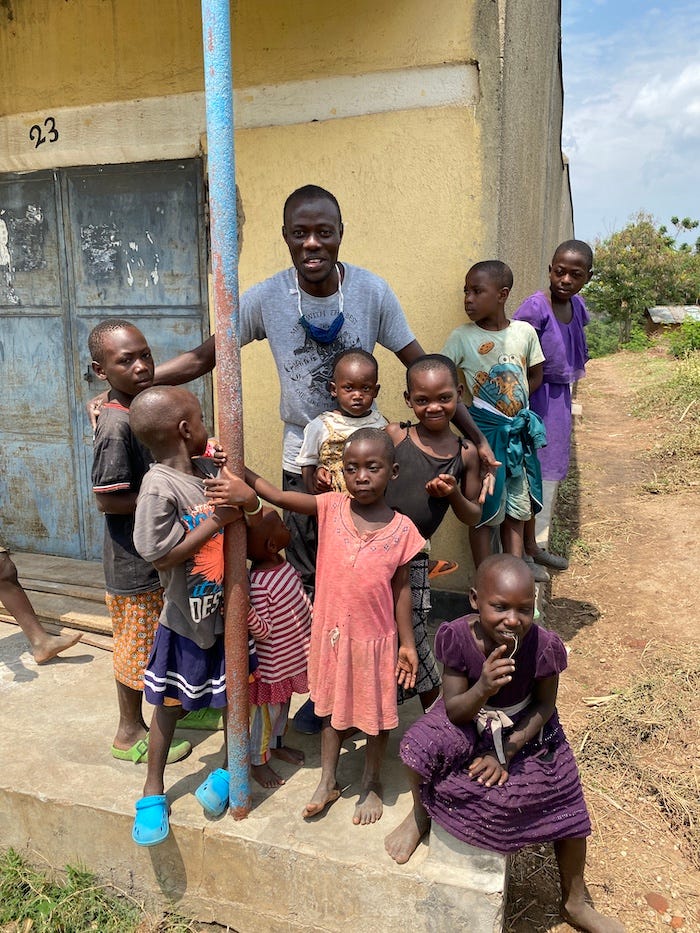
Hi there, we are 2 Canadians, Jill and Chris from Artistic Voyages. We have now been travelling full time since 2017, living in numerous different countries, and experiencing the life and diversity of our planet on the ground, and firsthand. We have now been on the African continent for 2 years! Join our adventure by hitting the links below!
Website: www.artisticvoyages.com
Patreon: www.patreon.com/artisticvoyages
Facebook: www.facebook.com/artisticvoyages
Instagram: www.instagram.com/artisticvoyages
Twitter: www.twitter.com/artisticvoyages
YouTube: www.youtube.com/c/artisticvoyages
Murals: www.artisticvoyages.com/murals


