
Two Vegans Walk Into A Bar… Insect Snacks Anyone?
The future of our food
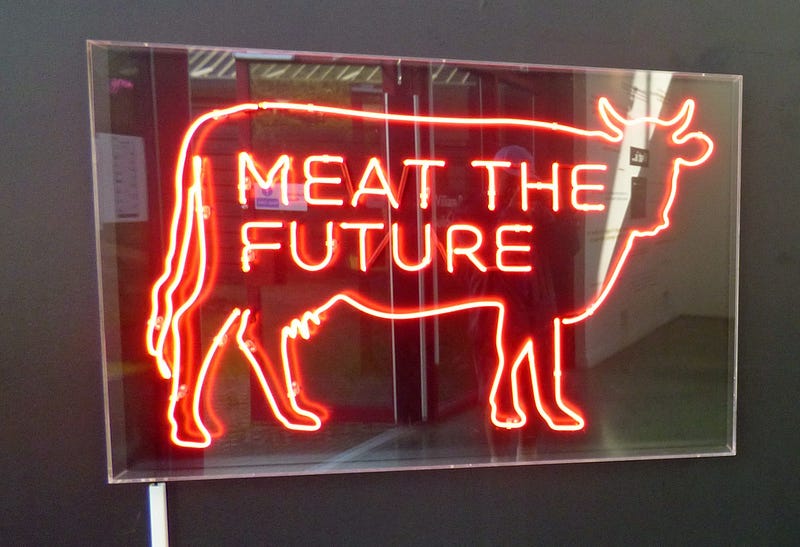
The Food Museum in Stowmarket, England, is currently hosting a fascinating exhibition called, ‘Meat The Future’, which looks at the future of our food system, sustainable agriculture, and the impact of what we eat on the environment and on health.
My husband and I, both vegans, went to see the exhibition and found free tasters available, including flavoured insects — an alternative source of protein to traditional meat. They say insects are the new thing in fancy food, and we’ll all be eating them soon — or should be.
My husband tried some insect food samples, but I wasn’t tempted. He seemed pleasantly surprised by the taste. Urgh! 😆
Despite fighting back my sense of revulsion, The ‘Meat The Future’ exhibition was my favourite part of our day. I thought we’d skip it because we don’t eat meat, but it wasn’t what I’d imagined. It was quite entertaining, enlightening, and aligned with our values on the environment and sustainability.
The exhibition looks at the impact of meat on the planet and why we should all eat more plant foods and consider alternative sources of protein.
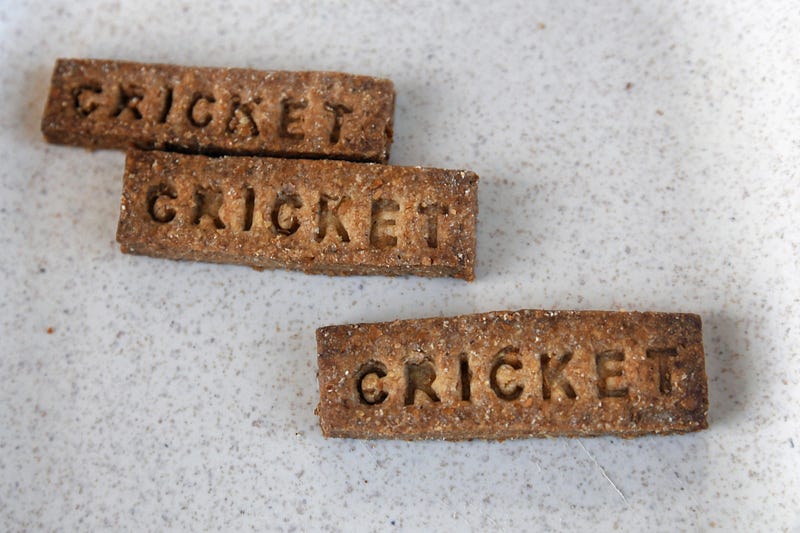
Many samples of foods made from insects were available to try: coronation cricket and digestive biscuits made with cricket flour. My husband tried a digestive biscuit, but I stuck to the plant food samples, trying miniature vegan burgers and beetroot crisps instead.
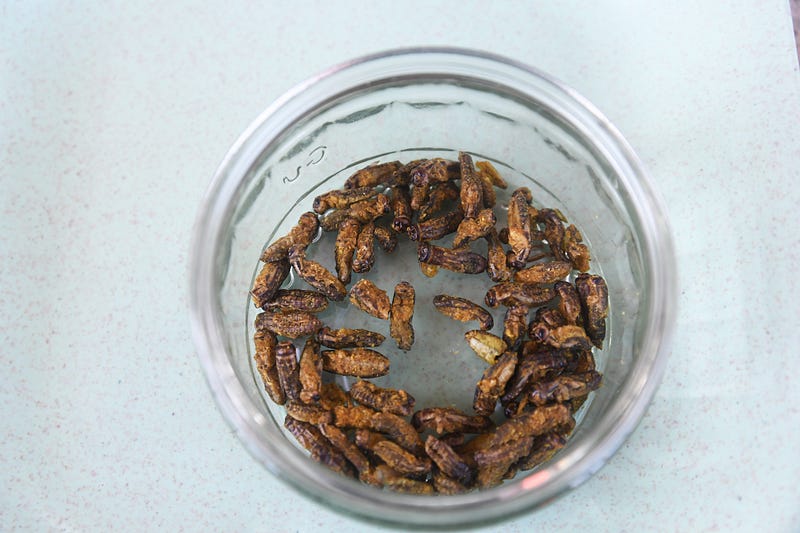
The fact that companies are now selling processed flavoured insects as snack foods was a real eye-opener! Insects are considered a viable source of protein that’s kinder to the planet than beef farming, which creates a lot of methane.
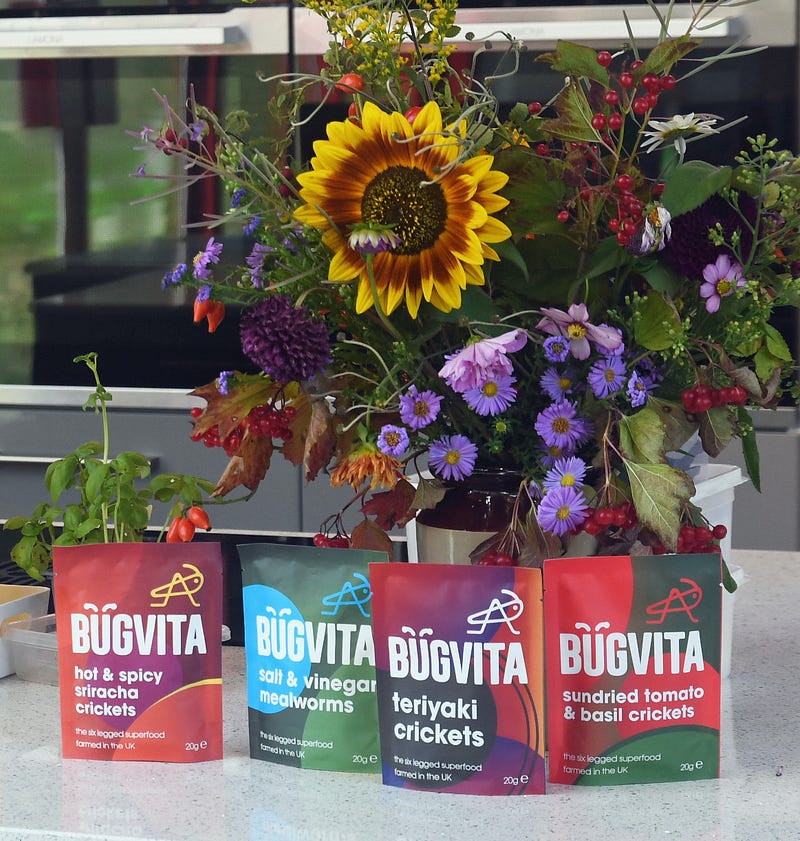
Near the entrance, there’s an open-plan kitchen. Packets of protein alternatives are displayed on the worktop. They include salt and vinegar mealworms, sundried tomato and basil crickets, hot and spicy crickets, and teriyaki crickets, all produced under the brand name ‘Bugvita’. Yum!
According to the UN’s Food and Agriculture Organization, 11% of the world’s greenhouse gases are caused by meat production, and people living in wealthy countries typically consume far too much meat. It’s not sustainable for the planet, and it’s not good for people’s health either.
The display explains that edible insects have a much lower environmental impact than meat. They require less land, feed and water. They emit less methane and can be fed on organic materials that are by-products of other food production techniques.
Ethics
Of course, there are ethical questions about insect farming, and to what extent the little creatures suffer when killed for protein: “It is not clear whether they feel pain in the same way and studies are divided,” explains the display.
However, insects thrive in crowded groups, unlike some farm animals who are not well suited to intensive farming and find confined spaces and overcrowding stressful. This means insects may be better suited to intensive agriculture, as well as being a more environmentally friendly source of protein.
Obviously, you need to kill a lot more bugs to get the same amount of protein as you’d get from a portion of a cow, so that’s another ethical issue to consider.
Propelled by environmental and animal welfare concerns, my husband and I decided to cut animal products from our diet about five years ago. Despite this, I found interesting facts I didn’t know in the exhibition. Apparently there’s a vegan ‘butcher’ selling vegan alternatives to meat in London.
The number of commercial insect protein products is surprising, all beautifully packaged and ready to eat. My husband, who abandoned his vegan diet for the day, reported that the cricket powder digestive biscuits were very tasty!
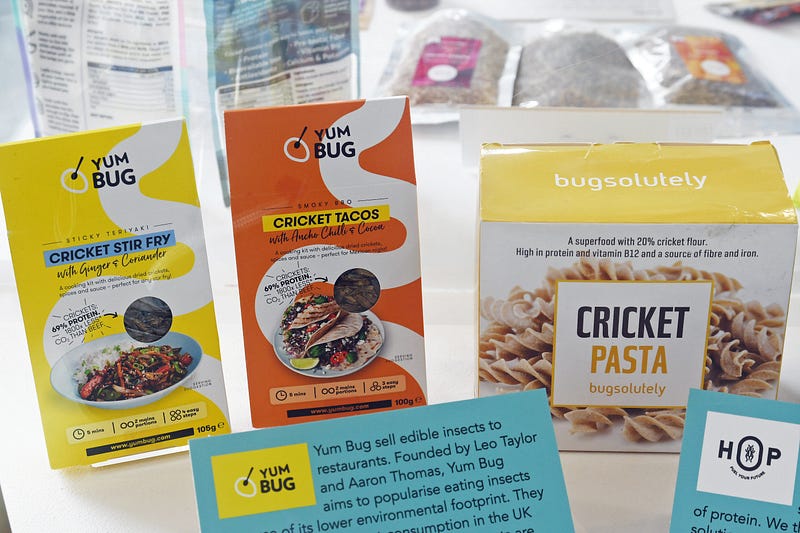
There are examples of cricket stir fry and cricket tacos, which are produced by Yum Bug and sold to restaurants.
“Insects are a sustainable, delicious superfood, eaten in over 80% of countries — you’re the weirdo,” say Yum Bug founders, Leo Taylor and Aaron Thomas. They aim to normalise insect consumption due to its better environmental credentials.
Cricket pasta produced by Bugsolutely is on display and cricket bolognese by One Hop was created by university friends who wanted to produce a high-quality source of sustainable protein for athletes.
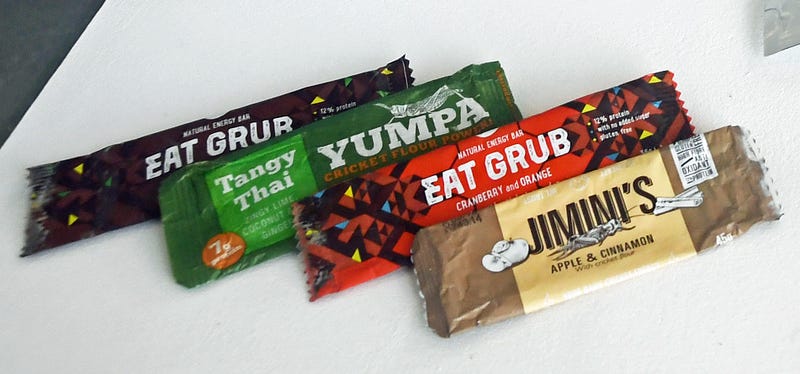
Snack bars, crisp alternatives and protein powders variously contain buffalo worms, mealworms and crickets.
Food waste
The exhibition looks at food waste, too. There’s enough food to feed the world, but due to people’s bad habits, a lot of it gets wasted.
According to ‘Farmageddon: The True Cost of Cheap Meat’ by Philip Lymbery, globally, households throw away an estimated 570,000 tonnes of meat every year, equating to about £1,300 million worth of wasted food. The reasons for the waste are people buying too much, not storing it properly, and not prioritising its consumption.
There are simple ways to reduce food waste, such as freezing food you may not use in time, or using leftovers in another dish the following day. Most foods can be frozen.
My husband and I freeze oils, hummus, cheese, fruit juice, and berries during blackberry picking season when there’s more fruit around than we can eat! If you can’t eat something on time, just freeze it.
Take part
You can take part in a quiz to look at your own meat consumption habits and see what conclusions the program draws from your responses: www.meatyourpersona.com
A second gallery looks at the amount of meat people in the UK and USA eat compared to other countries. As nations, we eat a lot. The key message was that we eat too much meat and it’s neither healthy nor environmentally sustainable.
They say if everyone adopted a ‘flexitarian’ diet with no processed meat, one small serving of red meat a week, moderate amounts of poultry, fish or dairy, and generous amounts of fruits, vegetables, legumes and nuts, society’s health would improve.
Premature mortality would reduce by 20%, heart disease would go down by 64%, cancer down by 24%, stroke down by 23%, type-2 diabetes down by 64% and respiratory disease down by 17%.
The exhibition runs until 5 May 2024 and was created in partnership with Oxford University.
Find out more: www.foodmuseum.org.uk/events/meat-the-future
© Susie Kearley 2024. All Rights Reserved.