
Two Truths From Seth Godin That Helped Me Have More Writing Success
And might empower you to change how you think
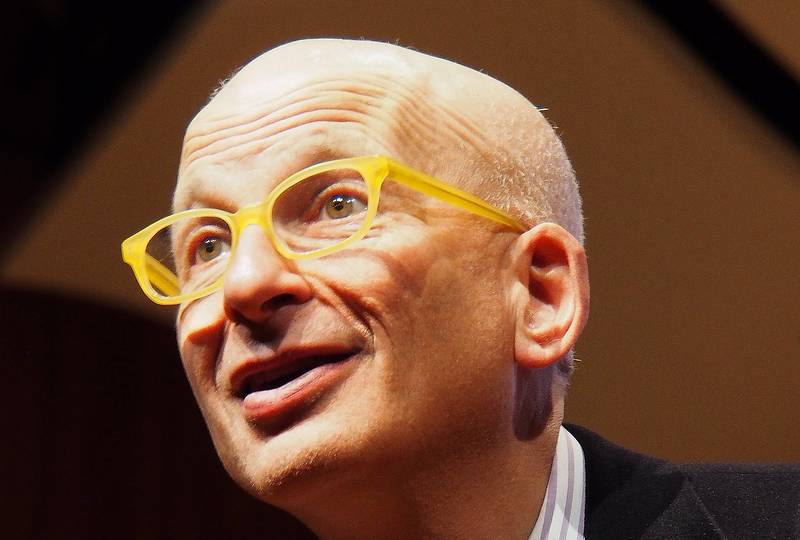
When you start out writing, you want to be heard. If you are lucky enough to have a few successful moments, you start to believe in yourself and think that large audiences are just around the corner.
But then, as you keep writing, you might find that it’s not quite that easy. Some articles hit the right connections and others seem to fall flat. Your idealistic dreams for a big future waver for a moment.
You ask yourself: is what I am saying of interest to people? Does anyone else out there really care what I have to say? Do I have what it takes?
Justine Musk and idea babies
Writer Justine Musk motivated me to start with what we uniquely have to offer. She describes mastery and uniqueness in such a witty and creative way:
“Choose one thing and become a master of it. Choose a second thing and become a master of that. When you become a master of two worlds (say, engineering and business), you can bring them together in a way that will a) introduce hot ideas to each other, so they can have idea sex and make idea babies that no one has seen before and b) create a competitive advantage because you can move between worlds, speak both languages, connect the tribes, mash the elements to spark fresh creative insight until you wake up with the epiphany that changes your life.”
Justine’s right: a) no one else has our particular combination of experiences, viewpoints, and connections. It’s our brand. And b) we need to really work at, contemplate, think about, mash up those particular combinations of perspective that are uniquely ours and find a path from there.
Seth Godin and the Two Truths
This leads me to Seth Godin and his book This Is Marketing. I was empowered when I connected his ideas to writing and our writer’s quest to create and make our voices heard.
Seth’s ideas are influential and inspiring. Two were specifically impactful as I thought about this writer’s quest:
- Our purpose for writing (or marketing) is to share, engage and change the world for others.
- We should start by speaking to the edge, not the mainstream. Find the smallest viable market that will love you and then share that love.
The simple act of flipping our perspective around to focus on sharing and making a change brings our focus back to our purpose. Sometimes along the way, as we cope with successes and struggles, we can forget what it is that we set out to do — to add ideas and perspectives that change our culture and impact people. It’s empowering to remind ourselves of this and to take the focus off of our inner scrutiny and perfectionism.
This perspective reframes marketing to our purpose, which is to change and help people through our ideas, and thus it empowers us to authentically work hard to build an audience, to make sure our voice is heard and change is made. We are encouraged to think of marketing as a means to make a true and positive change for something that makes the world better.
It doesn’t feel like a selfish act to market ourselves or to work hard to build audiences when our purpose is focused on impact and positive change.
Seth’s second point is to start with finding the smallest viable market. This teaches us to remember Justine Musk’s words about our specific and unique connections. It reminds us to have patience as we slowly build and connect to people who embrace our ideas and make them their own.
The joy is in the practice of what we do — the journey that enables us to grow, reach and explore.
In This Is Marketing, Seth is talking about how we communicate and connect to the world. He gives us a perspective that centers us on why. Why are we doing it? What is our purpose and why are we writing? If we understand this, then we understand why we should market and the why we should write (or create, or build, or dream).
He who has a why can bear almost any how — Nietzsche
Why are you writing?
It bears repeating that the more we remind ourselves of why we are writing and why we care about it, the more we will understand the steps of how. And these steps will feel authentic and humble — they will guide us when we are up and down — they will keep us focused on why we are writing in the first place.
Make sure you have a why in your mind. Why do you want to influence people? What is your mission? Define it, think about it, and live by it. It will sustain you every day through the moments when things are flowing and through the moments when everything seems bleak.
Your audience
Writing good material is the starting place. We must constantly challenge ourselves to reach and grow as writers. It’s a skill we can work at and develop as much as it’s a talent. But writing great material isn’t enough.
It isn’t enough if we don’t connect to our audience.
I’m a conductor and I am always thinking about the audience. I believe that music is life changing, and I want to share that life changing experience with my audience. I understand that each person is different in what they know, feel, like and understand about music and I know that each of their experiences are unique. I try to program concerts so that the music will touch everyone in their own way, and I build my audience one by one.
I may personally love to conduct, to make music with others, to interpret the great repertoire of masters like Beethoven and Shostakovich — but I never lose sight of the audience, and ultimately each performance’s greatest meaning is in sharing the music with them and impacting their lives through our experiences together.
Make a change
Seth writes:
If creating is the point, if writing and painting and building are so fun, why do we even care if we’re found, recognized, published, broadcast, or otherwise commercialized? Marketing is the act of making change happen. Making is insufficient. You haven’t made an impact until you’ve changed someone. Changed the boss’s mind. Changed the school system.
No matter what area we are talking about, whether it’s business, writing, or creating — it’s easy to turn our focus on our stats, invitations, reviews, status or success — however that reads in our particular arena. But when we are engaging with audiences as writers, and our purpose is to make a change, then we are creating a focus that better enables our creativity and success. Now our focus is to connect to other people in order to benefit them. We hope our ideas or perspectives might enable others create their own new ideas and perspectives and change the world in some positive way. It takes the paralysis away of focusing on ourselves, and engages our energy and passions towards the impact that we have on others. It gives us the why.
Marketing is the generous act of helping others become who they seek to become. It involves creating honest stories — stories that resonate and spread. Marketers offer solutions, opportunities for humans to solve their problems and move forward. And when our ideas spread, we change the culture. We build something that people would miss if it were gone, something that gives them meaning, connection, and possibility. — Seth Godin
How empowering these words are — they remind us of the purpose behind what we are doing as writers. We are sharing, caring, creating new possibilities. Creativity, stories, experiences, suggestions — all of it changes people around us, changes the culture we’re in. As writers we can have a hand in changing the world somehow for the better, and Seth reminds us of this.
If you can bring someone belonging, connection, peace of mind, status, or one of the other most desired emotions, you’ve done something worthwhile. The thing you sell is simply a road to achieve those emotions, and we let everyone down when we focus on the tactics, not the outcomes. Who’s it for and what’s it for are the two questions that guide all of our decisions.
What’s your market?
The thing which truly has discouraged me at times is the issue of reaching people. Sometimes we write what we think is a great article, and it doesn’t seem to catch on, or the numbers of people it reaches is disheartening. We can pour ourselves into something and feel like we’ve written our best work. If we have experiences where we aren’t making traction, or it feels this way to us in comparison to our expectations, then we can perceive that no one is listening. Maybe we should quit. Maybe we weren’t quite cut out for this.
But these next words from Seth got my mind spinning in a new way.
The smallest viable market is the focus that, ironically and delightfully, leads to your growth.
Wait. What??
The goal of the smallest viable audience is to find people who will understand you and will fall in love with where you hope to take them.
Loving you is a way of expressing themselves. Becoming part of your movement is an expression of who they are…That love leads to traction, to engagement, and to evangelism. That love becomes part of their identity, a chance to do something that feels right. To express themselves through their contributions, their actions, and the badge they wear.
These words turned my thinking upside-down. How many times have I been focused on numbers, hits, likes, reads? What if we focus instead on our message, our mission, and each and every follower. These people are the people who will follow your path with you and make it part of their own. And if you have patience, they will help you expand your message.
We have to prioritize two things if we are going to build up from the smallest viable market: a) write all of the time so that you become a chosen voice in the world of others and b) make sure that you are consistent about your niche, your particular unique mission, these ideas that you are passionate about.
Write for your niche group and expand from there
This thinking made me think about what I write about. If I cast my net into too many different directions, am I serving the people who have followed me in the directions I’ve taken so far? Is my journey connected in some way so that my mission runs through everything I explore and write about?
We want to explore a variety of topics that take our ideas into many different directions. But Seth’s words brought me back to “What is my purpose”? and what is the smallest area that I am trying to build from, what is the smallest but most unique piece of expertise that I bring to the world and how can I focus on that and build from there?
Perhaps the best path is to truly identify your niche, and to write about your one niche — to explore it from many different angles that mash the elements and connect the tribes as Justine Musk says.
Five steps of marketing
Seth talks about the process of marketing in five steps. If you are writing and building your audience, (as we all are, truthfully, no matter where we are in that journey), these five steps in This is Marketing are inspirational and truly helpful:
The first step is to invent a thing worth making, with a story worth telling, and a contribution worth talking about.
The second step is to design and build it in a way that a few people will particularly benefit from and care about.
The third step is to tell a story that matches the built-in narrative and dreams of that tiny group of people, the smallest viable market.
The fourth step is the one everyone gets excited about: spread the word.
The last step is often overlooked: show up — regularly, consistently, and generously, for years and years — to organize and lead and build confidence in the change you seek to make. To earn permission to follow up and to earn enrollment to teach
Small steps serving others and empowering yourself
I feel inspired now to keep writing. My mission is more clear, my patience is renewed, and my path has more purpose. We need to take things one step at a time and to think about who we are serving with our writing, building our audiences as we go and loving the process along the way.
Remember that we each have a personal mission that starts with ourselves. With each act of creativity, we are not only expressing our ideas and passions with others— and helping in some way to make a change — but we are also generating our own inner connections and ideas. Through our reading, writing, searching and struggles we are personally engaging with the world around us as we contemplate and interact with it.
That alone is worth it all.


