
Two to Tango: Confronting Our Shadow Selves in Relationships
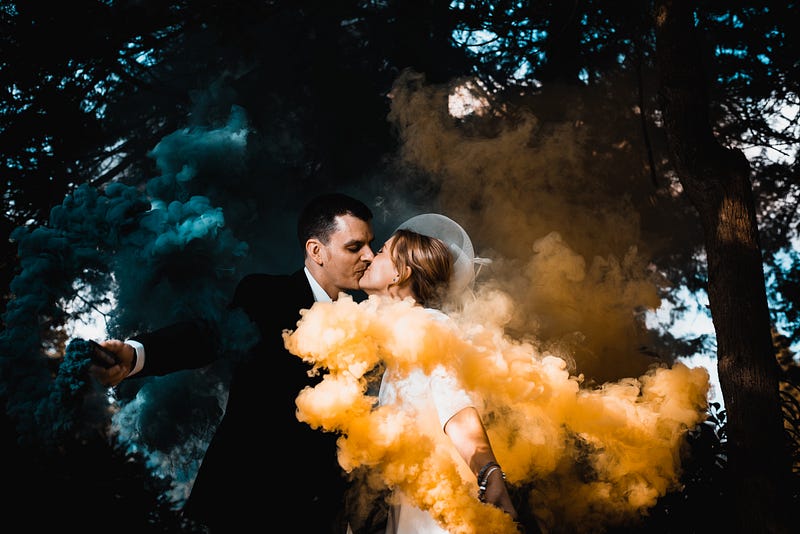
Few, if any, of us go into love and relationships as completely open books, and more’s the pity. We are afraid to see (ourselves) and to be seen. We are afraid that if we drew out our shadow selves, our opportunity for love would leave.
Sometimes, we don’t even know our shadow selves are there. We think we are who we say we are until the wrong relationship draws it out of us. If it takes two to tango, our shadow selves seem to attach themselves to the partners we choose and then wait to be seen. And they need to be seen.
It takes two to tango is an interesting phrase. When I was an undergraduate, I took a social dance class. My instructors were both professional dancers who participated in ballroom competitions. Each class would begin with a demo of a dance performance before they taught us the basics. They showed us the full beauty of the dance before we started stepping on each other’s toes and awkwardly counting our steps.
Of all the dances they taught us, the tango was my favorite. It was violent in its passions and beautiful. The give and take, yin and yang, and perfect synchronicity of the movements left me astounded. It was like watching a beautifully choreographed fight or a perfectly orchestrated piece of music.
It can’t be done alone. Dancing the tango alone would look like a full mental breakdown. To be beautiful, it requires partnership, and our relationships should look like give and take, yin and yang, and synchronicity. Too often, we seem to capture the violent passion of relationships and leave out the partnership — the part where we work together, compromise, and yet still maintain our own individuality.
The tango requires that duality, but it also requires each individual partner to be strong in their role.
I don’t mean male-female or dominant-passive. Each partner is a full individual, a strong dancer capable of supporting and being supported in the dance. It’s equality masquerading in the beauty of the dance.
Maybe your style runs to the waltz or salsa or that middle school slow dance with arms looped around waist and neck in a gentle swaying to the music. Dance takes partnership. Relationships take partnership- or, at least, healthy relationships do. It takes two to tango, and too often we’re only tangling with our own shadow selves rather than our partners.
When we find ourselves repeating relationship patterns, leapfrogging from one bad relationship to the next, we’re dancing with our shadow selves.
We keep facing those shadows, the parts of ourselves we’re not dealing with, in the form of partnerships that aren’t right for us.
We work out codependence with narcissists. We work out our boundaries, communication skills, and childhood issues with every unsuitable partner, compounding the problems if we don’t work through them.
When we decide that we want the partnership of the dance rather than the angst of a series of bad relationships, we learn to recognize and integrate our shadow selves. We acknowledge our flaws, and we own our mistakes. We include this as a part of our makeup, no longer hidden from sight but acknowledged and addressed.
In my last relationship, I came face to face with a number of shadows. From childhood issues to issues with my divorce, from boundaries to communication, the relationship challenged me, and it pulled out all of the parts of myself that I was only starting to learn to recognize. It was a relationship that had all of the angst of the tango but none of the true partnership. We weren’t working together; we were working against each other because we were wrestling our shadow selves and not meeting each other with those parts of us fully integrated.
In truth, I had done much of the shadow work already, but the parts that I hadn’t yet addressed manifested themselves within that relationship. I needed to learn a lesson, and it showed up in relationship form. It left me broke, heartbroken, and devastated, but it also made me stronger.
The heartbreak of the relationship made me fully address and integrate my shadows so that I was capable of a full, passionate partnership and not the chaos of dancing with someone who was shadow boxing themselves.
It challenged me to be resourceful, courageous, and tenacious, and I came out the other side of the heartbreak fully ready to participate in a relationship with an equal partner who could match my passion and work with me rather than turning the dance of the relationship into a fight.
We keep our cards close to our chests, showing only our best hand and hoping that someone will love us.
We keep trying to deny our shadows or run from them, and instead, we keep dating them. It’s a vicious cycle, and maybe we get a hit of that passion, but we miss out on the beauty of true partnership. We miss out on the beauty of being loved flaws and all.
Too many relationships look like two people hearing different music in the same dance. They step on each other toes, and nearly everyone else can see that they aren’t a good fit. Yet, as individuals in the dance, we are often the last to realize that our struggle isn’t with the steps of the dance; the struggle is with the partners we’ve chosen and the shadows we’re fighting or avoiding.
It’s not beautiful to watch humans break each other on their journey to integrating their shadows. But the aftermath? The rising again and being a whole person with a full shadow capable of the dance? That’s what love and partnership can look like when we stop dancing with (and dating) our shadows.