
Two systems. One mind
The energy of the mind is the essence of life
Aristotle

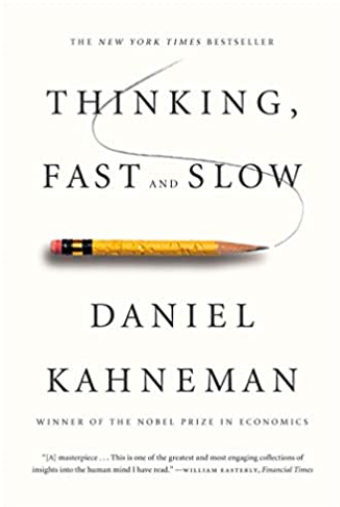
Inspired from “Thinking, Fast and Slow”, by Daniel Kahneman. A brilliant book which I recommend reading. It is not going to be a book review or summary. This are my own impressions and take-aways that I would like to share with you.
The two ways of thinking
Just have a short look at the picture below:

Without absolutely any cognitive effort, you can clearly appreciate that the lady is happy. It is as clear as it is the fact of the blue sky in the background. You figured that out intuitively, just by sight. What is even more interesting is that you did not intend to do that, i.e. you did not try to understand her feelings, it just happened automatically. Also, you did not perceive like doing anything, the conclusion just came by itself.
That was a clear illustration of Fast Thinking.
Now, please look at the following exercise:

That is clearly a multiplication problem.
The answer is 12508.
Just kidding, of course. The correct answer is 140.
Do you agree?! Probably not. Even without solving the exercise, you can clearly know that the answer is not even close to any of 12508 or 140 numbers. You were probably able to cut away those incorrect answers with very little effort. It might have been not that easy if I told you the answer is 388, as it is much closer to the correct result.
Now, please solve the exercise in your mind or on paper.
dots, dots, dots.
To do that you had to focus, to go through a series of steps, to memorize intermediate results. Your brain started to consume effort, you probably made a frowning face, your pulse accelerated a little bit.
That was an illustration of the Slow Thinking.
The 2 systems
Daniel calls the two ways of thinking as simple as two systems:
System 1 — operates fast and automatically, with no or little effort and without intended effort.
System 2 — gives the necessary attention to demanding cognitive activities and focus, such as solving of exercises.
System 1 operates by default and calls System 2 when it is in trouble. For example when you are arguing with someone, System 1 might want to throw many unfriendly words, but calls for System 2 to take the control over and use an appropriate speech.
It is interesting that when System 2 get all the resources of your brain, System 1 can become latent, i.e. be less effective.
To illustrate that, please watch the video below and count how many passes does the team in white make?
The correct answer is 13.
(space intentionally left blank)
Congrats if you counted it right, but have you seen the moonwalking bear?
Statistic shows that half of people do not recognize such events in this type of exercises.
Why did it happen? Because System 2 had the full control of your brain and System on stood in the background for a while.
System 1 is also susceptible to illusions by itself. Just look at the picture below and tell me (I mean yourself, lol) which horizontal line is longer:
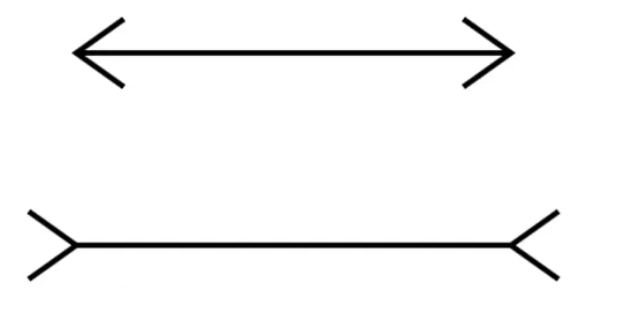
If you have done these kind of exercises before, probably you know the catch, and your System 2 knows that the two horizontal lines are equal. However your System 2 cannot impose to you System 1 to see the equal length. Your System 2 still “thinks” the bottom line is longer.
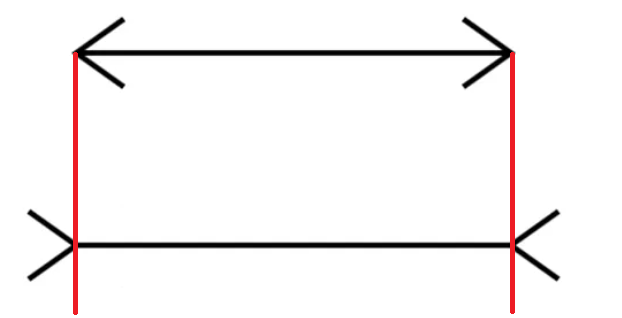
I’m sure you got the idea until now. So I guess you are asking yourself the question —
Why is this important?
Understanding how your brain works in an important ability in order to be aware of you cognitive biases and eventual illusions. Which might help you in any of your daily activities.
Knowing the trick with the moonwalking bear above, you will be cautious when someone distracts the mass attention, because there might be someone else in the back, taking advantage that you System 1 is now “sleeping” and steal from the crowd — this might save you pocket!
Knowing that System 2 has limited focus, you will not talk and expect answers from a driver in a crowded intersection — that might save your life!
Being aware of cognitive illusions (which are also applicable to System 2, by the way), could help you to avoid hiring bad employees or to refuse a difficult client — that might save your daily work stress!
That might be said for many domains, for example investing. Even the famous Ray Dalio highlights the importance of understanding how the brain works in his state-of-the-art book Principles: Life and Work.
Aim to become better every day!
Alex
Hope this was a nice read for you! If so, give it a clap!
Feel free to share your opinions in the comments section below. Follow to get more unique content or buy me a coffee ☕for more inspiration!


