
Two Sales Superpowers I Learned in India
You don’t need to spend your whole salary to learn these lessons
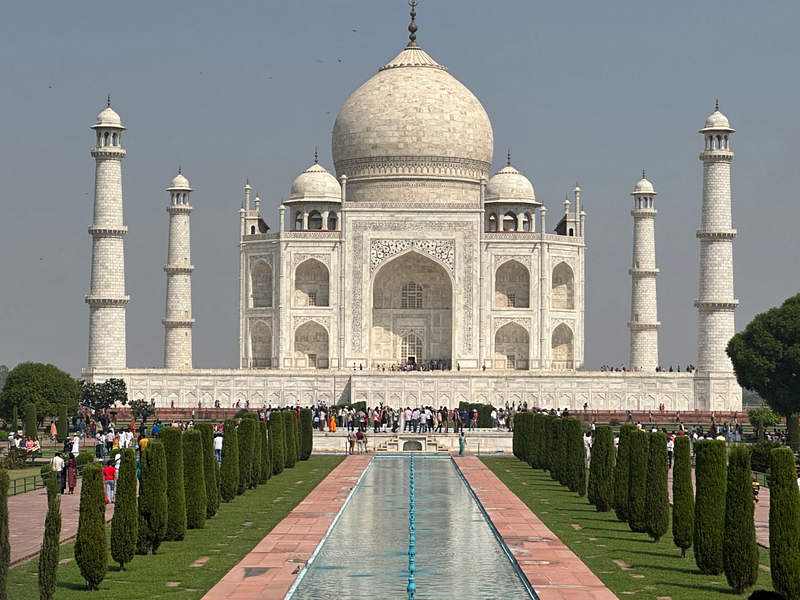
When you spend your whole paycheck in one afternoon, there is usually a feeling of remorse. But the weekend I visited India’s Taj Mahal, I felt I was the one to get the best of my deals. Why? Because the salespeople in the shops I went to made me feel like I was walking out with treasures that would last generations. Let me explain.
Recently, I had a one-month business trip to India. On the first weekend, I visited Agra, home of the Taj Mahal. Seeing the grounds and The Taj itself was inspiring. It was crafted over 22 years by more than 20,000 people working day and night. The thing that really left an impression was the marblework. The marble was chiseled out by hand and inlaid with semi-precious stones that had been sourced from all over the world. To see the intricacy of the work on walls and contemplate the nearly quarter of a century it took to build one of the most beautiful structures in the world was mind-blowing.
A component of my Agra tour that I was not expecting from a private tour guide, but that happens all over the world, was trips to sponsor gift shops. Initially, I had hoped to get out of those shops as quickly as possible, but the salespeople I met in Agra are more skilled than most a wrapping up customers once we enter their webs. They were masters of using two sales techniques that emptied my wallet and left me smiling as I did so: Tell a good story and tie the value of the purchase to something that is important to the customer.
Tell a good story
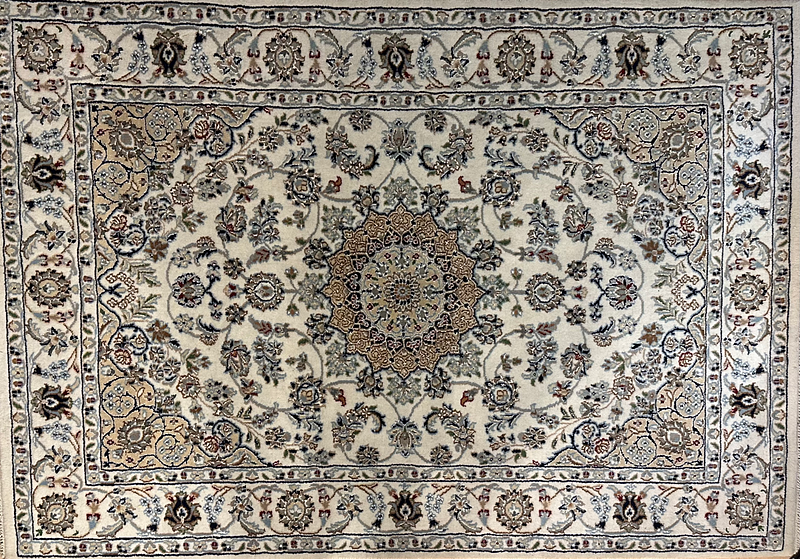
Stop number one — the carpet shop. I reluctantly entered this shop from a sense of obligation to my guide, Guru, who had done a great job of showing me around. However, observing how hand-woven carpets being made in front of me, and the detail of the work done by the two artisans sitting at the loom as they knotted each new strand over and over until they reached the end of a row. I saw the way these carpets were mowed like grass to give them an elegant appearance and the way the tassels were painstakingly added to finish off the process. Well, it was an experience I won’t soon forget.
I really got a sense of the history behind each carpet. It was like being in an art gallery and thinking I could choose a work of art with real value to hang in my house.
I was told how these craftspeople had been doing the same work for generations, going all the way back to their Persian roots over 7-centuries ago. I began to feel that this was a rare and unique experience. One I had to share with friends and family back home.
Then the salesperson showed me rug after rug, the next one more beautiful than the last. He explained that the patterns were unique to each family, a sort of family crest. Then, He described how some of the families’ carpets could be seen in museums around the world, showing me pictures in coffee-table books. I really got a sense of the history behind each carpet. And I began to understand more about quality, what differentiates a good carpet from a cheap one or a great one from the rest. It was like being in an art gallery and thinking I could choose a work of art with real value to hang in my house. I thought to myself, this is not just a fine hand-crafted rug it’s an investment. I am not wealthy, but I felt so on that day, choosing a carpet from the family who had had works placed in national museums. SOLD!
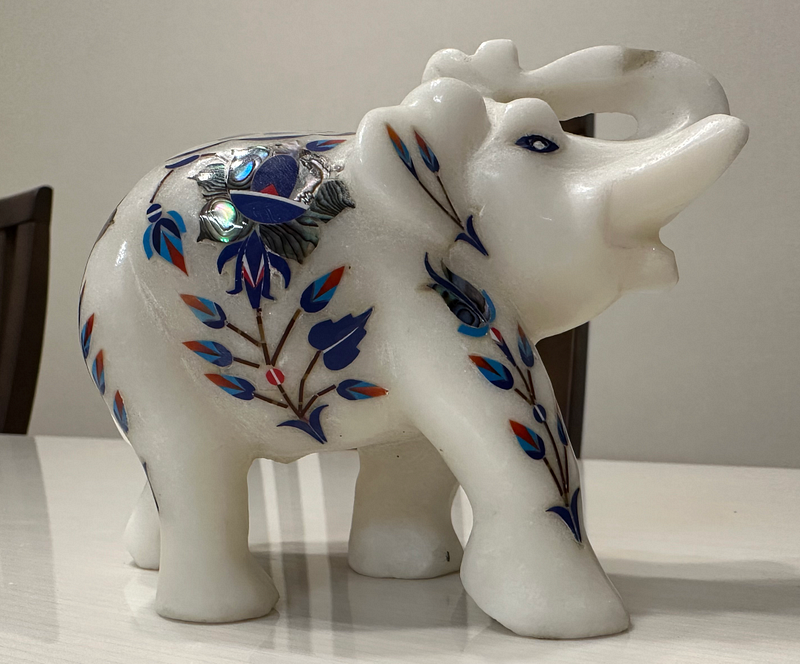
The same thing happened at the shop where I bought the marble elephant below. The salesperson told me of how these craftspeople take off every Friday to work on restoration of the Taj Mahal. They chisel out old glue and broken stones, then replace them with colorful semi-precious stones that come from all over the world. He showed me how the colorful designs are added to the marble in their studio, using the same process my tour guide had explained earlier at the Taj. For a moment, I thought they had collaborated on a plan to tempt customers. Regardless, the beauty of their work could not be denied.
These stories made me feel like I was buying more than items. I was purchasing pieces of history. These were artifacts to share for generations to come. They would add splendor to my home. They are unique not just in where they came from but also through their backstories. I’ll share those with guests whenever they visit my home. Telling a good story allows the customer to envision the process by which their items came to be available to them. This makes the would-be buyer feel special and the items more valuable than they would be without the legend behind them.
What kind of story could I tell if I had bought that one!?
This isn’t just true in India. It is a skill excellent salespeople utilize day in and day out all over the world. For example, a friend of mine in the United States has a table made of a single slab of wood from a 215-year-old tree. He calls the table The Lincoln Table because it is as old as America’s 16th President, Abraham Lincoln. Therefore, when one sits at his Lincoln Table they feel a sense of history, a sense of importance, and like what they are doing matters. This perceived value is priceless.
Tie the value to something important to the customer
I’ve heard that in India one should negotiate prices, but when the carpet dealer told me it took two people a combined 18 months to make my carpet, he had me. If I negotiated a lower price, I’d feel that I was undervaluing the 9 months each of the carpet weavers had put in to make the rug.
I saw other cheaper rugs that were made by prisoners in Kashmir. The difference in quality was more in my head than the materials or skills. It’s cheaper, I thought, because they don’t need to pay prisoners much. Those convicts may not have been making carpets for generations either. When I saw these carpets made in the penitentiary, It raised the value of my previously purchased one.
“How about this one?” the shopkeeper asked. What kind of a story could I tell if I bought that one!? See this beautiful rug? I got a great deal on it because prisoners in Kashmir made it. That is a terrible story. And I would not feel a sense of luxury when I looked at or walked on that carpet. In fact, I’d probably feel downcast.
We undervalue the investment we are willing to make in ourselves.
The elephant took two weeks to make. I can imagine the marble chiseler and stone layer laboring over their work before sealing the statuette with a final coat of glue to hold everything in place. How much would you pay a skilled artisan to work for you for two weeks? Probably more than the cost of this lovely marble elephant.
In my coaching business, I often ask people what they would pay to solve their problems. From years of experience, I can say that we undervalue the investment we are willing to make in ourselves. Yet, we need to learn to value ourselves more. To understand the value of solving the problem or taking a step forward. Then we are more likely to be willing to sacrifice what we have for what we could become. That enhances the value of our investment in ourselves.
Initially, I was shocked that I had spent almost my entire paycheck on a day trip to Agra. But when I returned home to Japan a few weeks later and realized that I had brought home centuries worth of history in products made with love and a sense of pride while also supporting the local economy, I was confident that my investment was well worth the price. That is the power of story and intrinsic value. These techniques increase our desire to obtain what is being sold. And that contributes to feelings of wealth and abundance in our lives.
Thanks for reading.


