
Two Paralysed Grandparents
One Chose to Live, One Chose to Live like a Dead Person
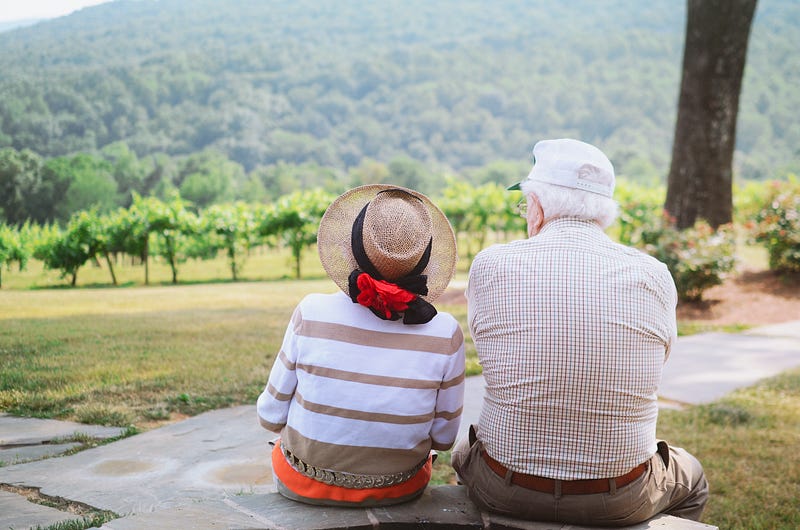
How an older person responds to their old age, health decline, and children’s independence have a lot to do with the culture.
The idea of filial piety (孝) is very deeply rooted in Asian societies. Children are expected to spend time and support their parents to say thanks for raising them up. Whereas in the west, children are expected to go away and maintain an almost egalitarian relationship with their parents once they become an adult.
As a Chinese only child who grew up in the UK, the concept of filial piety surprises me again and again. When I remarked that I didn’t ask to be born, but now I am expected to take care of my parents like yield from an investment, I got a heavy smack from my mum for being ‘heartless’.
Today I wanted to talk about two grandmas, one in Poland and another in Hong Kong, whose different concepts of security and independence have created drastically different outcome to their final days.
P.S. Real stories.
Grandma in Hong Kong
Charlie’s grandma — which we call “Por Por” in Hong Kong, had four successful children. So when she fell down in the washroom by accident and sadly had a stroke that paralysed half of her body, she was sent to the most expensive and prestigious hospital in Hong Kong. Subsequently, she was transferred to the best carehome as well.
There was no alternative for Por Por. She needed 24/7 care from a professional carer who could bath, lift and clean her up as she had lost the ability to self-care.
In fact, the care was so extra that in addition to the full-time carer, her children employed two other foreign helpers to massage her and give her whatever she needed.
When Charlie visited her, however, Por Por was full of complaints. In her words, she lamented on her “poor fate in her old age” and what’s the point of raising four “useless busy children”. She took the care for granted. She just couldn’t stop being sorry for herself.
During Covid, the carehome was closed to visitors. Charlie and Por Por’s children tried to Facetime her and wrote her letters. Unfortunately, she had already given up. She stopped reading the letters, watching TV or even doing exercise. She sat, cried and was diagnosed with depression.
One night, she passed away quietly in tears, ending her life with the belief that her story was more pathetic than the heroines in Shakespears’ tragedies.
Grandma in Poland
Let’s talk about Gosia’s grandma, Babcia, who has also passed away recently.
Similar to Por Por, half of Babcia’s body was paralysed, after suffering from a stroke. The doctor wasn’t hopeful given her old age, but she demanded regular physiologist session for her recovery.
She was trying her best in the carehome, in fact, she went around squeezing whatever she could find even outside of the physiologist session. Her children and grandchildren visited her from time to time, and felt that her grip getting stronger and stronger each time, and her laughter getting louder and louder.
The doctor couldn’t believe how Babcia slowly started walking again, and she wisely advised the young doctor that “There is science, and then there’s willpower that’s beyond science”.
She said she loved her family and didn’t want to become a burden. She was proud to have successful and hardworking children and wanted their visits to be happy and warm each time. She became friends with others in the ward, flirted with the young physiotherapist, and welcomed the priest’s visits.
Before Covid was a thing, she was sent home for her miraculous recovery. Indeed, the paralysis disappeared! She spent her last days in her family home, feeling proud of everything she had accomplished.
She passed away peacefully and contently in the bed she shared with her beloved husband for the last 70 years until he passed away a few years before her.
Both stories made me cried. One of sadness and the other out of respect.
As I learn more about the topics of loneliness, independence and ageing population, I often question how much of “successful ageing” rely on physical abundance and the effort of young people and organisations, and how much is reliant on the old people themselves.
Similar to how richer populations are more affected by mental health issues, the best care, resources and intention will only solve one side of the problem. A healthy ageing experience also rely on the aged feeling confident that they are independent, loved and powerful.
We have painted the picture of old people being frail and dependent for a long time, in both the east and the west. But the stories are changing, a 84-year-old Japanese lady developed an app for old people, Sandra Arechaederra was 51-year-old when she joined the Rock’s Titan Games (that’s hardly old but the other contestants were half of her age on average!), and Joe Biden is 78 years old.
As my heart went out to Charlie’s grandma I was wondering about the retirement life of my own mother. Probably the last generation who still believe in the 3-stage study-work-retire model, what’s her plan for the next 40 years if she lives till 100 years old (very likely)?
Is she expecting me to take care of her, or will she lament the fact that I’m just not going to be around simply because I have no plan to move back to Hong Kong at all? Will she age healthily? What’s her passion? What’s her choice?
What’s your choice?


