
Two Little Girls. One Little Grave
Diphtheria Killed My Great Aunts. I’m Trying to Bring Them Back
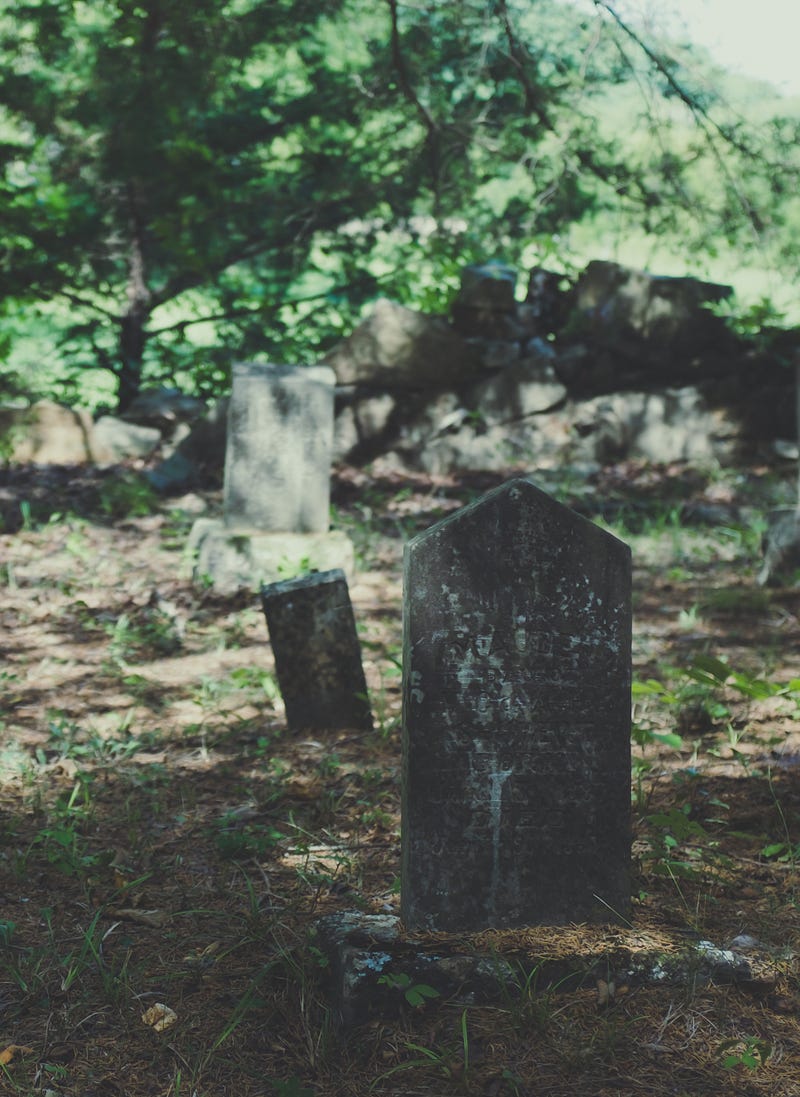
Two little girls, sisters, born two years apart. They died 5 days apart, aged 1 and 3. Buried together, perhaps so they would not feel lonely. Or perhaps only to save money: a single coffin for 2 tiny bodies, a single burial, a single grave. They were daughters, cousins, baby sisters. They were Jenny and Lilly. They were my great-aunts, Jenny and Lilly.
We have no photos of Jenny and Lilly , no locks of hair, no letters mentioning their names. Most of what I know came from discovering their burial site as part of a genealogy search. My grandfather, their older brother, was 10 when they died. All he ever told me about them were their names, and that they had died of diphtheria. He never spoke about them, and I did not ask. Now it’s too late.
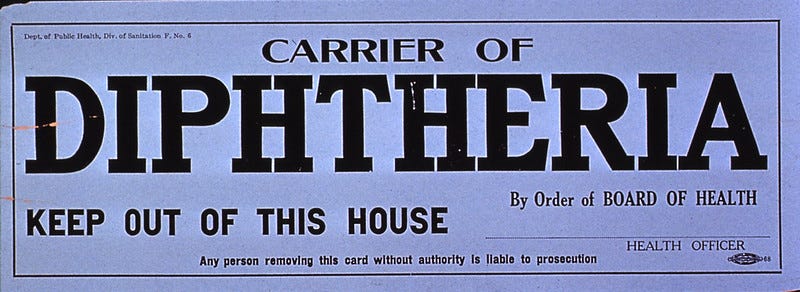
Diphtheria had been a scourge of New York City life as far back as the early 1800s. It was still a terrifying and dangerous disease in 1920. Thousands died every year. Caused by a toxin from a bacterium, Corynebacterium diphtheria, its symptoms included weakness, fever, a sore throat, difficulty swallowing, and finally a thick coating called a pseudomembrane that coated their throats, blocking their airways.
Long before we knew the cause, we named it for its symptoms: Malignant Croup. Gangrenous Sore Throat. Angina Suffocative. In the densely populated tenements it spread like butter on a hot bagel, like the rumors that rolled off the wagging tongues of tenement yentas. When the girls’ symptoms began, my great-grandparents must have known what might come.
I picture my tiny great-aunts, struggling for breath, perhaps both at once, perhaps one and then the other. What must that have been like, for them, their parents, their older brother and sister? Did anyone try to peel back the grey pseudomembrane, clearing their airways but exposing more painful, reddened, irritated tissue beneath?
Diphtheria is contagious. How did the family try to care for Jenny and Lilly while still protecting themselves? Did they all have to quarantine at home? How did they eat? My grandfather never told me, and I, despite my lifelong interest in infectious disease and family history, never asked.
There were no antibiotics, no oxygen supplementation back then.
The family was not wealthy. My great-grandfather was a baker, rising early and working late every day to feed his wife and children. The rest of the family was far away. The girls were most likely treated at home, by their parents, mostly by my great-grandmother. Imagine the family’s horror, watching them struggle for air, hearing their ragged breathing, unable to help.
The girls would have become progressively weaker, their throats ever more painful, but crying would only have made breathing harder. I imagine poor Lilly, at 1 year of age barely able to communicate, unable to cry in pain, and I want to cry myself.
The knowledge of death stalking both girls would have permeated the little Brooklyn apartment.
The first antitoxins for treatment and prevention were introduced in 1894. In that year, in Manhattan and the Bronx alone, the Health Department recorded 9,641 cases and 2,870 deaths: almost one in 3 people who caught diphtheria died from it.
In 1895 New York City began providing free antitoxin shots, in an effort to stop the killer. The antitoxin was produced by the Mulford Company and by the New York City Department of Health. This was a public health effort, not an exercise in corporate profit-making or political gamesmanship.
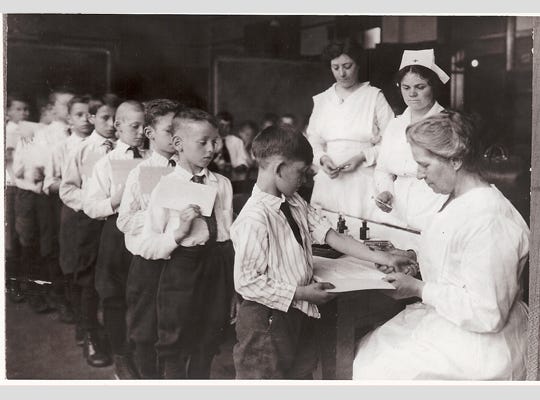
Thanks to the introduction of modern vaccines in the 1920s and 30s, the death rate from diphtheria decreased dramatically. A diphtheria vaccine is now part of the standard vaccination protocol in the US. Children begin their diphtheria series as young as 2 months, along with tetanus and whooping cough (pertussis). Pregnant women and adults of all ages, including the elderly, can and do safely receive booster shots.
The CDC reports that respiratory diphtheria, although still a reportable disease, is now extremely rare in the US. When I had the croup or a cold as a baby, my parents never feared that a grey coating would appear in my throat, choking off my breath.
But that was all too late for Jenny and Lilly.
The family had moved from Michigan to NY not long before. My great-grandfather began the naturalization process to become a US citizen in August, 1920, just months before the girls took sick. What could have been a year of hope, of new starts, became one forever tainted by the memory of those poor dead little girls. No one named children after them. No one has stories to tell about them. They have disappeared from memory, as their bodies have surely disappeared in their graves.
I’m still hunting down relatives who might have heard something from their own parents or grandparents. I am asking the questions no one has asked. I’d like to give Jenny and Lilly a little bit of the lives they missed out on. They had no school memories. No family gatherings, no playing with cousins or friends. No dating, no marriage, no children, grandchildren. No jobs or maybe even careers, unlikely as that might have been for their generation. We will never know who they might have become.
You die twice: once when your body dies, and once when the last person who remembers you dies

The saying goes that you die twice: once when your body dies, and once when the last person who remembers you dies. Jenny and Lilly have been physically dead for 100 years, and dead to memory since my grandfather, their brother and last surviving sibling, died in 2003.
By writing what I can of their story, I feel that I am bringing them back to life. Before it’s too late. Before they are truly dead forever, just two names on a lonely tombstone.
Thanks for reading! If you liked this, you might also enjoy these:


