
Two Hills to Climb in Granada
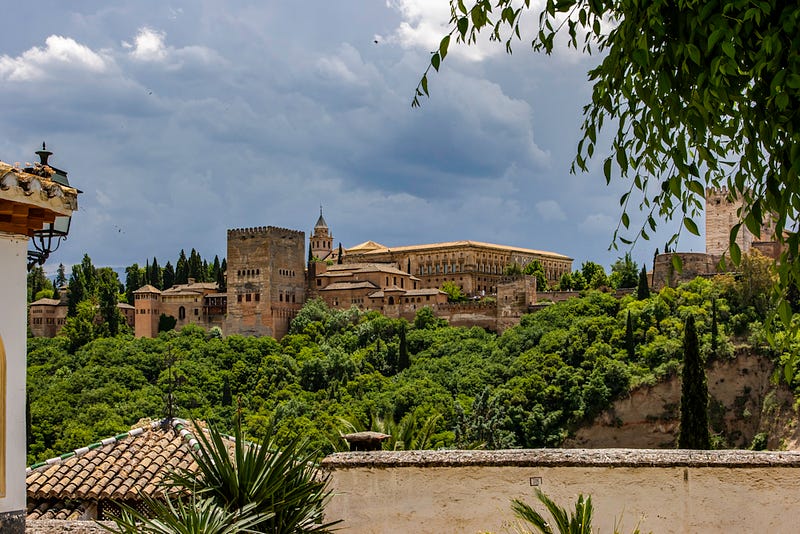
One to look at what’s on the other!
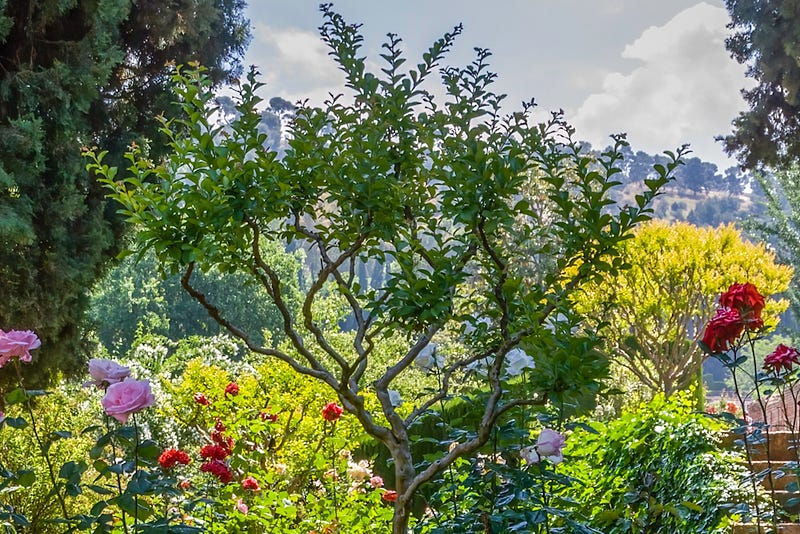
Hill # 1
The first hill to climb is called the Albaicin. Some people spell it Albayzin. It’s pretty steep and don’t tell anybody but we really didn’t climb up this hill at all.
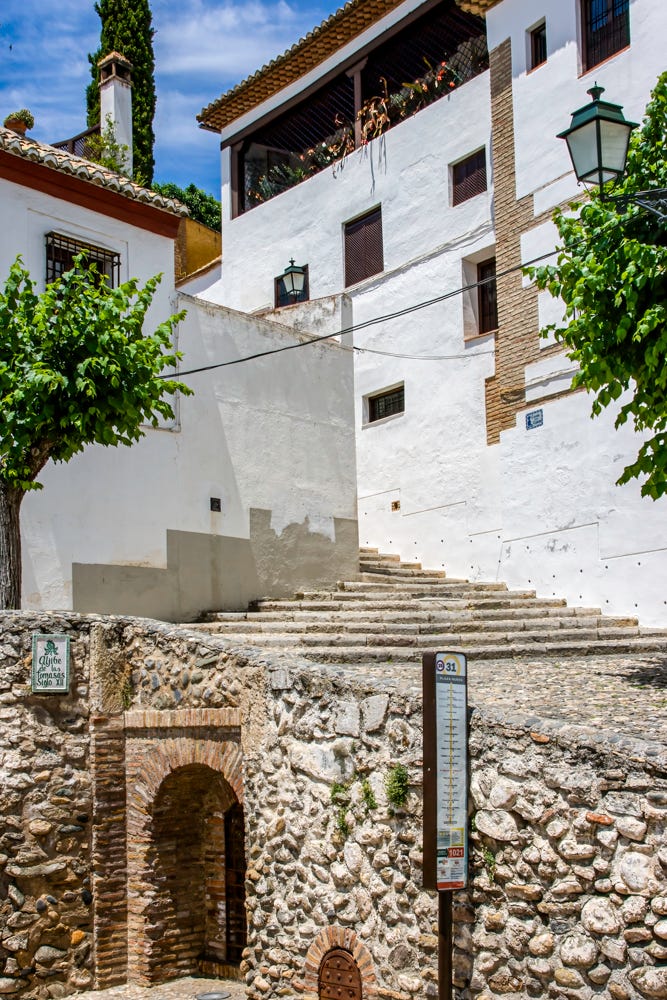
We actually walked from our hotel to the Plaza de Isabel la Católica and grabbed the local C31 bus which took us on a 25-minute loop all over Albaicin and back to the plaza. We then stayed on the bus and went up the hill again. This time we got off halfway up the hill at the best viewpoint, the plaza outside San Nicolas church called Mirador de San Nicolás. Yes, this is the hill where we view what’s on the other hill!
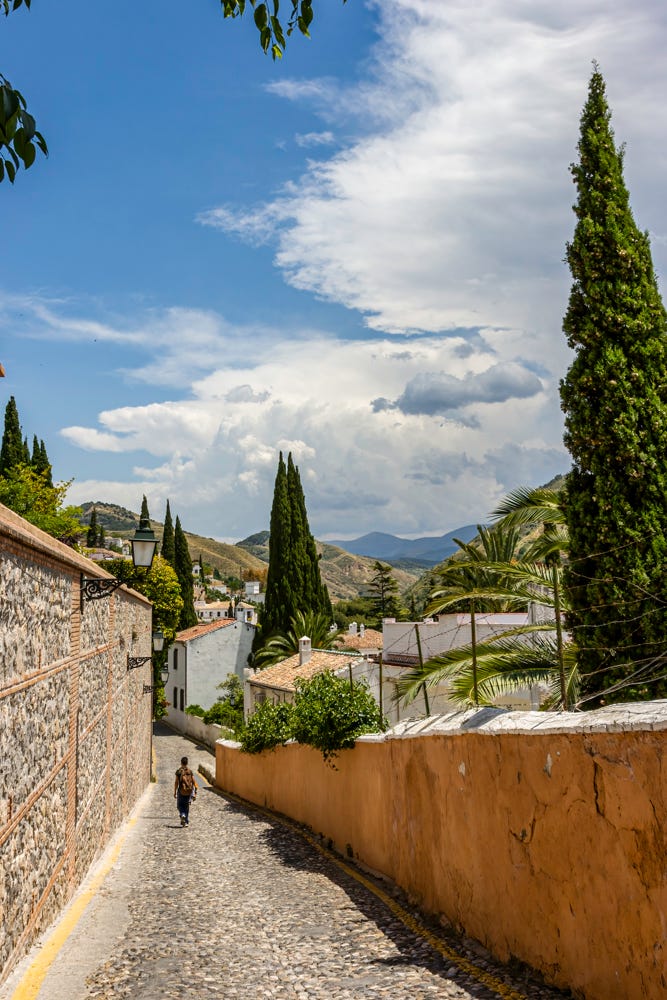
We then walked down the hill all the way to the Plaza Nueva where we rewarded ourselves with glasses of cool Sangria as we listened to cool guitar music. And the tapas were free!
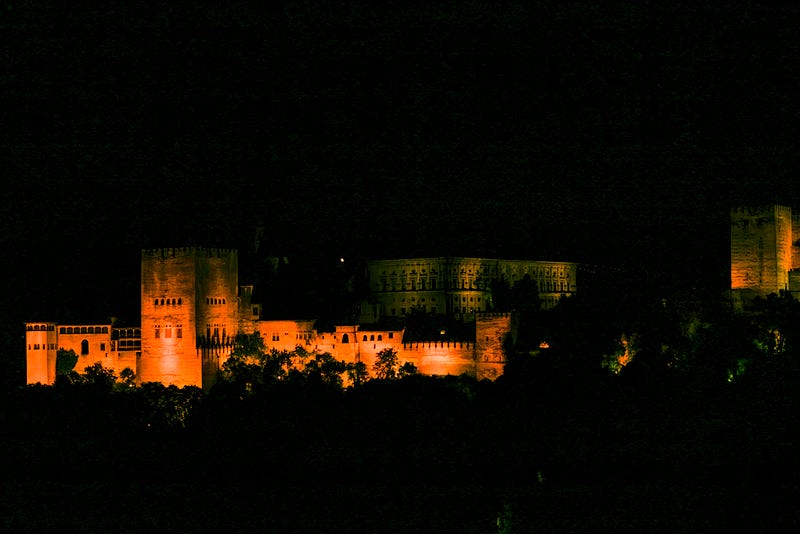
We returned to Albaicin that night on our way to be entertained in Sacromonte. A minibus picked us up at our hotel and drove us first to that same Albaicin viewpoint so that we could see the Alhambra at night. Then we drove on to Sacromonte to see the Gypsies.
Sacromonte is actually on the same hill as Albaicin but is further east and segregated from the rest of Granada. There is even a wall stretching almost to the top that separates Sacromonte from all points west.
There are about 50,000 people residing in the Sacromonte district of Granada. Most people call them Gypsies because it was thought for hundreds of years that they originally came from Egypt.
But the people call themselves Roma and they actually came from India many centuries ago and originally settled in the countries of southeast Europe.
These people actually prefer to live by themselves to keep their culture intact. They picked up some of this culture back in India and some in those Balkan countries where they settled before pushing on to Spain. And in Spain, they picked up Flamenco, which is what we came to see that night.
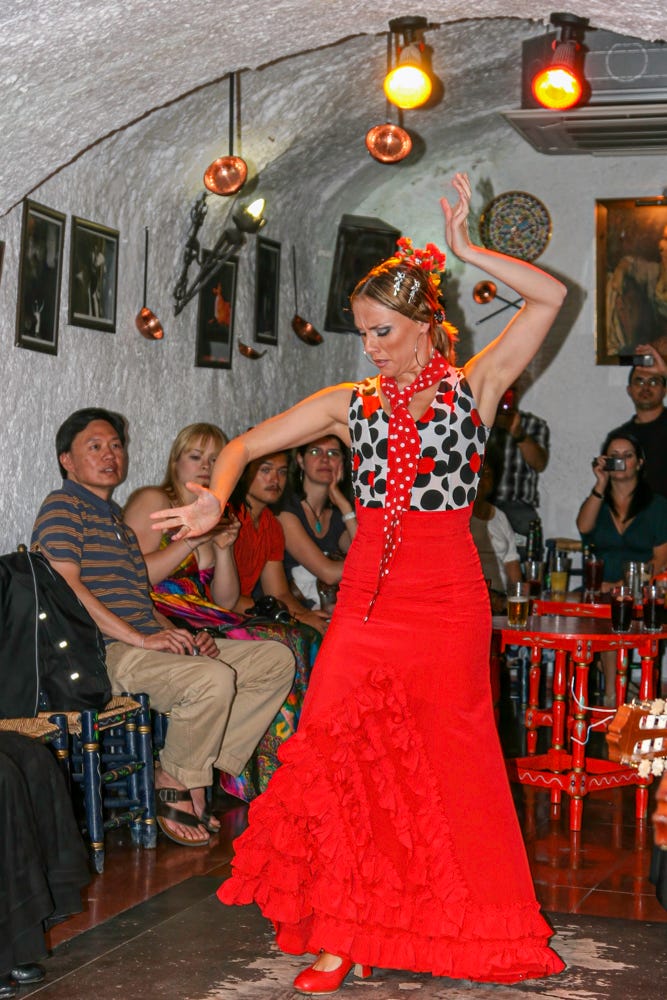
The Roma mix song and dance into their version of Flamenco which they call Zambra. The Roma built their homes in the caves of Sacromonte, and we gathered along the cavern walls to watch them stomp and whirl and shout, encouraged by drums and guitars and castanets and the clapping of both the tourist guests and other members of the troupe.
Hill # 2
We devoted the next two days to the plants and structures on top of the second hill to climb in Granada. The northern side of this hill is steeper than the Albaicin, but the main entrance to the Alhambra is on the southern side where the streets gradually lead up to the fortress.
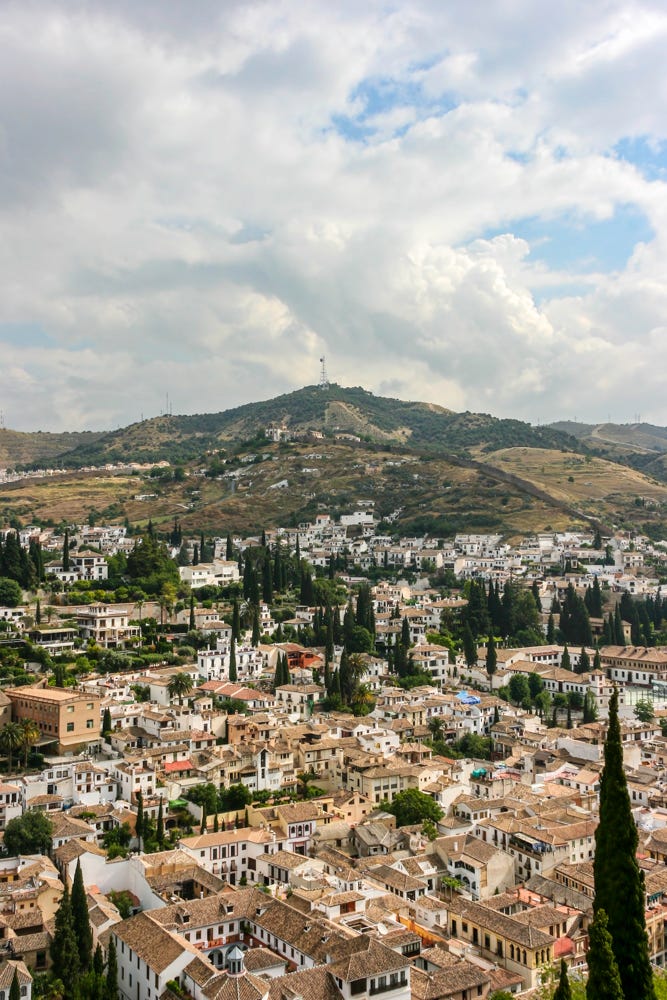
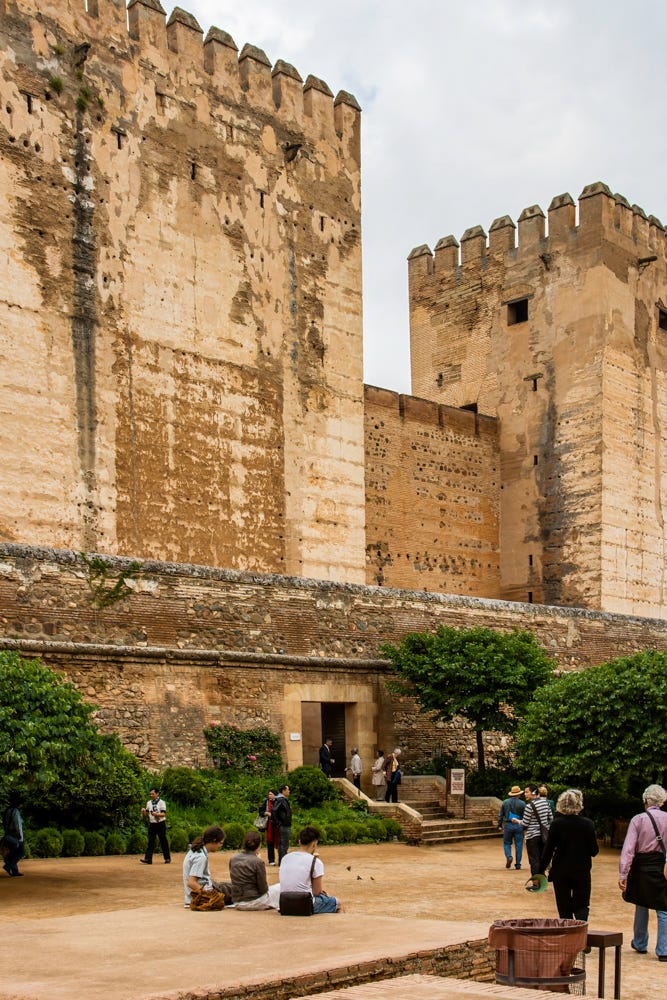
The Moors conquered just about all of Spain in the 8th century. But from the middle of the 13th to the end of the 15th century they ruled just a small portion of southern Spain from their capital, a walled city on top of this hill in Granada. They called their capital Alhambra, an Arabic word that means “red walls.”
Spanish Christians began fighting to take back their country for Christianity. It took them 800 years. They finally accomplished their goal when the combined forces of Isabella of Castile and Ferdinand of Aragon drove the last Moors out of Spain in 1492 and took over the Alhambra as their own capital.
On our first day of touring the Alhambra, we concentrated on the Alcazaba, the westernmost and oldest portion of the Alhambra, and some of the gardens and buildings nearby.
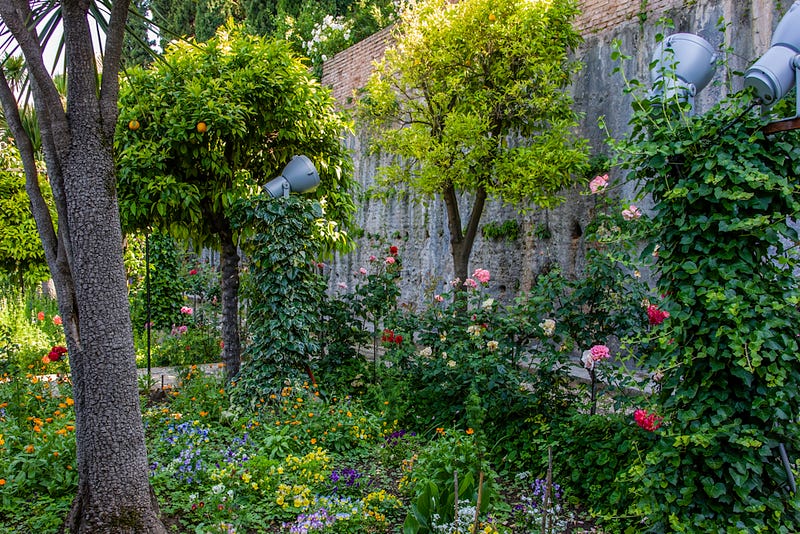
I came back the next day to see on my own what we missed on the official tour: the Generalife palace and gardens east of the Alhambra and the majority of the Nasrid Palaces and gardens between the Generalife and the Alcazaba.
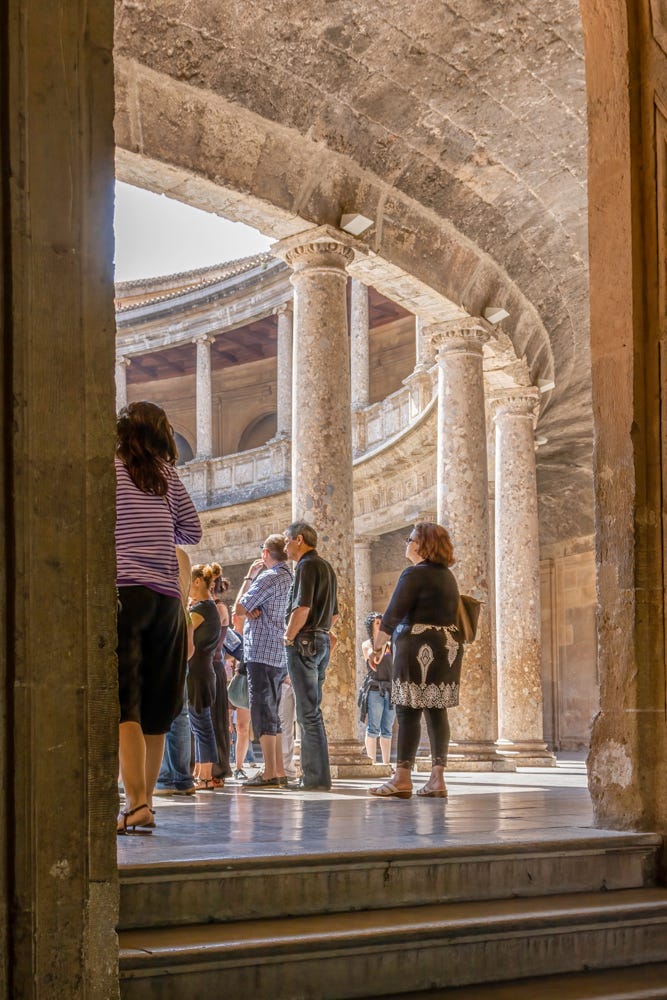
Charles V was both the King of Spain, thanks to his maternal grandparents (Isabella and Ferdinand) and Holy Roman Emperor, thanks to his paternal Hapsburg grandparents (Maximilian I and Mary of Burgundy). He started building his Alhambra palace in 1527 but it was never finished. The roof was finally completed in 1967.
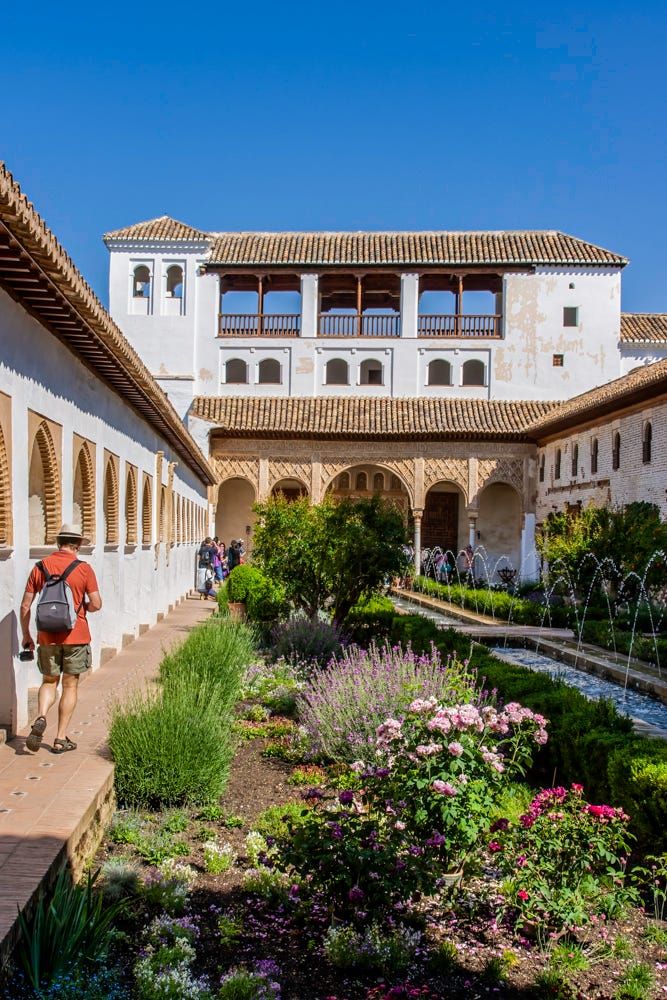
The Generalife is actually east of the Alhambra, but there are many paths and walkways that connect the Generalife gardens to those of the Nasrid palaces inside the Alhambra.
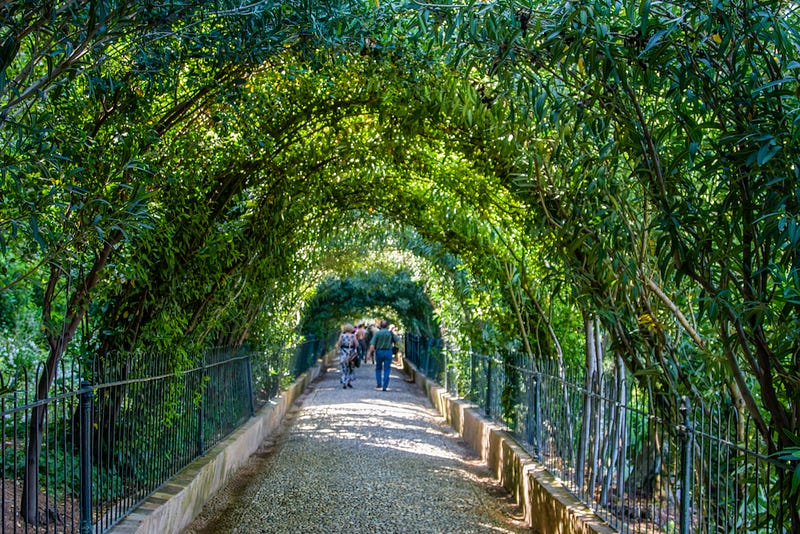
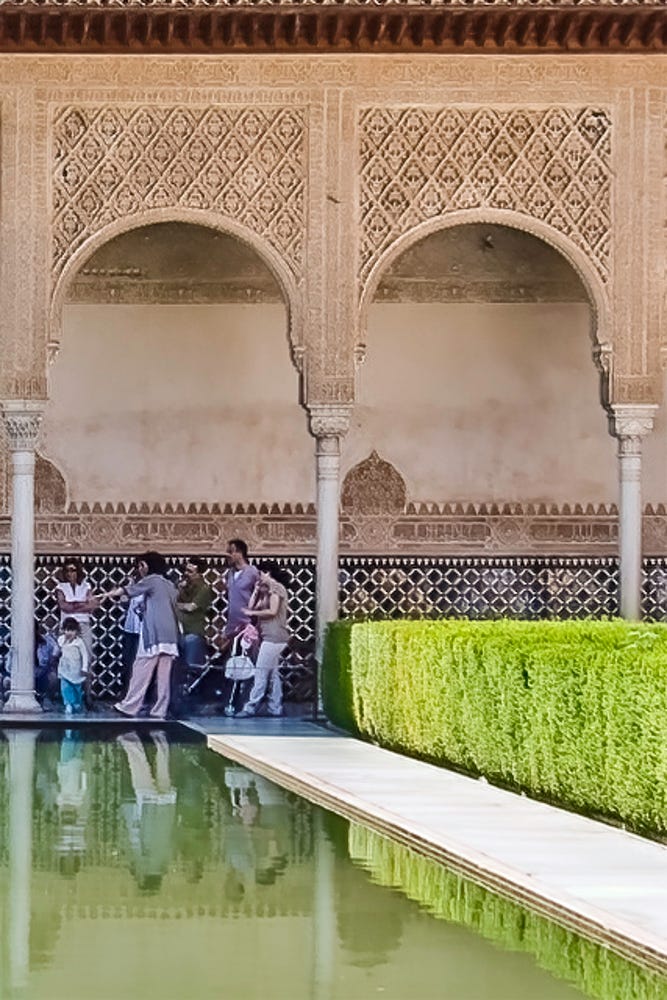
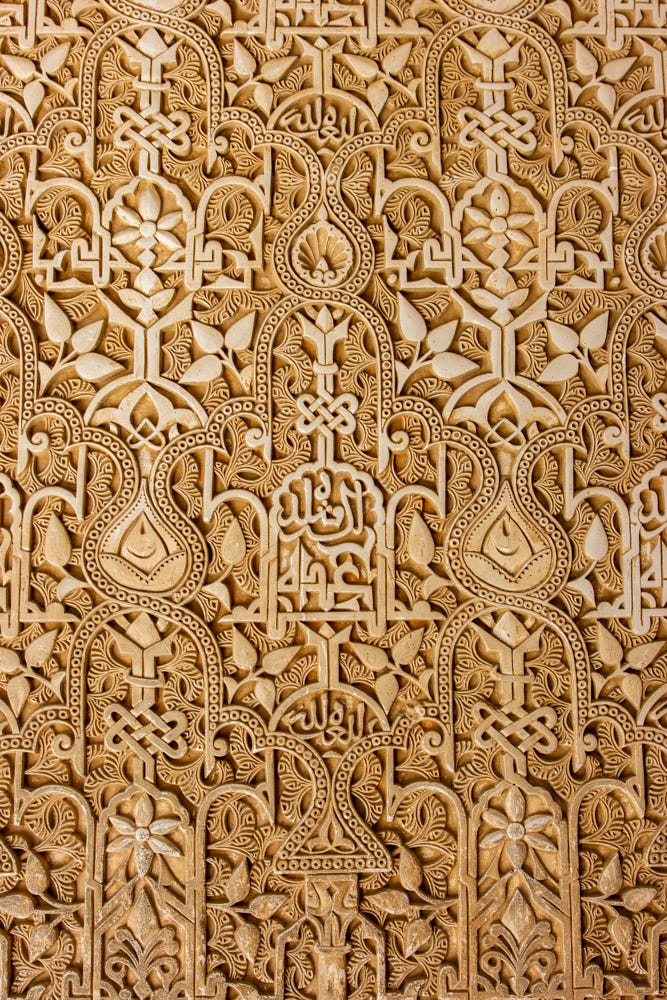
Our tour guide on our first-day Alhambra tour explained Islamic art in great detail. The Moslem religion does not allow portraits of humans or animals in their art, hence the emphasis in calligraphy and geometrical design. The Alhambra is generally considered the epitome of Islamic art in all of Spain.
So, that’s the story of our two hills in Granada. We flew back to Madrid the evening after our second Alhambra tour and the next day another airplane took us to London where we found yet another plane that took us the rest of the way home.
We traveled to Spain a couple of more times in recent years. But we visited only the northern portions of the country: Barcelona, Madrid and Santiago de Compostela. But the Moorish influence does not exist in these places. You’ll have to travel to southern Spain for this.
But we did sample free tapas in towns along the Camino de Santiago and we watched Flamenco dancers in Madrid! And one day we ventured outside Barcelona to visit Montserrat, which reminded us of the Alhambra. Except Montserrat is a monastery on a mountain while the Alhambra is a fortress on a hill full of palaces and gardens.
Granada, I fell under your spell!


