
ARACHNIDS GONE WILD
Encounters With African Camel Spiders — Hairy, Scary, and Fast
Large spiders were just one of many hazards on our archaeological dig in northern Sudan
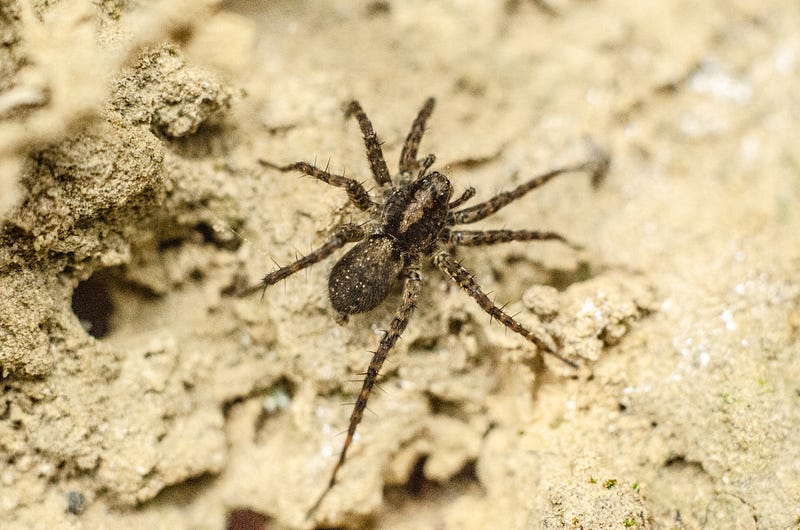
During the nine months I spent working on an archaeological dig in Northern Sudan, there were things I hadn’t mentally prepared for.
Unrelenting heat: 110 degrees Fahrenheit in the shade. Drinking well water: Bat poop scooped daily from the drawn well water. Latrine: Fenced hole in the ground that was party central for butt-biting flies. Flies: Did I mention the biggest, blackest, most persistent pest on the planet? Spiders and scorpions: Plenty of both — had to learn which were poisonous.
We studied all of these things in the classroom back at the University of Calgary. We’d endured endless lectures on both the ancient and modern cultures of the Sudan, which at the time was still the largest country in Africa.
This was before ethnic and religious conflicts split the nation into Northern Sudan and Southern Sudan, handing over the title of largest country by land size to Algeria.
As irrepressible grad students hungry for adventure and anxious to do real archaeology, the lectures on culture shock and navigating hazards and inconveniences were met with “yeah, yeah, OK, we get it.”
The arrogance and stupidity of youth.
We would manage. Of course we would. We were anthropologists and archaeologists in the making. We were tough, smart and ready. Right!
A little backstory
I was impressed by how international the dig was. Our leader (and professor back at the U. of Calgary) was the renown British archaeologist Dr. Peter Shinnie.
He loved to mix things up and keep us on our toes.
If he assigned a journal article to read that was in German or French, he expected us to figure out how to get it translated. He suggested we should learn these two languages. We were already studying Arabic.
His team of students was comprised of two Americans — including me — several Canadians and a handful of students from Great Britain and Poland. Peter’s wife was from Ghana.
Location of the first encounter
My first encounter with a camel spider was shared with a student from Cornwall. Brian was studying archaeology and cartography.
We worked together six days a week in a storage room which served as our “offices.” Like all structures in the 14-person compound, it was a small mud brick building with a dirt floor and thatched roof.
Brian operated at one end of the room at a make-shift desk made from a few planks supported by shipping containers. His maps were spread out and surrounded by the tools of his trade.
His role at the dig was to survey and map the archaeological site.
At the other end was my area. My desk was similar to his, and my job was to catalogue hundreds of artifacts, or small finds as they were called.
These were numbered, tagged, and recorded. I was happy with my job — as was Brian — because we didn’t have to spend most of the day in the scorching heat.
On this morning about a dozen burlap bags had been placed under and around our work areas. They were filled with paper supplies, boxes of string, stakes, brush pans and cooking stock.
Supplies arrived sporadically from Khartoum in a Land Rover driven by an ancient, half-blind Sudanese workman. Items came in bulk and were stored wherever there was space.
Enter the camel spider
Brian and I were absorbed in our work. Often there were long periods of silence before one of us initiated any sort of conversation.
Over my shoulder I heard a strangled gasp.
It sounded to my inexperienced ears like someone having a heart attack. I jerked around to see Brian staggering forward, as if he were drunk and heading for the dance floor.
His blue eyes were wild and his blond hair looked like it was standing on end.
He pointed downward before flailing his arms up in a “stay away” gesture as he teetered backward knocking items off his desk.
An incredibly huge spider — yellow-brownish and at least 6 or 7 inches long — was rocketing toward my end of the room. I never imagined spiders could move so quickly.
Terrified, but clueless as to what to do — I charged at the creature like an enraged bull. All I needed was a red and black cape and sword to complete the picture.
As I stomped and yelled the spider must have had a change of heart. It spun up on its legs, almost dancing, and hurtled straight back to Brian — reaching him in a millisecond.
The spider then jumped on his shoe and scampered right up his pant leg.
All I could do was watch in horror.
Brian squealed like a little girl chased by an imaginary monster. He twirled and attempted to fling the critter onto the floor. Instead it darted up his arm lightning fast, as if determined to reach his mouth and stop his terrified squalls.
By this time I was screaming too. I couldn’t process what my eyes were seeing. But my brain told me to do something.
Grab that broom by the door and rake the thing off his body. But I was galvanized, bolted to the floor with feet of cement.
I finally broke from my trance. I snatched the broom and started beating Brian with it. The spider leapt off his arm and broke for the door.
In an instant, it was over. The whole transaction was probably no more than 30 seconds but it seemed like eternity.
Our screams drew several workmen from the the dig site. They ambled in, looked at us, glanced quizzically around the room, and then back at us again.
They spoke rapidly in Arabic, and the only thing I could make out was an irritated “madha hadatha?” What happened?
I strained my memory but could only pull out— with hand gestures — “namlat kabir!” which I thought meant “a big spider.” But no, I told him we’d seen a big donkey.
The men howled with laughter until the dig leader, Abdul-Aziz Bilal Hussain, came in to find out what the commotion was about. Abdul, who was from Khartoum, spoke perfect English.
By now Brian had recovered and was anxious for the men to leave. He knew we’d be the butt of endless jokes for days. Life in the desert was bereft of much entertainment and our crew provided more than most of these guys had experienced in years.
As I breathlessly explained the spider attack to Abdul, he craned at the ceiling and formed a mirthless smile.
He glanced down at his sandals and with comic exaggeration shook his jalabiya. He hoped the creature hadn’t taken refuge in the folds of his pantaloons he mocked.
Seeing nothing, he proclaimed, “Alhamdulillah.” (Allah is merciful.)
Camel spiders aren’t poisonous he explained to Brian. (Sudanese men rarely spoke or even acknowledged the presence of women — even when we were standing right in front of them.)
Its bite was stinging but not deadly. And, they’re among the speediest in the desert he added.
Don’t worry, he consoled. He was sure that particular spider had been hiding out in the burlap bags and wouldn’t come around again.
He shrugged, laughed and hustled the men back out to the dig site.
The second camel spider
In the evening after work the Bedouin workmen walked barefoot several miles across the desert to reach their tents.
We scattered to our own private compartments. Each of us had a tiny thatched roof hut where we slept and stowed our belongings. On the dirt floor was a grass-like woven rug and an angareb.
The angareb was a bed with a wooden frame held together by rope. They were also used as outside sofas.
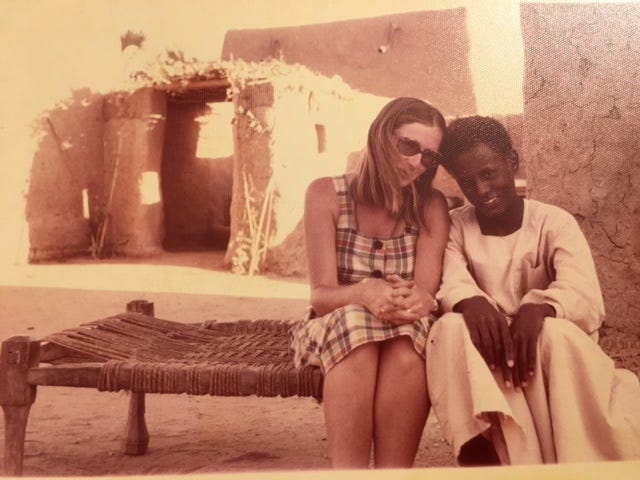
It was covered by a thin mattress and stood about ten inches off the floor. By the bedside was a box that served as a table for our kerosene lamp.
There was no electricity or running water anywhere near our dig site. You had to drive miles to a little outpost called Shendi for that kind of luxury.
We turned in around seven because the sun had already set and there wasn’t much to do in the dark after a long hot day at the dig. Also, we rose at 4:00 AM to start work by five.
Archaeology in the desert wasn’t nearly as glamorous as we’d imagined.
On this night I extinguished the flame of the kerosene lamp and pulled a blanket over me. Surprisingly, the desert becomes quite chilly after sunset. I placed my flashlight — my torch as my British friends called it— near my pillow.
I began drifting off to sleep lulled by the sounds of the desert. There was a deep hypnotic roar as the wind whistled, squeaked and hummed.
My calm was abruptly shattered by what felt like a hand slapping my thigh.
What the hell?
Whatever struck me was still there. I snapped on the torch. Once again, a camel spider.
This sucker spread out as wide as a dinner plate, and was stunned by the sudden light.
I was not going to scream like Brian I told myself. This little guy isn’t going to bite or kill me. My heart beat like a engine getting ready to blow, but I remained silent and still.
I eased back the blanket, flung it hard into the air, and sent him sailing. My torch caught the creature scrambling toward the hut’s entry, which was covered by a long strip of burlap.
With trembling hands I leaned back onto my pillow and pointed the torch toward the ceiling.
That was where he came from I surmised.
After a few minutes my racing heart was calmed. I’ve always been an animal lover so I decided to deal with the situation pragmatically.
Every critter on the planet — humans, dogs, cats, cattle, lions, mice and spiders — they all gotta make a living. They deserve to live every bit as much as we do.
So, adhhab bisalam — go in peace, camel spider. Go do your thing. But please… please don’t come back here again.
As far as I know, he never did.
If you like my stories and want to read more, please use my referral link! Your $5 monthly membership supports me and other writers on Medium. https://medium.com/@deborah.camp/membership Maybe you’d like to write on Medium and earn a little money too. Either way, here’s my link to get you started: https://medium.com/@deborah.camp/membership