
Twisted Haiku
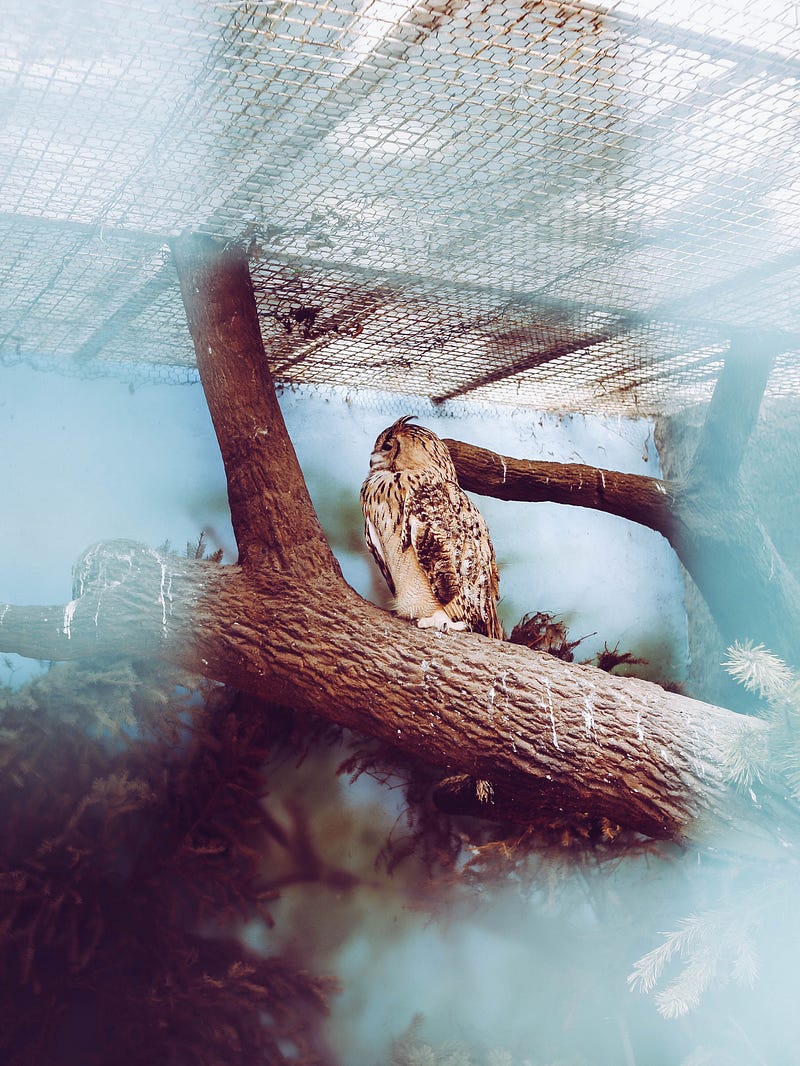
Solemn bird locked in a cage
Never to the see the light of day.
White walls hold me hostage,
The cycle repeats.
~Feathertales
Summary
A poem titled "Twisted Haiku" reflects on the confinement of a bird within a cage, symbolizing captivity and a perpetual cycle.
Abstract
The poem "Twisted Haiku" by Feathertales is a poignant piece that uses the imagery of a "Solemn bird locked in a cage" to evoke a sense of entrapment and melancholy. The bird, deprived of the freedom to experience the "light of day," is a metaphor for a being constrained by its environment, as suggested by the line "White walls hold me hostage." The poem's structure, reminiscent of a haiku, implies a cyclical nature of this confinement, ending with the line "The cycle repeats," suggesting a continuous loop of captivity and perhaps a commentary on the human condition.
Opinions
Solemn bird locked in a cage
Never to the see the light of day.
White walls hold me hostage,
The cycle repeats.
~Feathertales


