
Twilight Imaginings: Bones of Stories
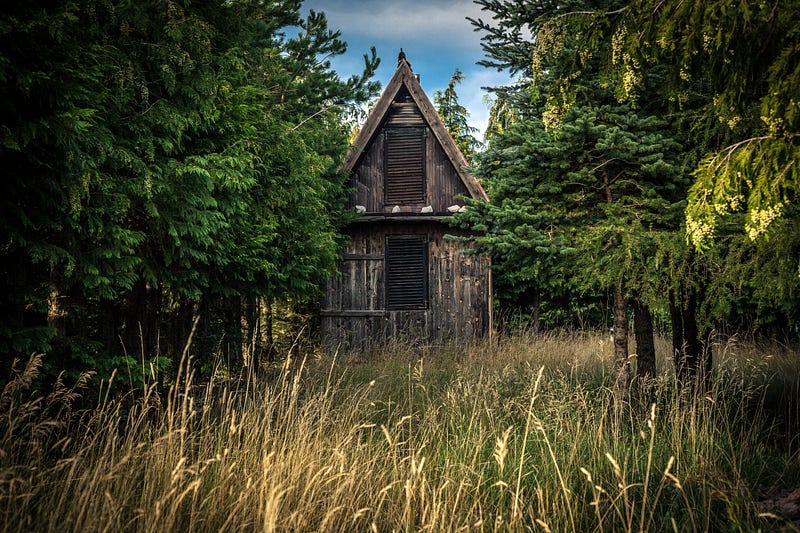
My imagination makes me human and makes me a fool; it gives me all the world and exiles me from it. — Ursula K. Le Guin
Imagined worlds bring real consequences. To write a story, the writer is forced to see beyond the existent, even if the bones of every good story are artifacts of this world. World building is more of an un-making of what exists, requiring an eye for shortcomings and an ear for songs that sing deeper than the known. Years of delving into this kind of creation changes a writer’s perception of reality. What seemed solid melts into the sea, while that sea sands into a boundless desert, dunes standing in for waves. Gazing at the cosmos through a telescope morphs the mind’s grasp of Time and Space, just as closing one’s eyes and conjuring elemental spells — within a richer world that allows for such things — makes a writer regard the mugwort overtaking her garden quite differently. Focus brings on the blur, but imagining respells the alphabet, making the material world appear as a dim reckoning through the fog, a land cursed by its witness. Solitude allows for the quiet to hear the hidden chaos, while worldly events carry on, from the mundane to the catastrophic, waiting for the writer to blink away the moment-removed, un-imagine herself back into ‘life’… Once the Siren Song finds her, it never ends.
Where I send my thoughts To far-off destinations So they may have a chance Of finding a place where they’re Far more suited than here. — Death Cab for Cutie: Soul Meets Body
Imagination often makes fools of the the other senses, since the departure from what’s at hand requires a certain aloofness. Just as the dusky shimmer on the placid sea conceals what lies beneath, so the places minds go to conjure stories are forever concealed to others, even after a fantastical map or a pile of words emerge. People plan ahead to carve out blocks of time to share with one another, while the imaginer is subject to those ‘others within’, all the time, even in dreams. Often times, the only proof of the writer’s existence to those around them is their corporal form, a somnambulant body drifting through space, as if in a dream, but a dream where nothing around influences the rest, since they are navigating in a waking dream within a dream, a fragile reckoning, with faces and places beyond comprehension, even for this Janus-faced dreamer. It’s the inner-eye that never sleeps, only blinking away the moments, like pages are torn out of a book. Imaginers treat the past as if the book of their life were scattered pages blowing in the wind, no fixed time or place, only their animated existence, this page giving way to this, now this, like maple leaves blowing along a November path, sweet to think of, but the syrup lies in the source, trapped, until ideal conditions arise. When they do, the writer drinks deep, until the sweetness turns sour.
Rows of houses, all bearing down on me I can feel their blue hands touching me All these things into position All these things we’ll one day swallow whole And fade out again and fade out — Radiohead: Street Spirit
There is no escape when the gray existence of imagining only perpetuates itself through the in-betweens, the twilight of inner and outer worlds. The suburbs become a carnivore to thinking, as surely as the city, while the dream of the shack in the woods remains shimmering, forever removed… Rage at the real world gutted of its magic can turn the imaginer into the apex predator of herself, casting curses in the dark, on a Midsummer’s afternoon. But the wellspring of imagined worlds that make this world seem so abysmal come from the disappointing world itself, the paradox that will never be reconciled between imagination and worldly thought. ‘From this…to THIS?…’ And yet the material world still shimmers in the dark and becomes mysterious in the light of day. A sea gutted of mermaids still embraces secrets beyond anyone’s reckoning, while courageous arms, unable to even hold a pen, battle villains far more noxious than Sauron. There is no gray without the light, no reason without another, even if those others must be forsaken for the sake of the story. In the best of times, the imaginer is the selfish-Giver, the one who withdraws and returns with far more to give than what’s been taken. In the gray of imagination, a fragile beauty springs forth.
Hayden Moore