
Twelve Videos on Ursula K. Leguin’s Tehanu
free video lectures exploring themes, plot, characters and the narrative world of Leguin’s fourth Earthsea novel
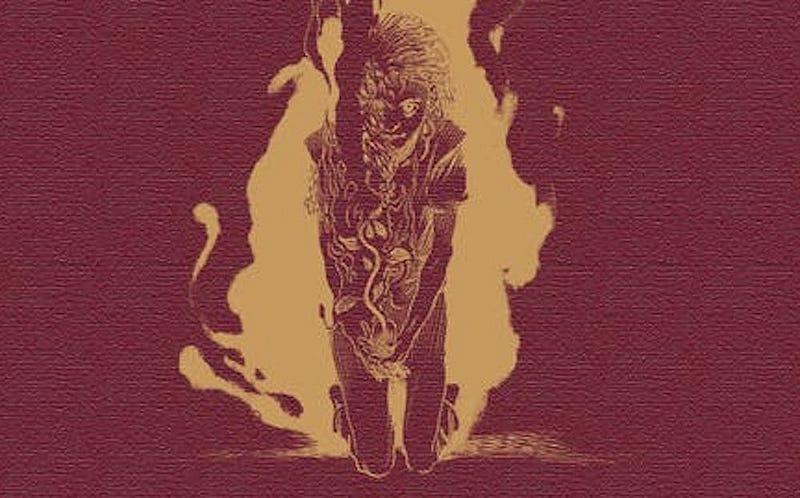
Earthsea gets a bit darker and deeper in this fourth Earthsea novel, which is written almost two decades after the earlier trilogy — A Wizard of Earthsea (1968), The Tombs of Atuan (1971), and The Farthest Shore (1972). This fourth book in the series was originally to bring the saga to a close, as “the last book of Earthsea”. But, as it turned out, it is the fourth of six, and centers us right in the middle of things.
In narrative time, Tehanu begins a bit (really about a year) before the The Farthest Shore’s ending, as we learn when the great and eldest dragon Kalessin bears the exhausted archmage Ged to his home in the isle of Gont, placing him into the care of Tenar. The very first chapter of Tehanu introduces us to a new main character of the Earthsea saga, a starved, beaten, abused, raped, burned, and left-for-dead child, who survives and is adopted by Tenar, who gives her the name Therru.
As Leguin herself tells us in many places, this powerful novel Tehanu develops out of her own deepened engagement and ongoing reflections about power and weakness, relations between men and women, the nature of good and evil, and many other topics. These include those within her narrative universe, such as the nature of magic, what is left behind when power is gone, and the kinship between humanity and dragonkind.
In the class I developed and taught at Milwaukee Institute of Art and Design, “Philosophy and Fantasy: Ursula K Leguin’s Earthsea”, Tehanu came a bit past the halfway mark of the semester. It’s also right in the middle of the textbook we used, the recently published omnibus volume that gathers all the books and stories of Earthsea (along with Charles Vess’ illustrations and Leguin’s own reflections and reminiscences).
For my students, I shot twelve lecture videos covering the events, characters, relationships, plot points, themes, peoples and the imaginary geography of Earthsea. I also released them to the general public who might have some interest in the Earthsea novels and stories. And here they are:
- Therru’s Abuse, Fear, And Healing
- Dragons and Human Beings
- Ogion and Tenar
- Ged No Longer A Mage
- Aunty Moss The Witch
- Women, Men, Magic, and Power
- Tenar Teaching Therru
- Ged Comes Back
- The King, Order, and Justice
- Spark, Tenar’s Failed Son
- Aspen, The Evil Wizard of Re Albi
- Tehanu and Segoy
You can find the three previous sets of videos on the earlier novels curated into listings like this one, and the new one on Tales From Earthsea, here:
If you’re a subscriber to my YouTube channel, or you follow me on Twitter, Facebook, or LinkedIn, you’ll see the two remaining sets of videos on the later books Tales From Earthsea, and The Other Wind as I release them.
I’m Gregory B. Sadler, the president of ReasonIO, the editor of Stoicism Today, a speaker, writer, and a producer of highly popular YouTube videos on classic and contemporary philosophy. I teach at Milwaukee Institute of Art and Design, and offer classes to the wider public in my Study With Sadler online academy. I also produce the Sadler’s Lectures podcast and co-host the Wisdom for Life radio show


