
Tweeting Through Time: A Fantastical Journey into Ancient Civilizations with Social Media
Subtexting History: How Ancient Voices Might Have Echoed in the Digital Era
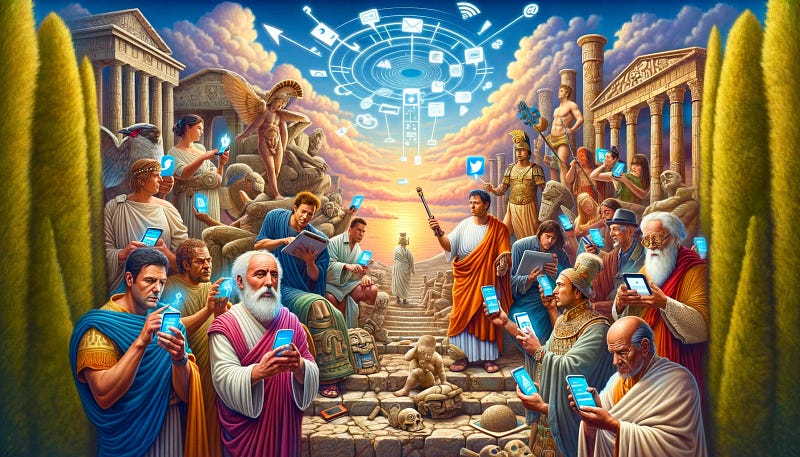
Hey there, history enthusiasts and social media buffs!
Have you ever wondered what it would be like if our ancient civilizations had access to social media platforms like Twitter and Facebook?
Well, buckle up, because we’re about to embark on a whimsical, slightly anachronistic journey back in time.
But first,
let me ask you this: Can you imagine Cleopatra posting a selfie with her latest asp accessory? Or Julius Caesar tweeting “Veni, Vidi, Vici #GaulWars”?
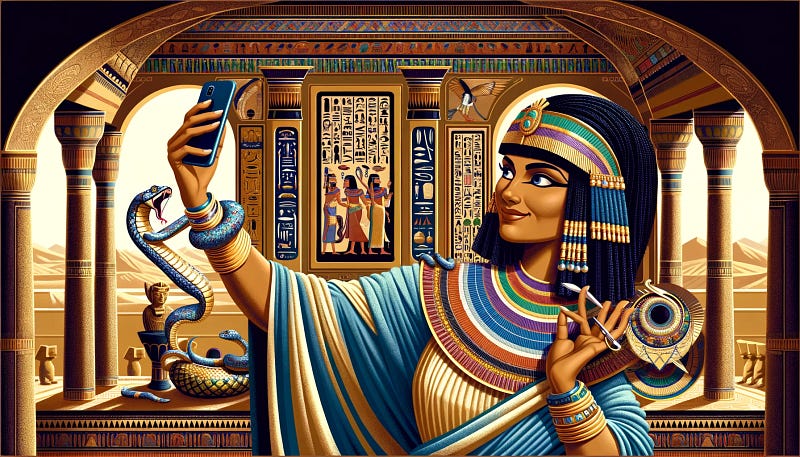
The possibilities are endless and frankly, hilarious to think about!
1. Hieroglyphs to Hashtags: The Ancient Egyptian Feed
Imagine Pharaohs on Facebook, updating their statuses with the latest pyramid progress.
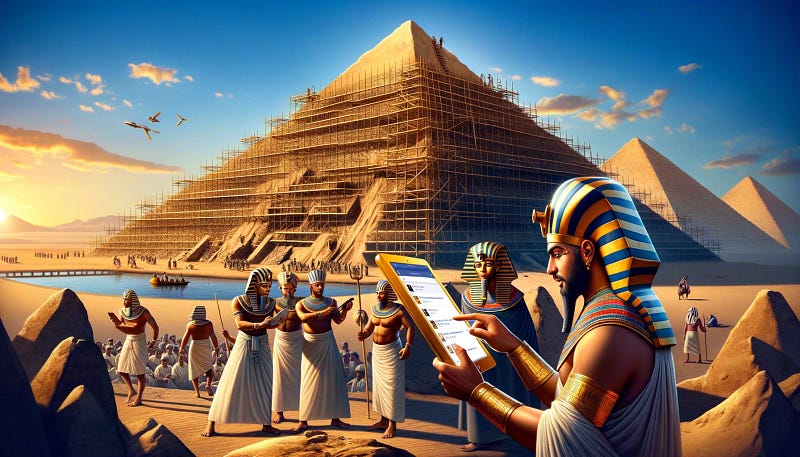
“Another layer added today! #PyramidPride.”
The Egyptian citizens could follow the construction updates in real-time, maybe even leaving comments like,
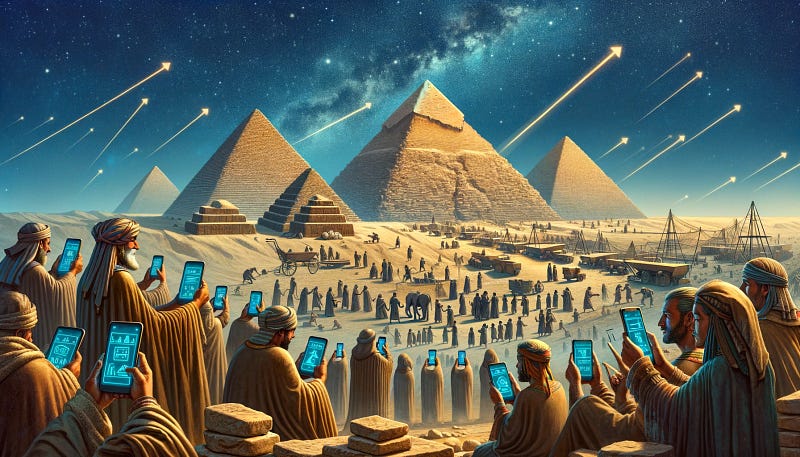
“Looking good, but don’t forget to align it with Orion’s Belt!”
But it’s not just about the Pharaohs.
What about the common folk?
Daily life posts with hashtags like #NileLife and #SphinxSelfies would flood our timelines.
And let’s not forget the influencer priests and priestesses, posting about the latest trends in mummification techniques.
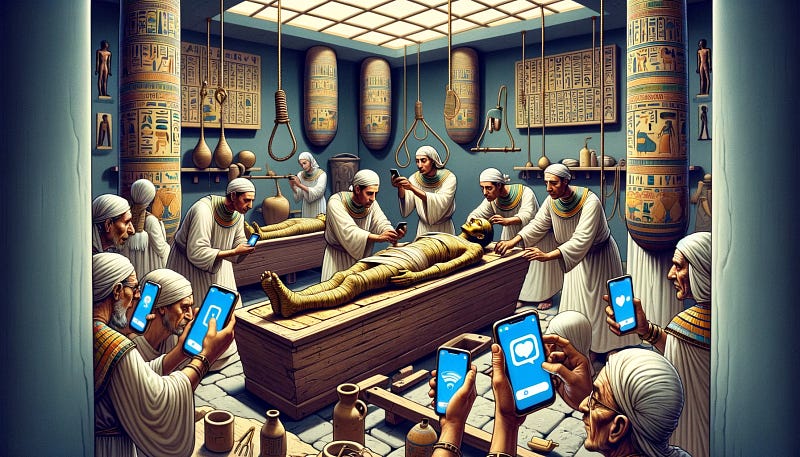
What kind of post do you think Cleopatra would make after a spat with Caesar? Drop your hilarious suggestions in the comments!
2. The Greek Agora Goes Digital
Imagine if the Greek agora, the heart of public discourse, went online. Philosophers like Socrates and Plato would have Twitter threads instead of dialogues, discussing the meaning of life in 280 characters or less. #DeepThoughts would be trending every day.
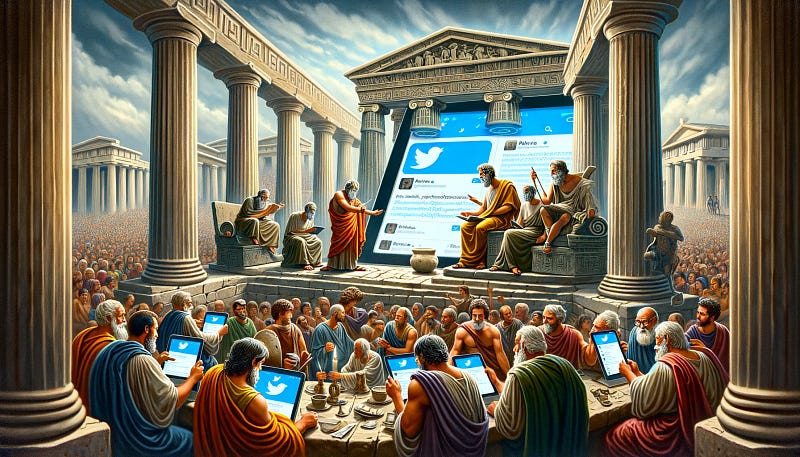
And what about Greek tragedies and comedies?
They’d probably have their own Facebook pages, with audiences reacting with likes, angry faces, or sad reactions to the dramatic plot twists.
“Oedipus Rex just found out about his parents! 😮😢”
Who would win in a Twitter debate — Aristotle or Socrates?
3. The Romans: Status Updates and Senate Tweets
Can you imagine Roman emperors using Facebook to announce their latest conquests?
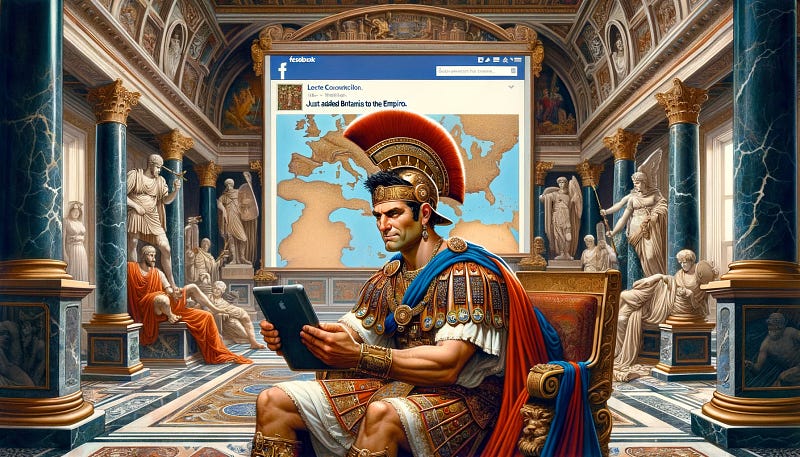
“Just added Britannia to the Empire. #RomanRule.”
Senators, on the other hand, would probably engage in political debates via tweetstorms, discussing the republic’s future.
Gladiators might even live-tweet their battles.
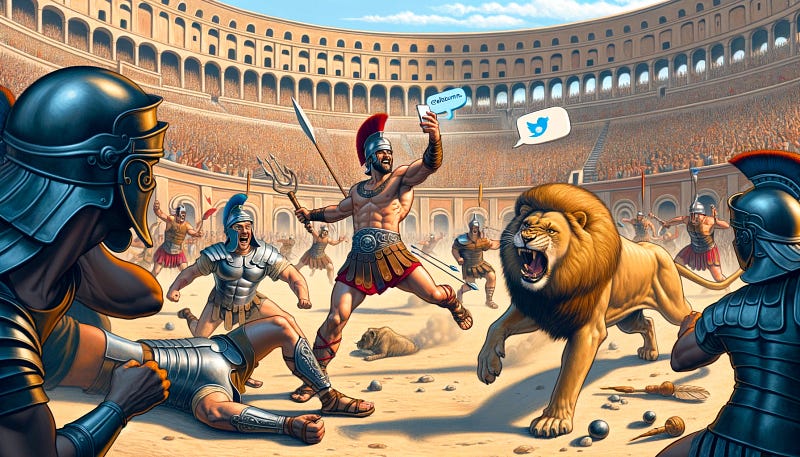
“#ColosseumLive: Just dodged a lion. Still standing!”
And let’s not forget the Roman gossip pages, filled with the latest scandals of the patrician class.
Write a comment describing how you would tweet as if you were a Roman gladiator about to enter the arena.
4. Social Media Stonehenge: The Mysteries Continue
Even the enigmatic Stonehenge could’ve had its own Instagram account. #StonehengeSunrise and #DruidGatherings would offer a glimpse into the mystical ceremonies of ancient Britons.
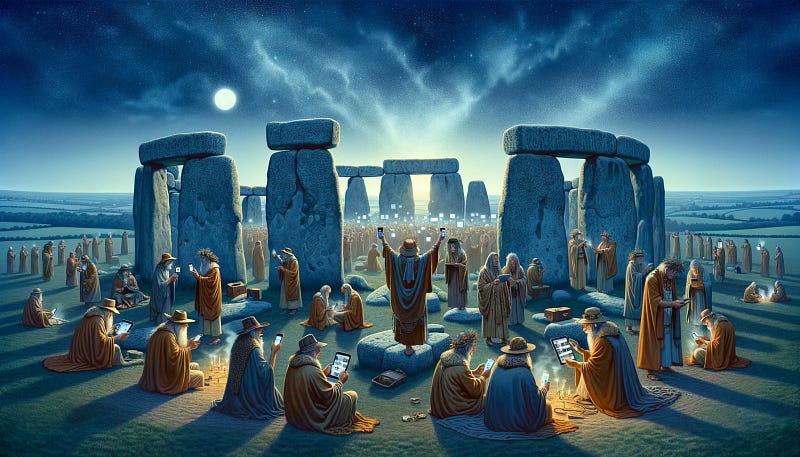
Imagine live stories showing the alignment of the stones with the solstices!
5. The Viking Voyage Vlogs
Lastly, let’s talk about the Vikings.
They’d probably be the YouTubers of the ancient world, posting vlogs of their voyages.
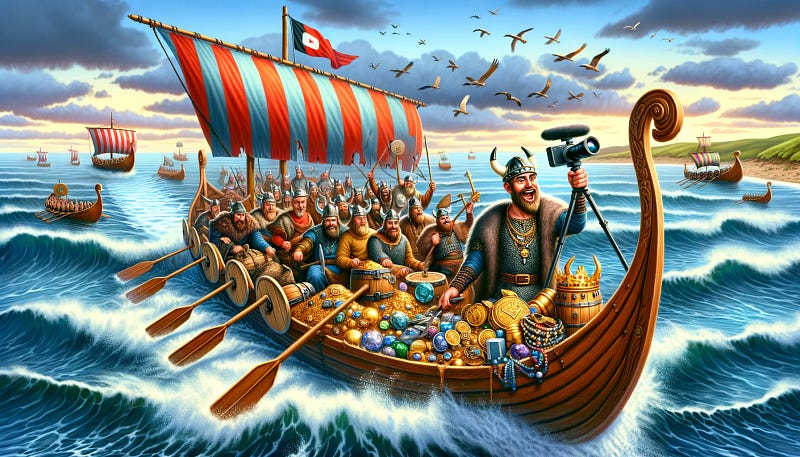
“Just raided a village in England, check out the loot! #VikingLife.”
Their shipbuilding tutorials would be a hit, inspiring a wave of DIY enthusiasts.
If you were a Viking vlogger, what would your channel be called?
The best name gets featured in my next blog!
So, dear readers, while this trip through time is purely fictional, it’s fun to imagine how history could have been tweeted, posted, and shared.
Do you think social media would have changed the course of history?
Share your thoughts and join the conversation below. And remember, even though we can’t tweet through time, we can bring history to life with our imagination and a bit of humor!