
Turkish seasonings — A Touch of Spice
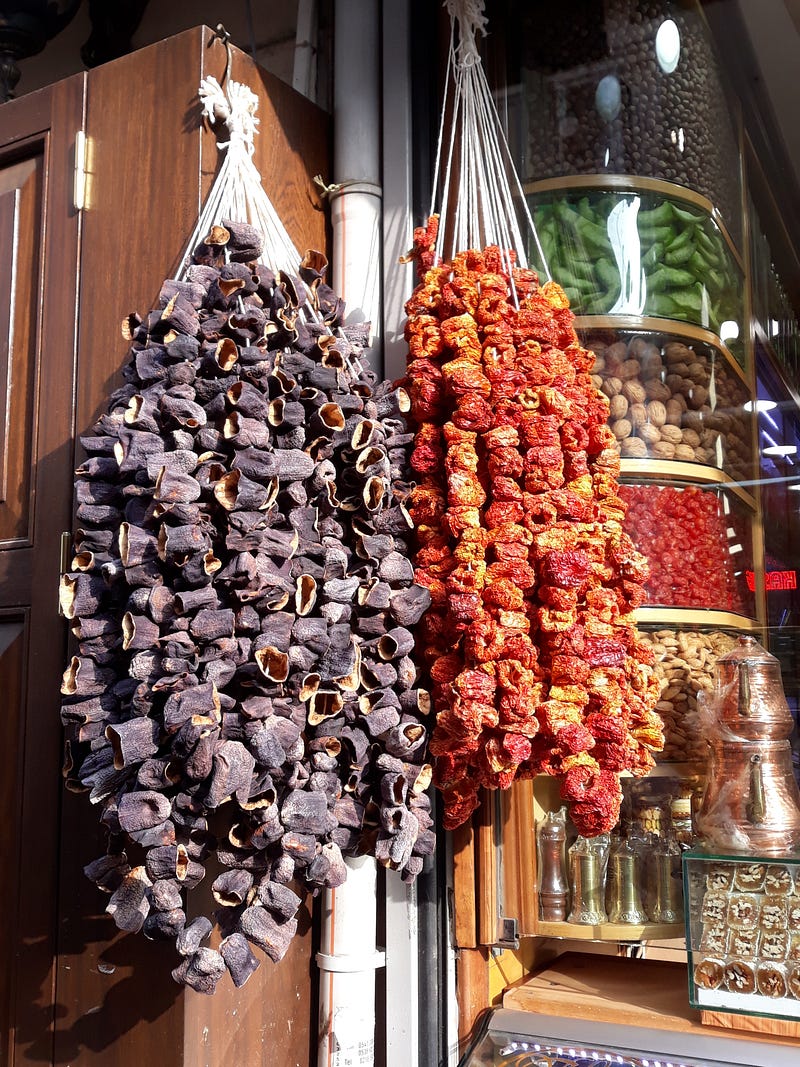
In a little known film set in Istanbul spanning the last century, Turkish seasonings play an important role. In Turkey herbs and spices represent the continuity of history as well as the diversity within cultures. After interviewing my baharatçı, my spice seller Ayhan Baloğlu, I can see why. Born in Gaziantep on the hot dusty plains of south eastern Turkey, young Ayhan came to Istanbul in 1985. He started his apprenticeship in the wholesale district of Eminönü in 1990, learning the craft directly from his master in the traditional way. Over time he went from uncertainly following orders to fill bags with herbs and spices while listening intently to the information that came with them, to himself instructing his apprentice on which balms to recommend for what ailment. From day one Ayhan supplemented his knowledge by studying independently. He opened his own retail shop on the Asian side of Istanbul in Kadıköy in 2002. Called Baloğlu, literally meaning ‘son of honey’, it is tucked away on bustling Güneşlibahçe Sokak, better known as Fish Street. From his brightly lit and well laid out store Ayhan dispenses herbs and advice in equal measure.
We began our interview sitting on low stools at the back of the shop. Slowly stirring sugar into my tea I asked him to name the ten bestselling herbs and spices. Without hesitation he listed “black pepper, ginger, cinnamon, turmeric, pine nuts for stuffed vegetables, dried red pepper flakes, white pepper, flax seeds, black cumin and thyme”. He explained that most Turks wouldn’t have all these things in their kitchen at the same time but said, “Without a doubt you’ll find black pepper, dried red pepper flakes, the herbs and spices used for making plain tomato paste or the hot and spicy variety, as well as cinnamon, ginger, turmeric and black cumin seeds”.
At first glance Turkish kitchens appear to offer far fewer choices of cuisine than mine. I’m from Australia and our diet is influenced by a multicultural population. It’s not unusual to have Thai one night and Middle Eastern the next. I have to confess though, this isn’t because I’m such an enthusiastic cook. My husband is the one always trying out new recipes and taste sensations. My job is to go out and gather the ingredients. Kim loves to make curry from scratch and I remember being frustrated when I couldn’t locate any turmeric in our early days in Turkey. All I could find were packets of ready-made curry powder in the supermarket that lacked the bite we prefer. Of course, over time I learnt I should be looking for the ingredients in a baharatçı, the Turkish word meaning both the name of the place selling herbs and spices, as well as the person selling them. Even though I knew I could find a wide variety of spices in his shop, I was really surprised to hear Ayhan mention turmeric, because none of my Turkish friends use it. When he told me it was mainly found in a few desserts and even then only to provide colour, I understood why I’d thought the Turkish kitchen limited.
You can read the complete version of “A Touch of Spice” in my collection of essays called Inside Out In Istanbul: Making Sense of the City.