
Turkey Forest Fire Calls for Climate Emergency
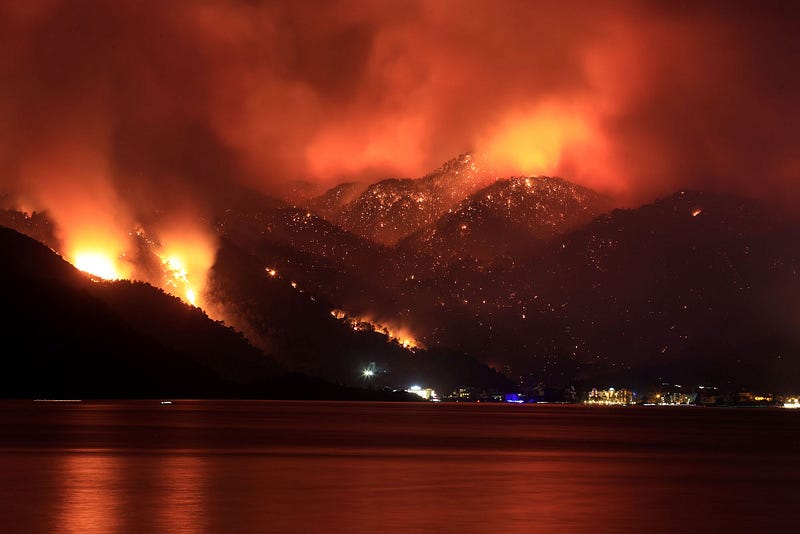
During past couple of weeks, the devastating news of Turkish fires has made global headlines. Series of acute videos and pictures of blazing fires have gone viral which depicts the despair of entire nation. Unbridled luminosity irradiates blazing land while darkness looms above due to smoke with continuous pungent smell. What is left are charred remains- charcoal ashes and lifeless flora-and-fauna. One particular photograph that evoked sentiments of a countless social-media users displayed a little boy watching firefighter planes amidst the orange horizon to battle the ferocious flames over the Mediterranean coast. Ill-armed firefighters, volunteers and Turkey’s Disaster and Emergency Management Authority (AFAD) are seen putting their lives on stake by merely utilizing buckets of water to extinguish fires. Meanwhile, citizens evacuate their residences, tourists vacate ‘Airbnbs’, wildlife runs for shelter futilely, land gets rendered of vegetation and breadwinners become penniless.
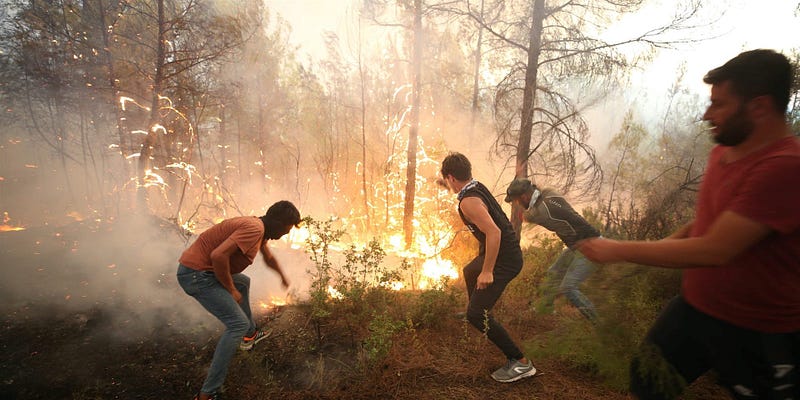
Nevertheless, prevailing situation has been compounded due to government’s inability to administer it. Justice and Development Party of Erdogan has come under fire due to their alleged sluggish and apathetic response. Meanwhile there is a constant blame-game among opposition parties. Incumbent party has been blamed for ignoring visible early warning signs of droughts and dying migratory birds. As such, they lacked a “master plan”. National forest program of Ankara’s Forestry department is outdated that doesn’t incorporate other interlinked sectors- agriculture, urbanization, tourism etc. Simultaneously, inhabitants are blaming the authorities for providing inadequate help and reinforcements of aircrafts and fire extinguishers which has been more compromised by refusal to accept help from Greece and Israel. The ruling party even censured social movement and social media campaigns asking for international help. In effect, Erdogan’s authoritarianism is risking the success of climate diplomacy.
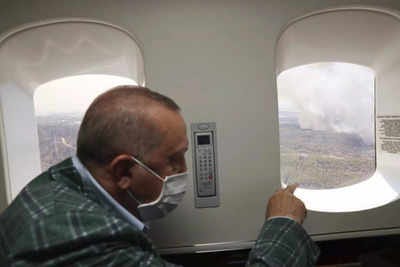
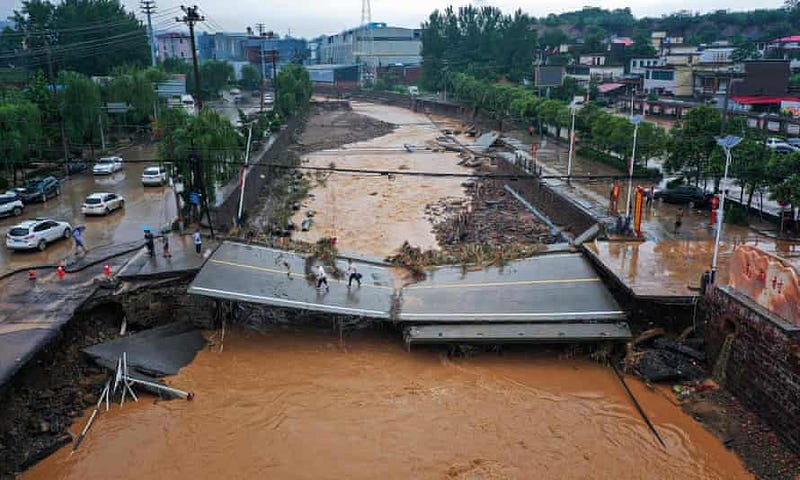
Torrential winds, severe drought, humidity and soaring temperatures above 40 degrees are cumulatively responsible to kindle blazing fires across Southwest Turkey all way up to Greece. Previously Climatologists had warned that due to climate change, extreme weather patterns such as southern European heatwave were anticipated to compound extensive fires. According to European Forest Fire Information Service, thrice as much fires have occurred in 2021, burning 140,000 hectares of land. This was in the light of a series of recent events that had triggered catastrophe- western European and Chinese floods, North American wildfires, Atlantic Hurricanes and Indian ocean cyclones. Above case-scenarios give weightage to arguments advocated by ecocentrics since decades that Climate Change is an unprecedented threat of our times.
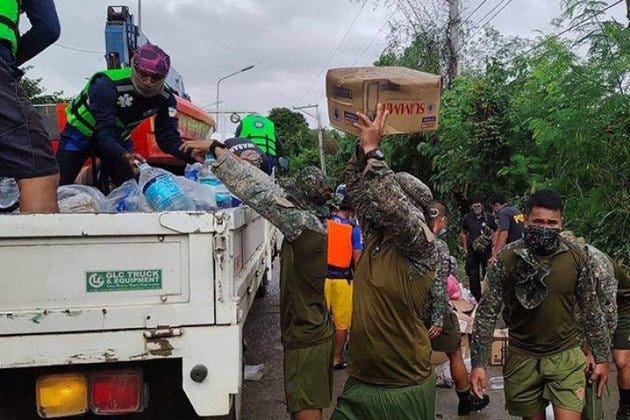
In such scenario, it becomes incumbent for all countries to draw lessons from shortcomings exhibited by Turkish administration and take precautionary measures to prevent such a mishap. First-and-foremost, all states must remain vigilant to any warning signs and be prepared-in-advance to fight any calamity head-on. Therefore, stakeholders must ensure that they are well-equipped with enough resources, e.g., upgraded telemetry and early warning systems, air and land conveyances, trained rescue-and-relief workers and medical-supplies etc. Disaster management committees must be setup comprising of professionals to forge an efficient strategy and policy. Citizens must undergo emergency evacuations exercises and workshops to handle and subdue disasters. In fire-prone areas, afforestation and plantation drives must be prioritized. According to Wildland Fire Management Information (WFMI), anthropogenic activities are major causes of forest fires; hence, forest guards must have service weapons and vehicles to stop irresponsible individuals, as well as, poachers and mafia who deliberately torch trees. Thermograms and satellites can alert forest department of arson and terrorism.
To combat Turkish forest fires, need of the hour is to collectively come to grips with Climate emergency. Types of natural calamities discussed earlier are interlinked and require integrated and holistic responses by Foresters, Biologists, climatologists etc. from all around the world to mitigate extreme and complex interacting-weather patterns and their resulting catastrophes. Human beings cannot completely avert the climate change; however, a collective response can save us from a complete disaster.


